Amaravati Reborn: Andhra Pradesh Government Accelerates Capital Development with Strategic Incentives and Welfare Measures
AMARAVATI — In a decisive move to revitalize the vision of Amaravati as a world-class capital city, the Andhra Pradesh Capital Region Development Authority (CRDA) has unveiled a comprehensive roadmap aimed at accelerating infrastructure growth while prioritizing the welfare of the farmers and families who form the backbone of the region’s land-pooling initiative.
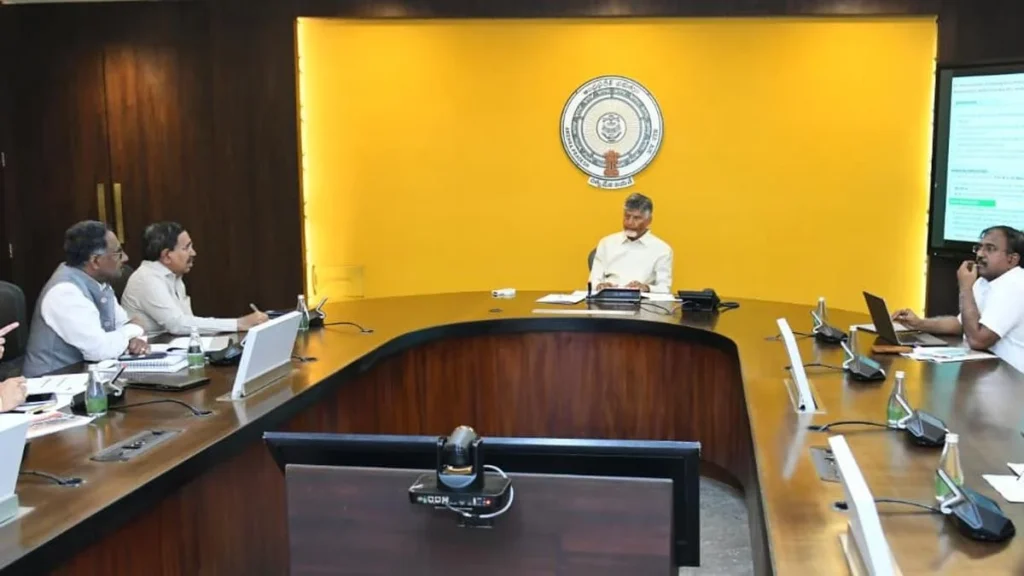
The 63rd CRDA Authority meeting, chaired by Chief Minister N. Chandrababu Naidu at the State Secretariat on Tuesday, July 7, 2026, marked a significant pivot in the administration’s approach to the capital’s development. With senior officials, including Municipal Administration and Urban Development Minister P. Narayana and Chief Secretary Sai Prasad in attendance, the meeting served to address years of stagnation, offering a blend of financial incentives, loan relief, and social infrastructure commitments.
The Core Mandate: Reviving the Vision
For over a decade, Amaravati has remained the centerpiece of Andhra Pradesh’s political and economic narrative. However, the project faced significant headwinds and administrative delays between 2019 and 2024. The decisions taken during the recent CRDA meeting indicate a clear intent to move past the paralysis of the previous years.
The Authority’s primary objective is two-fold: to fast-track the construction of key infrastructure—including trunk roads, the International Airport, and the International Sports City—and to ensure that the farmers who surrendered their land under the Land Pooling Scheme (LPS) are not just compensated, but are active stakeholders in the capital’s prosperity.
Chronology of Commitments and Policy Adjustments
The government’s strategy is built upon a layered approach to compensation, acknowledging that different groups of landowners joined the development process at different stages of the project’s maturity.
1. Enhanced Annuities for New Entrants
Minister P. Narayana announced a revised structure for farmers who joined the Land Pooling Scheme post-June 12, 2024. These landowners are now entitled to an annual annuity of ₹40,000 per acre for a ten-year duration, effective from the date of land surrender. To account for inflationary pressures, the government has built in a yearly increment:
- For Irrigated (Jareebu) Land: An annual increase of ₹5,000 per acre.
- For Dry Land: An annual increase of ₹3,000 per acre.
2. Retroactive Justice: Extending the 2014–2019 Pool
The government reaffirmed its commitment to the original cohort of farmers who joined the land-pooling project during its inception (2014–2019). Recognizing that the project was effectively stalled during the subsequent five-year period, the Authority officially extended the annuity payment period from the original 10 years to 15 years. This gesture serves as both financial compensation for the delay and a bridge of trust between the state and the farming community.

3. Relief for Displaced Residents
The development of trunk roads necessitates the acquisition of residential land in village habitation areas. To mitigate the impact on these families, the CRDA has pledged to allot developed plots of equivalent size within the same village, ensuring that social ties and community structures remain intact. Furthermore, recognizing the rising costs of temporary accommodation, the government has doubled the monthly rental assistance for these families from ₹5,000 to ₹10,000 for a one-year period during the construction phase of their new homes.
Financial Empowerment and Debt Relief
One of the most significant announcements from the 63rd CRDA meeting is the agricultural loan waiver scheme. The government has approved a waiver of up to ₹1.50 lakh for families whose land was acquired for major capital projects, including:
- The International Airport.
- The International Sports City.
- Strategic railway corridors.
- The Inner Ring Road (IRR).
- Smart industrial clusters.
This waiver applies to all eligible agricultural loans availed on or before January 6, 2026. By removing the debt burden from these families, the government aims to provide them with a clean slate as the capital city begins to generate new economic opportunities in commerce, logistics, and services.
Strategic Land Allocations and Social Infrastructure
The CRDA is not merely focusing on roads and utilities; it is planning for the long-term socio-economic health of the capital. The Authority has approved the transfer of 307 acres to the Endowments Department, specifically earmarked for the development of the International Sports City, with a financial settlement of ₹159 crore.
Additionally, the government is diversifying the city’s institutional footprint. Land has been allocated for:
- Governmental Infrastructure: A dedicated office and aquarium for the Fisheries Department.
- Institutional Presence: Allocations have been made for the Art of Living Foundation, the Isha Foundation, and the Confederation of Indian Industry (CII).
Chief Minister Naidu’s vision for the 217 sq. km capital region is one of integrated urban living. He has directed officials to ensure that each of the 25 proposed townships includes a minimum of one high-quality national or international school and a modern, state-of-the-art hospital. This move is designed to ensure that Amaravati functions as a self-sustaining urban ecosystem rather than a mere administrative hub.
Official Responses and Future Outlook
Addressing the press following the meeting, Minister P. Narayana provided clarity on the contentious issue of the "Seed Access Road." While the government prefers a consensus-based approach, the Minister emphasized that the state would initiate formal land acquisition proceedings if the remaining landowners failed to join the voluntary land-pooling programme within the stipulated deadline.

"The construction of the steel bridge on the corridor is complete," Mr. Narayana confirmed, adding that the project would be handed over within ten days. "Our priority is to complete the core infrastructure that connects the various zones of Amaravati, ensuring that the city is operational and accessible as soon as possible."
Implications of the 63rd CRDA Meeting
Economic Impact
The injection of funds through annuity hikes, loan waivers, and infrastructure spending is expected to act as a stimulus for the local economy. As construction gains momentum, the demand for local labor, construction materials, and logistics services will rise, potentially transforming the region into a major employment hub in Andhra Pradesh.
Building Political Trust
The extension of the annuity period and the increase in rental assistance are clear indicators of a government attempting to repair the social contract. By acknowledging the five-year stagnation period, the current administration is positioning itself as the guardian of the original Amaravati vision, aiming to restore confidence among the agrarian population who were once apprehensive about the project’s long-term viability.
Urban Planning Standards
The directive to include hospitals and schools in every township reflects a commitment to "smart city" principles. By incentivizing the entry of major foundations like the CII and the Art of Living, the government is attempting to create an intellectual and corporate culture that will attract global investment and a skilled workforce to the region.
The Path Ahead
While the decisions taken on July 7, 2026, represent a significant leap forward, the success of these measures will depend on the speed of implementation. The challenge for the CRDA now lies in the seamless execution of these policy benefits and the prompt completion of the remaining infrastructure.
As the state moves forward, the focus remains firmly on Amaravati’s transformation from a stalled project into the administrative, educational, and economic heart of Andhra Pradesh. With clear policy directives now in place and a renewed commitment to the stakeholders of the land-pooling scheme, the government has set the stage for what it hopes will be a historic era of development for the region.