The New Frontier of Content Economics: AWS WAF Introduces AI Traffic Monetization
In a landmark shift for the digital economy, Amazon Web Services (AWS) has unveiled a groundbreaking feature for AWS WAF (Web Application Firewall) that fundamentally alters the relationship between content publishers and artificial intelligence. By introducing native AI traffic monetization, AWS is providing website owners with the ability to treat AI crawlers and autonomous agents not as uninvited guests, but as revenue-generating entities, marking the first major infrastructure-level response to the "AI scraping" crisis.
Main Facts: A Paradigm Shift in Web Traffic
For years, the internet has operated on a tacit agreement: search engines crawl content, and in exchange, they provide visibility and referral traffic. However, the rise of Large Language Models (LLMs) has shattered this model. AI bots now scrape websites to train models and generate direct answers, effectively "consuming" the value of the content without ever driving a user to the original source. This leaves publishers with increased infrastructure costs—bandwidth, server load, and latency—without the compensatory page views or ad impressions.
AWS WAF’s new monetization capability addresses this imbalance by allowing publishers to charge AI bots for access to their data directly at the network edge. This is achieved without requiring developers to modify their backend code or build complex payment gateways. Instead, the system utilizes the x402 protocol—an open standard for machine-to-machine payments—to issue an HTTP 402 "Payment Required" response to unauthorized or unverified AI agents.
By integrating directly into the CloudFront edge, AWS ensures that publishers can:
- Set Granular Pricing: Define costs per request based on content path, bot category, or verification tier.
- Automate Settlement: Receive payments in stablecoins (USDC) directly into preferred wallets.
- Gain Visibility: Monitor bot activity and revenue via a centralized AWS dashboard.
Chronology: From Visibility to Accountability
The path to this solution follows a clear timeline of escalating industry tension.
Phase 1: The Visibility Gap (Pre-2024)
Publishers began noting a massive spike in "non-human" traffic. AWS responded by expanding its WAF Bot Control managed rule groups, which allowed administrators to identify specific bots (e.g., GPTBot, Claude-Web) and either block or rate-limit them. However, this was a binary "block or allow" strategy.
Phase 2: The Infrastructure Strain (2024–2025)
As AI crawlers grew by more than 300% year-over-year, they began to account for over 50% of web traffic for many providers. The lack of ROI for this traffic created a financial burden, as publishers were forced to scale servers to accommodate bots that provided zero business value.
Phase 3: The Monetization Integration (June 2026)
AWS officially integrated the "Monetize" action into the WAF console. By leveraging the Coinbase x402 Facilitator, AWS bridged the gap between traditional web infrastructure and decentralized payment rails. This allows for an autonomous, machine-readable payment flow where a bot essentially "pays for its ticket" to access the data.

Supporting Data: The Bot Explosion
The economic justification for this feature is rooted in hard data. Current metrics from AWS show that AI-specific crawlers have become the most significant category of non-human traffic.
- Traffic Volume: In many sectors, AI bots now constitute over half of all incoming web requests.
- The "Zero-Referral" Problem: Unlike traditional search engine crawlers that return users to the source, AI agents provide "summarized intelligence," effectively decoupling information from the publisher’s platform.
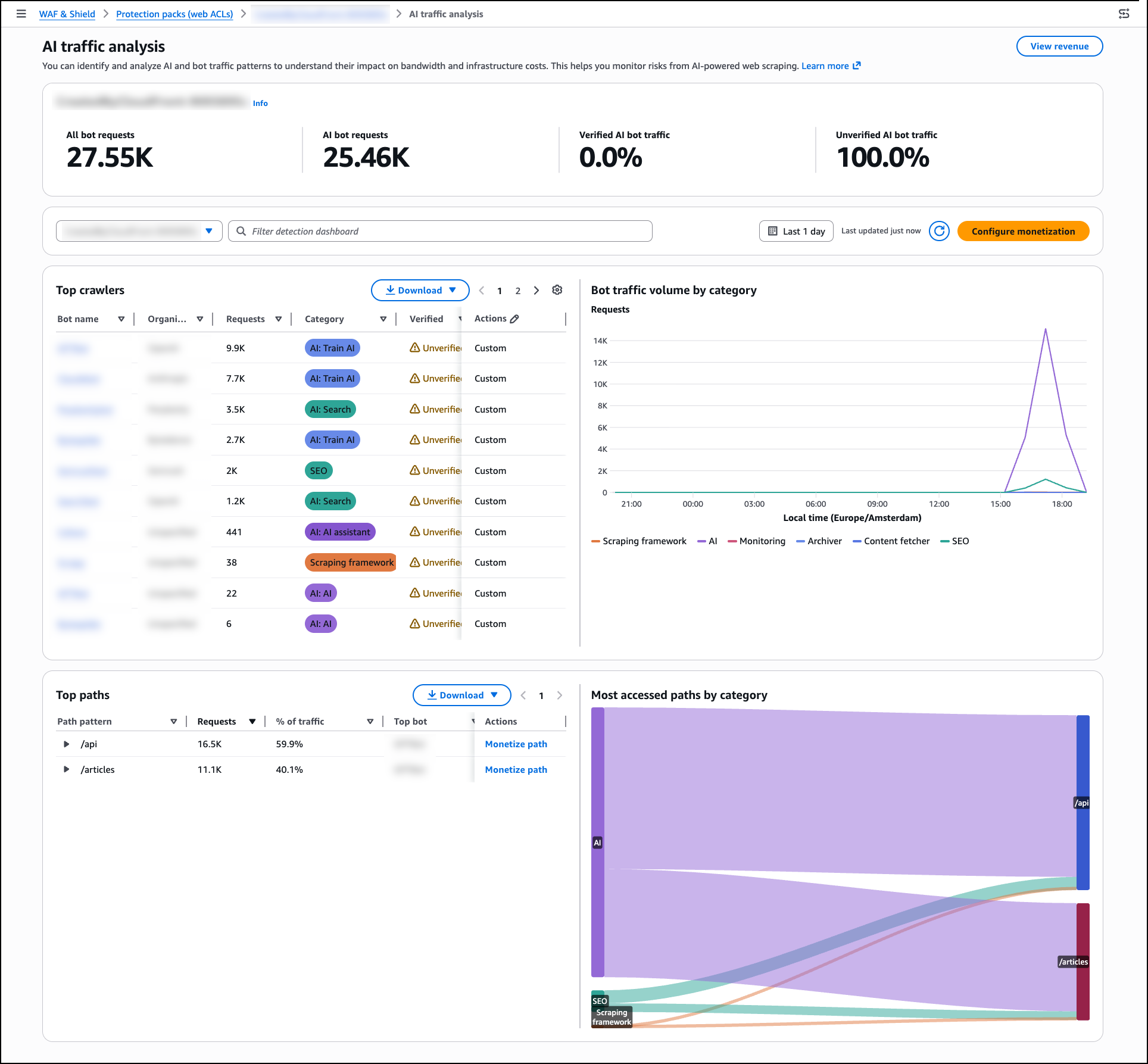
- The Technical Solution: AWS WAF currently classifies over 650 distinct AI bot types. The new dashboard allows owners to segment these into "Verified" vs. "Unverified," providing clear metrics on bandwidth consumption and the "estimated monthly cost" of serving these agents.
This data allows publishers to move from a defensive posture—where they block all bots to save money—to an offensive, revenue-generating strategy.
Official Responses and Strategic Implications
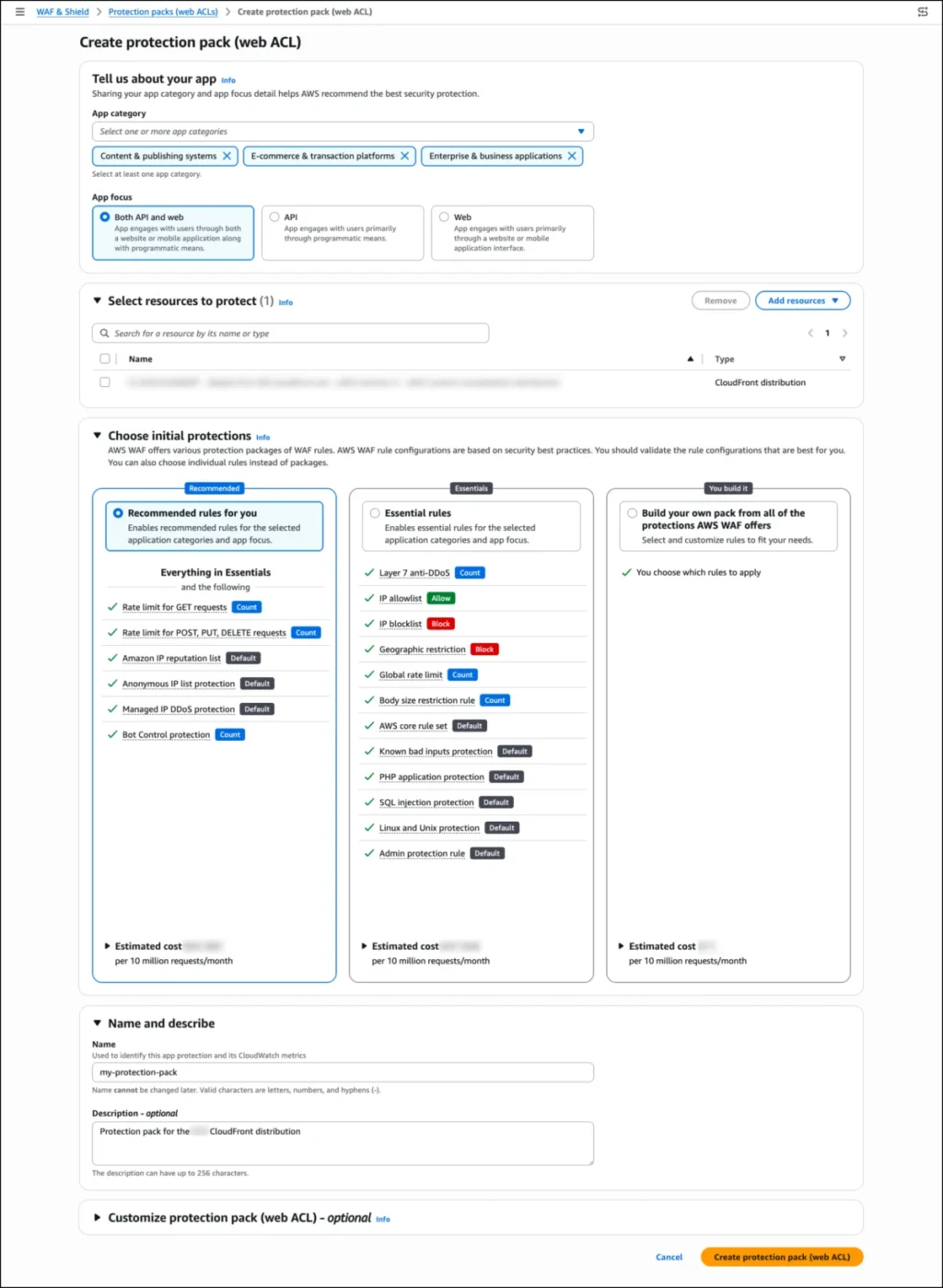
The introduction of this tool signals that AWS views AI traffic as a legitimate commercial transaction. By providing a "Protection Pack" configuration, AWS has made it trivial to categorize content.
"We are enabling a new type of internet economy," noted a spokesperson close to the development. "By placing the monetization logic at the edge, we reduce the complexity of licensing agreements. Instead of negotiating with every AI developer, publishers can simply set a price, and if the AI agent wants the data, they pay the fee."
The integration with third-party payment rails like Stripe and the Machine Payments Protocol (MPP) is slated for the near future, which will likely broaden the appeal to enterprise publishers who require fiat currency settlements. Currently, the use of USDC on blockchain networks provides an immediate, global, and trustless mechanism for settlement that bypasses the traditional banking delays that have historically plagued international content licensing.
Strategic Implications for the Digital Ecosystem
1. The Death of "Free" Scraping
The most immediate implication is the end of the "free-for-all" era of web scraping. AI companies will now have to factor in "data acquisition costs" (DAC) for their training sets. If a publisher chooses to monetize their content, AI developers will be forced to choose: pay the fee or lose access to high-quality, proprietary datasets.
2. A New Revenue Stream for Publishers
For news organizations, academic archives, and e-commerce platforms, this represents a potential new revenue stream. Publishers can now monetize their "digital footprint" by allowing AI agents to crawl their sites for a fee, effectively turning their server infrastructure into a profit center rather than a cost center.
3. The Standardization of Machine Payments
The reliance on the x402 protocol is a major milestone for the maturity of the web. By standardizing how a server asks for payment and how a client provides it, AWS is setting the stage for a more autonomous internet. This protocol allows for frictionless, machine-to-machine commerce that could eventually extend beyond AI bots to other automated agents and IoT devices.
4. Competitive Dynamics
Smaller publishers, who previously lacked the legal or technical resources to enforce copyright or demand payment from AI giants, now have a "level playing field" tool. The AWS WAF console democratizes the ability to protect intellectual property. If a large AI player ignores the 402 payment request, the publisher can instantly escalate the response to a Block, effectively enforcing their terms of service at the network level.
Getting Started: Implementation for Enterprises
The rollout is designed for ease of use. Administrators simply:
- Confirm Bot Control: Ensure the WAF Bot Control managed rule group is active.
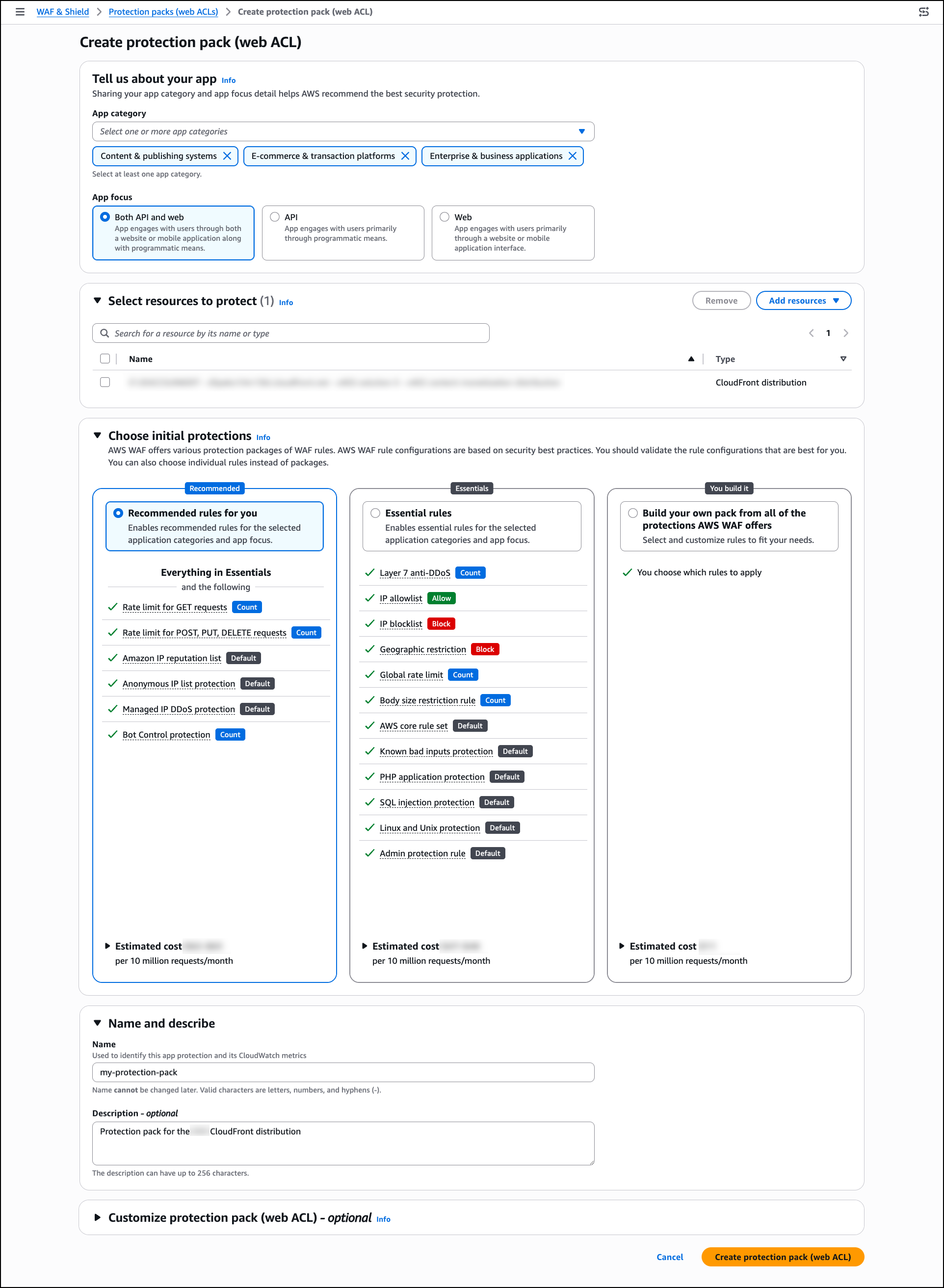
- Create a Protection Pack: Use the WAF console to group content paths and set "Monetize" as the default action for specific AI agents.
- Configure Payment: Input wallet addresses for stablecoin settlement.
- Test and Deploy: Utilize the
Currency Mode: TESTfeature to simulate payments on testnets before going live with real capital.
This systematic approach minimizes the risk of downtime or broken integrations. As businesses move into the second half of the decade, the ability to control and monetize the "AI layer" of the web will likely be a defining characteristic of successful digital strategies. AWS has not only built a security tool; they have built the accounting department for the autonomous web.