Empowering Intelligent Agents: AWS Launches Web Search for Amazon Bedrock AgentCore
In a significant leap forward for generative AI integration, Amazon Web Services (AWS) has announced the general availability of Web Search on Amazon Bedrock AgentCore. This new, fully managed tool provides AI agents with the ability to ground their responses in real-time, verified web data without ever exposing sensitive customer information to external third-party search providers.
By leveraging the Model Context Protocol (MCP), AWS is providing developers with a streamlined, secure, and highly efficient path to bridge the gap between static model training data and the rapidly evolving nature of the live internet.
The Core Innovation: Bridging the Gap Between Models and Reality
For all the power of Large Language Models (LLMs), they suffer from a fundamental limitation: they are frozen in time. Once training is complete, the model’s "worldview" remains stagnant. While Retrieval-Augmented Generation (RAG) has helped mitigate this by allowing models to query internal company databases, there has long been a missing piece: how to securely and accurately pull in the most recent developments from the public web.

Web Search on Amazon Bedrock AgentCore solves this by acting as a native, managed connector. When an agent receives a natural-language query, it can now trigger a search. The tool retrieves relevant snippets, authoritative URLs, titles, and publication dates. Crucially, this process adheres to strict enterprise governance, ensuring that no data egress occurs outside the user’s secured AWS environment.
Leveraging Proven Infrastructure
The technology behind this launch is not experimental; it is the culmination of years of engineering at Amazon. The search engine powering Bedrock AgentCore is the same infrastructure that drives Amazon’s high-scale agentic experiences, including Alexa+, Amazon Quick, and Kiro. By combining a massive, high-quality web index with structured knowledge graph data, the tool provides a "multi-source grounding" approach. This means agents don’t just get raw search results; they get access to verified, structured facts from the Amazon Knowledge Graph, drastically reducing the risk of "hallucinations" often associated with general-purpose web scraping.
Chronology of Development and Deployment
The path to this general availability release follows a deliberate, customer-centric roadmap characteristic of AWS’s development lifecycle.

- Initial Research and Internal Pilot (2024–2025): AWS engineers began integrating internal search indexing capabilities with the Bedrock ecosystem. The objective was to create a "zero-egress" model that would satisfy the stringent security requirements of enterprise customers.
- The Rise of MCP: The adoption of the Model Context Protocol (MCP) served as the technical catalyst. By standardizing how agents interact with tools, AWS enabled a "plug-and-play" architecture for its gateway.
- Beta/Early Access (Q1 2026): Select enterprise partners, including Benchling and Gen Digital, were granted early access to the feature. Their feedback on performance, latency, and security efficacy was integrated into the final build.
- Official Launch (June 16, 2026): AWS officially announced the general availability of the service in the US East (N. Virginia) region.
- Post-Launch Refinement (June 18, 2026): AWS updated the service documentation and transparency reports to include clear, usage-based pricing models, addressing the primary feedback from the developer community.
Technical Architecture: How it Works
The implementation of Web Search within the Bedrock AgentCore environment is designed for simplicity without sacrificing the granularity required by power users.
The Gateway and the Connector
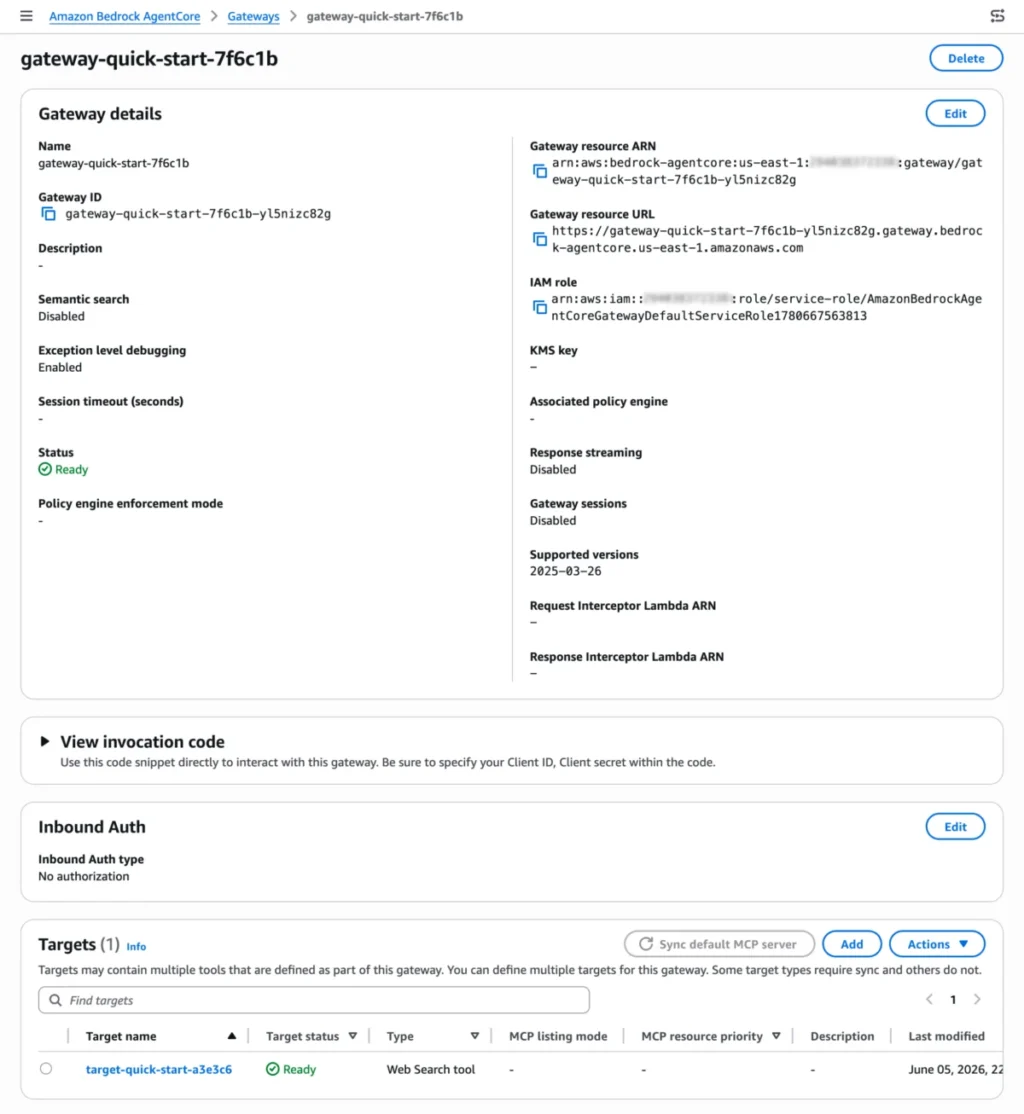
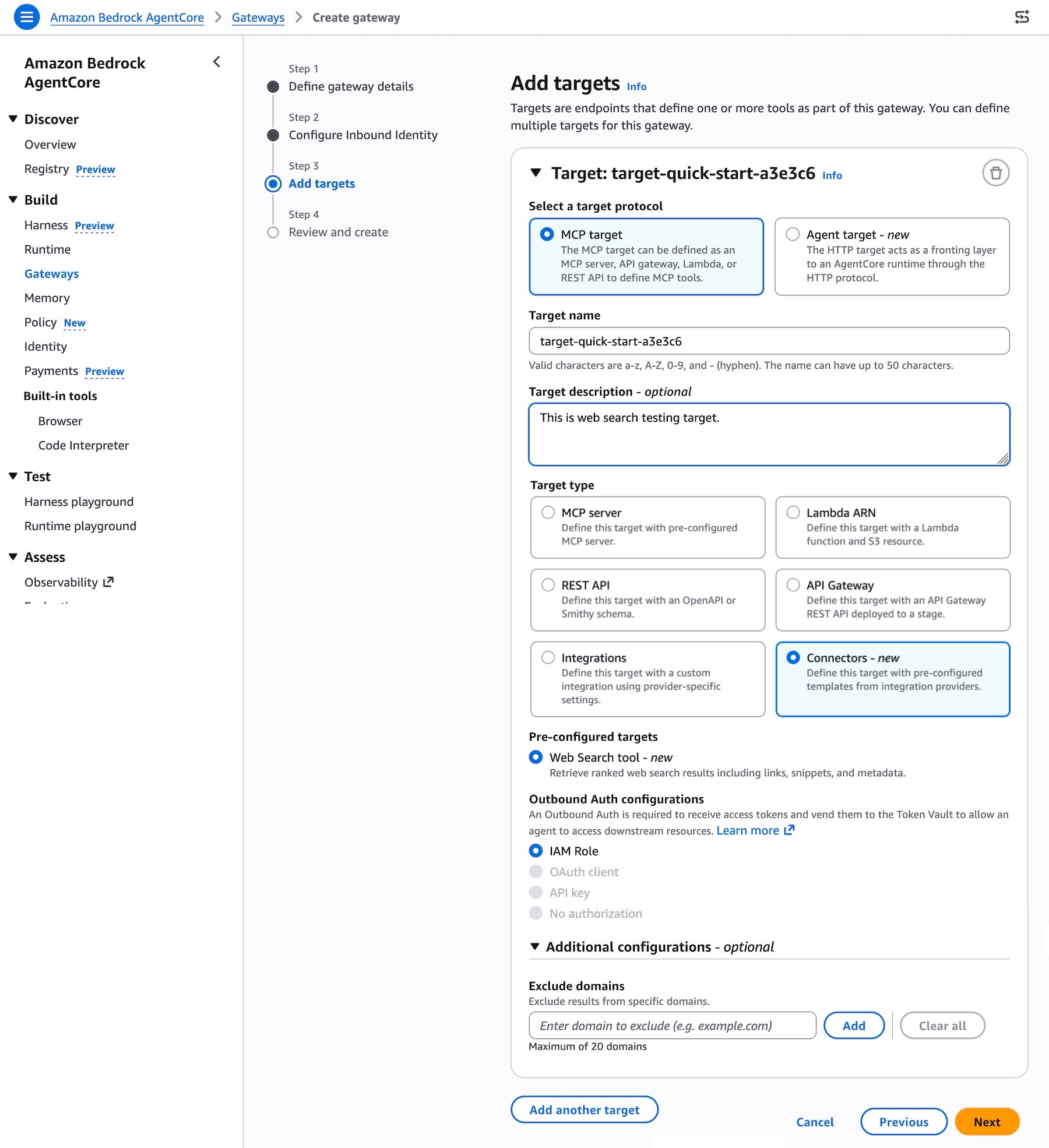
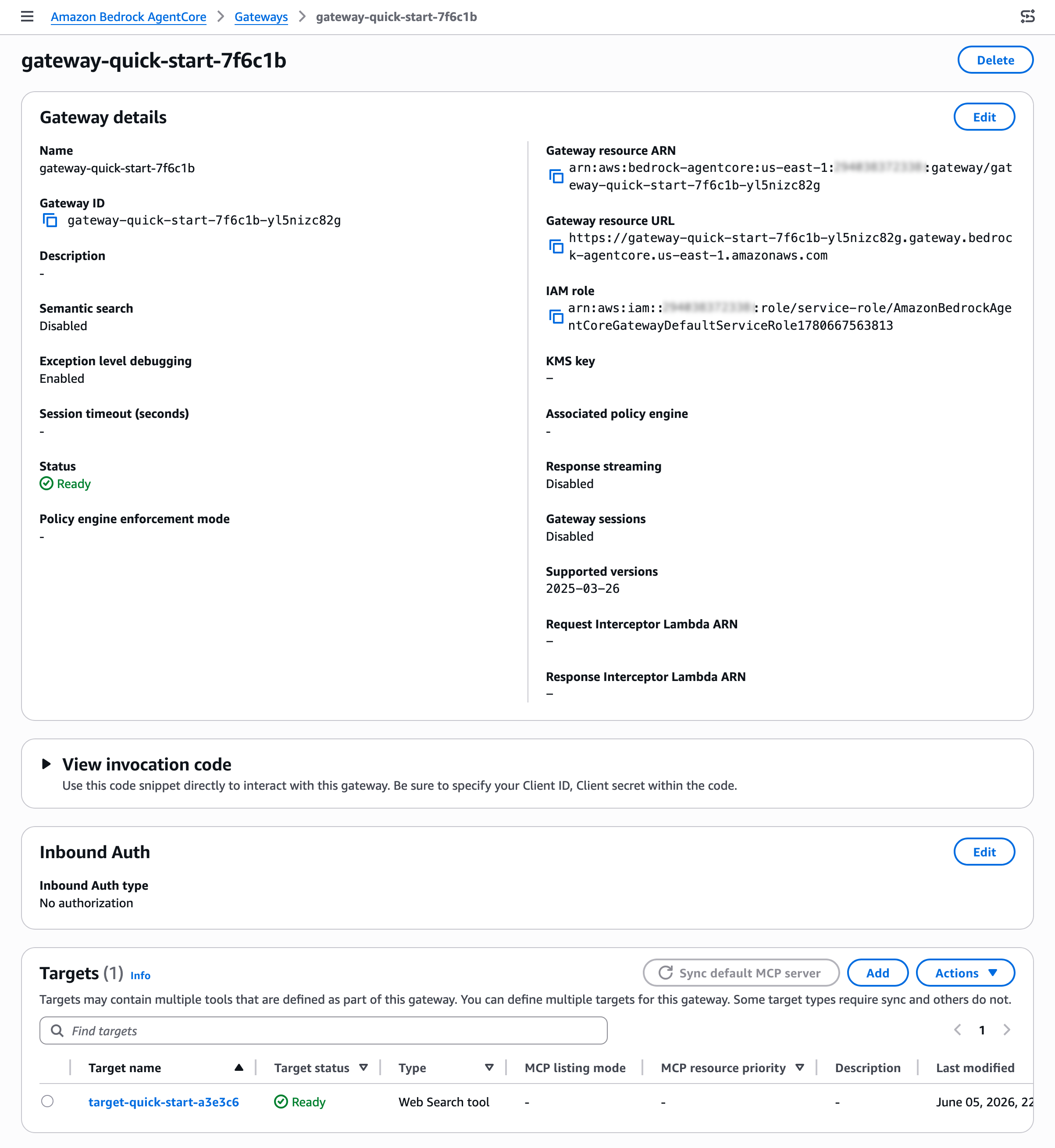
Developers begin by configuring a Bedrock AgentCore Gateway. Within this gateway, they define a "target protocol" using MCP. By selecting "Connectors" as the target type, the Web Search tool becomes available as a preconfigured, managed service.
Once configured, the interaction flow follows these steps:
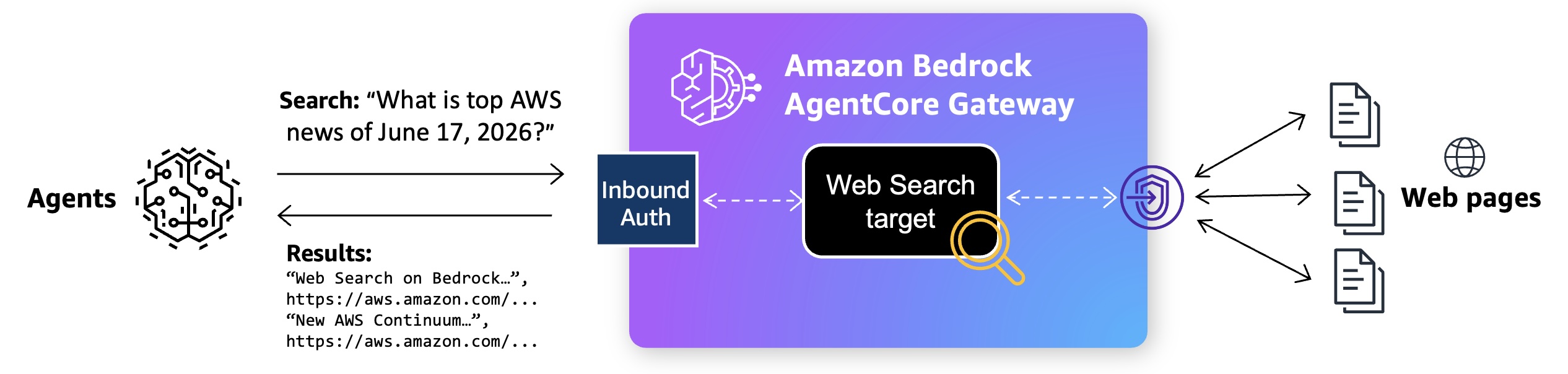
- Intent Recognition: The agent analyzes the user’s prompt to determine if real-time web information is required.
- Query Execution: The agent issues a structured request through the Gateway.
- Context Retrieval: The Web Search tool queries the Amazon index, pulling back verified snippets and metadata.
- Reasoning and Synthesis: The LLM processes the retrieved snippets, citing sources to ensure transparency and accountability.
Developer Tooling
AWS has ensured that developers can test these agents in a sandbox environment before full-scale deployment. Using the MCP Inspector, developers can perform real-time debugging, observe the search queries being generated by their agents, and audit the metadata returned by the search index.
Industry Implications and Use Cases
The introduction of this tool has profound implications for industries where information currency is non-negotiable.
Accelerating Scientific R&D
Benchling, a leader in cloud-based R&D, has utilized this tool to transform how scientists interact with their data. According to Nicholas Larus-Stone, Head of AI Agents at Benchling, the primary advantage is the convergence of private and public data. "Scientists using Benchling AI can now ask about a target they’re actively working on and get answers grounded in both their institutional data… and published literature." This creates a "complete science" workflow, where hypothesis generation is supported by the absolute latest research.
Strengthening Cyber Safety
For organizations like Gen Digital, the stakes involve the rapid evolution of global threats. Iskander Sanchez-Rola, Senior Director of AI & Innovation, notes that for their "Norton Revamp" product, the ability to provide users with "current, grounded content" is essential for building and maintaining an online reputation. The assurance that all search queries remain within the AWS-managed environment is the "value-add" that allows them to trust the system with professional-grade tasks.
Economic and Strategic Outlook
AWS has adopted a transparent, usage-based pricing model for this service, which is likely to lower the barrier to entry for startups and large enterprises alike.
- Pricing: The service is priced at $7 per 1,000 queries. This granular pricing allows businesses to scale their usage in lockstep with their actual application demand.
- Free Tier: To incentivize adoption, new AWS customers are eligible for up to $200 in Free Tier credits, allowing for significant prototyping and testing.
- Strategic Advantage: By managing the infrastructure, AWS is effectively removing the "undifferentiated heavy lifting" of maintaining search APIs, scrapers, and indexers. Developers are no longer forced to manage third-party search contracts or navigate complex API integrations. They are, quite simply, "buying the result" rather than "building the plumbing."
Future Roadmaps and Scalability
While the service is currently limited to the US East (N. Virginia) region, industry observers expect a rapid global rollout. The use of the Model Context Protocol suggests that AWS is positioning Bedrock AgentCore as a central hub in an ecosystem of tools.
As AI agents move from simple chatbots to autonomous "doers," the ability to pull in live, verified, and secure web data will become a standard requirement. AWS has positioned itself as the enterprise standard for this capability. The focus on "zero data egress" is a clear signal to the market that AWS intends to be the home for the most security-sensitive AI deployments in the world.
How to Get Started
For organizations looking to integrate Web Search into their existing workflows:
- Visit the Bedrock AgentCore Console: Access the Gateway settings to initialize the new search connector.
- Review Documentation: Utilize the comprehensive AWS Developer Guide for detailed implementation of the MCP client.
- Community Engagement: Engage with the AWS re:Post forum to share feedback, troubleshoot specific use cases, and stay informed on future tool updates.
As the AI landscape continues to shift, one thing is certain: the era of the "disconnected" AI agent is drawing to a close. With the launch of Web Search on Bedrock AgentCore, AWS has provided the tools for agents to finally see, read, and understand the world as it exists today, not just as it was when they were trained.