Mastering Cinematic AI Video: A Comprehensive Workflow Using Seedance and Modern Generative Tools
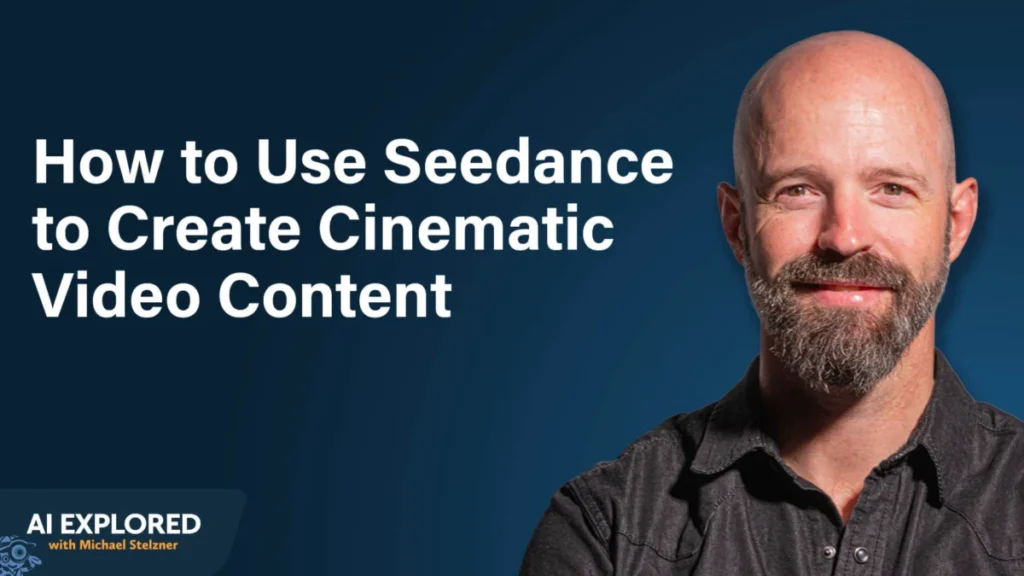
As artificial intelligence continues its aggressive march into Hollywood, advertising, and independent content creation, a lingering stigma persists: many viewers still associate AI video with "sloppy" outputs, uncanny motion, and garbled visuals. However, according to recent industry insights from Ross Symons, Chief Creative Officer of Zen Robot, those critiques miss the mark entirely. The limitation isn’t the technology; it’s the human-to-model communication gap.
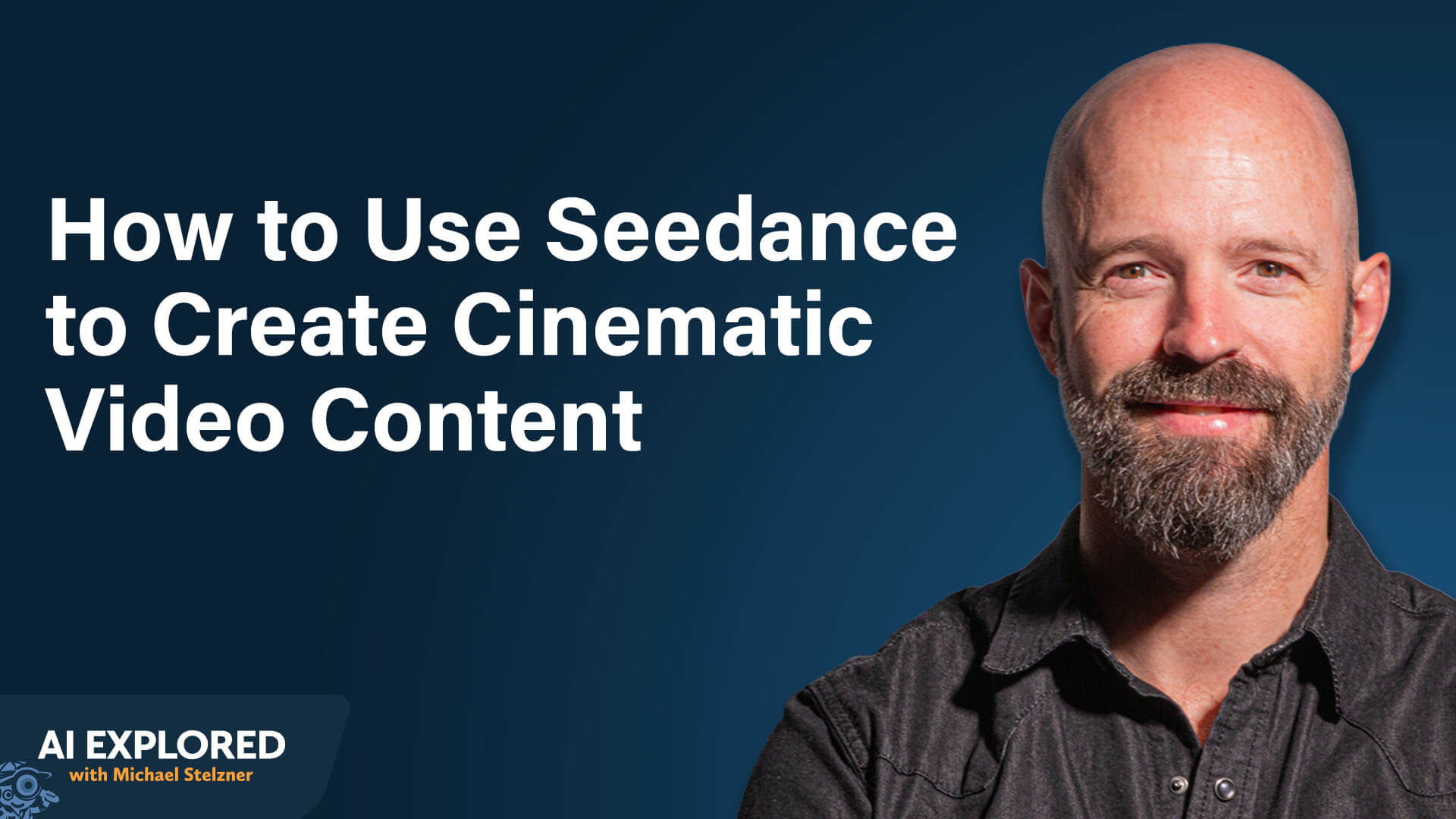
In a recent deep-dive on the AI Explored podcast, co-created by Symons and Michael Stelzner, creators were given a masterclass on how to move beyond vague conversational prompts and adopt a professional, filmmaker-first workflow. Utilizing cutting-edge platforms like ByteDance’s Seedance model, creators can now produce broadcast-ready, hyper-consistent cinematic sequences—provided they understand the intricate mechanics of diffusion models, prompt engineering, and cinematic structuring.
Main Facts: The Evolution of AI Video Production
The landscape of generative AI video has shifted drastically away from simple five-second, low-resolution loops toward sophisticated, multi-second narratives capable of handling complex choreography and strict reference adherence.
- The Core Distinction: Large Language Models (LLMs) like ChatGPT, Claude, and Gemini process conversational intent and conversational filler. Diffusion models—the underlying architecture powering image and video generators like Midjourney and Seedance—do not. They extract strictly visual keywords, ignoring conversational niceties.
- The Power of Seedance: Developed by ByteDance (the parent company of TikTok), Seedance has emerged as an industry powerhouse known for its near-flawless adherence to text prompts and reference image accuracy.
- The Financial Reality: Native high-resolution rendering with advanced models comes at a cost. A 30-second clip at 720p can run roughly $14, while jumping to 1080p can push costs past $30. However, strategic upscaling workarounds allow creators to achieve near-4K quality for a fraction of the native render price.
Chronology & Step-by-Step Workflow: How to Think Like a Filmmaker
Turning a basic concept into a polished piece of AI video requires a rigorous, chronological pipeline. Symons breaks the process down into four distinct phases, bridging traditional cinematography with modern prompt engineering.
Phase 1: Conceptualization and Narrative Foundation
Every professional video begins with a strong concept. It does not need to be deeply avant-garde; it can be as simple as showcasing a product in an unexpected environment or visualizing a metaphor.
- Translating Ideas Across Mediums: Symons highlights a personal project originally built years ago as a physical stop-motion animation: a Red Bull can on a table, approached by an origami paper bull that opens the drink, sprouts wings, and flies away. When fed into Seedance with a couple of image references, the concept held up seamlessly because the core idea was strong.
- Leveraging LLMs: Creators can use ChatGPT to expand a basic premise, prompting the AI to extrapolate narratives, suggest visual sequences, or propose alternative variations before ever touching a visual generator.
Phase 2: Building Key Visuals (The Subject, Environment, and Character Framework)
Image generation serves as the foundational bedrock for AI video. Mastering still imagery guarantees a vastly higher success rate in motion generation. Symons categorizes this phase into three mandatory pillars:
- The Hero/Subject: The focal point of the story (e.g., a custom product bottle or a specific character). For missing professional photography, creators can use mockups generated via Midjourney or ChatGPT.
- The Environment: The setting. Rather than using lazy adjectives like "cool," creators must specify lighting, color temperature, time of day, and depth of field.
- Secondary Elements: Objects or characters introduced to build tension or motion, such as a black panther walking into a product shot.
Cinematography Tip: To avoid flat, centered compositions, creators should study classic film stills. Uploading a still to ChatGPT and asking it to analyze the emotional effect (e.g., low angles for power, close-ups for intensity, wide shots for isolation) yields professional cinematography terminology that can be repurposed directly into prompts.
Phase 3: Storyboarding and Keyframe Structuring
A storyboard mapping out 6 to 12 keyframes prevents creators from overloading a single clip with too many actions.
- Start Frame + End Frame + Prompt: This method locks down the beginning and end visually while using a text prompt to choreograph the transition.
- Start Frame + Prompt Only: This offers more creative freedom, allowing the model to interpret motion organically over a set duration.
- The Golden Rule of Duration: Match the complexity of the prompt to the clip’s duration. Cramming a sliding can, flying paper, a forming bull, and an explosion into a 5-second window will overwhelm the model, resulting in warped perspectives and distorted limbs.
Phase 4: Generation via Seedance and Assembly
Accessing Seedance typically occurs through API aggregator platforms such as Luma AI, Flora, Figma Weave, and Krea rather than a standalone app.
- Time-Segmented Prompting: Seedance supports advanced choreography within a single generation. Creators can structure a 15-second prompt by defining exact intervals: "Between 0 and 4 seconds, X happens. Between 4 and 8 seconds, Y happens."
- Chaining Clips: To build longer narratives, creators extract the final frame of a preceding clip and use it as the starting frame for the next, maintaining visual continuity.
Supporting Data & Economic Workarounds
High-end AI video production introduces unique budgeting challenges. Native high-resolution generation on advanced models can quickly drain a creator’s resources. To bypass this, professionals utilize an upscaling workaround:

- Low-Resolution Generation: Generate the initial video clip at an affordable lower resolution (such as 480p) for roughly $6.
- Platform Upscaling: Pass the rendered clip through built-in platform tools or dedicated upscalers like Topaz Labs or Magnific twice.
- The Savings: This secondary polish costs an additional $3, bringing the total project cost to roughly $9—delivering quality comparable to a native high-resolution render at one-third of the price.
Official Industry Responses and Model Comparisons
The generative video ecosystem is fiercely competitive. While Google’s Veo 3 (accessible via Gemini) offers free video generations and established early benchmarks, newer models like Seedance and Kling 3.0 have redefined prompt adherence and spatial consistency.
Experts caution that skills do not automatically transfer between models. Each platform interprets syntax differently; mastering Veo builds generalized AI literacy, but unlocking Seedance’s maximum potential requires learning its specific responses to timing controls and reference weightings. Furthermore, industry veterans stress that transitioning from image references to rigid keyframes should be done sparingly, as strict keyframe endpoints often force awkward camera movements and unnatural transitions.
Implications for Marketers and Content Creators
The democratization of cinematic-quality video production carries profound implications for the digital landscape:
- Lower Barriers to High-End Commercials: Small-business owners and lean marketing teams can now produce agency-grade product commercials, visual metaphors, and narrative-driven social media content without the need for massive production crews, sound stages, or expensive physical shoots.
- The Rise of "Prompt Directors": Traditional directing is evolving into prompt direction. Creators who understand visual grammar, film history, composition, and lighting will consistently outperform those who rely on generic text inputs.
- Strategic AI Integration: As platforms like the AI Business Society and specialized academies demonstrate, the dividing line in modern marketing is no longer about whether to use AI, but how effectively one can filter through the noise to build repeatable, high-ROI workflows.
By treating AI video generators not as magic buttons, but as highly literal digital cinematographers, creators can finally bridge the gap between imagination and polished execution.