Trump Pledges to Intervene With Elon Musk Over Continuing Ukraine Starshield Disruptions
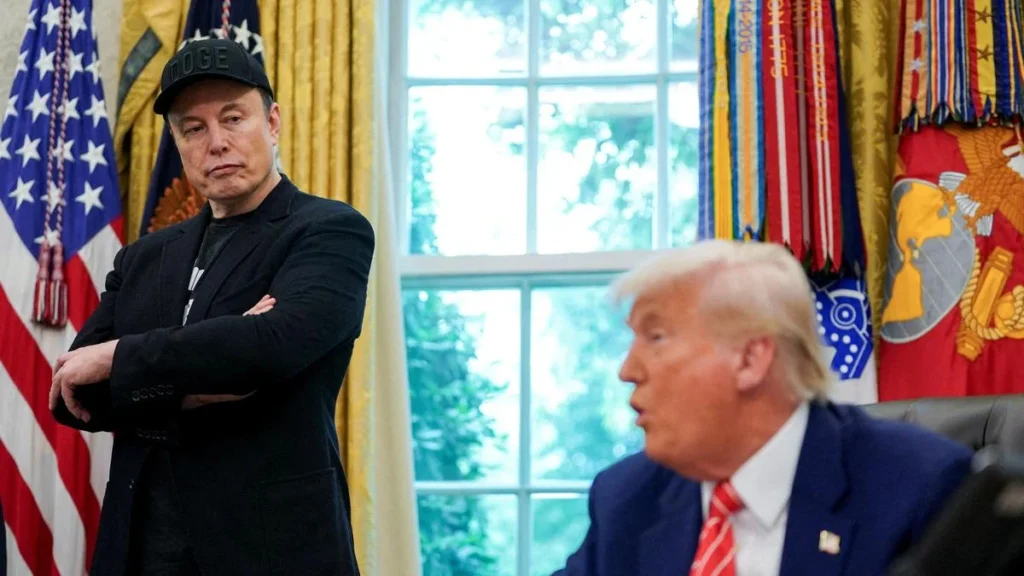
WASHINGTON — U.S. President Donald Trump announced on Friday, October 23, 2026, that he is prepared to personally intervene and speak with tech billionaire Elon Musk if ongoing technical and access disruptions persist regarding Ukraine’s military-grade satellite communications network, Starshield.
Speaking to reporters in the Oval Office at the White House, President Trump addressed lingering concerns that Ukrainian forces were still experiencing critical connectivity failures with the secure, defense-adapted version of the Starlink platform—a system vital for the nation’s military operations as the conflict enters its fifth year.
"If there is a problem, I will get it straightened out," Mr. Trump stated firmly, responding to fresh reports that operational hurdles remained on the ground in Eastern Europe.
The remarks follow a fluid week of diplomatic and technological friction surrounding the critical infrastructure provided by SpaceX, highlighting the immense leverage held by private aerospace and tech titans over sovereign defense logistics and modern geopolitical conflicts.
Main Facts
The core of the unfolding situation revolves around the operational status of Starshield, the military-grade derivative of Elon Musk’s ubiquitous Starlink satellite constellation. Key elements of the current crisis include:
- The Operational Stakes: Starshield and Starlink serve as the foundational digital backbone for the Ukrainian Armed Forces, facilitating real-time battlefield coordination, drone operations, artillery targeting, and secure communications across frontlines where traditional terrestrial infrastructure has been obliterated.
- The Communication Glitch: Ukrainian officials reported renewed connectivity drops and operational restrictions on Friday, directly contradicting earlier assertions from Washington that full access had been successfully restored.
- Presidential Assurance: While acknowledging that he had not yet spoken directly with Mr. Musk regarding the latest reported outages, President Trump committed to stepping in personally to resolve any gridlock.
- The Power Dynamics Debate: President Trump forcefully rejected bipartisan criticisms that Mr. Musk wields an inappropriate or dangerous level of unilateral control over critical international security assets, defending the billionaire’s integrity and character.
Chronology of Events
The latest controversy surrounding satellite access in the Russia-Ukraine conflict unfolded across a rapid succession of statements and developments in late October 2026:
Thursday, October 22, 2026
President Trump publicly announced to the press that Elon Musk—whose aerospace company, SpaceX, designs and deploys the Starshield architecture—had successfully restored full access to the military communication system following a brief disruption. The announcement was initially interpreted by international observers as a sign that technical bottlenecks between Kyiv and the private supplier had been smoothed over.

Friday, October 23, 2026 (Morning to Afternoon)
Despite the previous day’s optimism, reports emerged from Ukrainian defense circles indicating that connectivity problems with Starshield were persisting, affecting active tactical maneuvers. The discrepancy forced the White House to re-address the issue during scheduled press briefings.
Friday, October 23, 2026 (Evening Press Conference)
Speaking from the White House, President Trump walked back his absolute certainty from the day prior. When directly questioned by reporters about whether he had reached out to Mr. Musk to force a permanent restoration of service, Trump admitted, "I have not spoken to him. I might have to, but I have not. I’ve heard it was fixed, but if it’s not, I’ll speak to him."
During the same briefing, the U.S. President dismissed growing concerns from foreign policy analysts regarding private tech monopolies in warfare, offering an endorsement of Mr. Musk: "Elon will never do anything wrong. I know him very well, he is a fair person."
Supporting Data and Technological Context
To understand the weight of President Trump’s pledge, one must examine the absolute reliance of modern militaries on commercial low-Earth orbit (LEO) constellations.
Since the full-scale invasion of Ukraine by Russia, SpaceX’s Starlink—and its heavily encrypted, mil-spec counterpart, Starshield—has evolved from an innovative civilian broadband project into an indispensable weapon of war.
- The LEO Advantage: Unlike geostationary satellites, which orbit at much higher altitudes and suffer from high latency and vulnerability to localized jamming, constellations like Starlink utilize thousands of small satellites in low-Earth orbit. This ensures high-speed, low-latency data transmission that is exceptionally difficult to permanently disable.
- The Vulnerability of Centralized Control: Because the infrastructure is entirely owned, operated, and maintained by a private corporation (SpaceX) rather than the Department of Defense or NATO, corporate leadership retains considerable autonomy over where, when, and how the service is deployed or restricted.
- The Cost of Disruption: Even brief outages to the Starshield network can blind Ukrainian drone squadrons, disrupt artillery fire-control systems, and sever secure lines of communication between battalion commanders and frontline units, potentially altering the tactical balance during active engagements.
Official Responses and Stakeholder Positions
The intersection of private enterprise, American foreign policy, and foreign warfare has generated a complex web of official responses from various political and corporate factions.
The White House Stance
The administration’s official posture balances a pragmatic recognition of Ukraine’s defense needs with a strong defense of private entrepreneurship. President Trump has consistently framed his personal relationship with Mr. Musk as an asset rather than a liability. By positioning himself as a direct mediator between Kyiv and SpaceX, Trump seeks to project decisive leadership capable of managing corporate actors on the global stage.

The Complex Trump-Musk Relationship
The dynamic between President Trump and the South African-born billionaire has experienced notable volatility. Last year, Mr. Musk briefly entered public service to lead the newly formed Department of Government Efficiency (DOGE), a high-profile initiative aimed at slashing federal bureaucracy and spending.
However, policy disagreements and intense public spotlights eventually led to a falling out between the two men, resulting in Musk’s departure from the administration.
Despite past friction, the relationship has warmed considerably in recent months. Observers noted a significant thaw when Mr. Musk attended a high-profile state banquet hosted at the White House for Chinese President Xi Jinping in September, signaling a return to closer alignment between the tech mogul and the executive branch.
Ukrainian and International Reactions
Kyiv has remained publicly cautious, balancing its absolute dependence on uninterrupted satellite communications with the delicate diplomacy required when dealing with its primary Western benefactor and a powerful independent supplier. International allies, meanwhile, continue to monitor the situation with underlying anxiety, questioning the long-term viability of outsourcing critical military infrastructure to private commercial entities whose policies can shift with corporate or individual whims.
Geopolitical and Strategic Implications
The ongoing saga surrounding Starshield and Ukraine illuminates several profound structural shifts in twenty-first-century warfare and international relations:
- The Rise of the "Tech Sovereign": Figures like Elon Musk occupy a unique space in global affairs, wielding economic, technological, and infrastructural power that historically belonged exclusively to nation-states. Their decisions can directly dictate the operational capacity of a sovereign military fighting an existential war.
- The Fragility of Commercial Defense Partnerships: While commercial off-the-shelf (COTS) technology offers unmatched innovation speed and cost-efficiency compared to traditional defense procurement, it introduces acute vulnerabilities. Corporate governance, shareholder pressures, regulatory environments, and individual executive philosophies suddenly become direct variables in military calculus.
- The Necessity of Presidential Mediation: That the operational continuity of a foreign military’s primary communication grid may hinge on a direct phone call between the President of the United States and a private citizen underscores the unconventional nature of modern statecraft.
As the White House monitors the situation on the ground, the international community waits to see whether President Trump’s promised intervention will secure a permanent, uninterrupted operational baseline for Ukraine’s digital battlefield communications, or whether the underlying tensions between private tech supremacy and sovereign security will surface once again.