Mastering Data Plumbing: Building Robust JSON Serialization Pipelines in Python
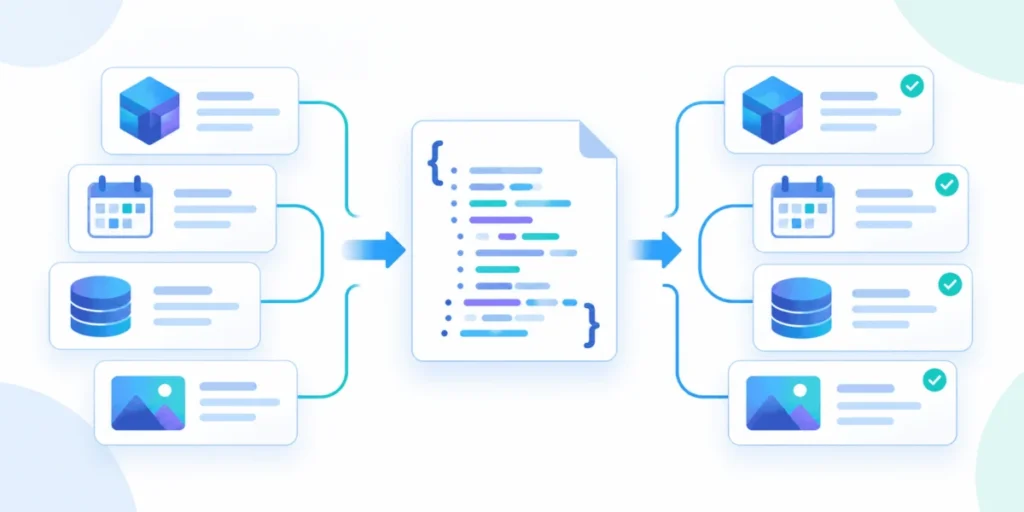
In the modern landscape of machine learning and data engineering, the glamour of model architecture often masks the reality of the daily grind. Experienced engineers know that only a fraction of project time is spent refining neural networks or tuning hyperparameters. The vast majority—often upwards of 80%—is dedicated to "data plumbing": the unglamorous but vital work of cleaning, preprocessing, and transporting data between microservices, storage layers, and production APIs.
As machine learning pipelines grow in complexity, the need for reliable serialization and deserialization becomes a critical point of failure. When structured datasets are passed between distributed systems, a single unsupported data type can trigger a cascade of errors, halting training jobs or corrupting configuration files. This article serves as a comprehensive guide to building a robust, fault-tolerant JSON serialization pipeline in Python capable of handling custom data types, schema migrations, and graceful error recovery.
The Root Problem: JSON Limitations in Python
The JSON (JavaScript Object Notation) format is the industry standard for data interchange due to its lightweight nature and human readability. However, it was designed with a limited set of native types: strings, numbers, booleans, nulls, arrays, and objects.
In the Python ecosystem, our data structures are far richer. We frequently rely on datetime for logging, set for unique feature collections, Path objects for file system management, and Enum for configuration constraints. When you attempt to serialize a Python dictionary containing these objects using the standard json.dumps() method, the process immediately fails with a TypeError.
The Failure Scenario
Consider a standard configuration object for a machine learning experiment:
from datetime import datetime
from enum import Enum
from pathlib import Path
import json

class ModelType(Enum):
    RANDOM_FOREST = "rf"
    NEURAL_NET = "nn"

experiment_config =
    "experiment_id": 1042,
    "model_type": ModelType.NEURAL_NET,
    "features": "age", "income", "location",
    "data_path": Path("/data/v2/train.csv"),
    "timestamp": datetime.now(),
    "nested_meta": "retries": 3
Attempting json.dumps(experiment_config) results in a TypeError: Object of type ModelType is not JSON serializable. This failure is not just an inconvenience; in an automated production pipeline, such an error could crash a long-running job, causing significant downtime and loss of compute resources.
1. Defining a Custom Encoder: The First Line of Defense
To move beyond the standard library’s limitations, we must implement a custom encoder. By subclassing json.JSONEncoder, we can override the default() method to intercept unsupported types before the serialization process fails.
Architectural Strategy
The goal of the custom encoder is to identify specific Python types and transform them into a "serializable representation." We use a marker-based approach, adding a __type__ key to our dictionary output. This acts as a metadata tag, allowing our decoder to reconstruct the object correctly later.
class RobustEncoder(json.JSONEncoder):
    def default(self, obj):
        if isinstance(obj, datetime):
            return "__type__": "datetime", "value": obj.isoformat()
        if isinstance(obj, set):
            return "__type__": "set", "value": list(obj)
        if isinstance(obj, Path):
            return "__type__": "path", "value": str(obj)
        if isinstance(obj, Enum):
            return obj.value
        return super().default(obj)
By passing cls=RobustEncoder to json.dumps(), the pipeline now effectively handles complex structures, outputting a serialized format that preserves the intent of the original data while conforming to JSON standards.
2. The Inverse Process: Implementing a Custom Decoder
Serialization is only half the battle. If we cannot reliably reconstruct our Python objects, we have not solved the problem—we have merely delayed the error. For this, we use the object_hook parameter in json.loads().
The Role of object_hook
The object_hook is a function that json.loads() calls for every dictionary it decodes. If our dictionary contains the __type__ key we injected during encoding, we can intercept it and perform the necessary type conversion.
import logging

def robust_decoder(dct):
    if "__type__" in dct and "value" in dct:
        type_name = dct["__type__"]
        val = dct["value"]
        try:
            if type_name == "datetime":
                return datetime.fromisoformat(val)
            elif type_name == "set":
                return set(val)
            elif type_name == "path":
                return Path(val)
        except (ValueError, TypeError) as e:
            logging.warning(f"Malformed type_name data detected: e. Falling back.")
            return val
    return dct
This design pattern provides graceful error recovery. If the data is malformed (e.g., an invalid date string), the code logs a warning rather than crashing the process, returning the raw data instead. This is essential for long-running systems that must remain operational even when encountering anomalous input.
3. Managing Schema Changes and Evolution
In machine learning engineering, change is constant. A model specification used six months ago might not have a learning_rate parameter, while a newer version might have deprecated old_metric. Loading legacy JSON configs into updated codebases is a frequent source of runtime exceptions.
The Factory Pattern for Migration
To handle evolving schemas, we move beyond simple deserialization to a validation layer. By wrapping json.loads() in a factory function, we can apply defaults and migrations dynamically.
def load_experiment_config(json_data: str) -> dict:
    raw_dict = json.loads(json_data, object_hook=robust_decoder)

    # Define current schema defaults
    return
        "experiment_id": raw_dict.get("experiment_id", "unknown"),
        "model_type": raw_dict.get("model_type", "rf"),
        "features": raw_dict.get("features", set()),
        "data_path": raw_dict.get("data_path", Path("./default_data.csv")),
        "timestamp": raw_dict.get("timestamp", datetime.now()),
        "learning_rate": raw_dict.get("learning_rate", 0.001), # New hyperparameter
        "nested_meta": raw_dict.get("nested_meta", )
This approach allows for "version-agnostic" configuration loading. By providing safe defaults for missing keys, you ensure that legacy experiments can still be inspected or rerun without requiring manual database or file migrations.
Implications for Production Systems
Implementing these strategies has profound implications for the stability of machine learning infrastructure:
- Increased System Resiliency: By decoupling the data representation from the underlying storage format, you prevent "poison pill" data from crashing downstream processes.
- Developer Productivity: Automated handling of
datetimeandPathobjects removes the boilerplate code that developers otherwise have to write repeatedly across different services. - Easier Auditing: Since the custom serialization format is transparent and human-readable, data scientists and auditors can easily inspect the
__type__markers to understand the structure of experimental configurations. - Forward Compatibility: The factory pattern allows for seamless transitions between schema versions, enabling faster iteration cycles in research-heavy environments.
Chronology of the Pipeline Development
- Phase 1 (The Identification): The initial recognition that standard JSON serialization fails on non-primitive types, identifying the need for a custom encoder.
- Phase 2 (The Encoding Layer): Implementing the
RobustEncoderto map complex Python objects into a tagged dictionary structure. - Phase 3 (The Decoding Layer): Establishing the
robust_decoderfunction to reverse the process, using theobject_hookto restore native Python types. - Phase 4 (The Hardening): Integrating error handling to prevent system crashes when encountering malformed or corrupted data.
- Phase 5 (The Migration Layer): Creating the
load_experiment_configfactory to handle evolving schemas and default values, ensuring backward compatibility.
Conclusion
The transition from a prototype to a production-grade machine learning system requires shifting focus from "making it work" to "making it reliable." Serialization is often overlooked in this transition, yet it is the backbone of any system that communicates state.
By building a robust serialization pipeline—using custom encoders for data transformation, object hooks for intelligent decoding, and factory functions for schema management—engineers can build systems that are significantly more resilient to the inevitable entropy of distributed data. These "data plumbing" techniques are not merely administrative tasks; they are essential engineering practices that define the difference between a brittle, high-maintenance codebase and a scalable, robust machine learning platform.
As you continue to scale your pipelines, remember that the reliability of your data is just as important as the accuracy of your models. By mastering these serialization patterns, you are ensuring that your infrastructure is ready to handle the complexities of real-world data at scale.