BiofuelCircle Secures ₹35 Cr Bridge Round to Scale India’s Green Energy Supply Chain
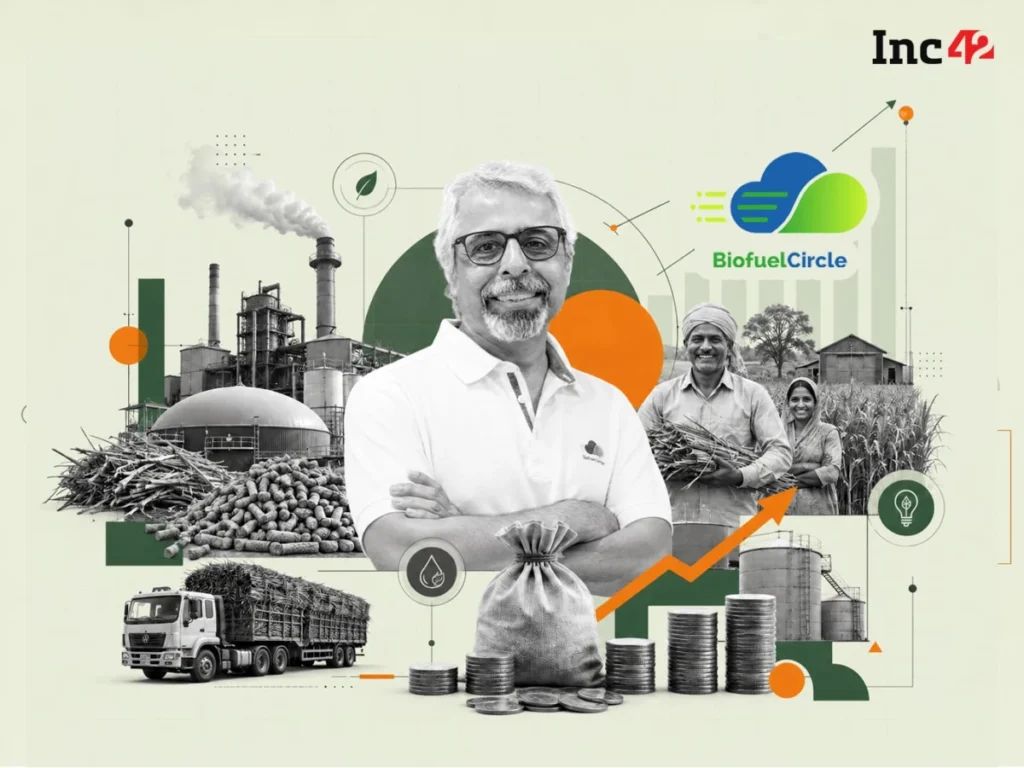
Pune-based biomass aggregator BiofuelCircle is positioning itself as a cornerstone of India’s bioeconomy, securing fresh capital to drive a three-fold revenue surge as it eyes a major Series B expansion.
In a significant move that underscores the growing investor appetite for climate infrastructure, Pune-based BiofuelCircle has successfully raised ₹35 crore ($3.6 million) in a bridge funding round. The round was spearheaded by existing investor Spectrum Impact, with strategic participation from Better Capital, Karma Capital Advisors, and a cohort of angel investors and company promoters.
This capital infusion arrives at a pivotal juncture for the biomass supply chain startup. As India pivots toward sustainable energy to reduce its reliance on fossil fuel imports, BiofuelCircle is transitioning from an infrastructure-heavy setup phase to a high-utilization growth cycle. With the fresh funding earmarked for working capital, the company is preparing to scale its operations to support an ambitious target of reaching ₹500 crore in revenue by the end of the current fiscal year.
The Strategic Roadmap: From Infrastructure to Scale
Bridging the Capital Gap
The ₹35 crore bridge round is more than just a financial stopgap; it is a signal of the company’s maturation. According to co-founder and CEO Suhas Baxi, the funding reflects a 10% valuation uplift over the ₹560 crore post-money valuation achieved during the firm’s Series A round. This brings the startup’s current valuation to approximately ₹615 crore.
Beyond this bridge round, BiofuelCircle is actively planning a larger Series B raise scheduled for early 2027. This future capital will be directed toward doubling the company’s footprint of "biomass banks"—specialized storage and processing hubs that form the backbone of their operations.
A Hybrid Model for a Fragmented Market
Founded in 2020 by Suhas Baxi and Ashwin Savé, BiofuelCircle identified a critical inefficiency in the Indian agricultural sector: the lack of a structured, reliable supply chain for crop residue. Agriculture in India generates massive amounts of waste that often ends up being burned, contributing to environmental degradation.
BiofuelCircle’s solution is a hybrid digital-physical marketplace. It connects farmers, biomass aggregators, biofuel manufacturers, and industrial consumers. By operating 80 biomass banks across 10 states—including major agricultural hubs like Punjab, Haryana, Uttar Pradesh, Gujarat, Maharashtra, and Andhra Pradesh—the company has created an end-to-end ecosystem.
Their operational model includes:
- Farm-Level Aggregation: Partnering with approximately 2,000 farmers to collect agricultural residue.
- Infrastructure Ownership: Managing specialized post-harvest machinery and training local tractor operators to ensure consistent quality.
- Digital Integration: Utilizing a proprietary platform to manage payments and logistics, removing the opacity typically associated with rural agricultural trade.
Chronology and Evolution of the Startup
The journey of BiofuelCircle is intrinsically linked to the broader evolution of India’s bioenergy policy.
- 2020: The startup is incorporated, focusing on formalizing the unorganized biomass sector.
- Post-2020: Rapid deployment of biomass banks across rural clusters to establish a reliable procurement network.
- Series A Phase: The company raised ₹100 crore in a Series A round, which was primarily utilized for capital expenditure (CAPEX) to set up the foundational 80 biomass banks.
- FY26 Performance: BiofuelCircle demonstrated significant market traction, reporting operating revenue of ₹160 crore—a three-fold increase from the ₹52 crore recorded the previous year.
- Current FY27 Outlook: With the infrastructure foundation laid, the company is focused on asset utilization, targeting a revenue jump to ₹500 crore.
Supporting Data and Financial Health
Unit Economics and Profitability
One of the most compelling aspects of the BiofuelCircle model is its capital efficiency. According to CEO Suhas Baxi, each biomass bank requires an initial investment of approximately ₹4 crore. However, these facilities are designed for long-term productivity, capable of generating gross margins of roughly 20%.
The company expects to recover the capital expenditure for each bank in under four years as operations mature. Notably, the oldest biomass banks in the company’s portfolio are already achieving profitability at the operating level, validating the company’s long-term thesis that organized biomass supply chains can be highly lucrative.
Market Reach
The startup’s customer base spans both the public and private sectors:
- Biofuel Sector: Supplying feedstock to approximately 2,000 biofuel companies.
- Industrial Clients: Providing services to over 600 industrial buyers, including global giants such as Unilever, PepsiCo, and Coca-Cola.
- Government/Large-Scale Projects: Directly feeding into compressed biogas (CBG) projects led by industry titans like IOCL, Reliance, and Adani Total Gas.
Official Responses and Strategic Outlook
In a statement regarding the funding, Suhas Baxi emphasized that the company has completed its intensive infrastructure build-out phase. "We have utilized our previous Series A funding to establish our physical presence. The current phase is about extracting higher utilization from those assets," he noted.
Baxi believes that the current global energy landscape has provided a tailwind for the company. "Geopolitical disruptions have highlighted the vulnerability of energy imports. This has accelerated interest from both investors and industrial players in domestic bioenergy infrastructure."
The Competitive Landscape
BiofuelCircle operates in a space that is becoming increasingly crowded as the government pushes the SATAT (Sustainable Alternative Towards Affordable Transportation) initiative. The startup faces competition from:
- Large-scale players: Such as GPS Renewables, which has recently secured significant funding to scale its own CBG project pipeline.
- Regional aggregators: A multitude of smaller, localized players attempting to corner specific agricultural belts.
However, BiofuelCircle differentiates itself through its technology-led approach to the supply chain, moving beyond simple procurement to offer an integrated service that manages the entire lifecycle of agricultural waste.
Broader Implications for India’s Bioeconomy
Policy Alignment
The growth of BiofuelCircle is a direct beneficiary of the National Bioenergy Programme and the broader shift toward sustainable aviation fuel (SAF) and compressed biogas. By converting crop residue—a major source of air pollution when burned—into a valuable commodity, the startup is helping India meet its climate commitments under the Paris Agreement.
Supply Chain Resilience
The transition to a green economy in India faces a "feedstock bottleneck." While there is a massive demand for CBG, the supply chain for agricultural residue remains fragmented. Companies like BiofuelCircle are essential to bridging this gap. By professionalizing the collection and storage process, they enable large industrial players to commit to green energy, knowing that the underlying supply chain is robust and reliable.
The Path Forward: 2027 and Beyond
As the company looks toward its Series B round in early 2027, the objective is clear: scale. The plan is to double the number of biomass banks across India, creating a nationwide grid of green feedstock.
For the Indian startup ecosystem, BiofuelCircle serves as a case study in "Climate-Tech 2.0." Unlike early-stage software plays, this firm is tackling tangible, hard-tech problems that require significant capital and operational on-the-ground management. As they push toward their ₹500 crore revenue target, the success or failure of their model will likely dictate the pace at which India’s agricultural sector can be fully integrated into the national energy transition.
By transforming agricultural waste into a high-value industrial input, BiofuelCircle is not just building a company; it is building the infrastructure of a cleaner, more energy-independent India. With strong backing from investors and a proven model of operational efficiency, the company is well-positioned to remain at the forefront of the nation’s burgeoning bioeconomy.