AWS Unveils Next-Generation Bedrock Console: A New Era for Generative AI Development
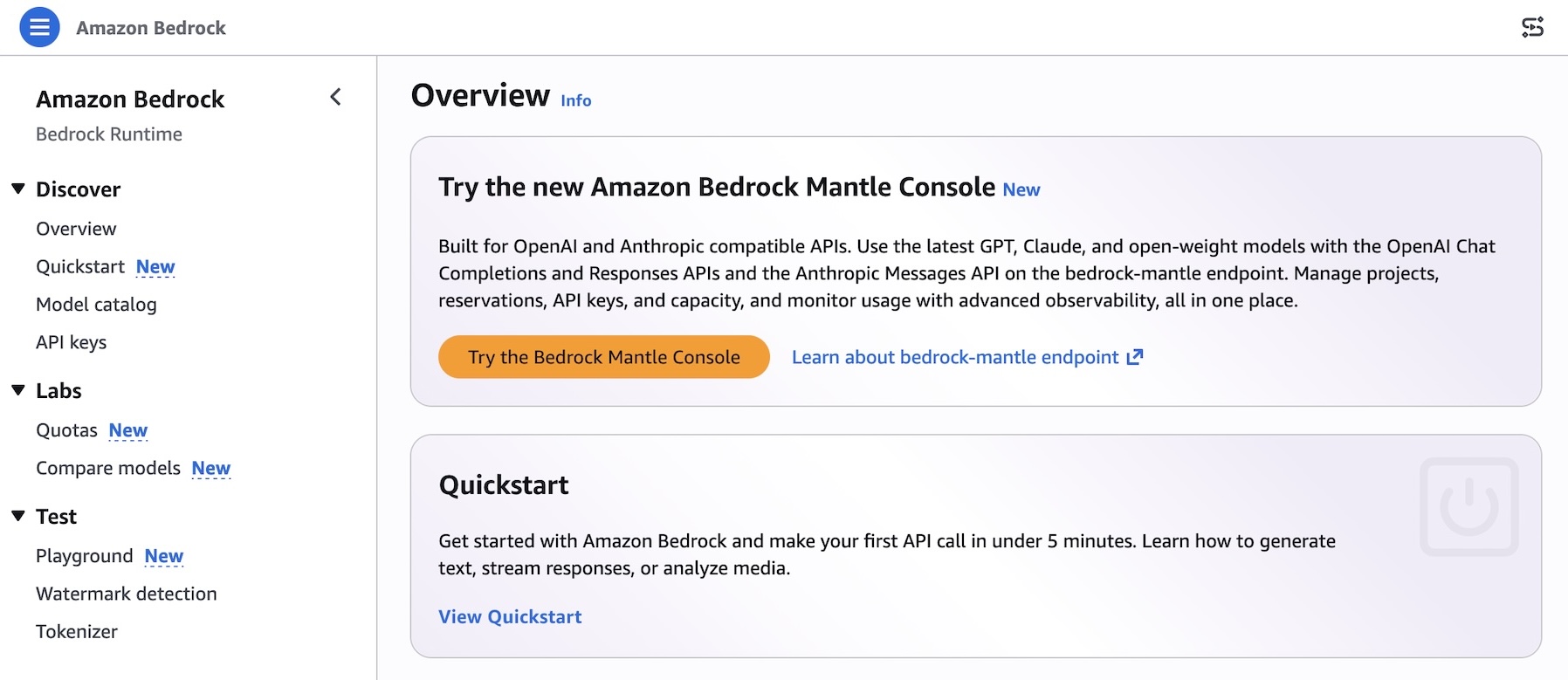
In a significant move to streamline the generative AI development lifecycle, Amazon Web Services (AWS) has announced the launch of a refreshed console experience for Amazon Bedrock. This update is centered around the high-performance bedrock-mantle inference engine, designed to provide developers with a more intuitive, efficient, and robust environment to experiment with, iterate upon, and scale cutting-edge foundation models.
The new interface represents a fundamental shift in how AWS users interact with large language models (LLMs). By prioritizing developer velocity, the new console simplifies the transition from the initial evaluation phase to full-scale production deployment.
The Core Transformation: Efficiency Meets Flexibility
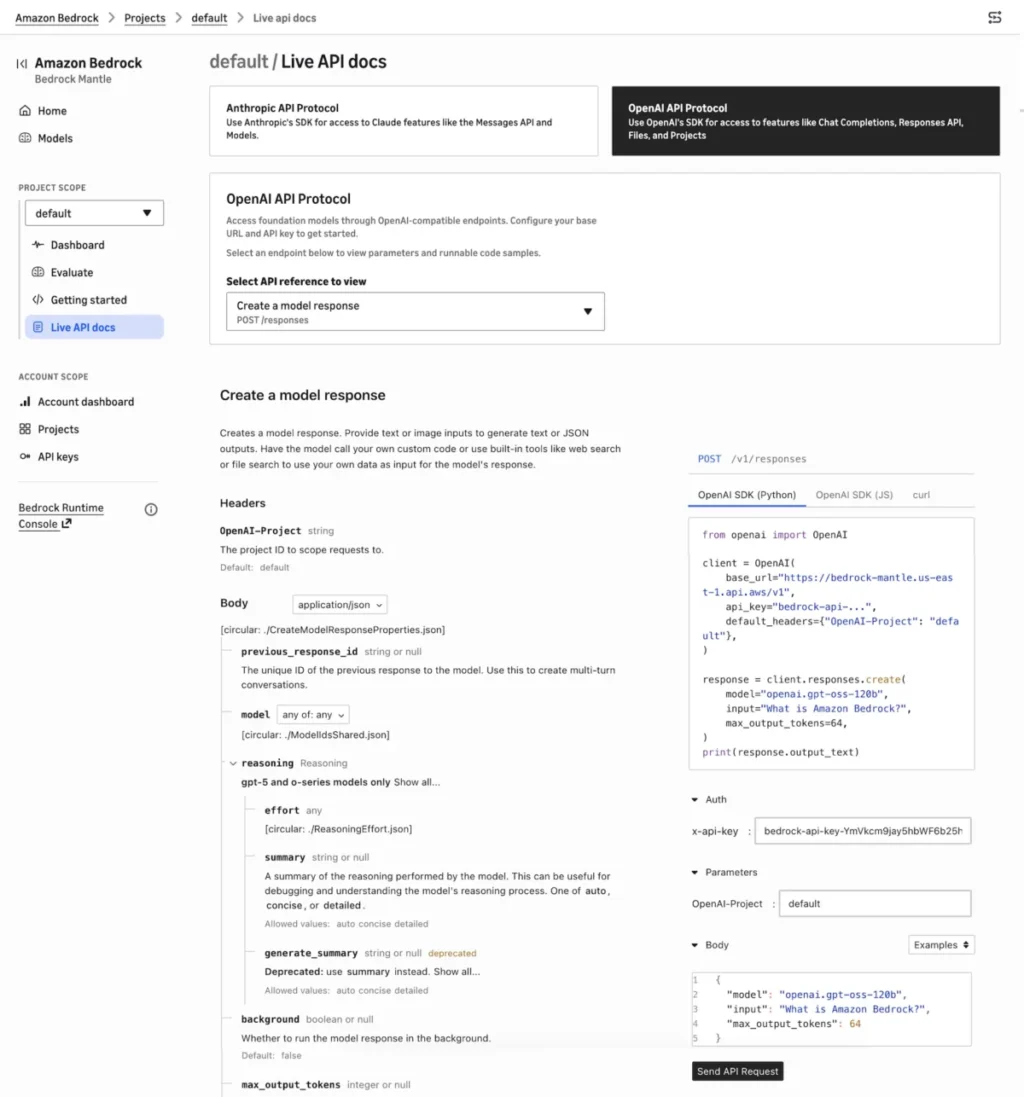
For developers working with GPT, Claude, or various open-weight models, the complexity of managing different APIs and inference environments can be a significant bottleneck. The new Amazon Bedrock console addresses this by providing a unified workflow that natively supports the OpenAI Responses API, the OpenAI Chat Completions API, and the Anthropic Messages API.
This architectural shift allows developers to maintain a consistent coding experience while leveraging the underlying power of AWS’s next-generation infrastructure. By optimizing the bedrock-mantle endpoint, AWS is effectively reducing the friction associated with integrating high-end AI models into enterprise applications.
Chronology of the Update: A Targeted Evolution
The release of the bedrock-mantle console follows a period of rapid innovation within the generative AI space. Over the past 24 months, AWS has systematically expanded its model catalog, moving from basic model hosting to a comprehensive platform ecosystem.
- Early Development: AWS initially launched Amazon Bedrock to offer a "managed service" approach to foundation models. While powerful, the original console was designed for broad service management, which at times proved cumbersome for developers focused purely on rapid model iteration.
- The Shift to Specialized Engines: Recognizing the need for specialized inference performance, AWS began developing the
bedrock-mantleengine, focusing on low-latency, high-throughput delivery tailored to the specific needs of modern transformer-based architectures. - Today’s Announcement: The launch of the dedicated Bedrock Mantle console marks the culmination of this focus, separating high-velocity inference workflows from the broader, more complex management features of the original Bedrock interface, such as Agents, Knowledge Bases, and Guardrails.
Supporting Data and Technical Infrastructure
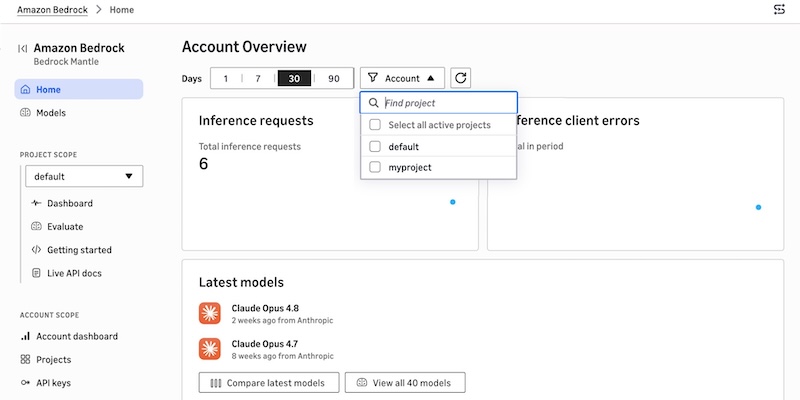
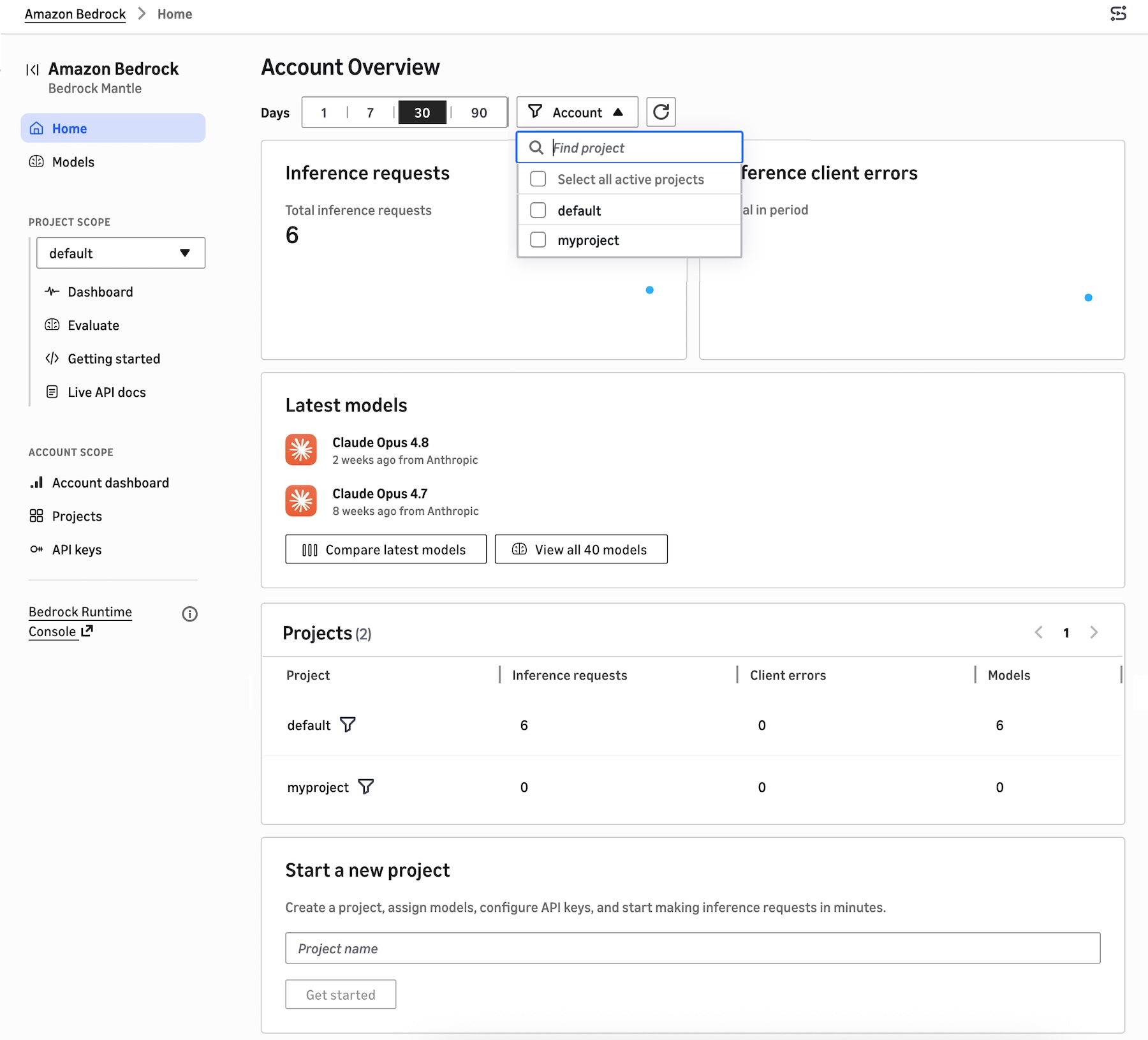
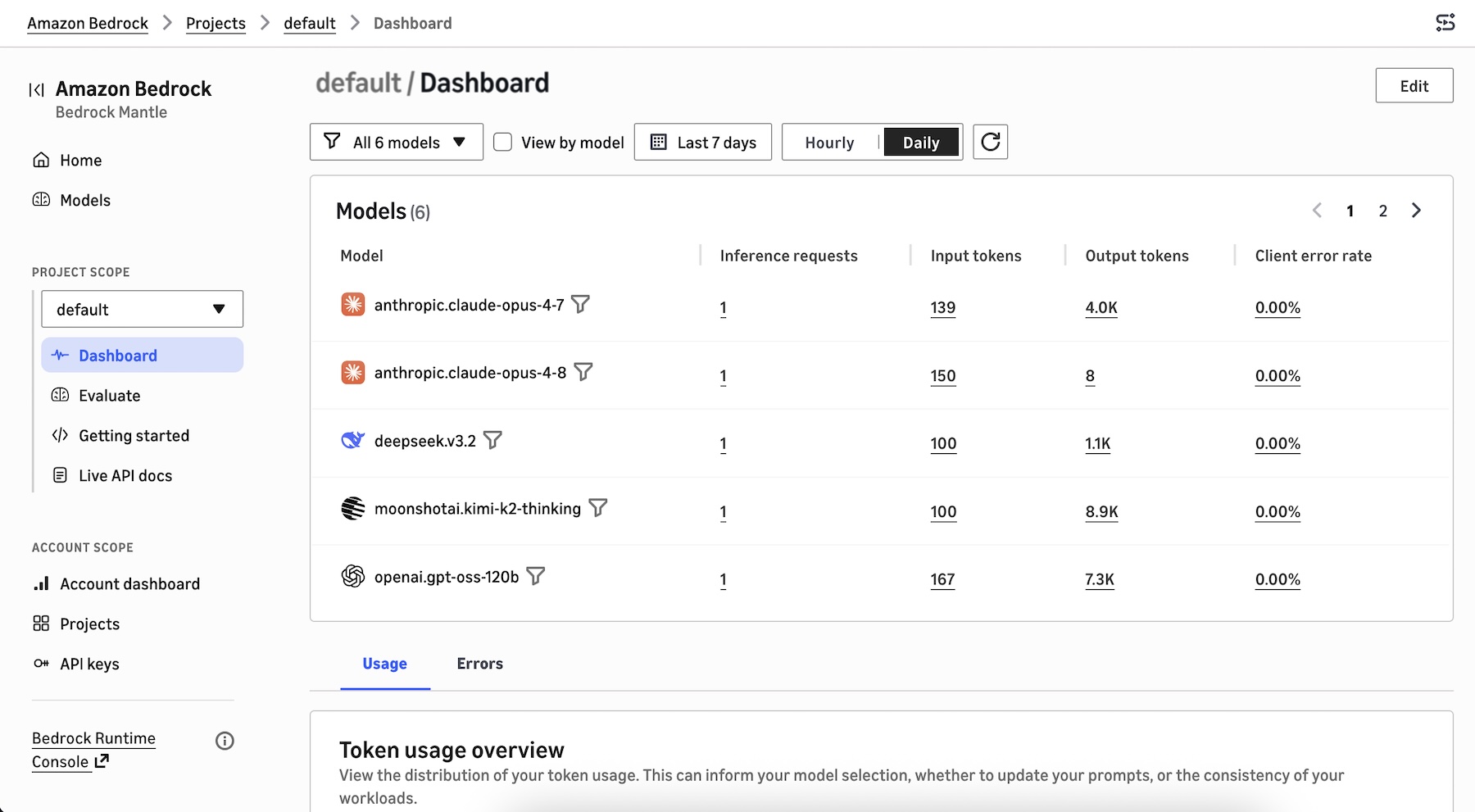
The new console is built around a project-based dashboard that provides granular visibility into model performance. This is not merely a cosmetic update; it is a functional shift toward observability.

Real-time Analytics
Developers can now track:
- Inference Requests: Visualized over custom date ranges to identify usage spikes.
- Error Rates: Proactive monitoring to ensure system stability.
- Token Consumption: Detailed breakdowns of total token usage, tokens per minute, and tokens per inference request.
This data-driven approach is critical for cost optimization. By analyzing tokens per inference request, teams can refine their prompt engineering strategies to achieve better results at a lower cost, directly impacting the bottom line of AI-integrated products.
Side-by-Side Model Evaluation
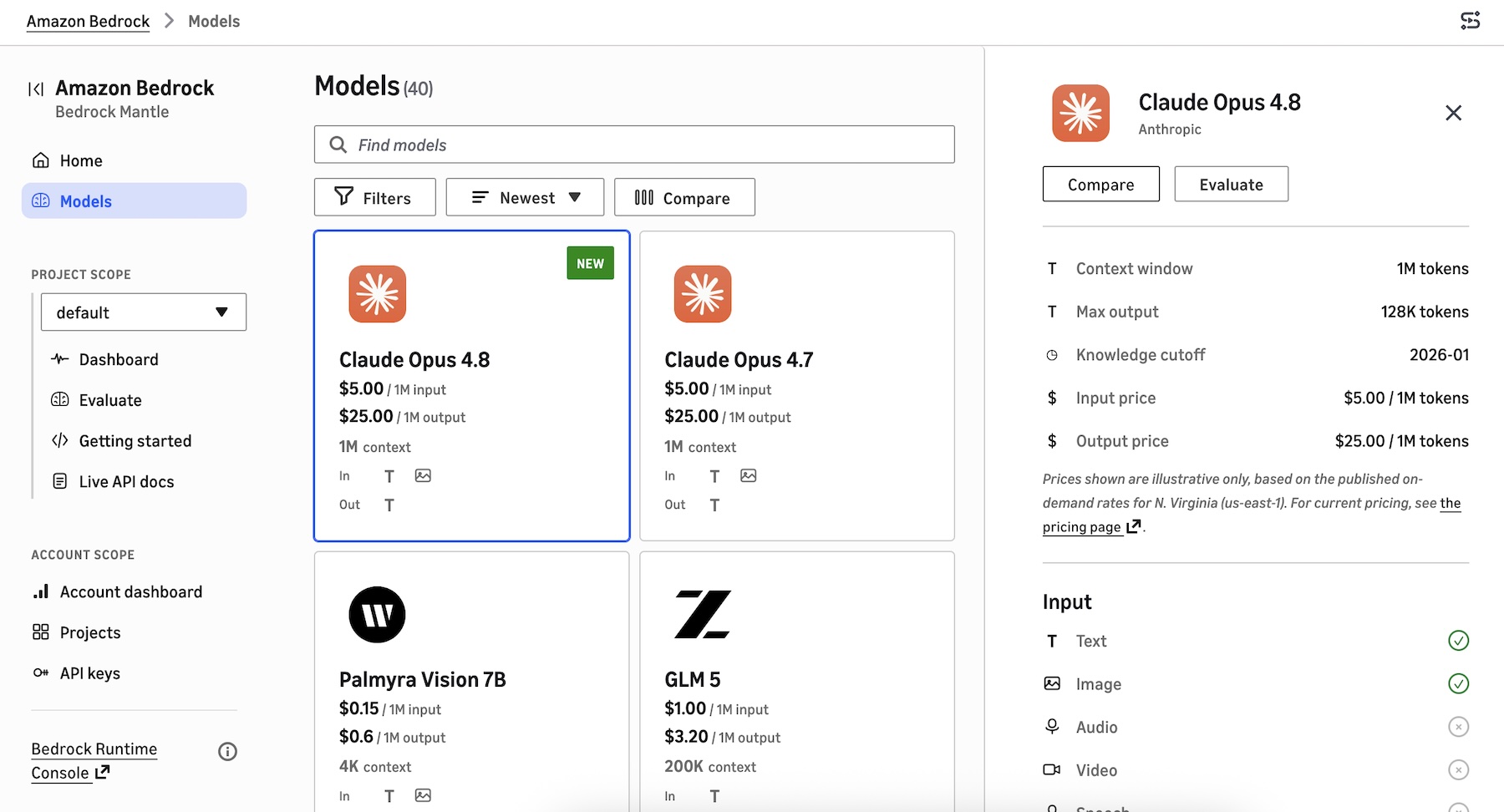
One of the most requested features by enterprise users is the ability to compare models objectively. The new console allows users to select up to three models simultaneously. By submitting a single prompt to all three, developers can compare responses in a side-by-side view. This functionality is indispensable for teams selecting the right model for specific tasks—such as code generation, creative writing, or data extraction—where performance nuances can significantly affect output quality.
Developer Experience: Streamlining the Workflow
The new console is designed to minimize the "time-to-first-request." Through the "Getting Started" module, developers can choose between migrating existing codebases or spinning up new applications using either the Anthropic or OpenAI SDKs.
Direct Integration with Coding Assistants
Perhaps the most notable addition is the "Clients" section. AWS now provides native support for connecting popular AI coding agents—including Claude Code, Cline, Codex, Cursor, and OpenCode—directly to the bedrock-mantle engine. By providing pre-configured environment variables and installation instructions, AWS is effectively lowering the barrier to entry for developers who rely on these tools to accelerate their daily coding tasks.
Live API Documentation
The console’s "Live API" feature offers an interactive documentation experience. As a developer adjusts model IDs or settings within the project, the API code snippets—pre-filled with the correct Region, endpoint URL, and security headers—update in real-time. This eliminates the common "copy-paste-debug" cycle, ensuring that the code provided by the console is ready for immediate execution in a production or staging environment.
Implications for the AI Ecosystem
The implications of this update are significant for both startups and large-scale enterprises.
1. Accelerating Time-to-Market
By centralizing the evaluation and deployment process, companies can iterate on AI features faster. The ability to switch between model providers—thanks to the standardized OpenAI/Anthropic API support—means that teams are no longer locked into a single provider’s infrastructure, reducing vendor risk.
2. Enhanced Governance and Security
While the bedrock-mantle console focuses on performance, it does not sacrifice the enterprise-grade security associated with AWS. By leveraging AWS IAM (Identity and Access Management) credentials and providing robust API key management, developers can ensure that their AI applications remain compliant with internal security standards from day one.
3. The Future of Hybrid Management
AWS has been careful to note that the existing Bedrock console remains the home for "fully-managed features" like Fine-tuning, Guardrails, and Knowledge Bases. This suggests a future where AWS users will utilize the bedrock-mantle console for the "inner loop" of development (coding and testing) and the standard Bedrock console for the "outer loop" of production governance and RAG (Retrieval-Augmented Generation) infrastructure.
Regional Availability and Next Steps
As of the current release, the bedrock-mantle console experience is available across a wide array of AWS Regions, including:
- North America: US East (N. Virginia, Ohio), US West (Oregon).
- Asia Pacific: Jakarta, Mumbai, Sydney, Tokyo.
- Europe: Frankfurt, Ireland, London, Milan, Stockholm.
- South America: São Paulo.
AWS encourages developers to explore the new console immediately. For those looking to provide feedback, the company has directed users to the AWS re:Post community or their dedicated account teams.
Conclusion: A Proactive Step for AWS
The introduction of the new Bedrock Mantle console is a clear signal that AWS is listening to the developer community. As the generative AI market moves past the "hype" phase and into a period of serious industrial application, the need for robust, developer-friendly tooling has never been greater.
By decoupling the high-velocity inference engine from the broader suite of AWS AI services, Amazon has created a leaner, more agile environment. For developers tasked with building the next generation of AI-powered applications, this update represents a significant leap forward in productivity, allowing them to focus less on infrastructure plumbing and more on the creative potential of foundation models. As competition in the cloud AI space continues to intensify, this focus on the developer experience may well prove to be AWS’s strongest asset in maintaining its leadership position.