The PayPal Honey Fallout: A Watershed Moment for Affiliate Marketing Integrity

The affiliate marketing landscape was shaken to its core this January as one of the industry’s most recognizable names, PayPal Honey, faced unprecedented disciplinary action. In a move that signals a tightening of standards across the digital advertising ecosystem, the browser extension giant was unceremoniously removed from two of the world’s most influential affiliate networks: Rakuten Advertising and impact.com.
This development, occurring in the shadow of major industry events, has sparked a firestorm of debate regarding conversion attribution, the role of browser extensions, and the responsibility of networks to police their own marketplaces. For merchants and affiliate managers, the "Honey incident" serves as a definitive wake-up call regarding the health and governance of their partnership programs.
The Chronology of the Crackdown
The disruption began in mid-January, coinciding with the industry’s largest annual gathering, Affiliate Summit West. The timing was not lost on observers, as the news dominated both the conference floor and social media discourse.
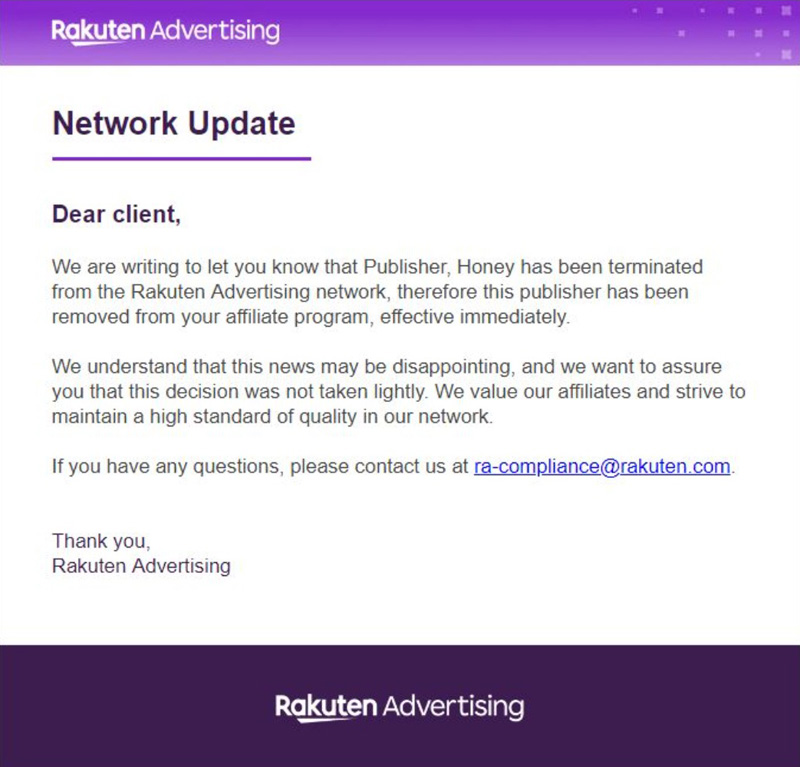
- Monday, January 12: Rakuten Advertising fired the first shot, officially announcing the "termination" of Honey from its network. In a formal statement, Rakuten cited the necessity of maintaining a "high standard of quality" within its ecosystem—a clear indicator that the network had concluded that Honey’s operational practices were no longer compatible with its network integrity standards.
- Friday, January 16: The situation escalated when impact.com confirmed that it had suspended Honey from its "Discovery Marketplace." Unlike Rakuten’s outright termination, impact.com characterized the move as a suspension, noting that the publisher was found to be "out of compliance" with its established platform policies.
The common thread linking these actions was the issue of "attribution manipulation." Both networks signaled that they would no longer tolerate practices that circumvented fair play, marking a significant pivot toward more rigorous enforcement of anti-parasitic behaviors.
The Core Conflict: Attribution Hijacking and "Stand-Down" Rules
At the heart of this controversy is the technical practice known as "stand-down" compliance. In the affiliate world, most programs operate on a "last-touch-wins" attribution model. This means the affiliate whose link or cookie was last interacted with by the consumer receives the full commission for the sale.
Browser extensions like Honey, which trigger automatically when a user visits a merchant’s site, are often accused of "link hijacking." When a user has already arrived at a store via an organic search or another affiliate’s recommendation, an active browser extension may inject its own cookie at the final checkout stage. This overrides the previous affiliate’s contribution, effectively stealing the commission.
To combat this, many programs implement "stand-down" rules, requiring browser extensions to remain inactive if another affiliate has already established a claim on the user’s journey. The investigations led by industry experts and the subsequent actions taken by the networks suggest that Honey was found in violation of these rules, intentionally or otherwise, and failed to adequately disclose or manage these overrides.

Supporting Data and Industry Scrutiny
The scrutiny surrounding Honey did not emerge in a vacuum. It was the result of extensive investigative efforts, including notable work by Ben Edelman and technical analyses like those presented by MegaLag. These investigations highlighted a recurring issue in the affiliate industry: the lack of transparency in how browser-based software interacts with merchant attribution systems.
Recent research underscores the depth of this problem. An independent audit conducted by the UK-based Affiliate & Partner Marketing Association (APMA) analyzed thirty brands across ten different networks. The study revealed that many merchants have been operating in the dark, unaware of how various affiliate technologies—ranging from "soft clicks" to automated extensions—compete for credit. The APMA audit, which has become a key reference point for program managers, provides a roadmap for auditing attribution and ensuring that marketing spend is being allocated to true value-creators rather than parasitic software.
Official Responses and Network Positioning
The tone from the networks has been one of decisive, if overdue, corrective action. Impact.com’s leadership, in particular, emphasized that these measures were necessary to restore trust in the "partnership economy." By explicitly calling out "attribution manipulation," the company underscored its commitment to protecting the interests of the thousands of legitimate creators, influencers, and publishers who rely on fair attribution to maintain their businesses.
For the merchants involved, these network actions provide necessary cover to enforce their own Terms and Conditions. However, industry veterans caution that waiting for a network to act is a risky strategy. By the time a network takes action, the damage to a merchant’s brand and the erosion of trust among their top-tier, rule-abiding partners may already be irreversible.
Implications for Program Management: Five Strategic Lessons
The PayPal Honey fallout provides a masterclass in modern affiliate program management. For those looking to fortify their own operations, the following five lessons are paramount:
1. The "Bad Apple" Effect
A single rogue affiliate can do more than just steal commissions; they can poison the entire well. When high-value content creators see that a merchant’s program is dominated by "last-click" hijackers, they often choose not to participate. Protecting the integrity of the affiliate roster is a prerequisite for attracting top-tier talent.
2. Autonomy in Policing
Reliance on network compliance teams is a strategic error. While networks provide the infrastructure, they often have competing incentives. Merchants must take ownership of their own Terms and Conditions and actively monitor for compliance. If an affiliate violates the rules, the merchant has the right—and the responsibility—to terminate that relationship, regardless of whether the network has acted yet.
3. Understanding Technical Intricacies
"Stand-down" rules and "soft clicks" are not mere buzzwords; they are the mechanics of your bottom line. Managers must invest the time to understand exactly how their partners’ technology functions. Utilizing resources like the Performance Marketing Association’s DSP policy comparisons is essential for making informed decisions about which partners to approve.
4. Avoid Broad Generalizations
While the Honey case highlights the dangers of certain browser extensions, it would be a mistake to ban all extensions or all loyalty sites. Not all browser extensions are created equal; some offer genuine value and adhere to strict ethical standards. Evaluate partners based on their individual behavior and performance data rather than painting entire categories with a broad, exclusionary brush.
5. Aggressive Diversification
If a program suffers a significant revenue drop due to the removal of one large affiliate, that program is inherently unstable. An over-reliance on a single channel or type of affiliate is a structural weakness. True resilience comes from a diversified portfolio that includes content producers, influencers, podcasters, card-linked offer providers, and niche community leaders. By cultivating a wide array of partnership types, a merchant ensures that their program remains robust and immune to the volatility of any single partner.
Conclusion: A New Standard for 2026
The removal of PayPal Honey from major networks is not just a news story; it is a signal of a maturing industry. As we move further into 2026, the era of "set-it-and-forget-it" affiliate management is effectively over. Brands that prioritize transparency, demand technical accountability, and proactively manage their affiliate ecosystems will be the ones to thrive.
The "partnership economy" is built on the foundation of trust. When that trust is manipulated, the entire system suffers. By treating the Honey incident as a catalyst for deeper auditing and more rigorous partner selection, merchants can build programs that are not only more profitable but also more sustainable, ensuring that rewards are directed to those who truly drive incremental value for the brand.