India’s Macroeconomic Resilience: CEA Nageswaran Signals the End of External Vulnerability
By Economic Correspondent
Updated: June 13, 2026, 01:47 PM IST
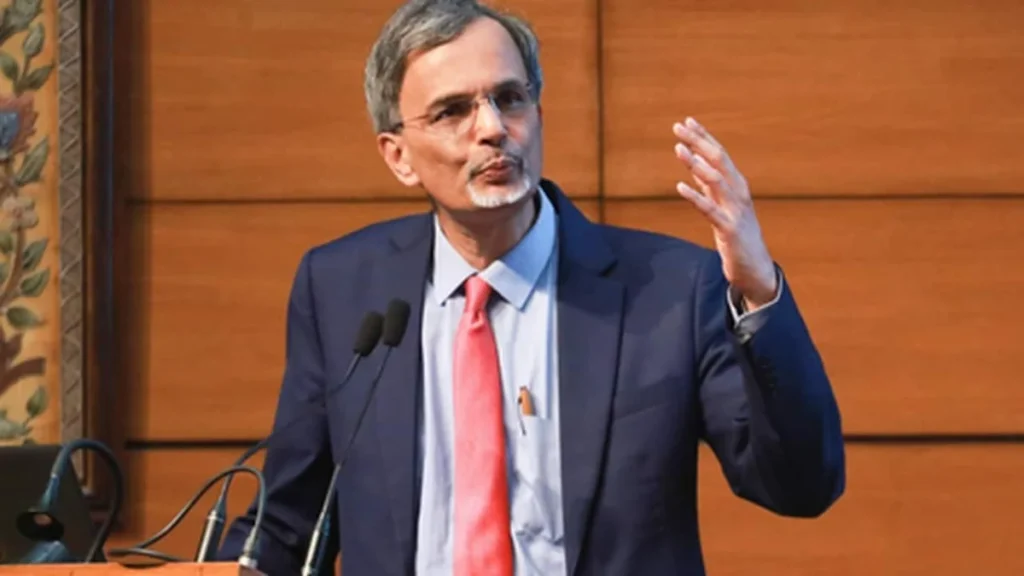
In a significant assessment of India’s economic trajectory, Chief Economic Advisor (CEA) V. Anantha Nageswaran has declared that the most turbulent chapter of India’s external sector volatility is now firmly behind the nation. Speaking at a press briefing on June 13, 2026, the CEA attributed the country’s improved outlook to a disciplined approach to macroeconomic management and a series of agile policy interventions that shielded the economy from the brunt of recent global disruptions.
As global markets continue to grapple with shifting geopolitical alliances, supply chain bottlenecks, and inflationary pressures, Nageswaran’s remarks serve as a definitive vote of confidence in India’s structural stability.
Main Facts: A Shift in the External Paradigm
The core of the CEA’s message centers on the transition from a posture of "defensive buffering" to one of "strategic resilience." According to the briefing, India has successfully navigated a period of intense global volatility—characterized by fluctuating oil prices, aggressive interest rate hikes by the US Federal Reserve, and regional conflicts—without succumbing to the balance-of-payments pressures that plagued emerging markets during similar cycles in the past.
The key pillars of this newfound stability, as outlined by the CEA, include:
- Foreign Exchange Buffers: A robust accumulation of foreign exchange reserves that provide a safety net against speculative attacks on the rupee.
- Diversified Export Basket: A strategic pivot toward high-value services and specialized manufacturing, reducing dependence on traditional low-margin exports.
- Fiscal Prudence: A commitment to the government’s fiscal consolidation roadmap, which has kept the sovereign risk profile attractive to long-term institutional investors.
Chronology: The Journey to Stability (2022–2026)
To understand the weight of the CEA’s statement, it is essential to look back at the arduous journey the Indian economy has traversed over the last four years.
2022: The Year of Imported Inflation
Following the escalation of geopolitical tensions in Eastern Europe, India faced a dual challenge: soaring energy costs and a rapidly weakening rupee. The Reserve Bank of India (RBI) was forced into a cycle of aggressive liquidity tightening to prevent imported inflation from spiraling out of control.
2023: Structural Adjustments
Throughout 2023, the government focused on long-term supply-side reforms. The implementation of the Production Linked Incentive (PLI) schemes began to bear fruit, signaling a shift toward domestic manufacturing self-reliance. This period was marked by high interest rates, which, while painful for borrowers, successfully anchored inflation expectations.
2024: The Global Headwind Phase
As the global economy slowed, India’s external trade faced significant contraction. However, the service sector’s resilience—particularly in IT, global capability centers (GCCs), and digital payments—offset the slowdown in merchandise exports.
2025: Strengthening the Foundations
The focus turned to current account deficit (CAD) management. By curbing non-essential imports and incentivizing foreign direct investment (FDI), India managed to keep its external financing gap at manageable levels, earning favorable ratings from global credit agencies.
2026: The "Turning Point"
The current year marks the consolidation phase. With global interest rates beginning to stabilize and supply chains re-normalizing, the Indian economy has emerged as a rare "bright spot" in a world of modest growth projections.
Supporting Data: Why the CEA is Optimistic
The optimism expressed by Nageswaran is not merely rhetoric; it is supported by a confluence of macroeconomic indicators that suggest a strengthening external position.
1. Current Account Deficit (CAD) Stability
Recent data indicates that the CAD has narrowed to a sustainable range. As India’s energy import bill stabilizes and the trade deficit in non-oil commodities shrinks, the external sector is no longer a source of persistent pressure on the domestic currency.
2. Foreign Direct Investment (FDI) Inflows
Despite global skepticism regarding emerging markets, India continues to attract long-term capital. The "China Plus One" strategy, coupled with domestic regulatory reforms, has made India a preferred destination for multinational corporations looking to diversify their manufacturing footprints.
3. Forex Reserves and Import Cover
India’s foreign exchange reserves have hit record highs, providing an import cover of over 12 months. This cushion is critical for maintaining confidence among foreign investors and ensuring that the country can meet its external debt obligations without needing external assistance.
Official Responses: Navigating the Policy Landscape
The government’s response to global disruptions has been characterized by a "calibrated flexibility." CEA Nageswaran noted that the Ministry of Finance and the RBI have maintained a high degree of coordination.
"Our policy interventions were never reactive; they were anticipatory," Nageswaran stated. "By managing liquidity effectively and ensuring that our fiscal deficit remains on the targeted glide path, we have created an environment where businesses can invest with certainty, despite the noise in the global markets."
The CEA also acknowledged the role of the private sector, noting that Indian corporations have deleveraged significantly over the last three years. This private sector health, combined with a clean banking balance sheet, has created a "virtuous cycle of investment" that continues to propel GDP growth.
Implications: What This Means for the Future
The declaration that the "worst is behind us" carries profound implications for stakeholders ranging from retail investors to multinational CEOs.
For Foreign Investors
The improved outlook suggests that the risk-premium associated with Indian assets is likely to decrease. As external risks recede, India may witness a sustained inflow of capital into its equity and bond markets, potentially leading to a re-rating of the Indian stock market.
For Monetary Policy
With the external sector stabilized, the RBI gains more room for maneuver. While the central bank remains vigilant against domestic inflationary spikes, it is no longer under the same degree of pressure to raise rates to defend the rupee against external shocks. This could lead to a more accommodative interest rate environment in the coming quarters.
For the Common Citizen
For the general public, the stability of the external sector translates into more predictable pricing for essential commodities. By reducing the volatility of the rupee, the government is effectively protecting the purchasing power of the middle class against imported inflation.
Looking Ahead: Challenges and Opportunities
While the CEA is optimistic, the report concludes with a note of caution. The global economic landscape remains fraught with potential "black swan" events. Future risks include the potential for sudden escalations in regional conflicts, shifts in global climate policy that could disrupt trade, and the lingering effects of technological disruption on labor markets.
However, the consensus among economists is that India is currently better equipped to handle these risks than at any point in the previous decade. By prioritizing domestic structural integrity and maintaining a buffer against global shocks, India has moved from a position of vulnerability to a position of strength.
As we move through the remainder of 2026, the focus will likely shift from "crisis management" to "long-term optimization." The government’s challenge will be to sustain this momentum by continuing to push for second-generation reforms, particularly in land and labor, which are essential for unlocking the next phase of India’s economic expansion.
In summary, the statement from the CEA is a clear signal to the world: India has weathered the storm, and it is now focused on the horizon, ready to leverage its structural gains to solidify its role as a global economic leader.