Accelerating the Enterprise AI Revolution: AWS Launches Amazon Bedrock Managed Knowledge Base
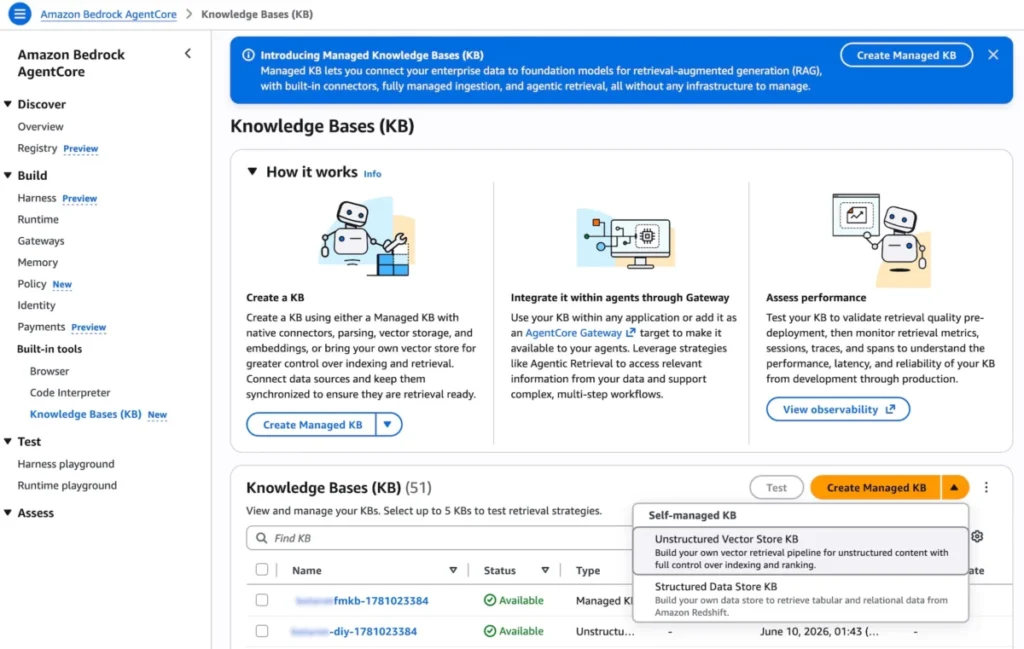
In a significant leap forward for generative AI accessibility, Amazon Web Services (AWS) has unveiled the Amazon Bedrock Managed Knowledge Base. This new suite of capabilities is designed to dismantle the barriers that have historically prevented enterprises from deploying sophisticated, data-driven AI agents. By abstracting the complex infrastructure required for Retrieval-Augmented Generation (RAG), AWS is enabling developers to transition from the experimentation phase to production-grade deployment in mere minutes.
The State of Generative AI: From Prototype to Production
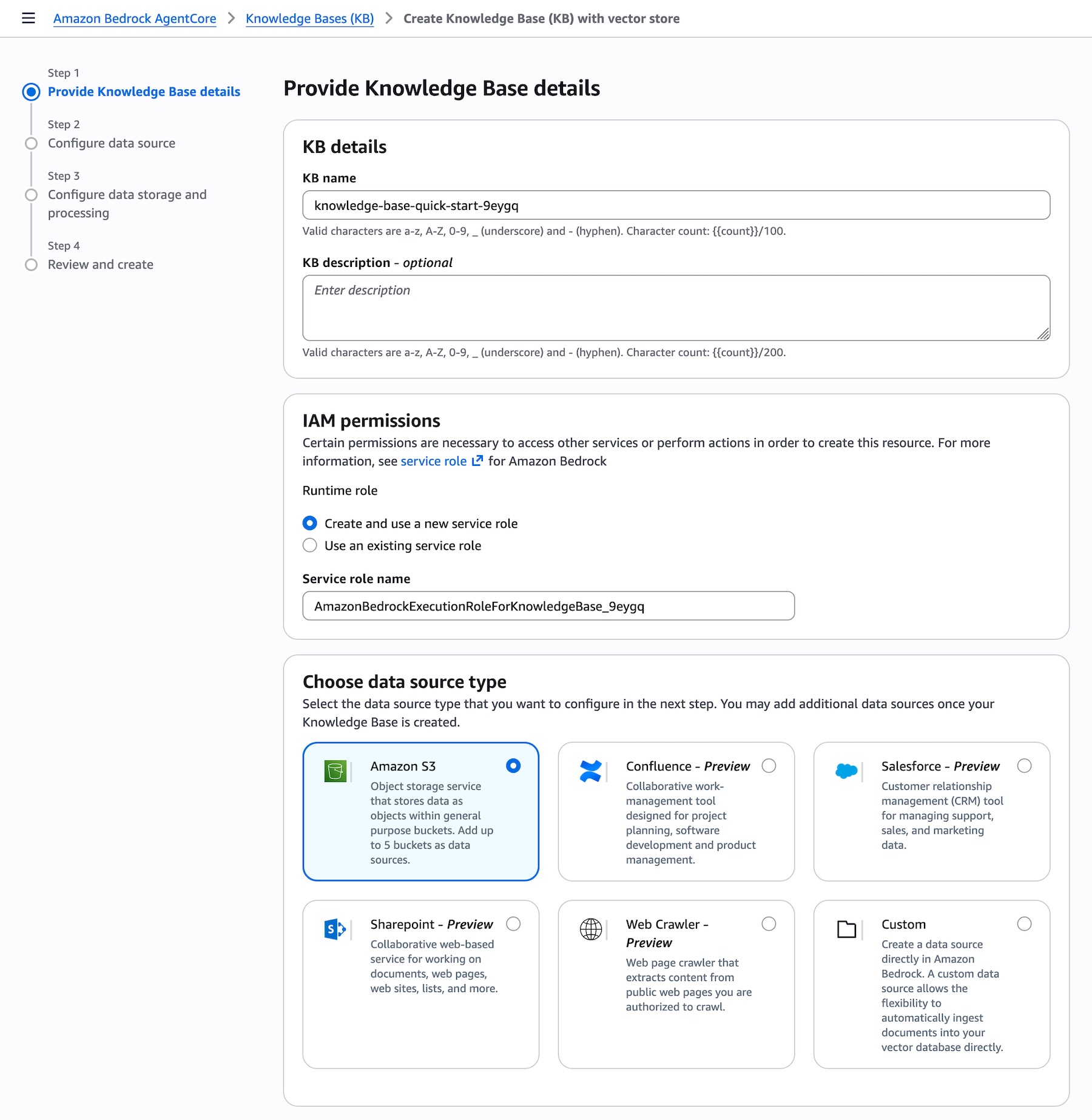
For the past two years, the promise of generative AI has been clear: intelligent agents capable of interacting with proprietary enterprise data. However, the reality for developers has been fraught with "undifferentiated heavy lifting." Building a functional AI agent required the manual assembly of a RAG pipeline—a multi-layered architecture involving data connectors, vector stores, embedding models, re-ranking algorithms, and foundational model orchestration.
Each of these components demands maintenance, security oversight, and constant tuning. When developers spend 80% of their time managing infrastructure, they spend only 20% of their time refining the business logic that actually provides value to the organization. Amazon Bedrock Managed Knowledge Base seeks to invert this ratio.
The Core Problem: Why RAG Implementation Remains Complex
Developers currently face three persistent hurdles:
- Data Ingestion and Parsing: Enterprise data lives in a fragmented ecosystem of S3 buckets, SharePoint sites, Confluence pages, and private drives. Standardizing this data for machine learning models is notoriously difficult.
- Retrieval Bottlenecks: Simple semantic search often fails to capture the nuance of complex queries, leading to "hallucinations" or incomplete answers.
- Orchestration Overhead: Integrating disparate models for embedding and re-ranking creates a brittle system that is difficult to scale and monitor.
Chronology: The Evolution of Bedrock
The introduction of Managed Knowledge Base represents the latest milestone in AWS’s aggressive roadmap to dominate the generative AI infrastructure layer:
- Initial Launch (2023): Amazon Bedrock debuts, offering a serverless API to access industry-leading foundation models (FMs) from Amazon, Anthropic, AI21 Labs, Cohere, Meta, and Mistral.
- Expansion Phase (Early 2024): AWS introduces Knowledge Bases for Bedrock, allowing developers to connect FMs to their own data sources. However, this still required significant configuration of vector databases and retrieval parameters.
- The "Agentic" Shift (Mid-2024): AWS launches Bedrock AgentCore, focusing on multi-step reasoning.
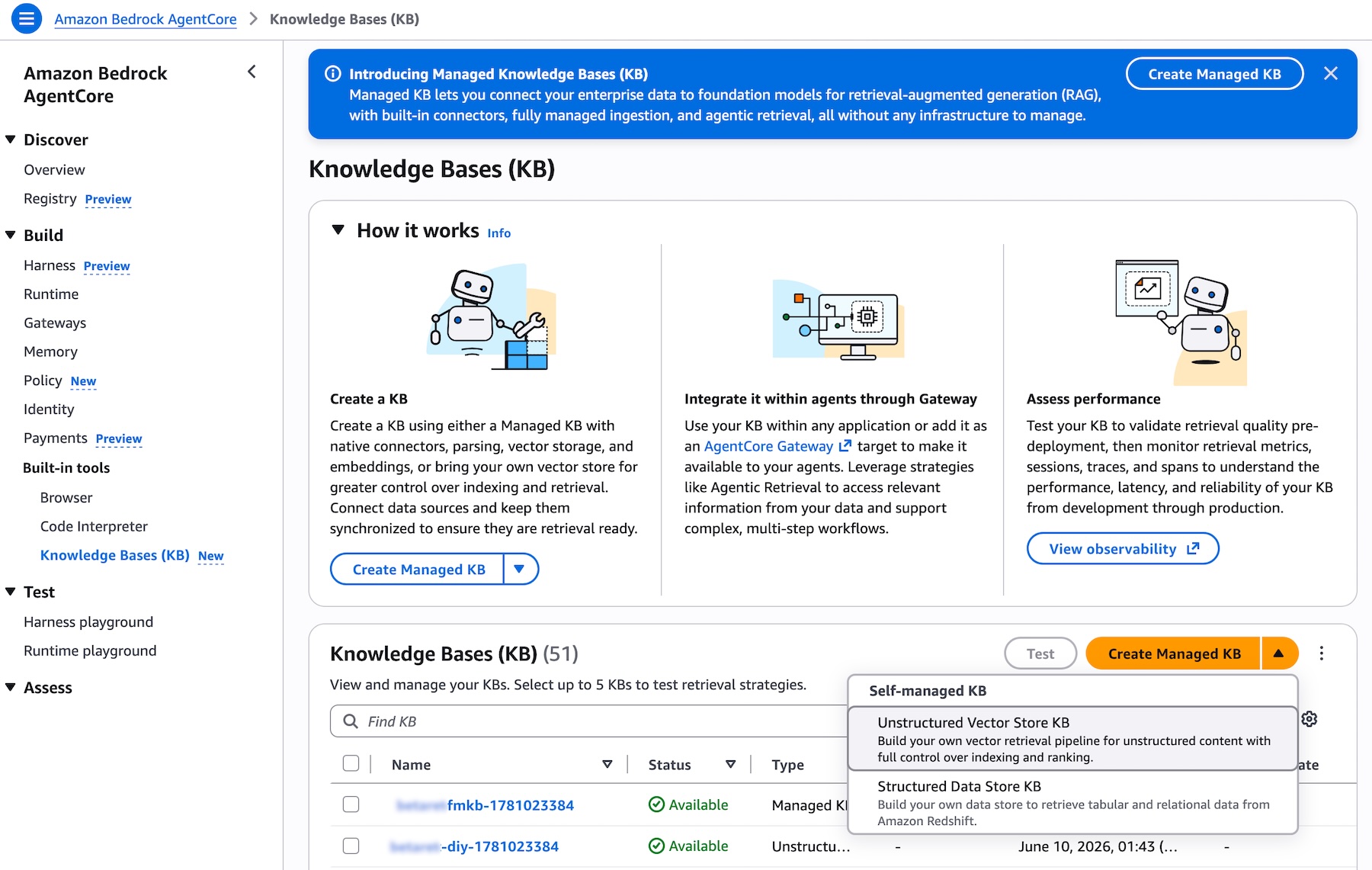
- The Present (June 2026): The launch of the Managed Knowledge Base, which fully automates the RAG lifecycle, including intelligent parsing and agentic retrieval, effectively turning a manual engineering project into a managed service.
Supporting Data and Technical Innovations
The power of the new Managed Knowledge Base lies in its "primitive" approach—treating the entire RAG pipeline as a single, scalable unit. This is achieved through three core technical innovations.

1. Smart Parsing: The End of Manual Data Cleaning
The "Smart Parsing" feature utilizes advanced document understanding techniques to ingest diverse file formats. Whether dealing with complex tables in a PDF, technical diagrams, or unstructured text, the system automatically selects the optimal strategy. By automating the extraction, chunking, and metadata tagging, AWS estimates that teams can save weeks of trial-and-error that typically define the data-preparation phase.
2. The Agentic Retriever: Mastering Multi-Step Reasoning
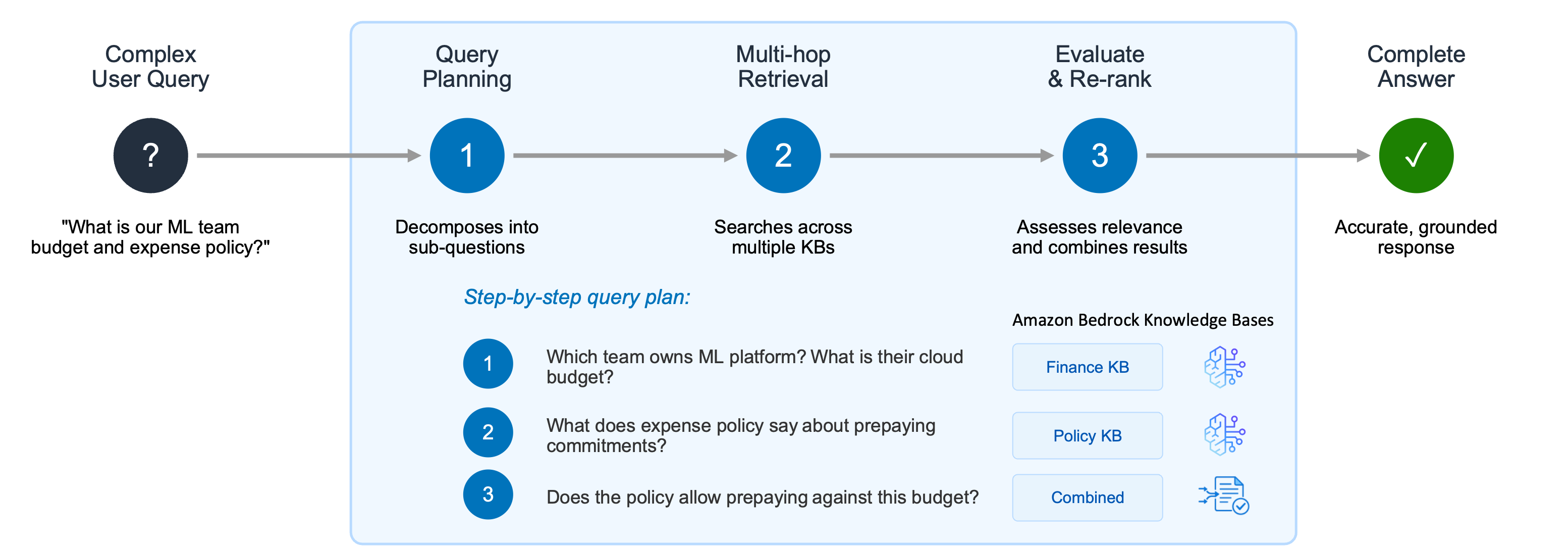
Perhaps the most significant advancement is the "Agentic Retriever." Conventional RAG systems often fail when a user asks a multi-part question that requires correlating information from different departments.
For instance, if an employee asks, "What is the cloud infrastructure budget for the ML team, and does our policy allow us to prepay annual commitments?" a basic search might find the budget but miss the policy nuances. The Agentic Retriever decomposes this query into a logical plan:
- Identify the ML team’s owner and their budget.
- Retrieve the specific expense policy regarding prepayments.
- Synthesize the two findings to provide a definitive answer.
This recursive reasoning capability shifts the AI from a simple "search tool" to an "active agent."
3. Native Integration with Model Context Protocol (MCP)
By supporting the Model Context Protocol (MCP), AWS ensures that the Managed Knowledge Base is not a "walled garden." Developers can plug their knowledge bases into any framework—such as LangChain, CrewAI, LlamaIndex, or LangGraph—without writing custom middleware. This interoperability ensures that businesses can leverage the best-in-breed tools of their choice while keeping their data securely anchored in the AWS ecosystem.
Industry Implications: What This Means for Businesses
The democratization of RAG technology via Managed Knowledge Base has profound implications for the enterprise landscape.
Lowering the Barrier to Entry
Small-to-medium enterprises (SMEs) that previously lacked the machine learning engineering talent to build custom RAG pipelines can now deploy enterprise-grade AI assistants. This levels the playing field, allowing smaller organizations to compete with tech giants in terms of operational efficiency.
Shifting Focus to ROI
With infrastructure managed by AWS, CTOs and IT leaders can shift their focus toward "Domain Engineering." The value of an AI agent is no longer in the code that retrieves the data, but in the quality and relevance of the proprietary data being served. Companies can now dedicate their data scientists to refining internal knowledge silos—curating better documentation and more accurate policy manuals—knowing that the underlying system will handle the retrieval with high fidelity.
Security and Compliance
For many industries, the greatest barrier to AI adoption is security. AWS has integrated Identity and Access Management (IAM) at a granular level. Because the Managed Knowledge Base is a native service, permissions for the AI agent are tied directly to the user’s existing corporate credentials. This ensures that an intern cannot query financial data that they would not be authorized to view in a traditional document repository.
Official Perspective and Future Outlook
"We are moving from a world where developers spend months building AI plumbing to a world where they spend minutes building AI solutions," says a representative from the AWS Bedrock product team. By abstracting the complexities of vector storage and model selection, AWS is effectively positioning itself as the "operating system" for the enterprise generative AI era.
The roadmap for this service is equally ambitious. AWS has confirmed that future updates will focus on "cross-regional data sharding," allowing global organizations to keep data resident in specific geographic regions while providing a unified, global AI experience for their employees.
Conclusion: A New Standard for RAG
The Amazon Bedrock Managed Knowledge Base is more than just a new feature; it is a fundamental shift in how organizations interact with their own information. By treating retrieval as a managed, agentic service rather than a manual pipeline, AWS has addressed the "last mile" problem of generative AI.
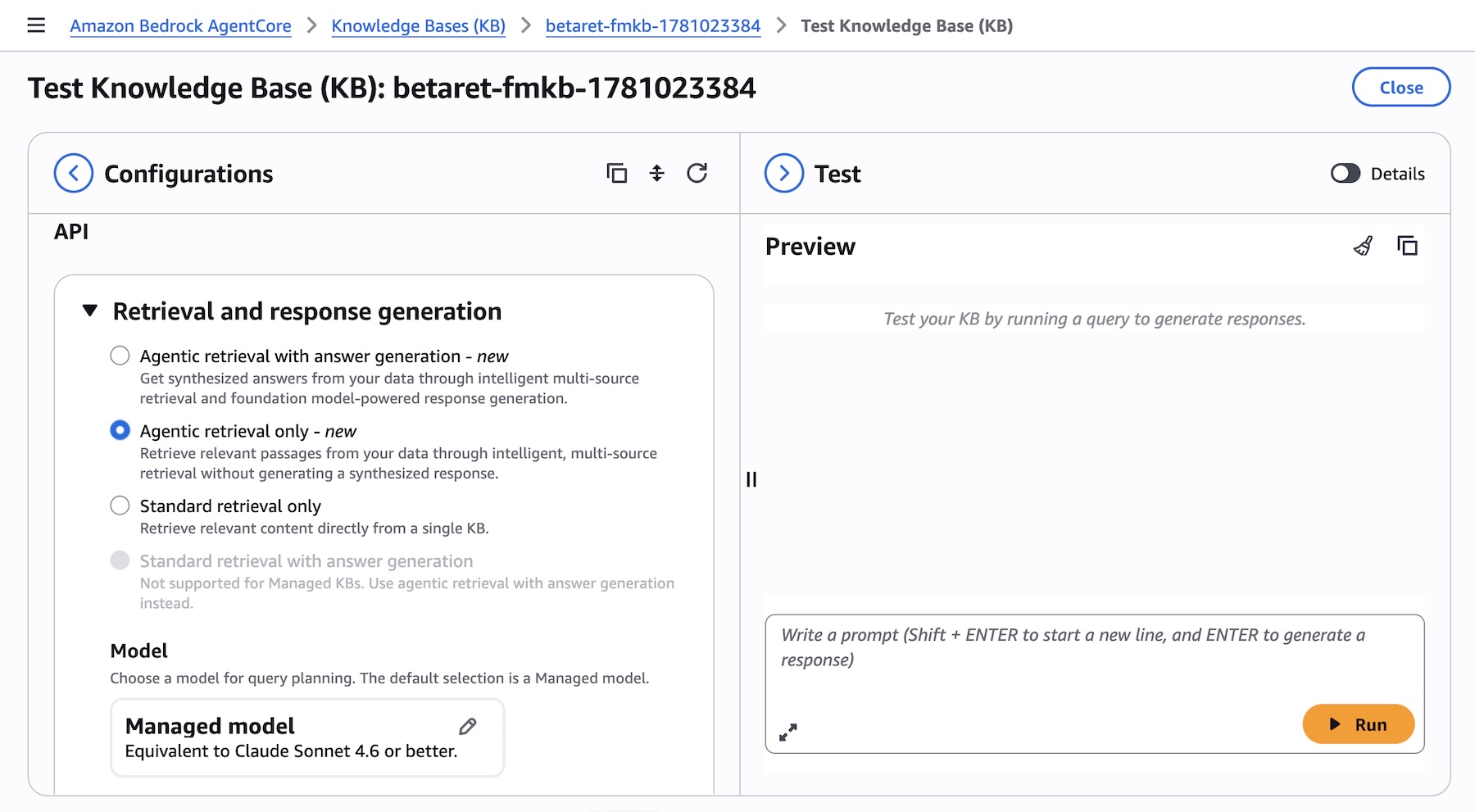
As the industry matures, the focus will inevitably turn from "Can we build this?" to "How effectively does this solve our business problems?" With the tools announced today, the answer is increasingly becoming "yes," and the path to implementation is shorter than ever. Developers are encouraged to visit the Bedrock Knowledge Bases Developer Guide to begin prototyping their first managed agents, leveraging the free tier to explore these capabilities without upfront cost.
The era of manual RAG orchestration is officially over; the era of intelligent, agentic knowledge management has arrived.