Innovation at Scale: Inside the AWS Summit NYC and the New Frontier of AI-Native Development
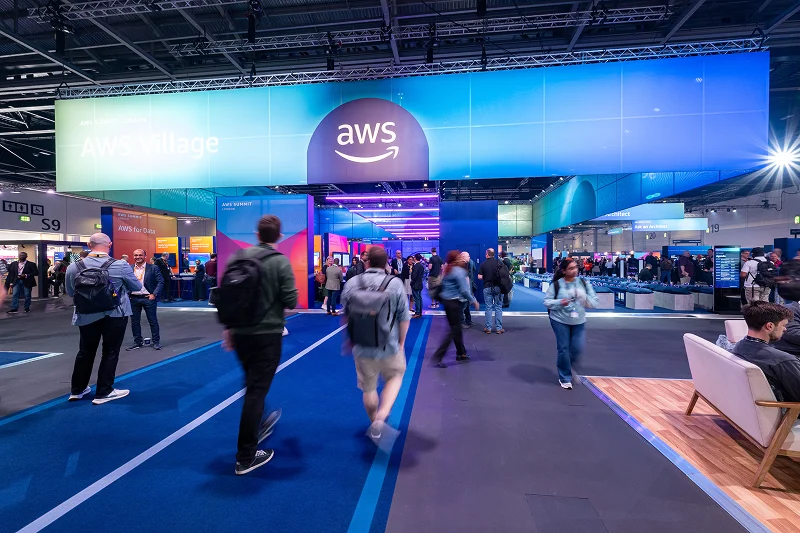
The tech landscape is currently fixed on the Javits Center in New York City, where the annual AWS Summit is unfolding. Bringing together thousands of builders, cloud architects, and enterprise leaders, the event serves as a bellwether for the future of infrastructure, security, and—above all—the rapidly evolving world of agentic artificial intelligence.
While the event floor is abuzz with live demonstrations and technical deep dives, the broader conversation is being shaped by data-driven insights into how the world’s largest organizations are successfully integrating AI into their core engineering workflows. As AWS leadership takes the stage to unveil the latest in developer tooling, the focus has shifted from mere "AI hype" to tangible, measurable productivity gains.
The State of the Cloud: Keynote Insights
The AWS Summit NYC keynote, led by Dr. Swami Sivasubramanian, VP of Agentic AI, and Chet Kapoor, VP of Security Services and Observability, serves as the cornerstone of this week’s announcements. For those unable to attend in person, the livestream remains the definitive resource for understanding the strategic roadmap for the coming year.
The duo’s presentation highlights a critical transition: we are moving past the era of simple LLM-based chatbots and into the era of "Agentic AI." This shift signifies a move toward systems that don’t just suggest code or summarize documents, but actively perform multi-step tasks, manage complex workflows, and integrate seamlessly with enterprise security postures.
Reimagining Development: The "Frontier Team" Blueprint
Perhaps the most significant revelation to emerge from the Summit is not a piece of hardware or a new cloud service, but a paradigm shift in software engineering. In a landmark blog post published this week, Dr. Sivasubramanian shared findings from an extensive study of hundreds of Amazon engineering teams. The data provides a roadmap for what AWS defines as "Frontier Teams"—groups that have successfully leveraged AI-native development to achieve unprecedented velocity.
Supporting Data: The Velocity Revolution
The statistics provided by the internal Amazon study are striking. The most illustrative example involves a team of six engineers who successfully rebuilt the Amazon Bedrock inference engine in just 76 days. In a traditional development lifecycle, this project was scoped for a team of 30 developers and projected to take between 12 and 18 months.
This represents a reduction in headcount requirements by 80% and a timeline acceleration of nearly 80%. Other teams reported similarly staggering results:
- Normalized Deployment Velocity: A median productivity gain of 4.5x, with high-performing teams reaching 10x.
- Feature Cycle Times: The "Perfect Order Experience" team reduced its feature cycle from two weeks to a single afternoon.
- Administrative Efficiency: The WW Grocery team cut the time required for design document creation from five full days to just a few hours.
The Five Pillars of the Frontier Methodology
The study distills these successes into five core practices that any organization can adopt to scale their AI integration:
- Invest in Agent Context: Before writing a single line of production code, teams must invest in "steering files," coding standards, and structured repository documentation. AI agents perform best when provided with a clear, well-defined sandbox.
- Embrace the Initial Friction: Transformation is rarely linear. Teams should expect a temporary slowdown in output while workflows are restructured to accommodate AI agents. Pushing through this phase is essential.
- Parallel Execution: Maintain a steady, well-scoped backlog. When tasks are granular and well-defined, agents can work in parallel, minimizing the need for constant human supervision.
- Intent-Based Specification: Before code generation begins, teams must articulate their intent through structured specifications. This reduces hallucinations and ensures that the agent’s output aligns with architectural requirements.
- Shift-Left Testing: By integrating automated testing at the earliest possible stage, agents can self-correct their errors before the code ever reaches the deployment pipeline.
Automation for the Bottom Line: The AWS FinOps Agent
Beyond developer velocity, AWS is tackling the complexity of cloud economics with the launch of the AWS FinOps Agent, now available in preview.
As cloud environments grow in complexity, managing costs has become a major pain point for engineering managers. The FinOps Agent is designed to act as a tireless, specialized assistant for financial operations. Its capabilities include:
- Automated Anomaly Detection: When costs spike, the agent doesn’t just alert the team; it investigates the root cause and posts the findings directly to a Slack channel.
- Proactive Optimization: The agent continuously monitors for idle resources, rightsizing opportunities, and Savings Plan recommendations.
- Closed-Loop Action: Perhaps most impressively, the agent can autonomously open Jira tickets for engineering teams when it identifies a specific action that could lead to cost savings.
This tool represents the "Agentic AI" philosophy in practice: moving from passive dashboards that tell you what is happening, to active agents that tell you why it happened and how to fix it.
Implications: The Road Ahead
The implications of this week’s announcements are clear: the barrier to entry for high-velocity software engineering is being lowered. However, as Dr. Sivasubramanian noted, commit velocity is only one part of the story.

The industry is now looking toward the next phase of this transformation: Release Management, Operations, and Security Operations. As we empower agents to write code and manage infrastructure, the traditional roles of SREs and Security Engineers will necessarily evolve. The ability to manage these agents—rather than just the underlying infrastructure—will become the defining skill set of the next generation of cloud professionals.
Looking Forward: A Call to Builders
While the AWS Summit continues to provide the technical foundation for these advancements, the responsibility of implementation falls to the community of builders. Whether you are a developer looking to integrate agentic workflows into your CI/CD pipeline or a CTO trying to reconcile cloud spend with business outcomes, the resources provided this week offer a tangible path forward.
For those eager to deepen their engagement, the AWS Builder Center remains the primary hub for collaboration, offering access to solutions, community forums, and expert-led sessions. As organizations worldwide look to replicate the success of Amazon’s "Frontier Teams," the focus must remain on structured adoption, iterative learning, and a willingness to rethink the traditional boundaries of software development.
As the industry pivots toward this new AI-native chapter, one thing is certain: the era of the manual, bottlenecked development cycle is coming to a close. In its place, we are seeing the rise of a highly automated, agent-assisted ecosystem that promises not just faster code, but more intentional, efficient, and cost-effective digital innovation.
This report is part of our ongoing coverage of the 2026 AWS Summit. Stay tuned for subsequent analysis regarding the long-term security implications of agentic AI and the upcoming advancements in EOL (End-of-Life) upgrade automation.