The Expanding Edge: Swift’s IoT Evolution and the Latest AWS Innovations
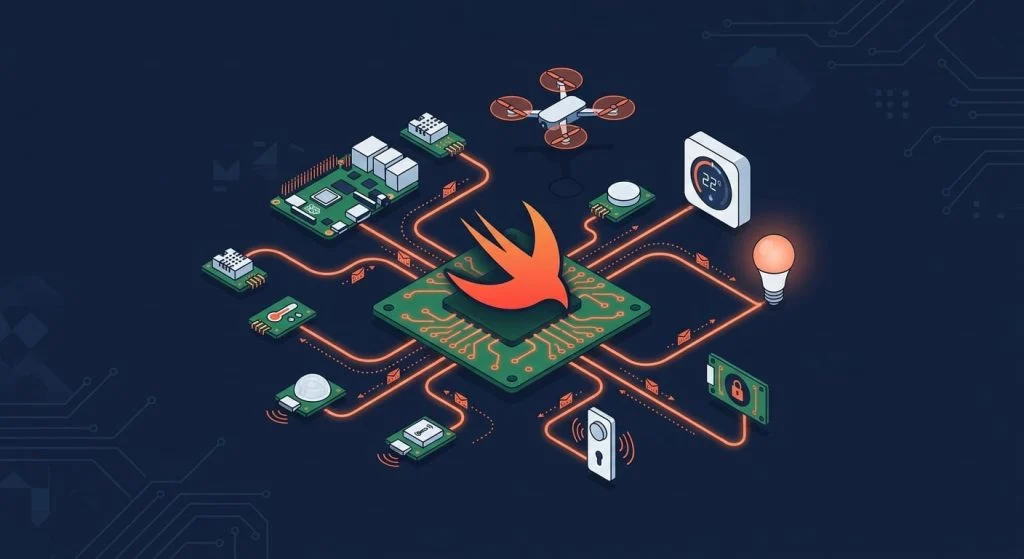
The technological landscape of cloud computing and edge integration continues to shift at an unprecedented pace. This week, AWS has made significant strides in bridging the gap between high-level application development and low-level hardware control, most notably through the general availability of the AWS IoT Device SDK for Swift. As the ecosystem matures, developers are finding that languages once confined to mobile and desktop applications—specifically Swift—are becoming first-class citizens in the world of IoT, edge computing, and AI-driven hardware.
Alongside these architectural advancements, AWS has introduced a series of critical updates to its core services, ranging from database licensing flexibility to mission-critical security features and the integration of next-generation AI models.
The Rise of Swift in the IoT and Edge Ecosystem
For years, the Internet of Things (IoT) landscape was dominated by C, C++, and more recently, Python. However, the release of the AWS IoT Device SDK for Swift marks a pivotal moment for the Swift Server Workgroup (SSWG) and the broader development community.
Technical Implications of the Swift SDK
The new SDK provides production-ready support for MQTT 5 connectivity, Device Shadow, Jobs, and sophisticated fleet provisioning. By bringing these capabilities to macOS, iOS, tvOS, and Linux, AWS is effectively enabling developers to write highly performant, type-safe code that can run seamlessly from the cloud down to the edge device.
This development is not an isolated event; it represents a broader industry trend toward "universal" languages. As frameworks like WendyOS gain traction, offering first-class Swift support for NVIDIA Jetson and Raspberry Pi hardware, we are seeing the emergence of a new paradigm in physical AI. The ability to deploy Swift-based applications directly to edge hardware simplifies the development lifecycle, allowing teams to maintain a unified codebase that spans server-side logic, mobile interfaces, and edge-computing microservices.
Headline Developments: Scaling Enterprise Capabilities
While the Swift SDK captures the attention of the developer community, AWS has simultaneously rolled out major updates aimed at enterprise scalability, data sovereignty, and AI integration.
Amazon RDS for SQL Server: The BYOM Milestone
One of the most requested features for legacy migration has finally arrived: "Bring Your Own Media" (BYOM) support for Amazon RDS for SQL Server. This initiative allows organizations to migrate their existing Microsoft SQL Server applications from on-premises environments to the cloud while retaining their current Microsoft licenses, including Software Assurance via the License Mobility program.
By integrating BYOM directly with AWS License Manager, customers can now track license usage and ensure compliance through a centralized dashboard. This removes a significant financial and operational barrier for enterprises looking to transition to a managed cloud environment without discarding long-term capital investments in software licensing.
Amazon Cognito: Multi-Region Resilience
In the realm of security and identity management, Amazon Cognito now supports multi-Region replication. This feature is a game-changer for applications requiring high availability and disaster recovery.
By synchronizing user and machine identity data—including credentials, user pool configurations, and federation setups—to a standby Region in near real-time, AWS is ensuring business continuity. In the event of a primary Region disruption, users remain authenticated, and the system experiences minimal to no downtime. Available across 16 regions for the Essentials and Plus tiers, this update underscores AWS’s commitment to providing robust, "always-on" infrastructure for global applications.
The AI Frontier: OpenAI’s New Models on Bedrock
Perhaps the most disruptive announcement of the week is the general availability of OpenAI’s GPT-5.5 and GPT-5.4 models, alongside the Codex suite, on Amazon Bedrock. This integration is more than just a model update; it is a fundamental shift in how developers interact with generative AI.
GPT-5.5 and the Future of Autonomous Coding
GPT-5.5 is currently OpenAI’s most capable model, specifically optimized for agentic coding, complex data analysis, and multi-step autonomous tasks. By hosting these models on Amazon Bedrock, AWS provides developers with the familiar security, governance, and operational controls they rely on, effectively mitigating the risks typically associated with third-party model implementation.
The Codex Integration
The availability of Codex through the Codex App, CLI, and IDE integrations (Visual Studio Code, JetBrains, and Xcode) marks a major advancement in AI-assisted software development. By aligning pricing with OpenAI’s first-party rates and ensuring usage counts toward existing AWS commitments, AWS is making it economically and operationally attractive for organizations to adopt these tools at scale.
Chronology of Technological Evolution
The current week’s announcements represent a deliberate progression in AWS’s strategy to capture the full spectrum of the developer lifecycle.

- Early Week (Swift Focus): The official announcement of the AWS IoT Device SDK for Swift signaled a move toward developer-centric tooling for the edge.
- Mid-Week (Enterprise Stability): The introduction of RDS BYOM and Cognito Multi-Region replication addressed the "hard" requirements of enterprise IT departments—compliance, cost-management, and high-availability.
- Late Week (AI Integration): The deployment of OpenAI’s most advanced models on Bedrock cemented AWS’s role as the primary orchestration layer for the next wave of AI-native applications.
Supporting Data: Why This Matters for the Industry
The shift toward Swift at the edge and the integration of advanced AI models are supported by shifting market demands. Industry reports suggest that:
- Edge Compute Growth: The edge computing market is expected to grow at a CAGR of over 30% through 2030, necessitating languages that provide the memory safety of Swift alongside the performance of lower-level languages.
- Licensing Efficiency: Organizations transitioning to the cloud currently waste an estimated 15-20% of their software budget on redundant licenses. The RDS BYOM update directly addresses this, potentially saving millions in annual operational expenditures for large enterprises.
- Resilience Demands: With the rise of global digital services, downtime costs have skyrocketed. Cognito’s multi-Region capabilities reflect a move toward "zero-RTO" (Recovery Time Objective) architectures.
Official Responses and Strategic Implications
AWS leadership has frequently emphasized that their goal is to "meet builders where they are." By providing SDKs for languages that developers love (like Swift) and providing the most powerful AI models within the secure environment of the AWS Cloud, the company is effectively lowering the barrier to entry for complex, distributed systems.
The implications for developers are clear: the divide between the "server side" and the "edge" is dissolving. A developer can now write a Swift service that manages an IoT fleet, uses Cognito to secure those devices, and calls upon a GPT-5.5 model on Bedrock to analyze the incoming data—all while operating within a single, unified cloud ecosystem.
Conclusion: The Path Forward
As we look toward the remainder of the year, it is evident that AWS is focused on deepening the "builder experience." Whether it is through the expansion of language support, the refinement of database licensing, or the provision of cutting-edge generative AI, the platform is evolving to become a more cohesive environment.
For developers, the challenge now is to leverage these tools. The availability of these services is only the starting point. The real innovation will happen in the coming months as the community begins to combine these disparate, powerful features into novel, resilient, and intelligent applications.
For those looking to engage further, the AWS Builder Center remains a vital resource for connecting with other engineers, sharing architectural patterns, and staying ahead of the rapid pace of change. As always, the "What’s New with AWS" page will continue to be the primary source for the latest updates as this exciting landscape continues to unfold.
Next week promises further insights as the ecosystem reacts to these changes. Stay tuned for the next weekly roundup.