Elevating Enterprise Continuity: A Deep Dive into the Next Generation of AWS Resilience Hub
In the modern digital landscape, where downtime can translate into millions of dollars in lost revenue and irreparable damage to brand reputation, system resilience has moved from a "nice-to-have" feature to a fundamental business requirement. Today, Amazon Web Services (AWS) announced a significant evolution of its AWS Resilience Hub, a platform designed to centralize and automate the resilience posture of complex, multi-application cloud environments.
This next-generation update introduces a suite of advanced features, including a new application modeling system, automated dependency discovery, and generative AI-powered failure mode analysis. By streamlining how Site Reliability Engineers (SREs) and development teams define, measure, and validate their resilience goals, AWS is looking to standardize business continuity across the enterprise.
The Core Challenge: Fragmentation in Enterprise Resilience
For organizations operating at scale—often managing hundreds or even thousands of individual applications—maintaining consistent availability is a daunting logistical hurdle. Historically, different teams within the same organization have operated in silos, setting disparate resilience standards and utilizing a fragmented array of monitoring and testing tools.
This lack of uniformity creates "blind spots." When IT leadership asks, "Is our entire portfolio resilient against a regional outage?" the answer is often buried under layers of disconnected reports, manual spreadsheets, and varying definitions of what constitutes "success." The next generation of AWS Resilience Hub addresses this by providing a single, unified source of truth. By integrating with AWS Organizations, the platform enables enterprises to govern resilience from a centralized, delegated administrator account, effectively eliminating the need for teams to manually jump between individual accounts to assess their risk profile.
Chronology of the Resilience Evolution
The journey toward this release represents years of iterative development by AWS. Since the original launch of Resilience Hub, the engineering team has focused on moving from reactive recovery to proactive prevention.
- Phase 1: Foundation and Visibility. The initial version of Resilience Hub focused on providing a dashboard to view the health of applications and basic compliance tracking.
- Phase 2: Integration and Depth. AWS gradually added deeper integrations with tools like CloudFormation, Terraform, and Amazon EKS, allowing the hub to better understand the underlying infrastructure.
- Phase 3: The Next Generation (Current). Today’s launch marks the shift toward "Intelligent Resilience." By incorporating generative AI for failure mode analysis and modular policy frameworks, the platform now acts as an active consultant rather than just a passive monitoring tool.
This evolution reflects a broader trend in cloud computing: the transition from infrastructure management to intent-based management, where engineers define the desired outcome (e.g., "99.95% availability") and the platform orchestrates the path to achieve it.

Deep Dive: How the New Architecture Works
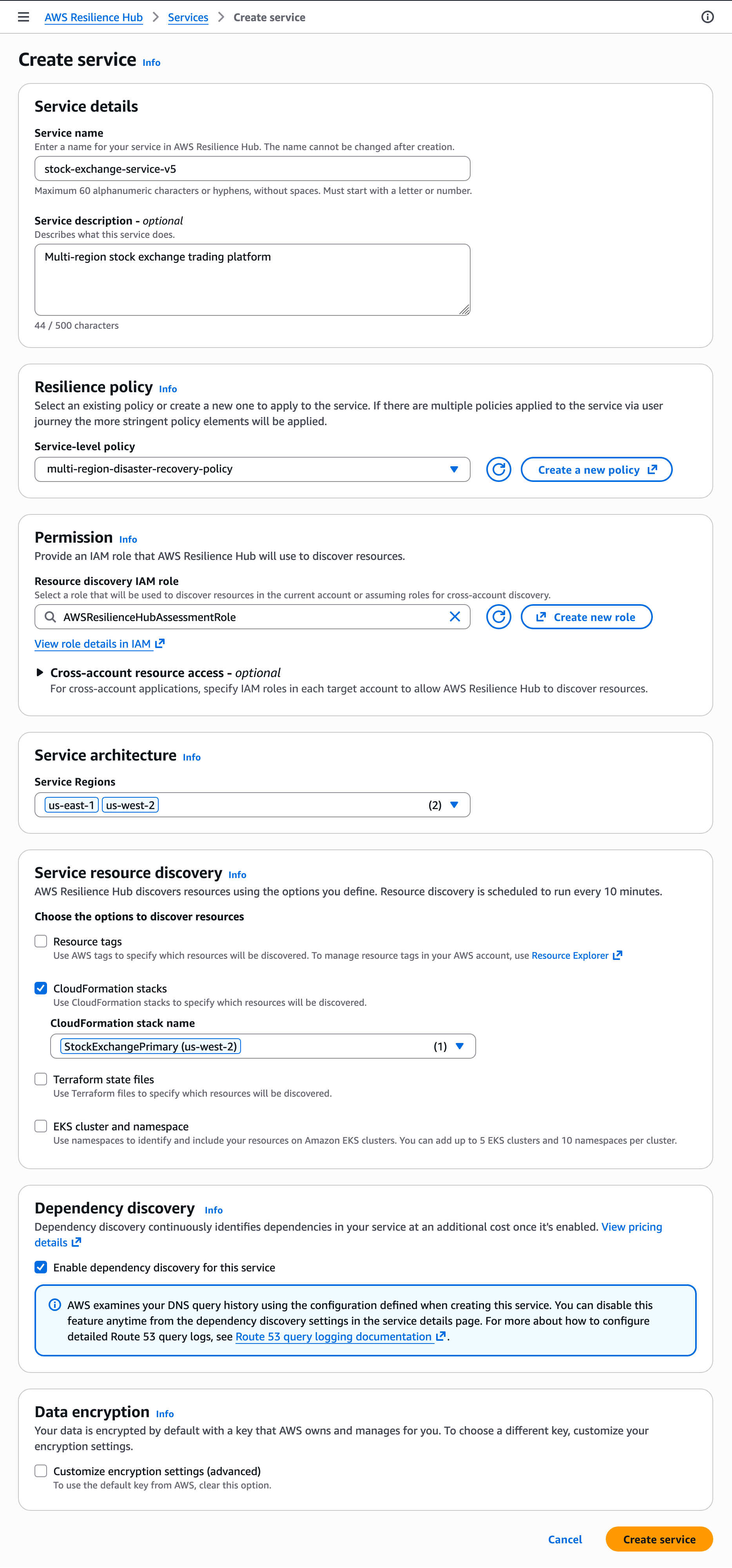
The updated Resilience Hub is built around a logical hierarchy: Systems and Services.
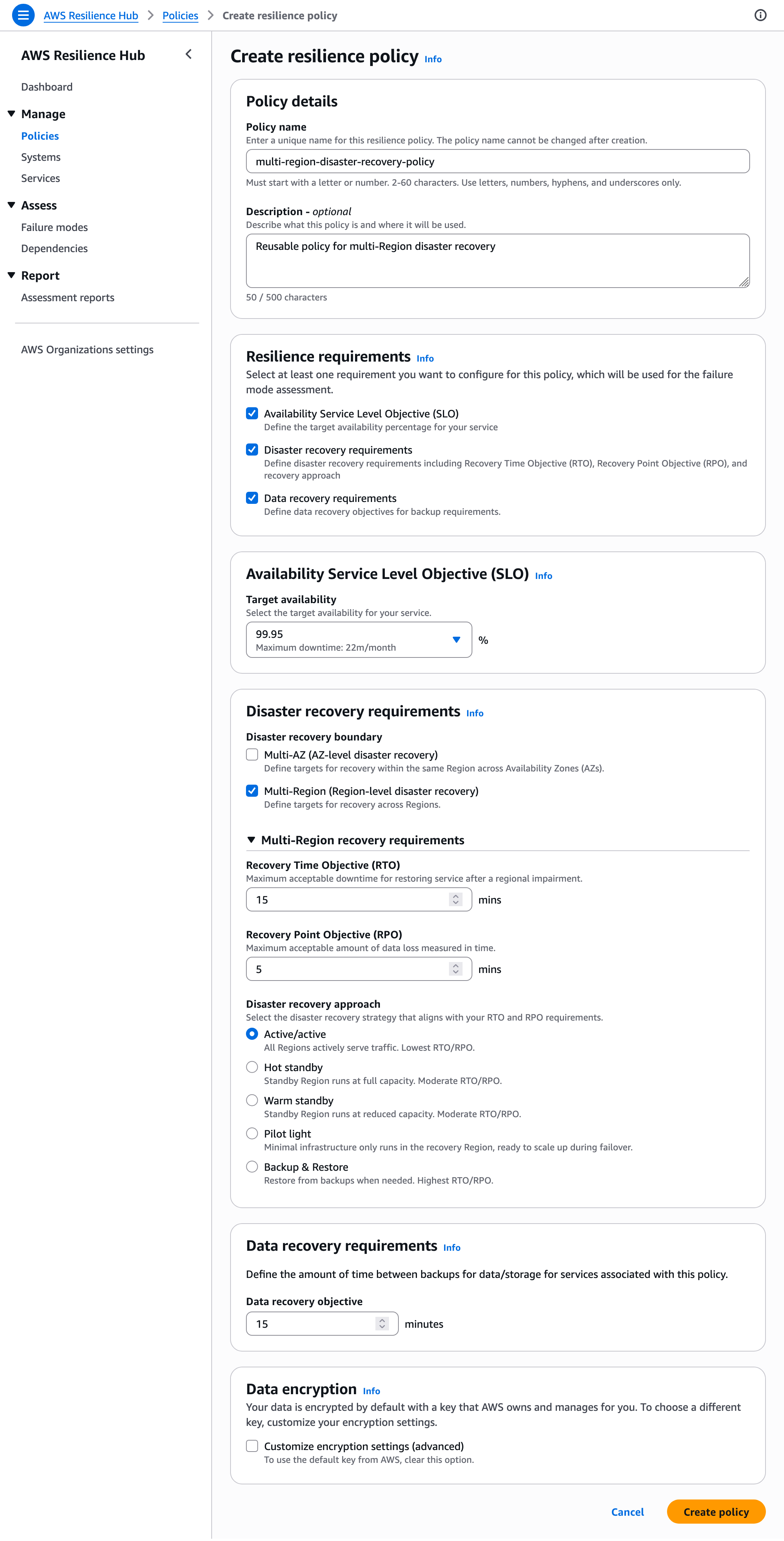
1. Modular Resilience Policies
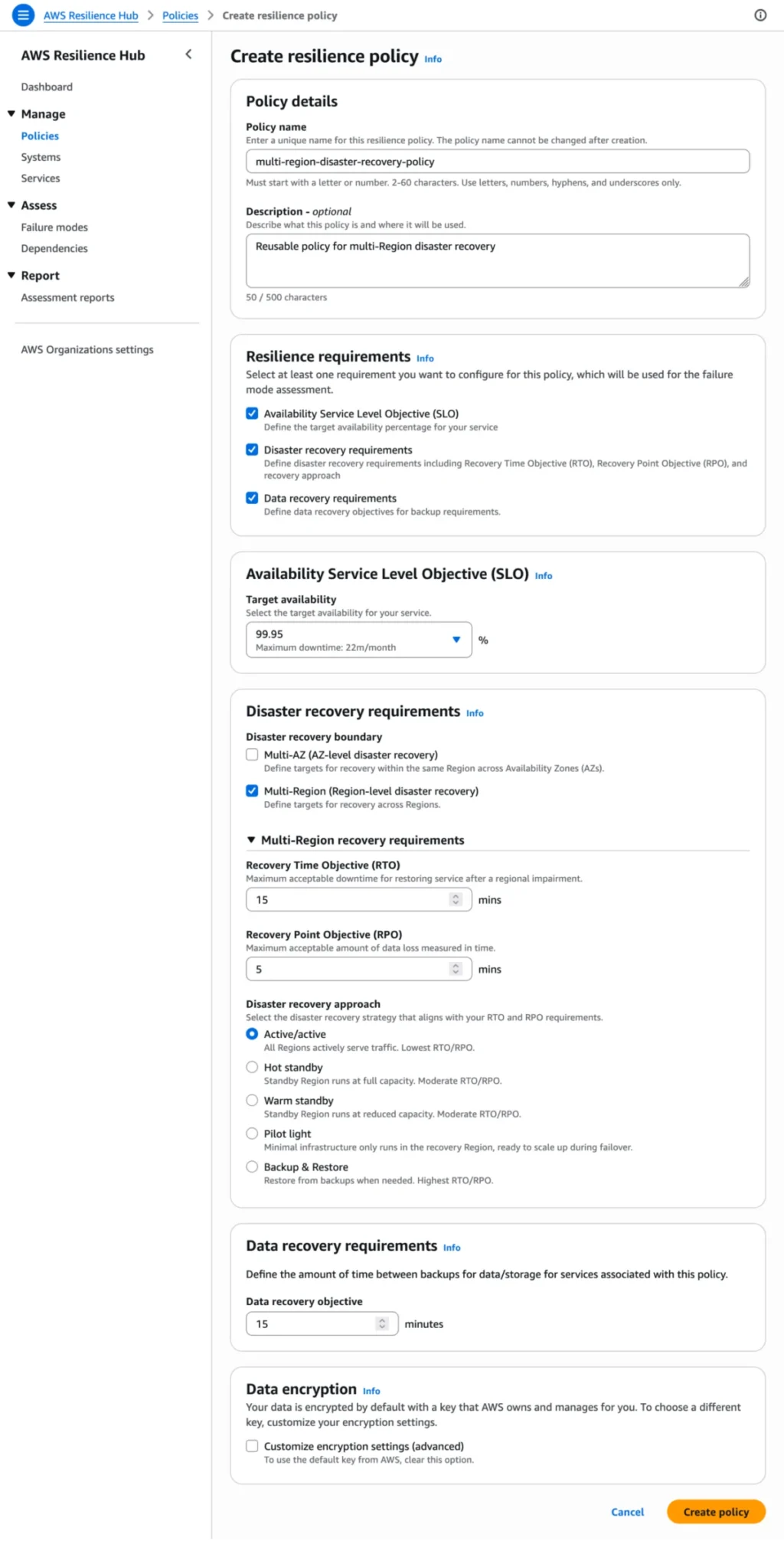
The process begins with the definition of a resilience policy. These policies are now reusable and modular, allowing an organization to define a "Gold Standard" for, say, a financial transaction service, and apply that same policy across dozens of different microservices. A policy includes critical metrics such as:
- SLO (Service Level Objectives): The percentage of time the system must be available.
- RTO (Recovery Time Objective): The maximum tolerable downtime.
- RPO (Recovery Point Objective): The maximum acceptable data loss in the event of a failure.
2. Dependency Discovery
One of the most powerful additions is the automated dependency discovery engine. By analyzing VPC query logs, the Hub automatically maps how services interact with one another. This is crucial because, in modern distributed systems, a failure in a minor backend service can cause a cascading outage in a critical front-end application. By visualizing these connections, SREs can identify "hidden" dependencies that might otherwise go unnoticed until a crisis occurs.
3. Generative AI-Powered Failure Mode Analysis
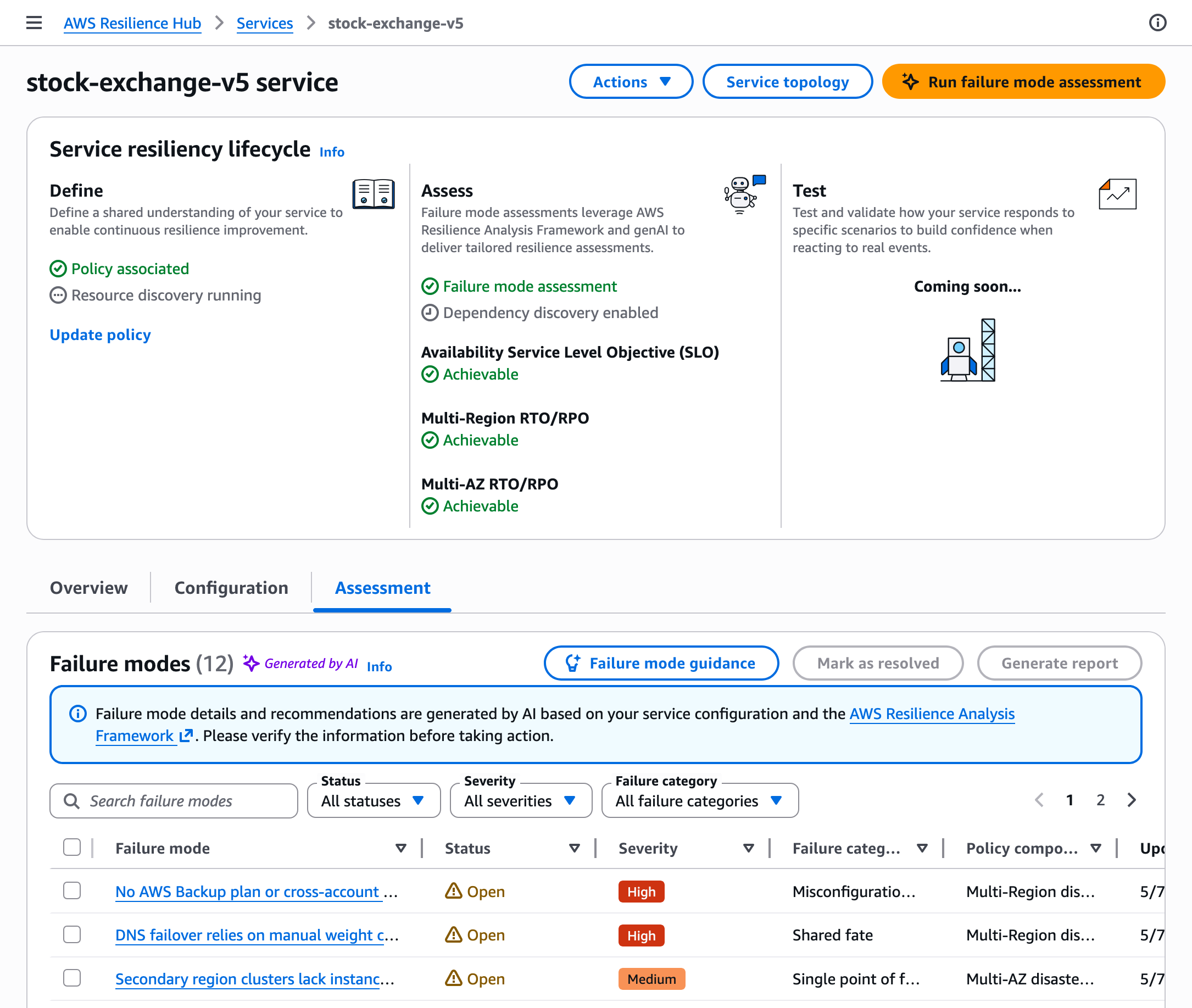
Perhaps the most significant innovation is the integration of generative AI into the assessment phase. When an assessment is triggered, the system doesn’t just check for obvious misconfigurations; it simulates potential failure points based on the application topology.
The AI agent builds a map of data flow, resource containment, and permissions, then provides actionable "Failure Mode Guidance." If the system detects a potential risk, it provides a clear, plain-English explanation of why the risk matters, its relation to the set policy, and—most importantly—the specific remediation steps required to fix it.
Supporting Data and Technical Workflow
The implementation of the new Hub follows a structured, repeatable workflow:
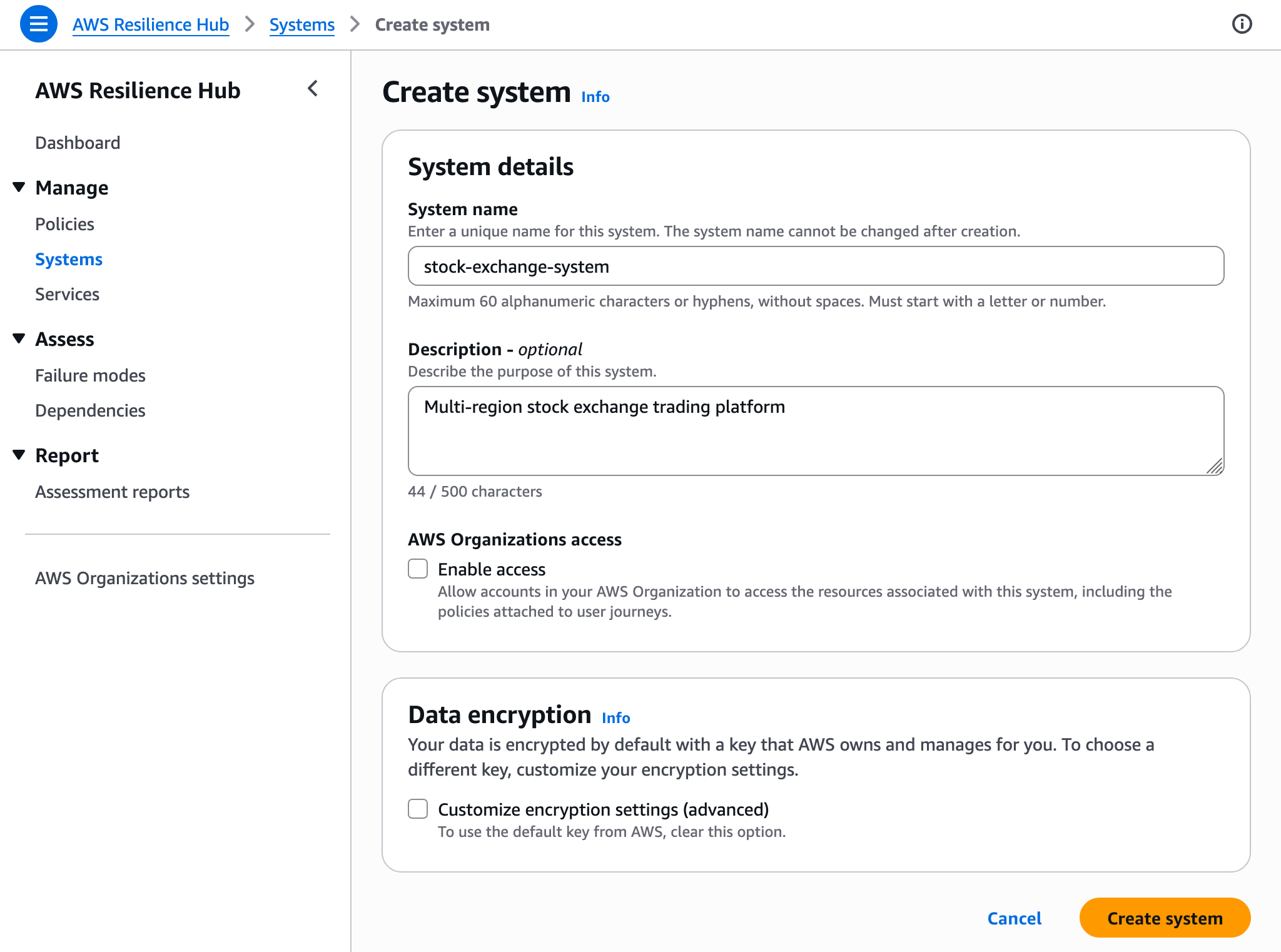
- Configuration: The user defines the environment using the Resilience Hub console.
- Assessment: The system performs a deep scan, leveraging IAM roles (via the new "invoker" role model) to gain read-only visibility into the infrastructure.
- Topology Mapping: Using the application topology service, the Hub builds a comprehensive graph of the environment.
- Review and Resolution: Users review findings via the Assessment tab. Each finding is prioritized based on its impact on the defined resilience policy.
Efficiency Metrics:
- Time to Assessment: By automating the ingestion of CloudFormation stacks and Terraform state files, the time to conduct an initial resilience audit has been reduced from days of manual documentation to minutes of automated scanning.
- Governance: The delegated administrator model allows for a 100% reduction in "context switching" between accounts, enabling a single SRE team to maintain oversight over an entire organizational footprint.
Official Perspectives: The Value Proposition
In discussing the launch, industry experts and AWS representatives emphasize that this tool is designed to bridge the gap between business requirements and technical execution.
"Organizations struggle to prove compliance because the definitions of resilience are often subjective," notes one lead architect familiar with the product. "By moving to a system where policies are coded into the infrastructure, companies can finally provide their stakeholders with audit-ready proof that their systems are built to withstand real-world outages."
The platform also provides a "Mark as Resolved" and "Mark as Irrelevant" feature, acknowledging that not every theoretical failure mode is applicable to every business context. This balance between AI-driven intelligence and human expert oversight is a cornerstone of the new design philosophy.
Implications for the Future of SRE
The implications of this release for the industry are profound:
- Standardization of "Resilience as Code": With modular policies, companies can embed resilience requirements directly into their CI/CD pipelines. If a new deployment violates the established RTO/RPO policy, the pipeline can trigger an alert, shifting resilience "left" in the development lifecycle.
- Reduced Cognitive Load: By offloading the discovery of dependencies and the simulation of failure modes to an automated engine, SREs can spend less time performing audits and more time architecting for high availability.
- Strategic Business Alignment: The ability to generate organization-wide reports on resilience posture allows IT departments to speak the language of the boardroom. Instead of discussing server uptimes, they can now discuss "Enterprise Risk Mitigation" using data-backed reports from the Hub.
Conclusion: A New Standard for Cloud Reliability
The next generation of AWS Resilience Hub represents a maturation of the cloud ecosystem. As applications become more complex and distributed, the human capacity to track dependencies and anticipate failure modes naturally hits a ceiling. By integrating intelligent discovery, generative AI, and centralized governance, AWS is providing the tools necessary to move past the era of "hoping for the best" and into an era of "engineering for the inevitable."
For businesses operating on AWS, the path forward is clear: define your policy, automate your discovery, and let the platform handle the rigorous, ongoing validation of your architectural integrity. As the service is generally available across all commercial regions starting today, the barrier to entry for enterprise-grade resilience has never been lower.
For those looking to get started, the AWS Resilience Hub console now hosts the full suite of new features, supported by extensive documentation in the AWS User Guide. As the threat landscape continues to evolve, tools like the Resilience Hub will undoubtedly become the bedrock upon which the next generation of global, high-availability applications are built.