The New Frontier of Web Economics: AWS WAF Introduces AI Traffic Monetization
In a landmark shift for the digital economy, Amazon Web Services (AWS) has unveiled a groundbreaking capability within AWS WAF (Web Application Firewall) that fundamentally changes how publishers interact with artificial intelligence. For the first time, digital content owners can directly monetize the massive influx of AI bot traffic hitting their servers, effectively creating a "toll booth" for AI agents at the network edge. This move addresses a growing imbalance in the internet’s value exchange: while AI crawlers consume vast quantities of proprietary data to fuel Large Language Models (LLMs), publishers have historically borne the infrastructure costs without seeing the traditional return on investment in the form of human page views or advertising revenue.
The Imbalance of the AI Era
The proliferation of generative AI has transformed the composition of global internet traffic. Recent industry data indicates that AI bot traffic now accounts for more than 50% of web traffic for a significant portion of major content providers. Even more striking is the velocity of this growth; AI-specific crawlers have surged by over 300% year-over-year.
Historically, the relationship between search engines and websites was symbiotic. A search engine crawler would index a site, and in return, provide a link that drove human users to the content—a transaction that powered the web’s ad-supported business model. AI, however, has disrupted this cycle. By consuming content to generate summaries, answers, and synthetic insights directly within chat interfaces, AI agents provide little to no referral traffic back to the original source. This "consumption without conversion" creates a financial drain for publishers, who must pay for the bandwidth and compute power required to serve their data to bots that provide no direct financial offset.
AWS WAF’s new monetization capability is designed to bridge this gap. By enabling content owners to set per-request pricing, AWS is shifting the paradigm from a "free-for-all" data harvest to a structured, transactional marketplace.
Chronology of a Digital Toll Booth
The rollout of this feature follows years of iterative development in AWS’s Bot Control suite.
- Foundation Phase: AWS WAF Bot Control was initially established to provide visibility and protection, allowing companies to block malicious scrapers or rate-limit aggressive bots.
- The Gap Analysis: Recognizing that many publishers wanted to engage with AI rather than simply block it, AWS engineers identified the need for a protocol that could facilitate machine-to-machine payments without requiring complex, bespoke contractual agreements between every publisher and every AI developer.
- The Announcement: In June 2026, AWS officially launched AI traffic monetization, integrating the capability directly into the CloudFront edge network.
- Protocol Integration: By utilizing the x402 open protocol—a machine-readable standard for 402 Payment Required responses—AWS enabled a frictionless, automated handshake between servers and AI agents.
- Future Roadmap: While the initial release focuses on stablecoin payments via Coinbase’s x402 Facilitator, AWS has already committed to expanding this ecosystem with Stripe integrations and broader Machine Payments Protocol (MPP) support in the coming months.
Supporting Data and Traffic Insights
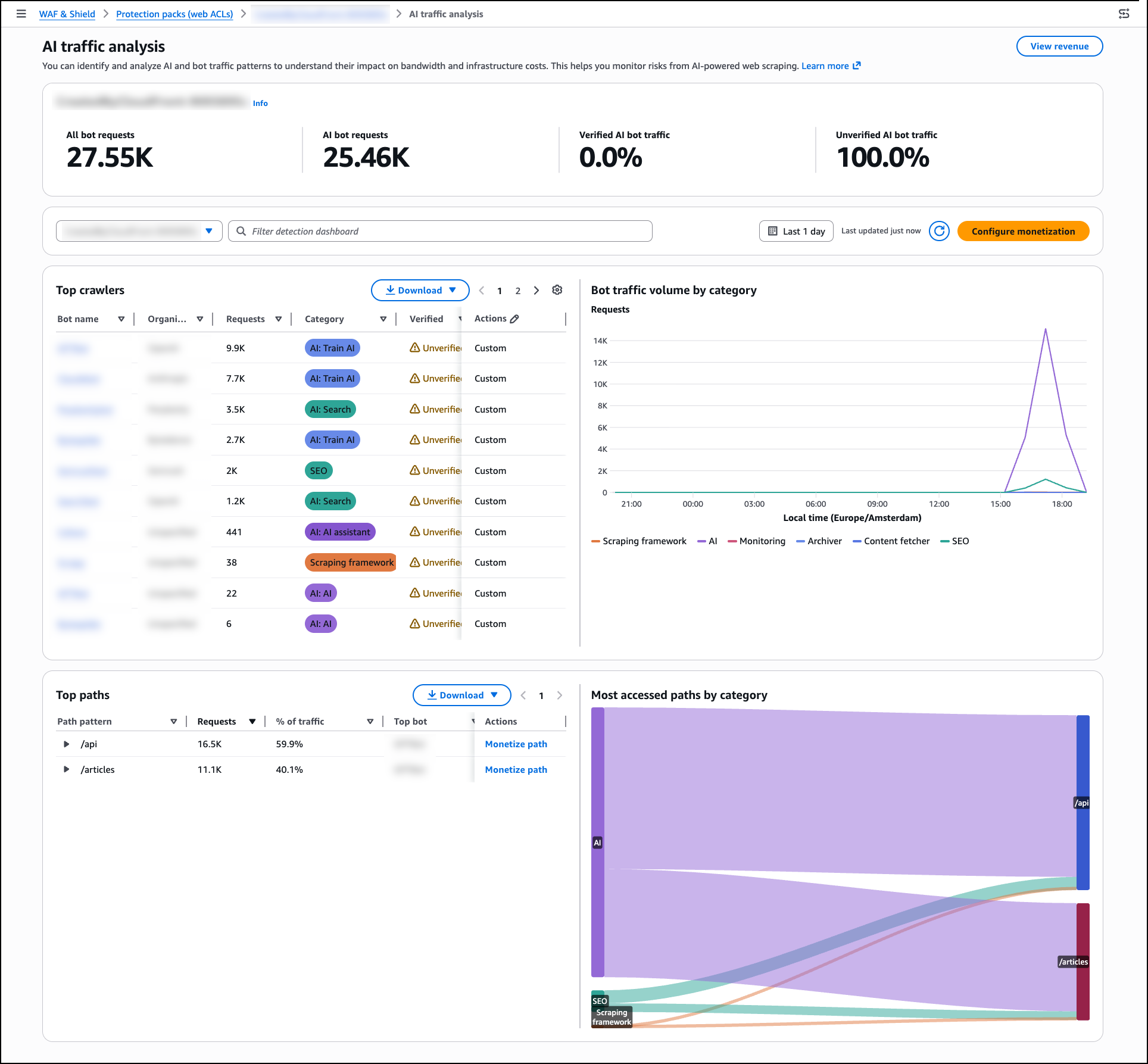
The power of this new tool lies in its granular visibility. Before a publisher commits to a pricing strategy, the integrated AI Traffic Analysis Dashboard provides a deep dive into exactly who is scraping their data and at what cost.
The dashboard categorizes traffic into four distinct tiers:
- All bot requests
- AI bot requests
- Verified AI bot traffic
- Unverified AI bot traffic
By surfacing infrastructure impact metrics—such as bandwidth consumed, estimated monthly cloud costs, and peak request rates—the dashboard allows publishers to move from anecdotal concerns to data-driven pricing. A per-path heatmap further visualizes where the "data mining" is most intense, enabling businesses to apply higher pricing tiers to premium or high-value intellectual property while maintaining lower costs for general assets.

AWS WAF currently classifies over 650 distinct AI bot types, including industry heavyweights like GPTBot, Claude-Web, and Perplexity-Bot. This classification allows for precise policy enforcement; a publisher might choose to allow "Verified" bots from a trusted partner at a lower rate, while charging a premium to "Unverified" agents or blocking them entirely.
Implementation: How the "Monetize" Action Works
The technical execution of this system is designed to be seamless for the developer while remaining robust for the publisher.
Configuring the Protection Pack
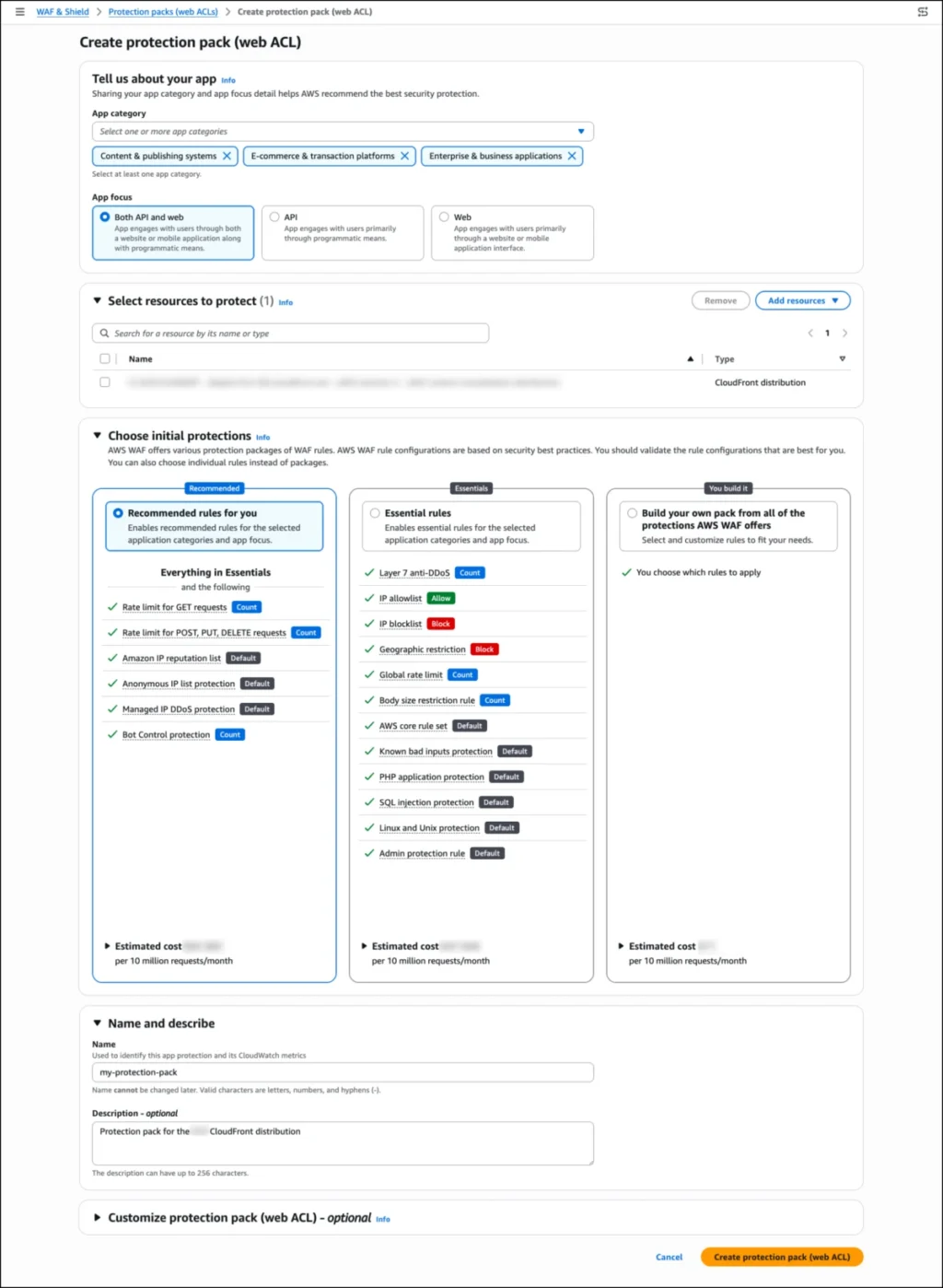
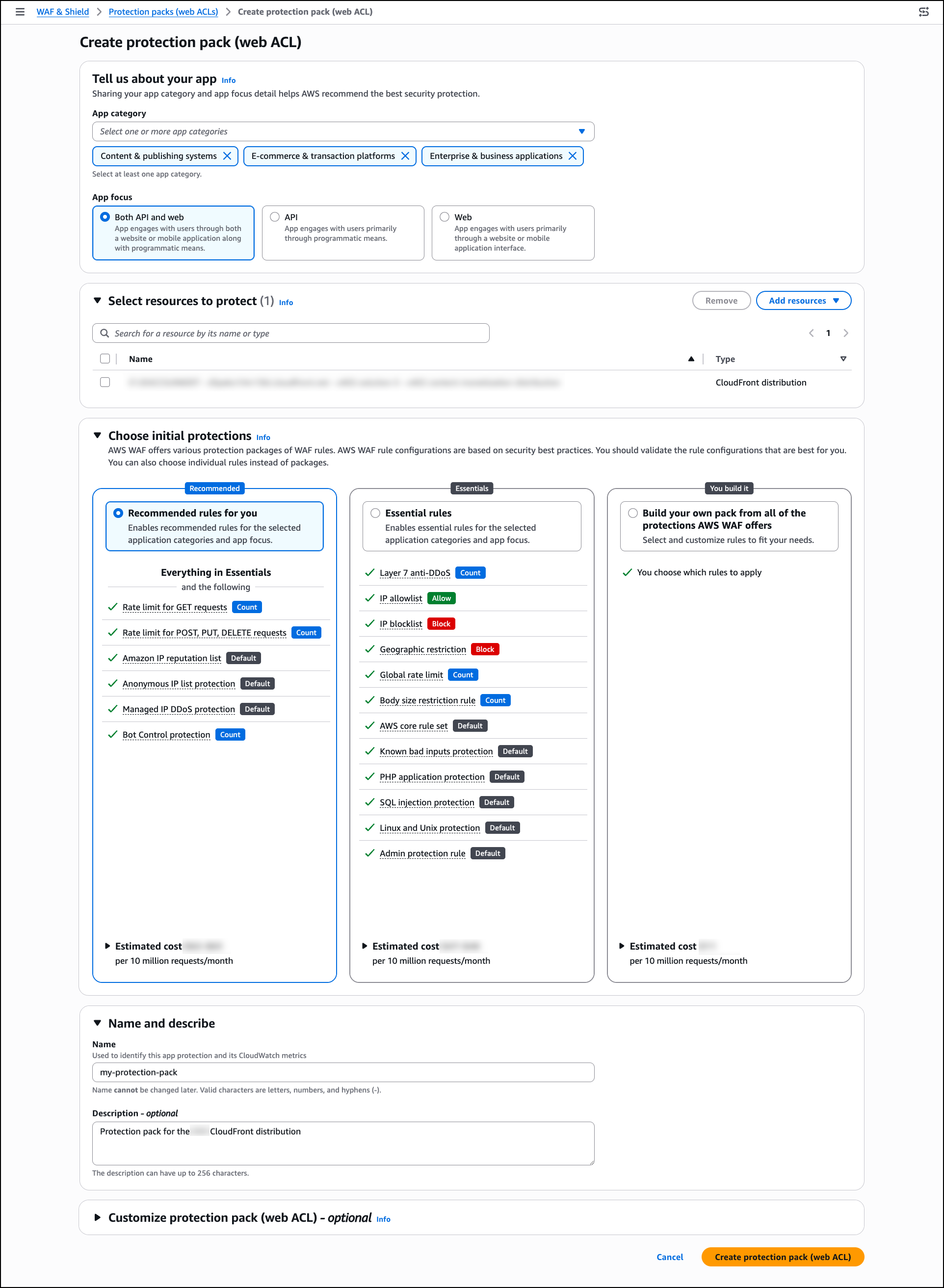
The process begins by enabling the AWS WAF Bot Control at the Common or Targeted level. Within the AWS WAF console, administrators create a "Protection Pack," which serves as the central policy engine. Here, the publisher defines the "monetization configuration," which includes:
- Targeted Content Paths: Selecting specific directories or endpoints to monetize.
- Agent Verification Tiers: Deciding whether to charge, allow, block, or challenge specific AI agents.
- Payment Settlement: Integrating a preferred wallet address on supported blockchain networks to receive USDC payments.
The Payment Handshake
When an AI bot requests a protected resource, the WAF intervenes. If the request matches a "Monetize" rule, the WAF returns an HTTP 402 (Payment Required) status code. This response contains a JSON-formatted price manifest. An autonomous, x402-compliant AI agent reads this manifest, which details the price in USDC, the destination wallet, and the accepted payment networks. The agent then submits a signed payment authorization. Once the payment is verified on-chain, the WAF serves the content. This entire transaction occurs at the edge, requiring no modification to the underlying origin server code.
Testing and Transparency
AWS has implemented a "Currency Mode" toggle, allowing developers to switch between "Real" and "Test" environments. This ensures that pricing strategies, wallet configurations, and payment flows can be vetted on testnets (like Base Sepolia) before any real capital is moved. Once the system is live, the AI Access Monetization dashboard offers a real-time view of total revenue, broken down by bot category and content path, ensuring full transparency in financial reconciliation.
Implications for the AI Ecosystem
The introduction of this capability carries profound implications for the future of the web and the AI industry.
For Publishers: A New Revenue Stream
For news organizations, academic repositories, and creative platforms, this represents a reclaim of digital sovereignty. By placing a price on content, publishers are effectively setting a market rate for their data. This could catalyze a move toward more sustainable AI development, where companies building LLMs are incentivized to partner with data providers rather than scraping them indiscriminately.
For AI Developers: The Cost of Doing Business
The era of "free data" is coming to a close. AI developers will now have to factor "data licensing costs" into their operational budgets. This may lead to a consolidation of the AI market, where only models that provide significant, quantifiable value can afford the overhead of paid content access. Furthermore, the reliance on the x402 protocol suggests that the AI industry is moving toward a more standardized, automated model of micro-transactions, moving away from slow, human-negotiated licensing deals.
For the Web: A More Secure Edge
By forcing bots to identify themselves and pay for access, the internet becomes significantly more transparent. The ability to distinguish between a legitimate AI tool and a malicious scraper is bolstered by this financial hurdle. As more content owners adopt these tools, the "noise" of unverified, low-quality bot traffic may decrease, potentially lowering the overall infrastructure burden for the internet at large.
The Regulatory and Ethical Dimension
While AWS is providing the infrastructure for this change, it also places the responsibility of ethical content pricing on the publishers. There are questions regarding how this will impact smaller creators versus large corporations, and whether it will create a "two-tier" internet where information is only accessible to the most well-funded AI models.
Conclusion
AWS WAF’s move to introduce AI traffic monetization is a watershed moment in the evolution of the web. It signals the end of the "Wild West" phase of AI scraping and the beginning of a mature, transactional era. By providing a scalable, easy-to-implement solution at the network edge, AWS has empowered publishers to reclaim their value in the AI-driven economy. As the industry watches to see how content owners and AI developers adapt, one thing is clear: the internet is no longer just a place for humans to browse—it is becoming a digital marketplace where machines pay for the privilege of learning from human creation.