From Local Resurgence to Global Ambition: How India’s Lava is Challenging Chinese Dominance and Expanding into the UK Market
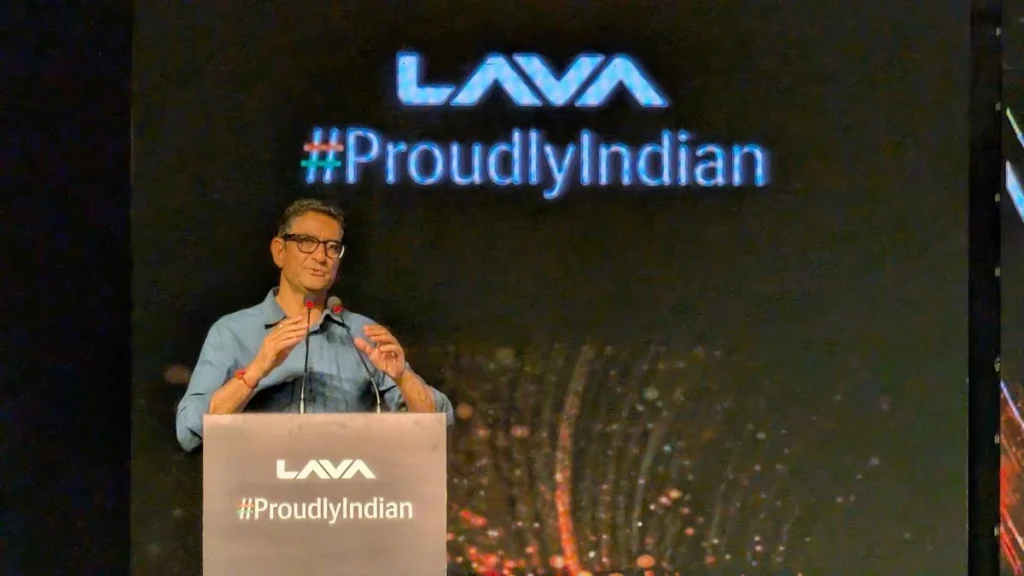
NEW DELHI — In an era dominated by global tech conglomerates and aggressive Chinese original equipment manufacturers (OEMs), Lava International, a pioneering homegrown Indian smartphone brand, is preparing for a landmark international expansion. Under the leadership of Managing Director Sunil Raina, the company has announced its entry into the United Kingdom (UK) market, scheduled for July 2026.
The expansion, spearheaded by the launch of Lava’s flagship Agni 4 smartphone, represents a calculated geopolitical and economic play. By leveraging shift-market dynamics, rising consumer cost-consciousness, and a growing wariness toward Chinese tech brands in Western nations, Lava aims to establish a robust footprint outside its native ecosystem.
Main Facts: The Strategic Shift and Global Ambitions
Lava’s expansion into the United Kingdom marks a pivotal milestone for the Indian hardware manufacturing sector, which has historically struggled to project its brands onto the global stage.
Leveraging Geopolitical Openings
The cornerstone of Lava’s UK strategy is a direct response to changing geopolitical sentiments. In conversation with The Hindu, Sunil Raina highlighted that the UK’s increasingly "Chinese-averse" market environment has presented a unique vacuum.
For years, Chinese brands captured the mid-to-low budget segments in Europe by offering high-spec devices at razor-thin margins. However, national security concerns, regulatory scrutiny, and shifting consumer sentiment have forced a reassessment of these brands in Western markets. Lava intends to position itself as a trusted, democratic alternative, offering high-quality hardware without the geopolitical baggage.
The E-Commerce First Approach
Rather than investing heavily in traditional brick-and-mortar retail networks or complex carrier partnerships immediately, Lava will launch in the UK through a strategic partnership with Amazon. This digital-first approach minimizes initial capital expenditure, mitigates overhead risks, and allows the brand to test consumer appetite directly. The Agni 4, which has garnered positive reviews in India for its balance of performance and price, will serve as Lava’s pioneer product in this new territory.
Laser Focus on the Value Segment
Unlike competitors that attempt to span the entire pricing spectrum from budget devices to ultra-premium foldables, Lava is maintaining a disciplined focus. In India, the company remains dedicated to the sub-₹30,000 (approximately £300) price category.
Raina dismisses the pursuit of the ultra-premium market as "vanity," asserting that the true volume and sustainable business lie in the budget and mid-segments. This philosophy will guide their UK operations, where they aim to capture value-conscious consumers seeking high-spec alternatives to market leaders.
Chronology: The Evolution and Resurrection of Lava
To understand Lava’s current global ambitions, it is essential to trace its trajectory from a dominant domestic player to a survivor of the Chinese smartphone invasion, and finally, to its modern iteration as an agile competitor.
+-----------------------------------------------------------------+
|                           2009 - 2015                           |
|  Lava emerges as a leading Indian domestic mobile brand,        |
|  dominating the feature phone and early smartphone markets.     |
+-----------------------------------------------------------------+
                                |
                                v
+-----------------------------------------------------------------+
|                           2016 - 2020                           |
|  Aggressive entry of Chinese OEMs (Xiaomi, Vivo, Oppo) pushes    |
|  Indian brands, including Lava, to the margins of the market.   |
+-----------------------------------------------------------------+
                                |
                                v
+-----------------------------------------------------------------+
|                           2021 - 2024                           |
|  Lava undergoes a strategic rebirth: launches the Agni and      |
|  Blaze series, and refocuses on design, localization, and       |
|  robust after-sales services (e.g., "service at home").         |
+-----------------------------------------------------------------+
                                |
                                v
+-----------------------------------------------------------------+
|                              2025                               |
|  Lava introduces "Vayu AI," its proprietary artificial          |
|  intelligence agent, laying the groundwork for smart devices.   |
+-----------------------------------------------------------------+
                                |
                                v
+-----------------------------------------------------------------+
|                            Mid-2026                             |
|  Lava registers a 50% YoY CAGR and announces UK expansion       |
|  with the Agni 4 launch via Amazon in July 2026.                |
+-----------------------------------------------------------------+
The Early Dominance and the Chinese Onslaught (2009–2020)
Founded in 2009, Lava was once part of a formidable cohort of Indian mobile brands—alongside Micromax, Karbonn, and Intex—that controlled the domestic market. However, the introduction of 4G technology around 2016 coincided with an aggressive push by highly subsidized, state-backed Chinese brands.
Equipped with superior supply chains, aggressive pricing, and massive marketing budgets, brands like Xiaomi, Oppo, Vivo, and Realme quickly captured over 70% of the Indian market, pushing local brands into near-obscurity.
Recalibration and the "Agni" Renaissance (2021–2025)
Instead of exiting the market, Lava chose to restructure its operations. The company invested in local research and development, refined its product design, and focused on clean, ad-free software experiences—a major pain point for users of budget Chinese phones.
The launch of the Agni and Blaze series marked a turning point, proving that an Indian brand could deliver competitive, high-performance 5G devices. By 2025, Lava had successfully reclaimed consumer trust, positioning itself as the sole Indian survivor capable of going toe-to-toe with global giants.
Supporting Data: Market Metrics and Economic Realities
Lava’s expansion is backed by solid operational performance and a unique resilience to macroeconomic headwinds.
Growth and Service Infrastructure
- Compound Annual Growth Rate (CAGR): Lava’s smartphone business is currently growing at an impressive 50% year-on-year (YoY), far outpacing the single-digit growth rates of the broader global smartphone market.
- Customer Service Network: A key driver of this growth has been Lava’s focus on after-sales service. The company has established more than 750 dedicated service centers across India.
- At-Home Service Initiative: To further differentiate itself, Lava introduced a "service at home" program, dispatching technicians directly to consumers’ doorsteps to resolve hardware and software issues—a service model virtually unmatched in the budget segment.
Navigating the Component Crisis and Industry Contraction
The global smartphone industry is currently grappling with severe macroeconomic challenges, including supply chain bottlenecks, inflationary pressures on raw materials, and rising semiconductor costs.
| Metric / Aspect | Broad Smartphone Industry | Lava International |
|---|---|---|
| Projected Impact of Price Hikes | Anticipated 10% to 15% contraction in overall market volume | Minimal disruption; agile operations mitigate supply bottlenecks |
| Segment Growth Dynamics | Premium segment stagnation; entry-level smartphone decline | 50% YoY CAGR in smartphones; strong position in growing feature phones |
| Market Position (Feature Phones) | Fragmented | Ranked #3 in India |
| Distribution Focus | Heavy reliance on traditional offline retail channels | Hybrid model in India; pure-play e-commerce (Amazon) for UK entry |
While larger conglomerates struggle with massive overheads and inventory glides during this crisis, Lava’s leaner, more agile structure has shielded it from the worst of the fallout. Sunil Raina notes that Lava’s smaller scale has allowed it to pivot quickly, adjust production schedules, and absorb component price hikes without passing prohibitive costs onto the end consumer.

The Feature Phone Resurgence
An unexpected consequence of rising smartphone prices has been the revival of the feature phone market. As entry-level smartphones become financially out of reach for lower-income demographics, many users are returning to basic devices.
Lava has capitalized on this trend, securing the number three position in the Indian feature phone market. This steady revenue stream provides the financial cushion needed to fund its high-growth smartphone R&D and international expansions.
Official Responses: Leadership Vision and Execution
Lava’s leadership remains pragmatic about the challenges ahead, emphasizing execution over expansion for its own sake.
On the UK Market Opportunity
Sunil Raina believes the UK market is ripe for disruption due to a lack of viable mid-range options that are not tied to Chinese conglomerates:
"Being a Chinese-averse market worked as an opportunity for Lava. People in the UK are seeking higher quality products at a lesser price. We believe we can deliver exactly that without compromising on data privacy or manufacturing transparency."
On Avoiding Product Diversification
While many smartphone brands quickly expand into smart TVs, laptops, and IoT ecosystems, Raina is keeping Lava focused strictly on its core competency:
"We are good at smartphones and have been doing this for quite some time. We do not intend to venture into other product verticals as of now. Anything beyond the sub-30k category in smartphones is vanity for us; we want to focus purely on budget and mid-segment smartphone business."
On Competing Globally
Raina expresses confidence that the lessons learned from competing in India’s highly competitive market will translate well internationally:
"Lava is the only Indian brand to compete with Chinese companies and has taken a share out of them. If we can compete with them in India, we can do it anywhere in the world."
Implications: The Global and Domestic Smartphone Landscapes
Lava’s entry into the United Kingdom carries significant implications for the global technology ecosystem, trade dynamics, and consumer choice.
Geopolitical Realignment of Supply Chains
For years, Western governments have sought to diversify technology supply chains away from China under "friend-shoring" initiatives. Lava’s emergence as an export-ready Indian brand aligns with these macroeconomic shifts. If Lava succeeds in the UK, it could pave the way for other Indian hardware manufacturers to enter European and North American markets, establishing India as a reliable alternative hub for consumer electronics.
The Democratization of AI
Lava is also bringing its artificial intelligence roadmap to the global stage. Last year, the company introduced "Vayu AI," its proprietary on-device AI agent designed to run efficiently on mid-range chipsets.
By integrating Vayu AI into upcoming devices like the Agni 4, Lava is democratizing advanced AI features—such as real-time translation, smart summarization, and context-aware assistance—that were previously exclusive to premium flagship phones. This strategy could disrupt the mid-segment market in the UK, where consumers are eager to experience AI without paying premium prices.
A Blueprint for Homegrown Brands
Lava’s survival and subsequent expansion offer a blueprint for domestic hardware brands in emerging economies. By focusing on localized customer service, maintaining strict price discipline, and turning geopolitical challenges into market opportunities, Lava has demonstrated that local brands do not have to yield to multinational monopolies.
As July 2026 approaches, the global tech industry will be watching closely to see if Lava’s "Proudly Indian" success story can successfully adapt to the streets of London.