Bridging the Data Gap: Integrating Facebook Ads with BigQuery for Scalable Analytics
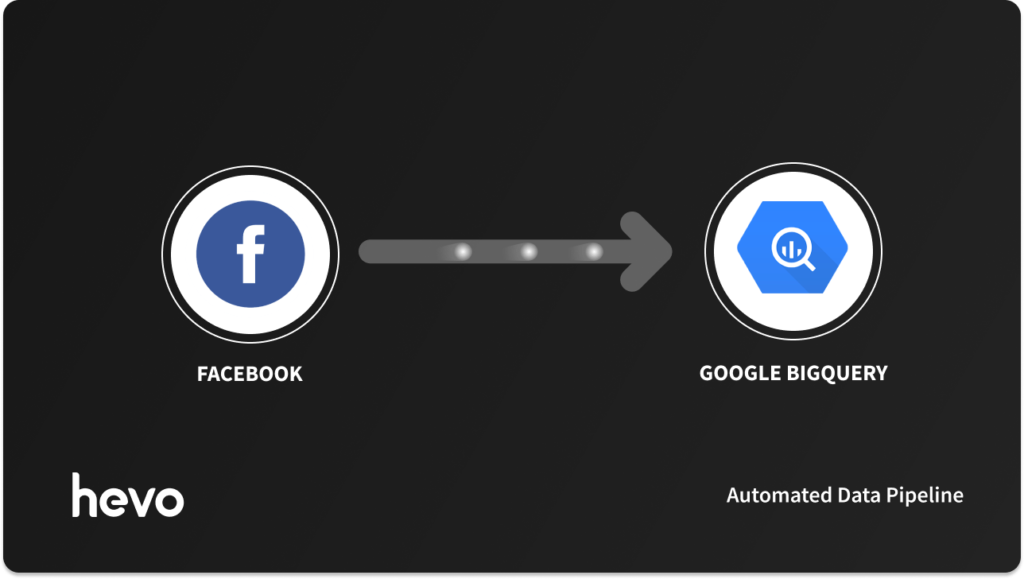
In the modern digital landscape, data is the lifeblood of marketing strategy. However, for many performance marketers and data engineers, the "walled garden" of Facebook Ads Manager acts as a significant bottleneck. While Meta’s native platform provides essential snapshots of campaign performance, it fails to provide the holistic view required for advanced data modeling.
As organizations strive to unify their marketing data with CRM, product, and revenue metrics, the need to move Facebook Ads data into a centralized data warehouse—specifically Google BigQuery—has become a top priority. This article explores the necessity of this integration, the technical pathways available, and why automation is rapidly replacing manual workflows in the enterprise space.
The Strategic Imperative: Why Move Ads Data to BigQuery?
The primary challenge with Ads Manager is its siloed nature. When your Facebook ad data is trapped in a proprietary interface, it remains isolated from the rest of your business ecosystem. By migrating this data to Google BigQuery, businesses gain several strategic advantages:
1. Unified Multi-Channel Attribution
Marketing does not happen in a vacuum. To calculate true Customer Acquisition Cost (CAC) and Return on Ad Spend (ROAS), you must correlate ad spend with backend revenue data. BigQuery allows you to join Facebook performance logs with Stripe, Salesforce, or Shopify data, providing a complete picture of the customer journey.
2. Advanced SQL-Powered Analytics
Ads Manager limits you to predefined dashboards. Once your data resides in BigQuery, you can execute complex SQL queries to identify granular trends, perform cohort analysis, and calculate custom metrics that Meta’s interface doesn’t support.
3. Predictive Modeling and Machine Learning
BigQuery’s integration with Vertex AI and other machine learning tools allows data scientists to forecast future ad performance. By training models on historical spend and conversion data, organizations can automate budget allocation and optimize bid strategies before the market shifts.
Methods of Integration: A Comparative Analysis
Moving data from a third-party API like Facebook into a cloud warehouse is rarely a "set it and forget it" task. There are three primary ways to achieve this, each with distinct trade-offs regarding cost, engineering overhead, and reliability.
The Automated Approach (Hevo Data)
For organizations that prioritize speed and reliability, automated ETL (Extract, Transform, Load) platforms like Hevo offer a no-code solution. These platforms are designed to handle the "heavy lifting"—managing API rate limits, handling schema drift, and ensuring incremental data loads.
The Engineering Approach (Custom Code)
Some teams prefer to build proprietary pipelines using Python, SQL, and cloud functions. This provides total control over transformations but introduces significant long-term maintenance costs. As Meta updates its API versions, custom scripts frequently break, necessitating dedicated engineering hours to patch and debug.
The Manual Approach (CSV Exports)
While free, the manual method is arguably the most expensive in terms of human capital. Manually downloading reports and uploading them to BigQuery is prone to human error, creates data latency, and is entirely non-scalable for growing businesses.
Technical Chronology: Implementing the Pipeline
To successfully integrate Facebook Ads with BigQuery, teams must follow a structured implementation process.
Phase 1: Authentication and Scoping
Before data can flow, you must establish an application within the Meta for Developers portal. This requires configuring an App ID and obtaining a long-lived Access Token with the correct permissions (ads_management, read_insights).
Phase 2: Choosing the Ingestion Mechanism
- Pulling via Graph API: This is the most common method for batch reporting. By querying the
/insightsendpoint, you can pull performance metrics (impressions, clicks, spend) filtered by date ranges. - Webhooks for Real-Time: For businesses that require near-real-time updates, Webhooks allow Meta to "push" notifications to your server when a campaign status changes.
Phase 3: Schema Mapping and Loading
Once the data is extracted, it must be transformed into a format compatible with BigQuery’s schema requirements. This involves mapping JSON-based ad objects into structured tables. Using a service like Google Cloud Storage (GCS) as a staging area is a best practice, allowing you to load large datasets efficiently via the bq load command.
Supporting Data: The Cost of Inaction
According to recent industry benchmarks, marketing teams spend approximately 30% of their time on manual data preparation rather than actual analysis. For a mid-sized team of five analysts, this equates to roughly 600 hours of wasted productivity annually.
Furthermore, manual data management introduces a 15–20% risk of error in reporting. These discrepancies—often caused by timezone mismatches or misaligned attribution windows—can lead to poor decision-making and, ultimately, wasted advertising budget. Conversely, automated pipelines report a 99.9% data accuracy rate, providing a single source of truth that executive leadership can trust.
Official Perspectives on API Evolution
Meta has been aggressively updating its Marketing API throughout 2025 and 2026. These updates are largely focused on user privacy and the deprecation of legacy fields. For developers building custom pipelines, these updates are a significant hurdle.
"The landscape of marketing data is becoming increasingly complex," says a senior data architect in the field. "When companies rely on custom scripts, they are essentially taking on the burden of a full-time software vendor. Every time Meta pushes an update, the internal team has to pivot. Automated tools are not just an alternative; they are a necessity for business continuity."
Implications for Future Growth
The integration of Facebook Ads into BigQuery is more than a technical project—it is a transformation of the corporate culture.
From Descriptive to Prescriptive Analytics
Most companies start by using BigQuery to see what happened (descriptive). As the data matures, the organization moves to understanding why it happened (diagnostic), and eventually, they use the historical repository to determine what will happen (predictive).
Competitive Advantage
In a crowded market, the company that can optimize its ad spend the fastest wins. By having your Facebook Ads data in BigQuery, you can build custom dashboards in Looker Studio or Power BI that visualize the correlation between ad spend and customer lifetime value (CLV). This level of visibility allows you to kill underperforming campaigns in real-time and double down on high-converting segments, giving you a distinct edge over competitors who are still relying on static, end-of-month spreadsheets.
Frequently Asked Questions (FAQ)
Q: Can I achieve real-time streaming with Facebook Ads?
A: While true sub-second streaming is difficult due to Meta’s API structure, you can achieve "near-real-time" reporting by using Webhooks to trigger updates to your database the moment a campaign event occurs.
Q: What is the biggest risk of using custom code for ETL?
A: The "brittleness" of the code. When the Facebook API evolves or a specific field is deprecated, your pipeline will fail. Without an automated monitoring system, you may go days without realizing your data is stale, leading to incorrect budget decisions.
Q: How does BigQuery handle nested ad data?
A: BigQuery is uniquely suited for this, as it supports RECORD and ARRAY data types. This allows you to store complex, nested JSON objects from the Facebook API without flattening them, preserving the relational integrity of your ad data.
Q: Is it better to use Google Cloud Data Transfer Service?
A: While Google offers native tools for Google Ads, the connector for Facebook Ads is often limited. Most enterprise users opt for third-party ETL providers like Hevo because they offer pre-built, optimized connectors that handle the specific quirks of the Facebook Marketing API more effectively than generic transfer services.
Conclusion: The Path Forward
The transition from fragmented spreadsheets to a centralized BigQuery repository is a milestone in any data-driven organization’s journey. While manual methods and custom code offer temporary solutions, they rarely stand the test of time as data volume grows and API complexity increases.
By choosing a robust, automated pipeline, companies can eliminate the friction of data engineering and refocus their energy on what truly matters: deriving actionable insights from their marketing efforts. Whether you are scaling your ad spend or refining your attribution models, the infrastructure you build today will define the accuracy and speed of your strategic decisions tomorrow.
For those ready to move beyond the limitations of Ads Manager, the tools to build a professional-grade, scalable data warehouse are more accessible than ever. It is time to treat your marketing data with the same technical rigor as your product data.