The Death of Information Overload: Why Curation is the New Currency in Marketing
In the modern digital landscape, the primary challenge facing marketing leaders is not a scarcity of information, but a paralyzing surplus of it. Every day, the typical CMO’s inbox and social media feeds are bombarded with a deluge of industry reports, theoretical frameworks, and “must-read” case studies. Yet, despite this constant influx, there is a growing disconnect: marketing professionals are busier than ever, yet they often struggle to find the specific, actionable insights required to navigate an increasingly complex industry.
The consensus among industry experts is shifting: marketing leaders do not need more content—they need better filters. This realization has sparked a quiet revolution in email marketing, as brands pivot away from broad, high-volume dissemination toward highly curated, strategic intelligence. A prime example of this evolution is the recent transformation of Convince & Convert’s (C&C) long-standing newsletter, ON, into its new, streamlined iteration, The Trendline.
The Shift Toward Curated Intelligence
For years, the standard playbook for brand newsletters involved a "link-heavy" approach—a collection of headers and URLs designed to drive traffic back to a corporate website. While this format served its purpose in a less crowded internet, it has become increasingly ineffective in the face of modern audience fatigue. Today’s marketing leaders are time-poor and information-rich; they prioritize formats that deliver high-value insights directly within the body of an email.
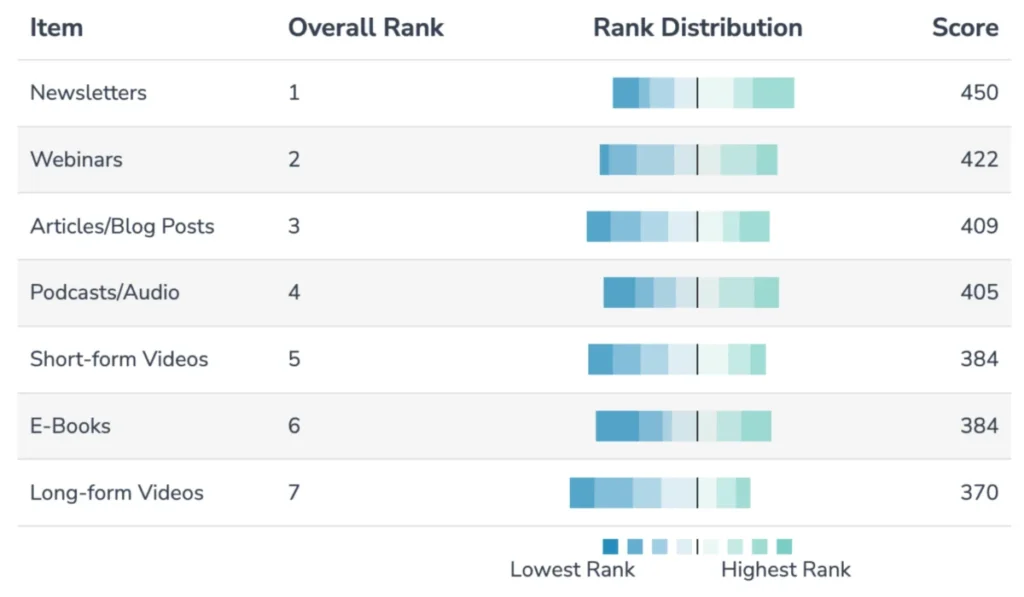
Recent audience research conducted by C&C confirms this shift in consumption habits. When surveyed about their preferred methods for staying informed on marketing trends, industry professionals ranked newsletters as their number one choice, outperforming short-form video, webinars, blogs, and podcasts. The data indicates that newsletters are not merely being read; they are being utilized as essential decision-making tools.
The Anatomy of the "Information Filter"
The fundamental flaw in traditional newsletters is the requirement for the reader to do the "heavy lifting." If a reader must click through five different links to determine whether a story is relevant to their business, the friction is often too high, and the content is ignored.
The new philosophy, as embodied by The Trendline, focuses on delivering a "debrief" rather than a "digest." This means providing:
- Strategic Context: Explaining not just what happened, but why it matters to a marketing leader’s specific goals.
- Reduced Friction: Eliminating the requirement for the reader to leave the email to grasp the core takeaway.
- Curated Authority: Serving as a trusted filter that separates signal from noise, effectively saving the reader time while increasing their industry IQ.
Chronology of a Transformation: From ‘ON’ to ‘The Trendline’
The decision to rebrand and restructure was not a reactionary move, but one informed by years of data and shifting audience sentiment.
Phase 1: The Audit (Ongoing)
For years, C&C utilized the ON newsletter to distribute a wide array of content, ranging from podcast episodes to original research. However, the team noticed that the format was increasingly disconnected from how their audience actually consumed information. The structure was based on the medium of the content (e.g., "Here is our latest blog post") rather than the utility of the content.

Phase 2: Audience Research (The Catalyst)
An annual survey of C&C’s audience revealed a clear preference: marketers wanted intelligence, not just links. When respondents were asked to rank their preferred learning formats, newsletters emerged as the clear frontrunner, nearly doubling the engagement scores of other media types.
Phase 3: Re-conceptualization (The Strategy)
The team identified three critical opportunities for improvement:
- Moving from list-based to insight-based: Shifting the focus from simply aggregating links to providing expert commentary.
- Prioritizing the "Upfront Value": Ensuring that the core value proposition of the newsletter is delivered within the email itself, rather than forcing clicks.
- Creating a "Voice of Authority": Transforming the newsletter from a company update into a strategic resource that helps leaders think more critically.
Phase 4: Launching ‘The Trendline’
The rebranding to The Trendline serves as a symbolic and structural commitment to this new model. By moving away from the generic ON moniker, the brand established a title that signals topical, forward-looking analysis—a "trendline" that tracks where the industry is headed rather than where it has been.
Supporting Data: Why Newsletters Lead the Pack
The transition was heavily influenced by the raw data gathered from the C&C audience. When respondents were asked to rank seven distinct content formats, the results were decisive:
- Newsletters: Consistently ranked as the most preferred format for learning about trends.
- Strategic Depth: The survey highlighted that readers prioritize "thought-leadership" and "why-it-matters" analysis over raw news reporting.
- Engagement Metrics: Preliminary data from the new format indicates that by including clear, actionable summaries, the "Sound Off" poll feature at the end of each email has provided a more reliable engagement metric than traditional, "muddier" open or click-through rates.
This data reinforces a broader industry trend: as AI-generated content continues to saturate the web, the "human filter"—the curated, vetted, and interpreted perspective of an expert—becomes a premium commodity.
Official Perspectives: The Strategic Rationale
According to leadership at Convince & Convert, the move to The Trendline represents a significant investment in owned media. "Marketing leaders don’t have time for constant deep dives," one strategist noted during the transition. "They need a resource that acts as a debrief—a way to cut through the noise and focus on what actually moves the needle."
The rationale is clear: by providing a more curated, high-value experience, the brand is effectively building trust. In an era where trust is the primary currency of B2B marketing, the ability to act as a trusted advisor to a CMO is far more valuable than simply driving a higher volume of website clicks.
Furthermore, the team emphasized that this change is not a "lateral move." It requires more labor, more strategic writing, and more consistent oversight. However, they argue that the return on investment—in the form of deeper audience relationships and enhanced brand authority—is significant.

Implications for the Broader Marketing Industry
The shift toward the Trendline model serves as a case study for any brand looking to refine its email marketing strategy. As the market reaches a saturation point for generic, automated content, the following lessons become vital:
1. Deliver Value Upfront
Brands must stop treating their newsletters as "traffic drivers" and start treating them as "value centers." If the email does not offer a standalone benefit, it is likely to be ignored or deleted.
2. Know Your Audience’s "Pain Point"
For senior leaders, the pain point is rarely a lack of news; it is a lack of time. Your newsletter should be designed to save them time by synthesizing complexity into clarity.
3. The Power of "Owned" Channels
Social media algorithms are fickle and prone to change. An owned email list, nurtured with high-value content, remains one of the few channels where a brand can directly connect with its audience without the interference of a third-party gatekeeper.
4. Interactive Engagement
Replacing static metrics with interactive ones—like the "Sound Off" poll—allows brands to build a two-way relationship with their readers. It provides a feedback loop that helps the content team pivot based on what the audience actually cares about.
Conclusion: The Future of Email Marketing
The transition to The Trendline is a testament to the fact that content marketing is not dead, but it is maturing. The "golden age" of content, where sheer volume dictated success, has been replaced by the "age of curation."
For marketing leaders and brand strategists, the path forward is clear: success will be found by those who can provide the most relevant, insightful, and concise information to their audiences. In an ecosystem drowning in noise, the brand that acts as the most reliable filter will inevitably earn the most loyalty. As the industry continues to evolve, the newsletters that survive will be those that do more than just inform—they will help their readers think, strategize, and lead with confidence.