The Death of the Traditional Search Bar: How Nudge is Architecting the ‘Agentic’ Future of Ecommerce
The digital storefront, once defined by the rigid architecture of search engine result pages (SERPs) and static category filters, is undergoing a seismic shift. As consumers increasingly bypass traditional search engines in favor of conversational AI—turning to ChatGPT, Gemini, and Perplexity for nuanced, intent-driven product discovery—ecommerce brands find themselves facing an existential visibility crisis.
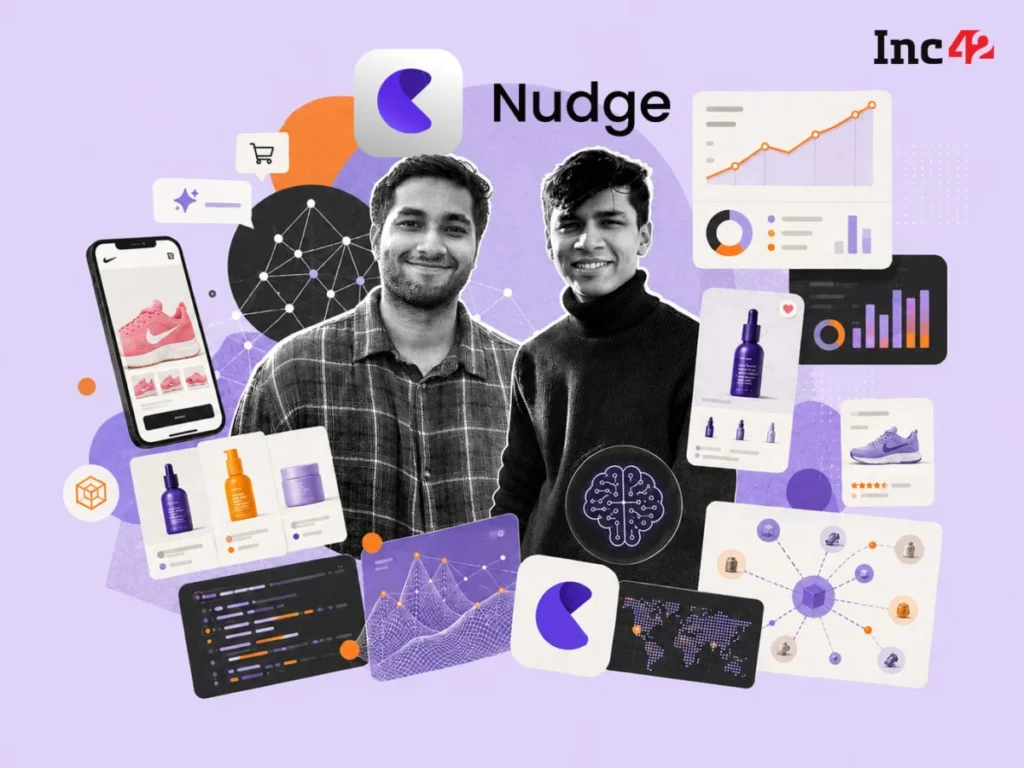
In this new landscape, the "search bar" is no longer a text box on a website; it is an AI prompt. For brands, the challenge is no longer just ranking for a keyword, but convincing an AI model that their product is the definitive answer to a complex, natural-language query. Enter Nudge, a Bengaluru-based startup founded in 2023, which is positioning itself as the critical "action layer" for the era of agentic commerce.
The Genesis: From Esports to AI-Driven Commerce
The story of Nudge is one of rapid iteration and a keen understanding of digital communities. Founders Kanishka Thakur and Gaurav Rawat did not begin their journey in the world of retail software. Their initial entrepreneurial venture, Klutchh, was an esports fantasy platform focused on high-engagement titles like Counter-Strike and PUBG.
By 2021, Klutchh had amassed nearly 50,000 active users, proving that the founders possessed a unique talent for building software that fostered deep community interaction. However, the business model faced the harsh reality of the gaming sector: while engagement was high, monetization remained elusive. The niche nature of esports fantasy, combined with a user base often reluctant to pay for premium features, forced the duo to re-evaluate their trajectory.
"We had people constantly active on our Discord servers and heavily using the product," Thakur recalls. "That’s when we realized we genuinely liked building products that communities cared about."
In 2023, the founders pivoted. Initially, they explored ecommerce personalization—helping brands tailor their websites for individual shoppers. But as generative AI began to dominate the digital discourse, the duo realized that the battle for customer attention was being won or lost long before the user reached the checkout page. The focus shifted from the website itself to the "AI interface"—the space where consumers ask, "What is the best running shoe for under $100?"

The "Action Layer": Bridging the Gap Between Chat and Checkout
Historically, Direct-to-Consumer (D2C) brands optimized their digital presence for Google’s crawlers and Meta’s algorithms. Today, the game has changed. When an AI agent recommends a product, it must be supported by data that the AI can interpret, rank, and present with confidence.
Nudge describes its core offering as the "action layer" for AI-led shopping. It does not simply analyze the conversation; it facilitates the transition from AI-driven discovery to a high-conversion purchase experience.
How the Technology Works
Nudge operates by dynamically modifying the shopping experience based on the intent identified by the AI. If a user asks a chatbot for "comfortable running shoes under $100 with quick delivery," the Nudge platform works behind the scenes to:
- Dynamically Adjust Product Descriptions: Ensuring the language on the landing page mirrors the specific intent of the user’s prompt.
- Curate Reviews and Bundles: Surfacing social proof and complementary products that align directly with the criteria mentioned in the AI conversation.
- Enrich Catalogues: Continuously updating metadata, schemas, and attributes so that when an AI model queries the brand’s catalogue, the output is optimized for accuracy and relevance.
"The AI platform becomes the salesperson," Thakur explains. "The challenge is making sure the product page still matches what the user was actually looking for. If the AI promises a specific feature, the website must deliver that promise immediately upon arrival."
Autonomous Experimentation: The End of Static A/B Testing
One of Nudge’s most significant technical differentiators is its approach to A/B testing. Traditional ecommerce platforms have long relied on split testing, where two versions of a page are compared over weeks to determine a winner. In the fast-paced world of AI-generated traffic, this process is far too slow.
Nudge utilizes a sophisticated engine powered by Anthropic’s Claude Opus 4.7 and Google’s Gemini 3.5. Instead of static testing, the startup creates multiple variants of webpages simultaneously. The system monitors performance in real-time, autonomously retiring underperforming versions while generating new, optimized alternatives based on shifting user behavior.

"What’s happening is, at all times, you have multiple kinds of personalized product pages running continuously," says Thakur. This self-improving loop ensures that the brand’s digital storefront evolves in tandem with the conversational patterns of the internet.
Supporting Data and Market Traction
Nudge is not merely a theoretical construct; it is currently supporting over 25 paying customers, including industry heavyweights such as L’Oréal, Nykaa, and BigBasket. While the company maintains a global outlook, the majority of its current revenue is derived from the US market, a testament to the aggressive pace at which American brands are adopting AI-native retail strategies.
The startup operates on a subscription-based model that scales with the volume of "agentic commerce opportunities" processed. This pricing structure aligns Nudge’s success directly with the success of its clients—the more effectively the platform handles AI-driven traffic, the more the startup earns.
In a recent funding milestone, Nudge secured $1.1 million in a pre-seed round led by s16vc, with participation from veteran operators from Shopify, Nutanix, and Postman. This influx of capital is earmarked for further development of their AI infrastructure, specifically for "post-click" purchase journeys and AI-driven advertising workflows.
The Implications for Global Ecommerce
The rise of Nudge highlights a broader trend: the "death" of the traditional search bar is forcing a complete architectural overhaul of the web.
1. The Death of Generic SEO
For decades, SEO was the primary gatekeeper of the internet. However, as AI models aggregate information into direct, synthesized answers, the "ten blue links" of Google are losing their dominance. Brands that do not invest in "AI-native discovery" risk being invisible to the next generation of consumers.

2. The Rise of the "Conversational Moat"
The competitive advantage of the future will not be defined by the number of backlinks a site has, but by how well a brand’s catalogue is "understood" by LLMs (Large Language Models). Companies like Nudge are essentially building a new form of infrastructure that translates brand identity into the language of machines.
3. Consolidation of the Retail Stack
Nudge’s ambition is to move beyond mere search visibility. By integrating into the commerce workflows of Shopify and Salesforce, the company is positioning itself as a central nervous system for ecommerce. If the startup succeeds, it could effectively bridge the gap between discovery and purchase, effectively controlling the entire journey from a user’s initial query to the final checkout.
Future Outlook: The Road Ahead
While Nudge has established a firm footing, the path ahead is not without its challenges. The company is currently in discussions to onboard large-scale enterprise retail players that operate across both digital and physical brick-and-mortar environments. Integrating AI-native online experiences with offline retail inventory and logistics will be a significant test of the platform’s scalability.
Moreover, the "agentic" nature of the market is still in its infancy. As AI models become more autonomous—eventually moving from recommending products to actually executing purchases on behalf of users—the requirements for "visibility" will shift once more.
Thakur remains optimistic about the long-term vision. "The search part becomes table stakes," he notes. "The bigger opportunity is controlling the actual commerce experience from discovery to purchase."
As conversational AI becomes the default "front door" to the internet, Nudge is making a high-stakes bet: that the next ecommerce moat will be built not on keywords or ad spend, but on the ability to provide an AI-native, intent-aware shopping journey. Whether Nudge can continue to outpace the rapid evolution of the AI landscape remains to be seen, but one thing is certain: for the brands that rely on it, the future of commerce is already speaking in natural language.