The Quick-Commerce Pivot: Why Fashion-Focused Klydo is Hitting the Brakes
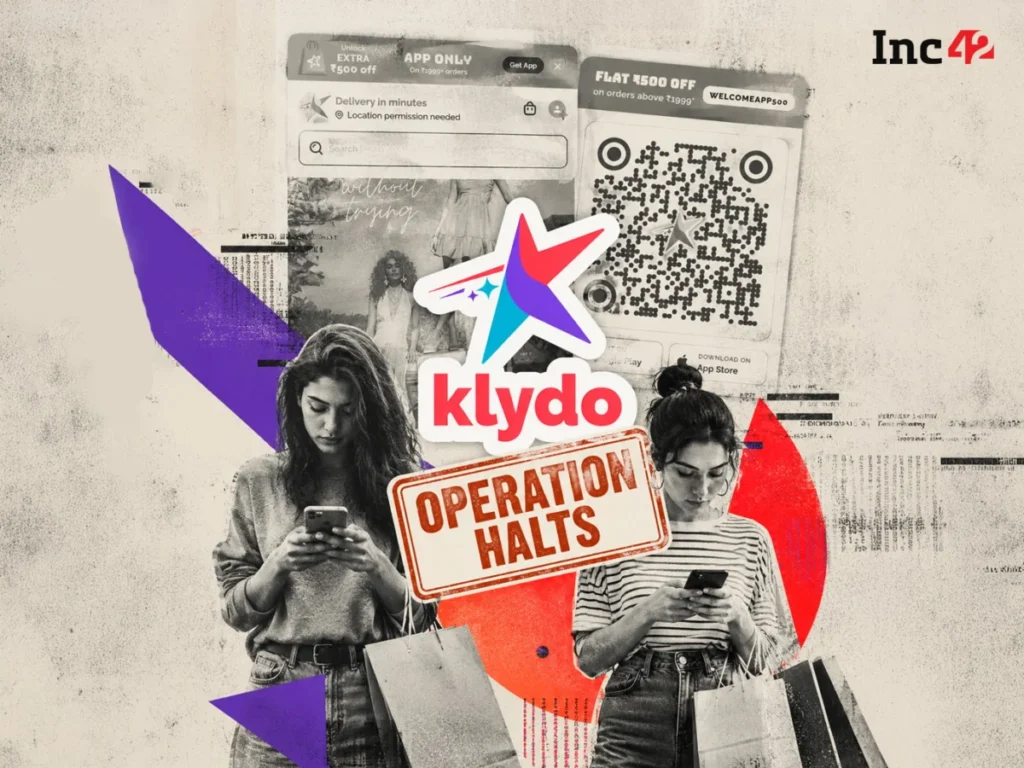
In the volatile ecosystem of Indian startups, the line between disruption and disintegration is often razor-thin. Bengaluru-based quick-commerce startup Klydo, which burst onto the scene with the ambitious promise of delivering fashion, footwear, and lifestyle goods within 15 to 30 minutes, has officially paused its consumer-facing operations. The move comes less than a year after the company’s inception, marking a sobering moment for a sector that has been aggressively experimenting with the "instant gratification" model.
As Klydo prepares to wind down its current service, the industry is left to grapple with a pressing question: Is the "10-minute delivery" model truly viable for high-SKU, high-return categories like fashion, or has the quick-commerce bubble finally met its reality check?
The Current Landscape: Klydo’s Sudden Halt
Klydo, which was launched in September 2025 by former Udaan executives Pradeep Yadav and Ankit Agarwal, recently issued a notification to its user base signaling a departure from its current operational model. The startup, which operated primarily in Bengaluru, offered a curated selection of apparel, accessories, home decor, and gifting items, promising lightning-fast logistics that challenged traditional e-commerce timelines.
In an official note posted to its platforms, the company framed the decision as a strategic pivot rather than a total collapse. "Klydo is pivoting in a new direction based on everything we’ve learned so far," the statement read. "While we’ve paused our current consumer offering, we’re now focused on building the next chapter of the company around a sharper product vision."
For the next few days, the app remains functional solely for administrative purposes—allowing users to access their order histories and reach out to customer support. Once this transition period concludes, the consumer-facing app will be effectively decommissioned, leaving a void in the niche segment of hyper-local fashion logistics.
A Chronology of Ambition and Adjustment
The trajectory of Klydo reflects the "blitzscaling" mentality that has characterized the Indian startup ecosystem over the past three years.
- September 2025: Klydo is founded by industry veterans Pradeep Yadav and Ankit Agarwal. With their pedigree in B2B commerce (Udaan), the founders aimed to apply the efficiencies of supply chain management to the hyper-local consumer market.
- Late 2025 – Early 2026: The startup gains traction in Bengaluru, capitalizing on the rising demand for convenience. It positions itself as a premium service, targeting urban professionals who value time over traditional shipping windows.
- Mid-2026: As the operational costs of maintaining micro-warehouses and managing rapid last-mile logistics mount, the company faces the same "cash burn" hurdles that have plagued the broader quick-commerce industry.
- Mid-2026 (Current Status): Following the lead of other struggling niche players, the founders decide to pull the plug on the consumer business to preserve capital and pivot toward a new, yet-to-be-disclosed product direction.
The rapid rise and subsequent pause of Klydo mirror the recent struggles of other players like Blip, a fellow Bengaluru-based entity that was forced to cease operations earlier this year due to a combination of unsustainable burn rates and a drying pool of venture capital.
The Economic Realities: Why Fashion Isn’t Groceries
The primary challenge for fashion-focused quick commerce lies in the fundamental difference between the "commodity" model of groceries and the "preference" model of fashion.
Inventory Complexity
In the grocery segment, items are standardized. Milk is milk, and a bottle of detergent is a uniform SKU. In fashion, the "size-color-fit" matrix creates a massive inventory burden. To ensure a 15-minute delivery, a startup must stock vast quantities of apparel in micro-hubs located in the heart of residential areas. If a customer orders a T-shirt and it doesn’t fit, the cost of the return logistics essentially wipes out the margin of the initial sale.
The Profitability Paradox
High inventory requirements coupled with low sell-through rates make profitability a Herculean task. While quick commerce has successfully disrupted the "kirana" market through grocery delivery, applying this to fashion creates a "persistent cash burn" scenario. Investor scrutiny has reached an all-time high, with VCs now demanding clear paths to unit-level profitability rather than growth at any cost.
Industry Implications: The Consolidation of Giants
While startups like Klydo and Blip struggle to sustain their independent operations, the "big players" in the industry are treating quick commerce as the inevitable next phase of evolution.
For established behemoths, the infrastructure is already in place. Myntra has launched ‘M-Now,’ and Nykaa has aggressively expanded ‘Nykaa Now’ across multiple cities. Unlike smaller startups, these incumbents leverage existing supply chains, massive brand equity, and deep pockets to subsidize the high costs of rapid delivery.
The strategy for these giants is clear: they are not attempting to build a new business from scratch, but rather optimizing their existing logistics to provide "convenience as a service." By absorbing the cost of rapid logistics into their broader retail operations, they effectively crowd out smaller, capital-starved entrants.
Market Outlook: The Path to $100 Billion
Despite the tremors in the startup ecosystem, the underlying market for fashion e-commerce in India remains exceptionally bullish. According to industry reports, the Indian fashion e-commerce market was valued at approximately $21.6 billion in 2025. It is projected to reach a staggering $98.45 billion by 2032, growing at a robust Compound Annual Growth Rate (CAGR) of 24.2%.
This massive growth potential is what continues to attract entrepreneurs to the space, even as the "quick-commerce" subset undergoes a painful correction. The question for the next generation of founders is not whether the market exists, but whether the "instant" promise can be decoupled from the "unsustainable" cost.
Industry analysts suggest that the future of fashion commerce may lie in a hybrid model—perhaps focusing on "next-day" delivery or "hyper-local fulfillment" rather than the 15-minute window. By reducing the frequency of delivery cycles and focusing on high-margin, low-return items (such as accessories or gifting), companies might find a way to balance the consumer demand for speed with the economic necessity of margin.
Official Stance and Future Direction
As of the time of reporting, Klydo has not released specific details regarding its future product vision. When contacted for comment, the startup remained tight-lipped, focusing instead on the transition period for its existing users.
The departure of Klydo from the consumer arena serves as a stark reminder of the "survival of the fittest" environment in the Indian startup scene. Founders Yadav and Agarwal, with their deep experience in the sector, are likely analyzing the data gathered over the last ten months to identify a more sustainable niche. Whether this new "sharper product vision" involves a pivot into B2B software, supply chain tech, or a completely different consumer vertical remains to be seen.
Conclusion: A Lesson in Resilience
The story of Klydo is neither an end nor a failure; it is a manifestation of the iterative nature of the modern digital economy. In a market projected to grow nearly five-fold over the next seven years, the "quick-commerce" experiment is simply finding its equilibrium.
For consumers, the loss of Klydo is a disappointment. For the industry, it is a necessary culling. As investors pivot their attention toward models that promise long-term sustainability over short-term buzz, the next chapter of Indian fashion retail will likely be defined by efficiency, technology, and a more calculated approach to the logistics of desire.
The "15-minute" promise may have been too much, too soon for the fashion industry, but the quest to redefine the retail experience is only just beginning. As Klydo prepares for its next chapter, the startup world waits to see what "sharper vision" actually looks like in practice.