Beyond the Output: A Comprehensive Guide to Rigorous AI Agent Evaluation
In the rapidly evolving landscape of artificial intelligence, a dangerous misconception persists: that AI agents—autonomous systems capable of reasoning and using tools—can be evaluated with the same rudimentary frameworks used for static Large Language Models (LLMs). For many development teams, the current "gold standard" involves running a few tasks, inspecting the final response, and assuming that a coherent output equals a functional system.
This approach is fundamentally flawed. An agent might provide a correct answer while simultaneously failing to follow proper security protocols, wasting compute resources, or relying on hallucinated tool arguments. Evaluating only the final outcome masks the "internal plumbing" of the agent—the reasoning paths, tool calls, and decision-making logic that define its actual reliability. To build agents that are production-ready, teams must shift their focus from final outputs to the full execution process.
The Paradigm Shift: From Outcomes to Processes
Traditional LLM evaluation asks: "Is the answer correct?" Agent evaluation must ask: "Was the process that led to this answer efficient, logical, and safe?"
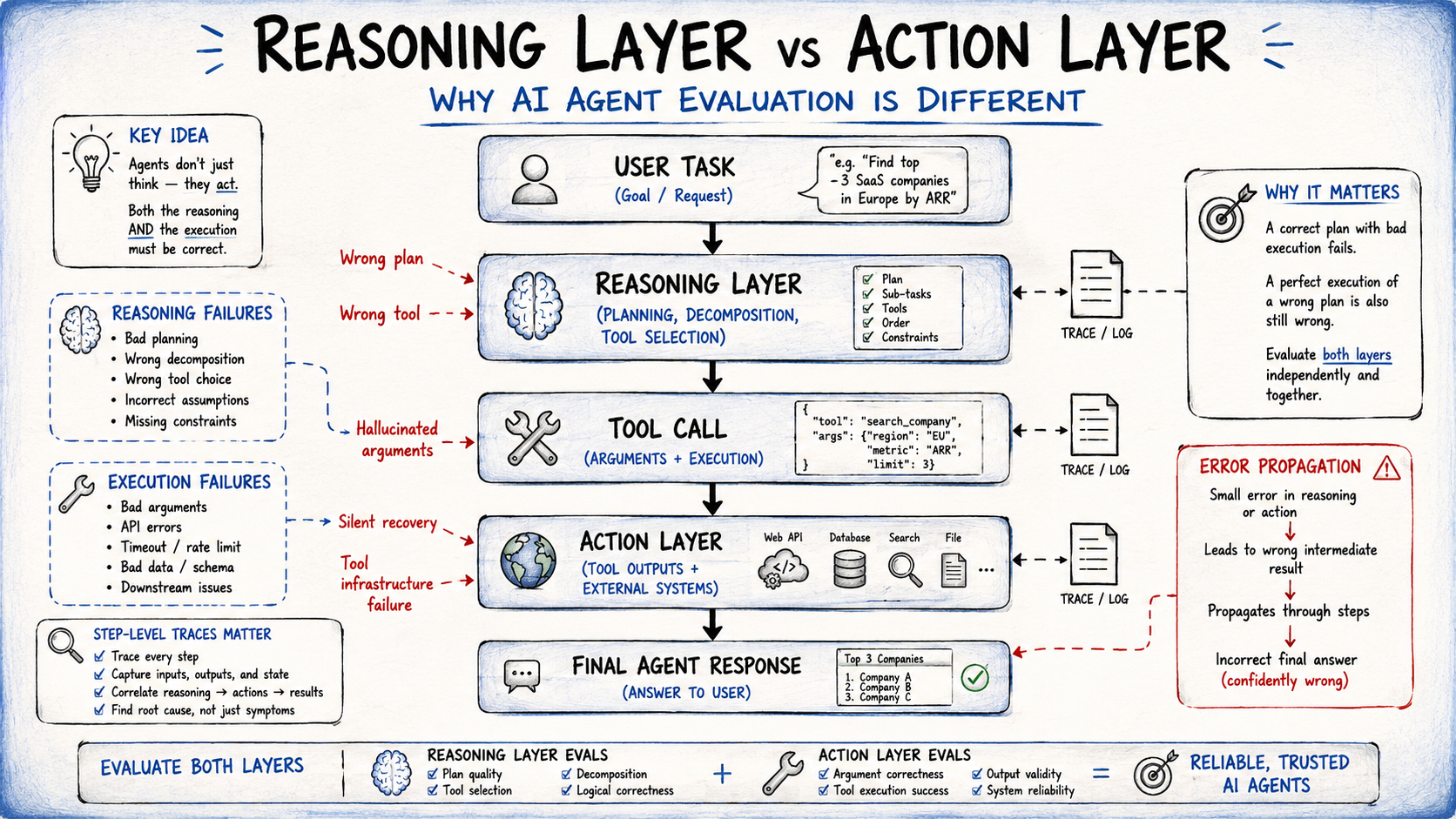
When an agent fails, developers often reflexively assume the system prompt is to blame. While prompting is a significant factor, many failures are actually measurement failures. Because agents operate across distinct layers—the Reasoning Layer (where the agent plans) and the Action Layer (where the agent executes tools)—a failure in one can be obscured by success in another.
For instance, an agent might reason perfectly about the need to retrieve a user’s database record, but then fail by passing malformed arguments to the database API. If we only grade the final output, we fail to identify which layer is breaking, leading to inefficient "trial-and-error" debugging. True agent evaluation requires step-level tracing: logs that capture each tool call, the arguments provided, the tool’s output, and the model’s subsequent reaction. Without this visibility, debugging is merely guesswork.
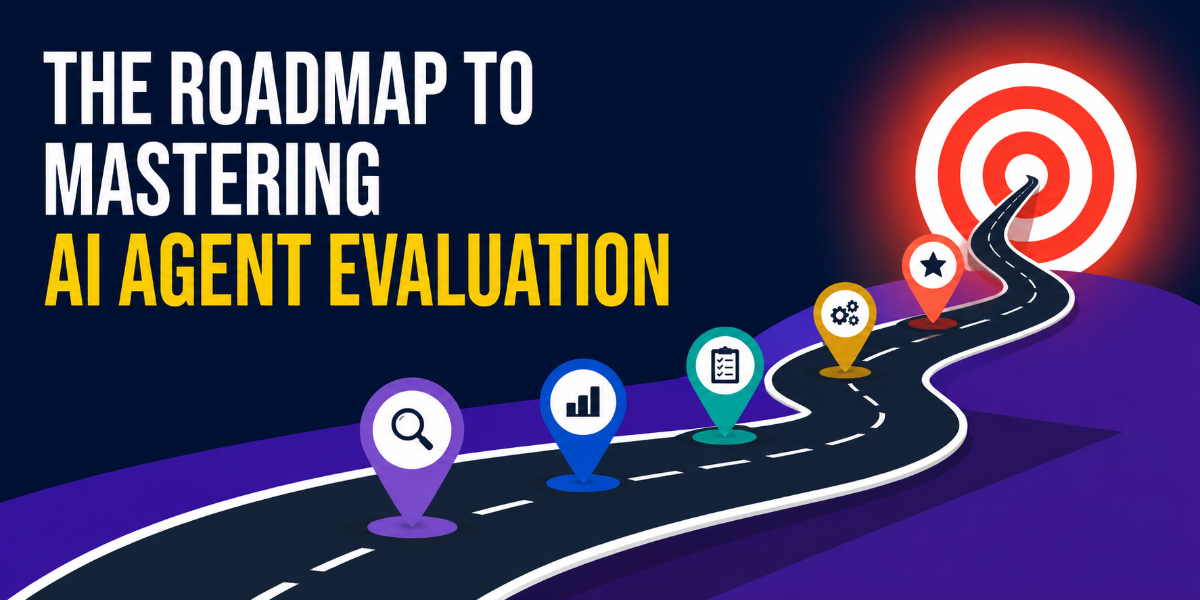
Chronology of an Effective Evaluation Workflow
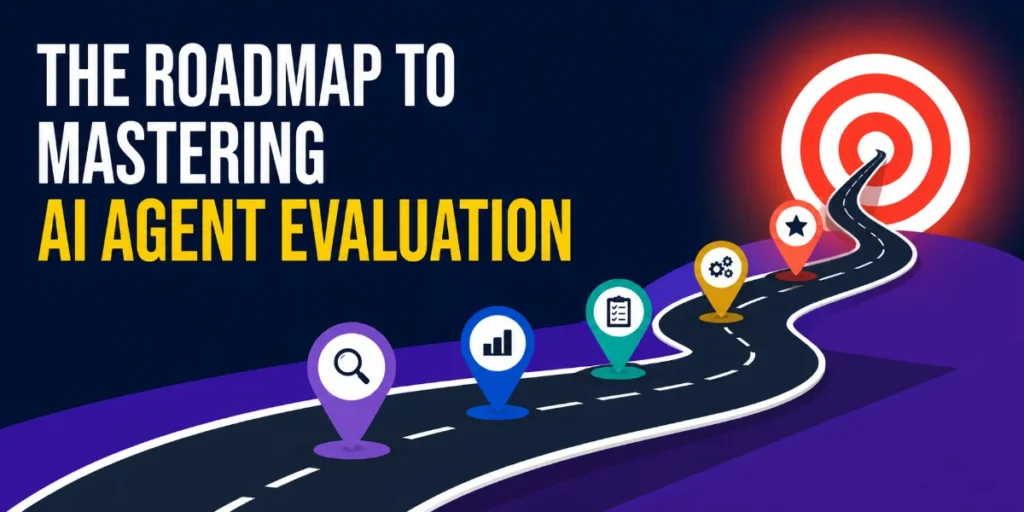
Building a robust evaluation harness is not a one-time setup but a lifecycle. To move from initial development to a hardened production system, follow this structured roadmap.
1. Defining Success: The Foundation of Quality
Evaluation is only as valuable as the criteria used to define a "pass." A successful evaluation task is one where two independent domain experts would arrive at the same verdict. Before running a single test, teams must establish:
- Unambiguous Task Specifications: Clear, non-negotiable requirements.
- Reference Solutions: Known-correct paths that serve as a baseline.
- Grading Logic: Explicit rubrics that define the boundaries of success.
2. The Two-Pronged Grading Approach
Once the criteria are set, grading should be bifurcated into deterministic and model-based systems.
Deterministic (Code-Based) Grading: This is the most cost-effective and reproducible method for the Action Layer. By using code to verify tool outputs—such as checking if a JSON object contains the required fields or if a function returned an expected error code—teams can catch structural failures instantly. These tests are fast, objective, and easy to debug.
Model-Based (LLM-as-a-Judge) Grading: For nuanced tasks like tone, empathy, or reasoning quality, deterministic code is insufficient. Here, an LLM-as-a-Judge acts as the evaluator. To ensure reliability, teams must avoid "vague" rubrics (e.g., "Is this helpful?"). Instead, use structured rubrics that break down requirements into granular, testable components. Furthermore, it is critical to calibrate these judges against human-graded samples periodically to detect "calibration drift."
Supporting Data and Metrics: Handling Non-Determinism
The most significant challenge in agent evaluation is non-determinism. Because agents are stochastic, the same input can yield different paths on successive runs. A single-trial evaluation is statistically insufficient.
To quantify this, teams should employ pass@k and pass^k metrics:
- pass@k: Measures the probability that at least one of k attempts succeeds. This is ideal for tasks where any valid path is acceptable.
- pass^k: Measures the probability that all of k attempts succeed. This is the gold standard for high-stakes agents (e.g., financial or medical) where consistency is mandatory.
Data indicates that even a high-performing agent with a 75% success rate on a single attempt will struggle to maintain that reliability over repeated cycles. Understanding the distribution of outcomes is the only way to accurately measure the robustness of an agent system.
Tailoring Strategy to Agent Archetypes
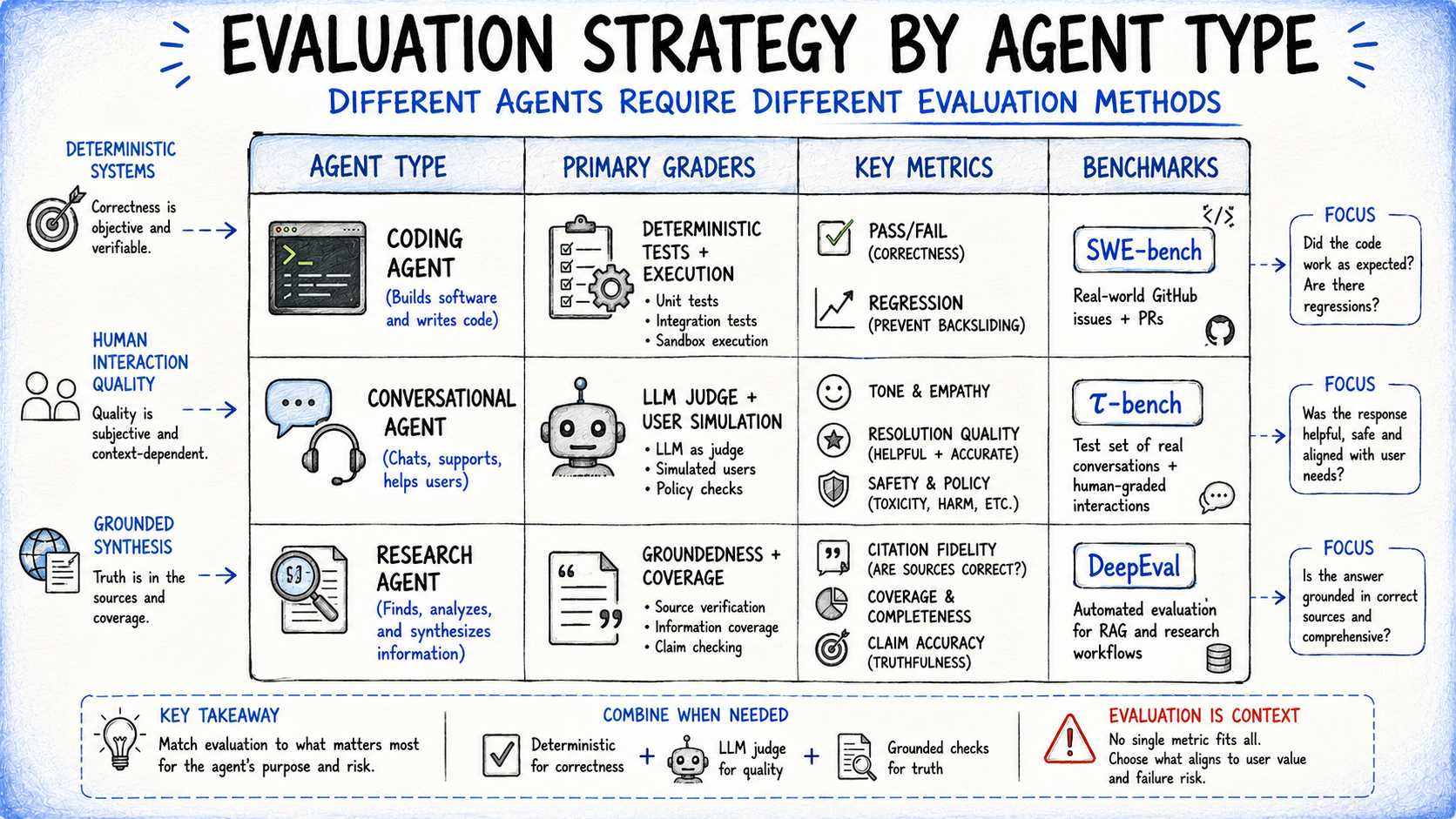
Different agents require different evaluation priorities. A "one-size-fits-all" approach will inevitably fail:
- Coding Agents: Evaluation focuses on deterministic benchmarks like SWE-bench. The priority is whether the code compiles, passes unit tests, and closes the ticket without introducing regressions.
- Conversational Agents: Evaluation must account for human-like interaction. Using a secondary LLM to simulate a user, frameworks like π-bench assess both the resolution of the task and the quality of the dialogue, ensuring the agent remains professional and aligned with brand guidelines.
- Research Agents: The primary focus is "groundedness." Evaluation must verify that every claim made by the agent is supported by the provided source material, penalizing the agent heavily for "hallucinated" citations.
Implications for Production and Regression
A critical distinction must be made between Capability Evals and Regression Suites.
Capability evals are forward-looking; they test the limits of what an agent can do. They should be difficult and intentionally designed to push the system to its breaking point. Once these tests reach a saturation point (e.g., 90%+ success), they should be migrated to the Regression Suite.
Regression suites act as the "safety net." They monitor performance on known, solved problems to ensure that new feature updates or prompt changes don’t break existing functionality. If a regression suite sees a dip, it is a red flag that immediate investigation is required.
Closing the Loop: Production Monitoring
Offline evaluation is a prerequisite for safety, but it is not a substitute for production monitoring. Real-world users interact with systems in ways that synthetic datasets never replicate. A complete evaluation strategy must include:
- Automated Evals: Running on every code commit to catch regressions.
- Production Monitoring: Tracking latency, token usage, and error rates in real-time.
- User Feedback Loops: Capturing "thumbs up/down" signals which often reveal intent-level failures that automated graders miss.
- Manual Transcript Review: The final layer of quality assurance where humans review logs to identify subtle flaws in reasoning that aggregate metrics might mask.
Conclusion: The Path Forward
The transition from "LLM-as-a-chat-interface" to "Agent-as-a-worker" is the most significant shift in the current AI era. However, this shift requires a parallel evolution in how we measure success. By moving away from simple "input-output" checks and toward rigorous, trace-based, and multi-layered evaluation frameworks, developers can transform brittle prototypes into resilient, enterprise-grade agents.
As tools like LangSmith, Braintrust, and DeepEval continue to mature, the barrier to implementing these rigorous frameworks is lower than ever. The teams that win will not be those with the most complex prompts, but those with the most disciplined evaluation strategies—ensuring that every decision their agents make is measured, verified, and fundamentally reliable.