The Engineering Science Behind Staggered Motorcycle Tyre Sizes: Why Front and Rear Wheels Are Never the Same
By Saurav Suman
Updated: July 04, 2026, 12:07 PM IST
To the casual observer, a motorcycle might appear to be a symmetrical machine. However, a closer inspection of the rubber meeting the road reveals a deliberate engineering asymmetry. Across almost every category of motorcycle—from nimble city commuters to high-octane superbikes—manufacturers fit different tyre sizes to the front and rear wheels. This is not a matter of aesthetic preference or manufacturing convenience; it is a fundamental requirement rooted in the divergent physical demands placed on each wheel.
Understanding why motorcycles utilize staggered tyre sizes requires a deep dive into the physics of motion, the dynamics of steering, and the complexities of power delivery.
Main Facts: The Functional Divide
At its core, the motorcycle is a vehicle that balances on two points of contact. Unlike a four-wheeled car, where tyre sizes are often uniform to allow for rotation and simplified inventory, a motorcycle requires specialized equipment for each end of the chassis.
The front tyre is primarily tasked with steering and braking. Because it must be capable of pivoting to change the bike’s direction, it is generally narrower and often larger in diameter. A narrower front tyre provides a lighter "steering feel," allowing the rider to tip the bike into corners with minimal effort. Furthermore, because the front tyre is responsible for the majority of stopping force during hard braking, it is designed with a profile that facilitates predictable feedback under load.
Conversely, the rear tyre is the powerhouse. Its primary responsibility is the transmission of engine torque to the tarmac. A wider rear tyre provides a larger "contact patch," which is critical for putting high horsepower onto the road without breaking traction. Furthermore, the rear tyre must support a significant portion of the rider’s weight and the bike’s mechanical bulk, necessitating a more robust, wider construction to maintain stability under acceleration.
Chronology of Motorcycle Tyre Evolution
The history of motorcycle tyre design is a trajectory of increasing specialization. In the early 20th century, motorcycles were primitive, low-powered machines. Many early bikes utilized uniform, skinny tyres simply because the engine output was negligible and steering geometry was rudimentary.
- The 1950s–1970s: As engine displacement grew, manufacturers began to recognize that the front and rear wheels experienced vastly different forces. The move toward "balloon" style tyres began, with rear tyres becoming slightly wider to handle the increasing torque of twin-cylinder engines.
- The 1980s–1990s: The advent of the superbike era necessitated a radical shift. Racing technology trickled down to street bikes, leading to the development of the "radial" tyre. Engineers began experimenting with vastly different widths and profiles to maximize lean angles.
- The 2000s–Present: Today, the industry has standardized the staggered approach. Through computer-aided design (CAD) and finite element analysis (FEA), modern engineers calculate the exact contact patch required for specific motorcycle architectures, ensuring that the front and rear tyres work in harmony to maintain the "gyroscopic effect" necessary for two-wheeled stability.
Supporting Data: Dynamics and Geometry
The physical difference between front and rear tyres is governed by several critical engineering metrics:
1. The Contact Patch and Grip
The contact patch is the area of the tyre actually touching the road. Under acceleration, the weight of the motorcycle shifts to the rear, increasing the load on the rear tyre. If the rear tyre were as narrow as the front, the pressure per square inch would be too high, leading to rapid overheating, excessive wear, and a loss of grip during acceleration. A wider rear tyre distributes this load across a larger surface, maintaining traction.
2. Steering Geometry and "Turn-in"
Steering is a function of the front tyre’s profile. A rounded, narrower front tyre allows for a more progressive "turn-in." If a front tyre were too wide, it would create a flat contact patch that resists leaning, making the motorcycle feel sluggish and heavy to steer. The "flickability" of a motorcycle—its ability to transition quickly from left to right in a chicane—is almost entirely dependent on the profile of the front tyre.
3. Gyroscopic Stability
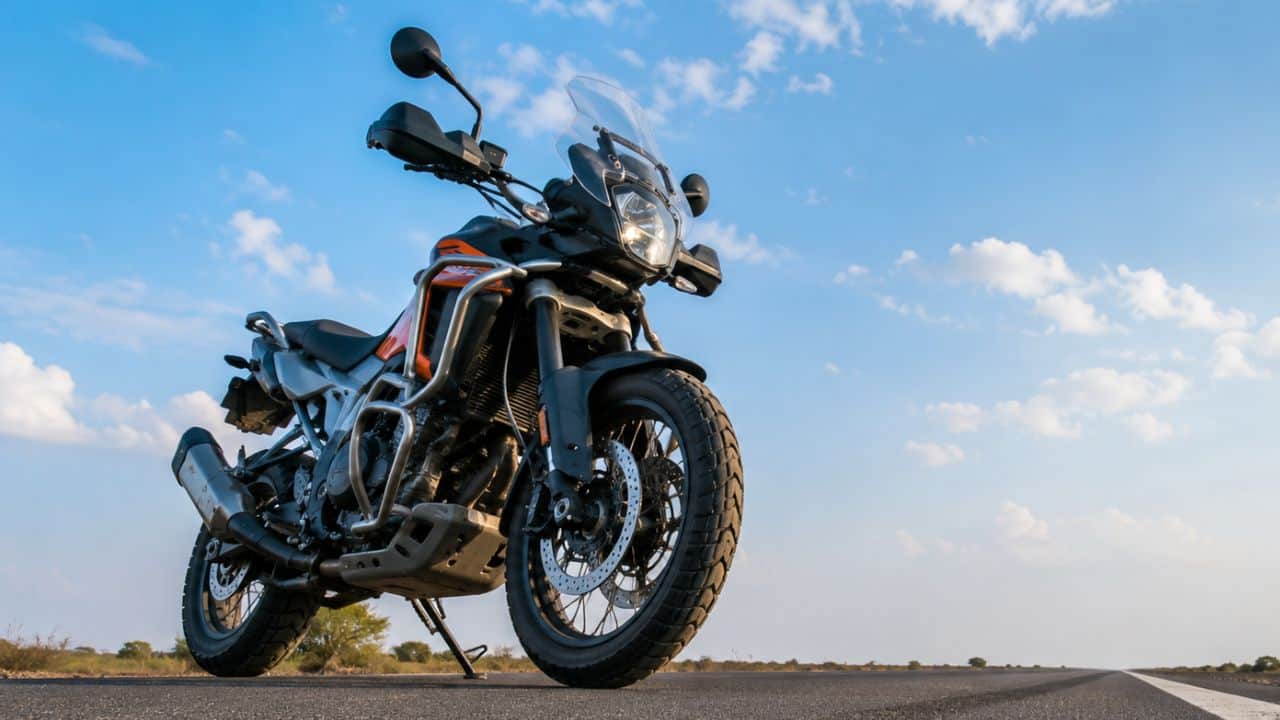
A larger diameter front wheel (often 17, 19, or 21 inches) provides the gyroscopic stability required to keep the bike tracking straight at high speeds. While the rear wheel is typically 17 inches on most modern sportbikes to keep the center of gravity low and optimize power transfer, the front wheel diameter is chosen to balance stability and agility.
Official Industry Responses
Leading tyre manufacturers, including Michelin, Pirelli, and Bridgestone, have long emphasized that the "pairing" of front and rear tyres is a precise science.
"When we develop a tyre set, we do not view them as two independent products," says a spokesperson for a leading global tyre manufacturer. "We develop a ‘system.’ The front tyre is designed to be the ‘brain’ of the handling, while the rear is the ‘muscle.’ If a consumer attempts to mix and match brands or incorrect sizes, they disrupt the balance of the motorcycle, often leading to unpredictable handling characteristics in corners or under emergency braking."
Industry regulators and safety bodies also mandate that motorcycle owners strictly adhere to the manufacturer’s specified sizes. Deviating from these dimensions—such as fitting an oversized rear tyre for "looks"—can alter the bike’s rake and trail, potentially leading to high-speed wobbles or dangerous understeer.
Implications for Riders and Consumers
The implications of this engineering reality are significant for motorcycle owners, particularly regarding maintenance and replacement.
The Dangers of "Mixing"
Because front and rear tyres are engineered to work together, they are often constructed with different rubber compounds. A rear tyre typically features a harder center compound to handle the high wear of acceleration and a softer compound on the shoulders for cornering. The front tyre, meanwhile, is designed with compounds that prioritize braking stability and cornering grip. Using a mismatched set can result in the front and rear tyres reaching their thermal limits at different times, creating a dangerous scenario where one tyre loses grip while the other is still performing optimally.
The Cost of Performance
The staggered size requirement also dictates the replacement cycle. Because the rear tyre is responsible for putting power to the road, it almost always wears out faster than the front. However, riders are cautioned against replacing only one tyre if the set is nearing the end of its life. Replacing a worn rear with a fresh one while keeping an old, "squared-off" front tyre will fundamentally change the steering geometry, often resulting in a bike that feels twitchy or unstable.
Future Outlook: Electric Vehicles (EVs)
As the industry pivots toward electric motorcycles, the engineering logic is shifting slightly. Electric motors offer instant, massive torque delivery, which places even higher demands on the rear tyre. Manufacturers are now exploring "high-load" tyre constructions to cope with the increased weight of battery packs and the sudden torque of electric drivetrains. Despite these changes, the fundamental principle—a narrow, agile front and a wide, robust rear—remains the gold standard for motorcycle stability.
Conclusion
The sight of a motorcycle with a thin front tyre and a beefy rear tyre is not merely a design choice; it is a manifestation of the complex physics that keep a rider upright and in control. By separating the responsibilities of steering and power delivery, engineers have created a system that allows motorcycles to be both incredibly agile and immensely powerful.
For the rider, the lesson is clear: respect the engineering. Always adhere to the manufacturer’s specified tyre sizes, maintain proper inflation pressures, and never underestimate the importance of the subtle, asymmetrical balance between your front and rear wheels. In the world of two-wheeled transportation, that balance is the literal difference between a smooth ride and a loss of control.