The Price of Ambition: Why the Oppo Reno16 Series Signals a Precarious Shift in the Smartphone Market
The global smartphone industry is currently navigating a period of significant turbulence. As manufacturing costs rise and consumer demand plateaus, manufacturers are increasingly caught between the desire to maintain premium margins and the necessity of staying competitive in a price-sensitive mid-range segment. Oppo’s latest offering, the Reno16 series, has arrived as a litmus test for this tension. While the devices themselves demonstrate competent engineering, their aggressive—and arguably misguided—pricing strategy has ignited a firestorm of debate among industry analysts and consumers alike.
Main Facts: The Reno16 and Reno16 Pro at a Glance
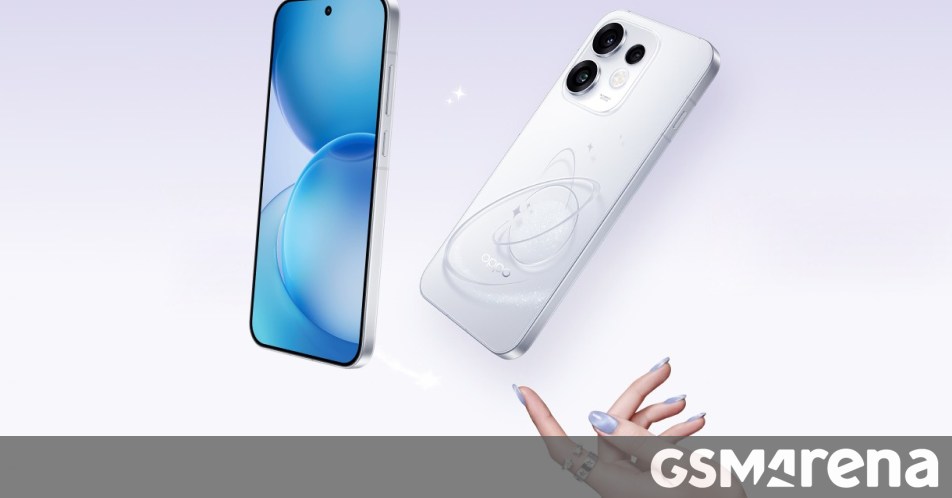
The Oppo Reno16 and Reno16 Pro are marketed as high-end mid-range devices designed to bridge the gap between mass-market affordability and flagship performance. However, upon closer inspection, the hardware-to-price ratio reveals a disconnect that threatens their market viability.
The standard Oppo Reno16 is positioned as the entry point into the series. Despite its sleek aesthetics, it is powered by the Snapdragon 7 Gen 4 chipset. While efficient for day-to-day tasks, it is difficult to justify in a device carrying an MSRP of €900. Even with a July promotional discount bringing the price down to €800, the hardware package—centered around a modest 50MP 1/1.95” main sensor—fails to compete with aggressive offerings from rival manufacturers who offer flagship-tier chips for significantly less.
The Oppo Reno16 Pro attempts to justify its premium with a more robust internal architecture. It features the MediaTek Dimensity 8550 chipset, providing a noticeable performance boost over the vanilla model. Furthermore, Oppo has equipped the Pro with a 200MP 1/1.56” main camera sensor. This upgrade provides a distinct advantage in resolution and detail, yet the MSRP of €1,100 (discounted to €900 for the 12/512GB configuration during its launch month) places it squarely in the territory of established, high-performance flagships.
Chronology: From Anticipation to Market Backlash
The trajectory of the Reno16 series has been one of high expectations followed by a swift reality check.
- Pre-Launch Hype: Rumors surrounding the Reno16 series suggested that Oppo would lean into their reputation for camera-centric mid-rangers, aiming to capture the "premium mid-range" demographic that has grown tired of $1,500 flagship price tags.
- The Launch Event: When Oppo officially unveiled the devices, the technical specifications were met with lukewarm reception. The hardware was seen as "capable but standard," failing to provide a "wow" factor that would justify a four-figure price point.
- The July Sales Window: As the devices hit the shelves, Oppo immediately introduced aggressive July discounts. While this move was likely intended to stimulate initial volume, market observers interpreted it as an admission that the original MSRPs were unsustainable and uncompetitive.
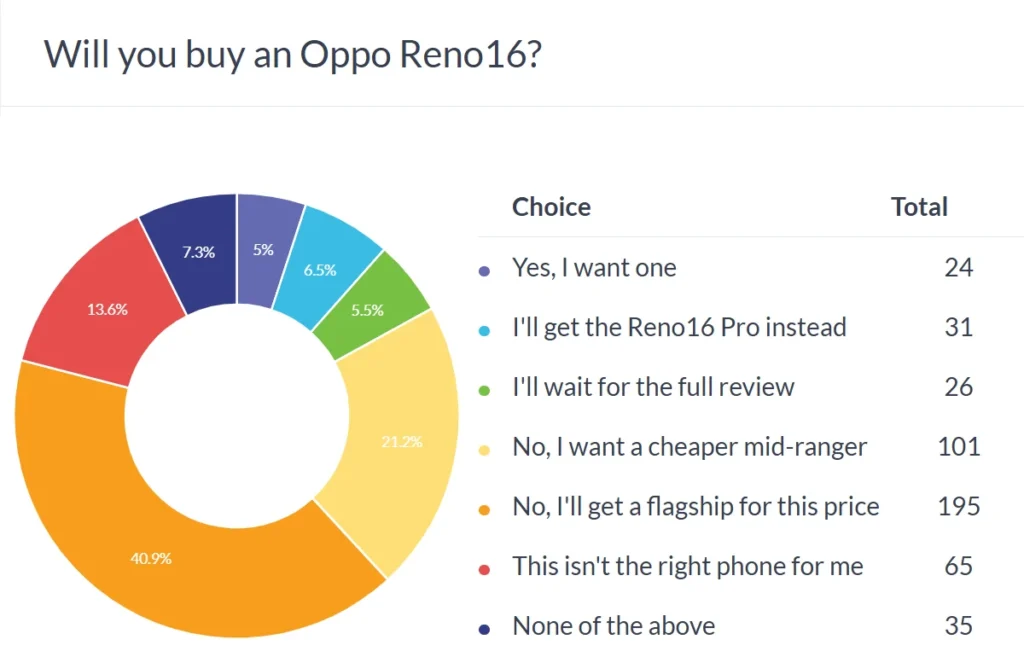
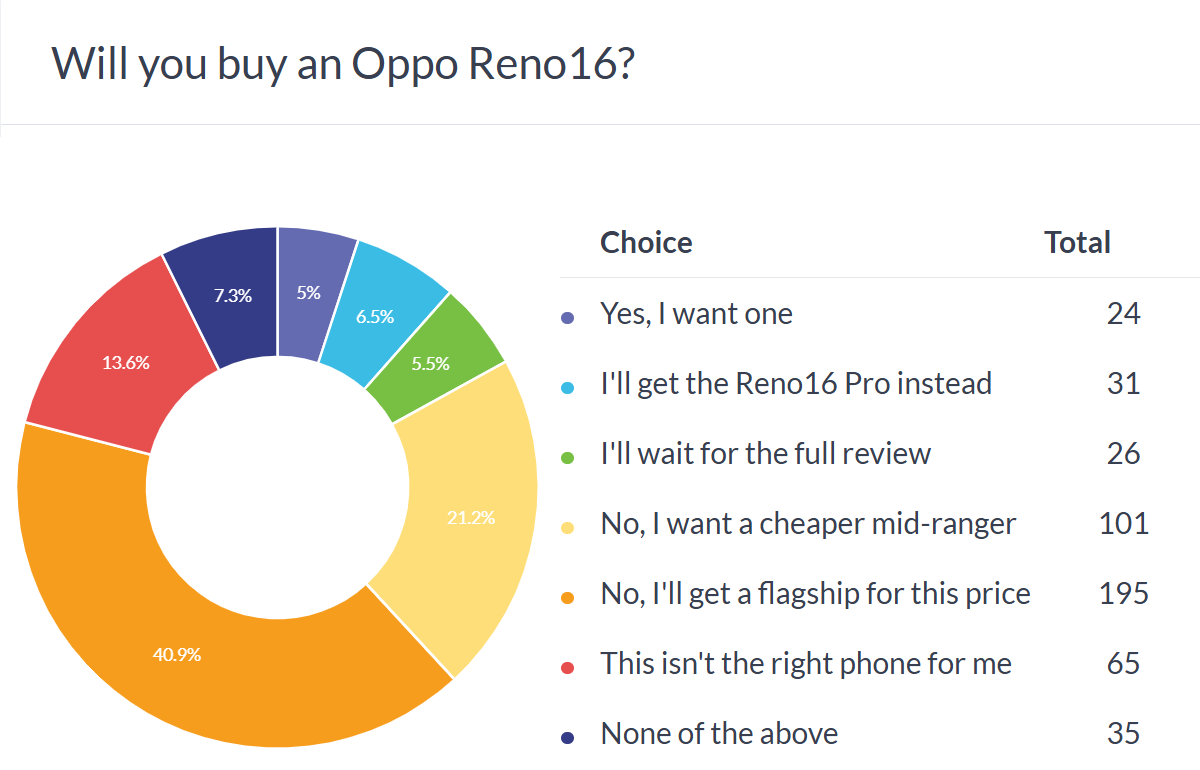
- The Weekly Poll Results: Following the release, a broad-spectrum industry poll gauged consumer sentiment. The results were telling: the vast majority of potential buyers expressed a clear preference for either true budget devices or established, full-featured flagships, effectively leaving the Reno16 series without a clear target audience.
Supporting Data: Decoding Consumer Sentiment
The recent industry poll results provide a quantitative look at why the Reno16 series is struggling to gain traction. When asked about their purchase intentions, respondents were largely polarized into two distinct camps.
The Value-Seekers
One significant segment of the market remains committed to the "value-for-money" proposition. For these users, a device like the Reno16, priced at €900, is a non-starter. They argue that if a phone lacks top-tier silicon (such as the Snapdragon 8-series or the latest Dimensity 9-series), it should not be priced anywhere near the €700 threshold. By pricing the base Reno16 at nearly €1,000, Oppo has alienated the very demographic that historically built the brand’s success.
The Flagship Purists
The second group of respondents consists of power users who are willing to spend over €1,000, but only for a device that offers a "no-compromise" experience. This includes top-tier water resistance ratings, telephoto lens arrays, and the most advanced imaging processors available. The Reno16 Pro, despite its 200MP sensor, lacks the peripheral hardware—such as a dedicated periscope lens or a flagship-grade ultrawide sensor—that these users expect at this price bracket.
Official Responses and Strategic Positioning
Oppo’s internal strategy appears to be a bet on brand loyalty and the "Reno" design language. In various regional communications, Oppo has emphasized the software integration, the refined aesthetics of the Reno16 chassis, and the proprietary fast-charging technologies that set their devices apart.
However, the silence from Oppo regarding the pricing backlash is telling. In the highly competitive European and Asian markets, manufacturers usually respond to such criticism by adjusting channel incentives or offering additional bundles (such as free earbuds or smartwatches). By sticking to their pricing guns while simultaneously offering "temporary" discounts, Oppo is walking a tightrope that risks eroding the perceived value of the Reno series in the long term.
Implications: The Future of the Mid-Range Segment
The failure of the Reno16 series to capture the imagination of the market is a symptom of a larger, more systemic issue within the smartphone industry.
The "Squeezed Middle"
We are witnessing the death of the "premium mid-range" as a distinct category. As entry-level devices improve in quality, and as older-generation flagships continue to offer superior performance long after their initial release, the space for a €900 mid-range phone is rapidly vanishing.
The Flagship Alternative
Why buy a Reno16 Pro for €1,100 when a 2026 flagship—or even a high-spec 2025 flagship—can be found for the same price or less? 2025 flagships, while aging, still offer superior build quality, more comprehensive camera systems, and better software support lifecycles than many of the mid-range devices being launched today. Consumers are becoming increasingly savvy, tracking price drops on previous-year models and realizing that a "discounted flagship" almost always outperforms a "premium mid-ranger."
Strategic Recommendations
For Oppo and its competitors to survive this shift, a recalibration is necessary. The current strategy of inflating MSRPs to create the illusion of a "discount" is transparent and largely rejected by the modern consumer. Instead, manufacturers must focus on:
- Hardware Differentiation: If the price is high, the hardware must be undeniable. Mid-range chips should not be paired with four-figure price tags.
- Lifecycle Value: Companies must offer longer support windows for mid-range devices if they intend to command premium pricing.
- Market Realignment: Companies need to acknowledge that the "sweet spot" for mid-range devices has shifted downward. A €600 device with excellent features will always sell better than a €1,000 device with "good enough" features.
Conclusion
The Oppo Reno16 series serves as a cautionary tale for the smartphone industry. While the devices are undoubtedly well-crafted, they represent a fundamental disconnect between corporate pricing strategy and consumer reality. By attempting to push the boundaries of what constitutes a "mid-range" price, Oppo has inadvertently highlighted the superior value proposition of both budget alternatives and older flagship devices.
As we move further into the second half of 2026, the question for Oppo is not just about the success of the Reno16—it is about whether they can pivot their strategy before the market moves on entirely. The era of the "expensive mid-range" is under siege, and for those who continue to ignore the signals from the consumer, the path ahead will be increasingly difficult. The smartphone market is not just changing; it is demanding a return to sensible pricing, where value is measured not by the marketing budget, but by the tangible experience delivered to the user’s hand.