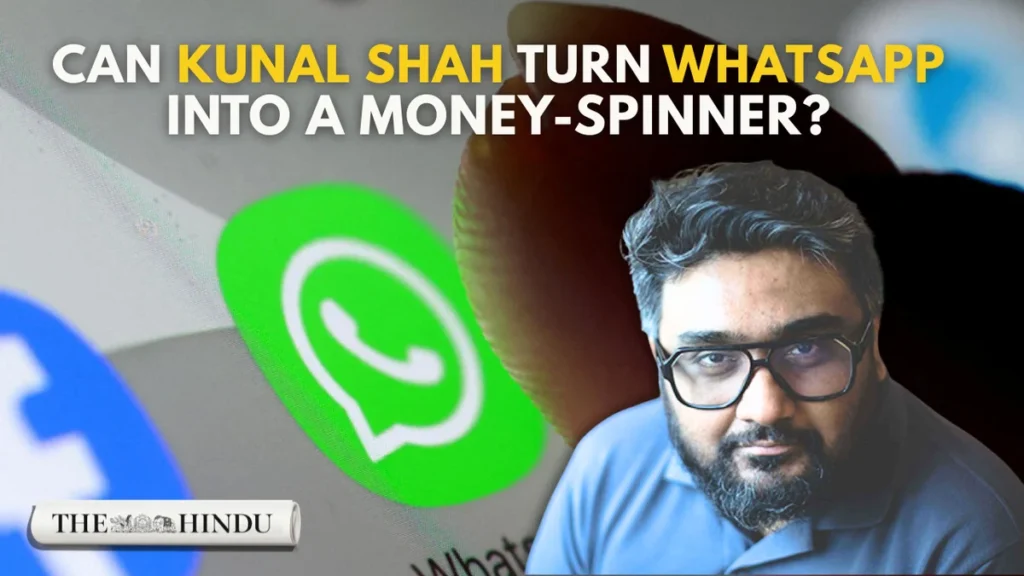
The Monetization Gambit: Inside Meta’s $900 Million Alliance with CRED and the Appointment of Kunal Shah to Lead WhatsApp
MUMBAI & MENLO PARK — In a move that has sent shockwaves through the global technology and financial services sectors, Meta Platforms Inc. has announced a sweeping restructuring of WhatsApp’s leadership, coupled with a massive financial commitment aimed at unlocking the messaging giant’s long-dormant monetization potential.
Meta has appointed Kunal Shah, the high-profile founder and CEO of Indian fintech unicorn CRED, as the new Global Head of WhatsApp. Alongside this leadership transition, Meta has committed a $900 million strategic investment in CRED, cementing a deep corporate alliance between the Silicon Valley social media behemoth and one of India’s most prominent financial technology ecosystems.
For over a decade, WhatsApp has occupied a unique and somewhat frustrating position within Meta’s portfolio. With over two billion monthly active users, it is arguably the world’s most ubiquitous communication utility. Yet, it has consistently lagged behind its sister platforms, Facebook and Instagram, in terms of revenue generation. By bringing Shah to the helm and backing his fintech venture with near-billion-dollar leverage, Meta is signaling a decisive shift away from traditional ad-supported models for WhatsApp, pivoting instead toward high-trust financial transactions, premium consumer services, and conversational commerce.
1. Main Facts: The Restructuring and the $900 Million Alliance
The dual announcement represents one of Meta’s most significant corporate maneuvers since its rebrand from Facebook in 2021. The transaction is structured to achieve two distinct but highly complementary strategic objectives:
Kunal Shah’s Global Appointment
Kunal Shah, a celebrated figure in the Indian startup ecosystem known for founding Freecharge (sold to Snapdeal in 2015) and subsequently launching CRED in 2018, will take over as the Global Head of WhatsApp. Shah will oversee the platform’s global operations, product roadmap, and business strategy. Crucially, his mandate is to transition WhatsApp from a free-to-use utility into a robust, revenue-generating transactional engine. Shah is expected to divide his time between Silicon Valley and Bengaluru, reflecting the strategic importance of emerging markets—particularly India—to WhatsApp’s future.
The $900 Million Investment in CRED
Meta’s $900 million investment in CRED represents a major minority stake acquisition, valuing the fintech platform at an undisclosed premium. This capital infusion will be utilized to expand CRED’s suite of premium financial services, scale its merchant ecosystem, and accelerate its international expansion. More importantly, the deal establishes a technical and commercial bridge between CRED’s high-yield user base and WhatsApp’s massive global network.
The Strategic Synthesis
The core thesis behind this alliance is simple yet ambitious: combining WhatsApp’s unparalleled distribution network with Shah’s proven expertise in building high-engagement, high-trust financial platforms. CRED has successfully monetized India’s affluent, creditworthy demographic—a segment traditionally difficult for broad-based social media platforms to target effectively. Meta aims to replicate and scale these monetization mechanisms across WhatsApp’s global user base.
2. Chronology: The Long and Arduous Quest to Monetize WhatsApp
To understand the significance of Shah’s appointment, it is necessary to examine the historical trajectory of WhatsApp under Meta’s ownership, characterized by shifting strategies, regulatory roadblocks, and missed monetization windows.
[2014] Meta acquires WhatsApp for $19 Billion; founders promise "No Ads, No Games".
  │
[2018] Acton & Koum depart over monetization disputes; Meta pivots to WhatsApp Business.
  │
[2019] Meta announces "Libra" cryptocurrency; faces immediate global regulatory backlash.
  │
[2020] WhatsApp Pay launches in India after multi-year regulatory delays; struggles to gain market share.
  │
[2022] Diem (formerly Libra) assets sold off; Meta abandons independent crypto-wallet plans.
  │
[2026] Meta appoints Kunal Shah as Global Head of WhatsApp, backing CRED with a $900M investment.
The $19 Billion Acquisition (2014)
When Facebook acquired WhatsApp in 2014 for a staggering $19 billion, the platform’s founders, Jan Koum and Brian Acton, famously insisted on maintaining a strict "no ads, no games, no gimmicks" philosophy. For several years, Facebook honored this agreement, focusing entirely on user acquisition and infrastructure scaling.
The Founders’ Departure and the Monetization Pivot (2018)
By 2018, tensions between WhatsApp’s founders and Meta CEO Mark Zuckerberg reached a breaking point over plans to introduce targeted advertising and business messaging tools. Both Acton and Koum departed the company. Following their exit, Meta began laying the groundwork for WhatsApp Business, allowing enterprises to communicate with customers, provide support, and send transactional notifications.
The Libra/Diem Cryptocurrency Misstep (2019–2022)
Seeking a global, frictionless payment standard to power commerce across its platforms, Meta announced "Libra" (later renamed Diem) in 2019. The initiative, designed as a stablecoin cryptocurrency managed by an independent association, faced immediate and fierce opposition from central banks, regulators, and lawmakers worldwide. Fearing systemic threats to monetary sovereignty and financial stability, regulatory pressure forced Meta to systematically scale back the project. In early 2022, the Diem Association sold its intellectual property and assets, marking the end of Meta’s independent global digital currency ambitions.
The Fragmented Rollout of WhatsApp Pay (2020–2025)
Concurrently, Meta attempted to launch localized peer-to-peer (P2P) payment systems, most notably WhatsApp Pay in India and Brazil. In India—WhatsApp’s largest market with over 500 million users—the platform faced prolonged regulatory scrutiny from the National Payments Corporation of India (NPCI) and the Reserve Bank of India (RBI) regarding data localization and market share caps. By the time WhatsApp Pay received approval for a wide rollout, competitor platforms like PhonePe and Google Pay had already established a near-duopoly in the Unified Payments Interface (UPI) ecosystem.
3. Supporting Data: The Monetization Gap and CRED’s Unique Value Proposition
Despite its massive scale, WhatsApp’s financial contribution to Meta remains disproportionately small compared to the company’s core advertising business.
The Average Revenue Per User (ARPU) Disparity
While Meta does not break out WhatsApp’s individual revenues in its quarterly earnings reports, industry analysts estimate the platform’s global ARPU to be a fraction of Facebook’s.
| Platform | Global Monthly Active Users (MAU) | Estimated Annual Revenue (2025) | Estimated ARPU |
|---|---|---|---|
| Facebook / Instagram | ~3.1 Billion | ~$135 Billion | ~$43.50 |
| ~2.2 Billion | ~$1.5 – $2.0 Billion | ~$0.80 – $0.90 |
This disparity highlights the fundamental challenge Meta faces: how to extract value from a messaging utility where users expect free, end-to-end encrypted communication without intrusive display advertising.
The Indian UPI Landscape
In India, which serves as the primary testing ground for WhatsApp’s transactional features, the UPI market is heavily consolidated. Despite having an active user base that dwarfs its competitors, WhatsApp Pay has failed to secure a meaningful share of transaction volumes.
UPI Market Share by Transaction Volume (Est. Q1 2026):
┌───────────────────────────────────────────────────────────┐
│ PhonePe (48%)                                             │
├─────────────────────────────────────────────────┬─────────┤
│ Google Pay (37%)                                │ Other   │
├────────────────────────┬────────────────────────┤ (2.5%)  │
│ Paytm (8%)             │ CRED (4.5%)            │         │
└────────────────────────┴────────────────────────┴─────────┘
*WhatsApp Pay accounts for less than 1.5% of total UPI transactions.
The CRED Paradigm: High-Value Monetization
While CRED’s market share in terms of raw transaction volume is modest (around 4.5%), its share of transaction value is disproportionately high. CRED’s business model is built around a highly curated user base: individuals with credit scores above a specific threshold (typically 750+ in India).
- Premium Demographic: CRED’s members represent the top 10% of Indian consumers by disposable income, responsible for a significant portion of the country’s credit card spend.
- High Engagement through Rewards: By gamifying credit card bill payments and offering exclusive rewards from premium D2C (Direct-to-Consumer) brands, CRED has created a high-trust environment where users willingly transact.
- Monetization Verticals: CRED has successfully expanded into peer-to-peer lending (CRED Mint), travel (CRED Escapes), luxury commerce (CRED Store), and premium utility payments.
By integrating Shah’s philosophies, Meta hopes to convert WhatsApp’s broad, low-value user base into structured tiers, offering premium, high-margin transactional services to those willing to pay for convenience and security.
4. Official Responses and Industry Reactions
The strategic alignment has drawn widespread commentary from corporate executives, fintech analysts, and regulatory experts.
Statements from Meta and CRED
In a joint press release, Meta CEO Mark Zuckerberg expressed confidence in Shah’s ability to chart a new course for the messaging service:
"Kunal has consistently demonstrated an uncanny ability to build products that people love, while simultaneously creating sustainable, high-value financial ecosystems. WhatsApp has connected the world; now, under Kunal’s leadership, we want to empower users and businesses to transact with the same ease and trust. Our investment in CRED underscores our belief in the convergence of communication and commerce."
Kunal Shah, addressing his appointment, emphasized the scale of the opportunity:
"For over a decade, WhatsApp has been the digital fabric holding communities together. The next frontier is trust and utility. We aren’t just looking to build a payment system; we are looking to build a conversational financial operating system. By leveraging CRED’s insights into consumer behavior and trust networks, we can unlock value for billions of users and millions of merchants globally."
Industry Analyst Commentary
Fintech analysts view the move as a direct challenge to established financial institutions and super-apps like Tencent’s WeChat.
"Meta has realized that building a payment network from scratch is a regulatory nightmare and a consumer adoption struggle," noted Priya Sen, Lead Fintech Analyst at Asian Capital Markets. "By buying into CRED and bringing Kunal Shah onboard, Meta is acquiring a pre-packaged playbook on how to monetize high-value users. The challenge will be translating a model built for India’s premium elite into a global product that works in Latin America, Europe, and Southeast Asia."
5. Strategic Implications: The Road to a Global "Super-App"
The appointment of Kunal Shah and the $900 million investment in CRED carry profound implications for the global tech ecosystem, the future of conversational commerce, and the regulatory landscapes of multiple jurisdictions.
                  ┌───────────────────────────────┐
                  │    Meta's Global Infrastructure │
                  └──────────────┬────────────────┘
                                 │
                   [ Kunal Shah's Integration Strategy ]
                                 │
         ┌───────────────────────┼───────────────────────┐
         ▼                       ▼                       ▼
┌──────────────────┐    ┌──────────────────┐    ┌──────────────────┐
│   CRED Ecosystem │    │  Conversational  │    │  Global Premium  │
│  High-Trust Tech │    │  Commerce APIs   │    │  Fintech Tier    │
└──────────────────┘    └──────────────────┘    └──────────────────┘
         │                       │                       │
         └───────────────────────┼───────────────────────┘
                                 ▼
                  ┌───────────────────────────────┐
                  │   Unified WhatsApp Super-App  │
                  └───────────────────────────────┘
1. Replicating the "WeChat" Model Outside of China
For years, Western tech firms have envied Tencent’s WeChat, which serves as an all-in-one operating system for daily life in China—handling everything from messaging and social media to ride-hailing, food delivery, and government services. Attempts to replicate this "super-app" model in the West have largely failed due to fragmented ecosystems and consumer preferences for dedicated apps.
Under Shah, WhatsApp is likely to pursue a hybrid approach. Rather than cramming endless features into a single interface, it will likely leverage its WhatsApp Business API to act as a seamless, conversational checkout layer for third-party services, backed by CRED’s underwriting, credit-scoring, and premium merchant networks.
2. Conversational Commerce and AI Integration
With Meta’s massive investments in generative AI (specifically LLaMA models), the integration of Kunal Shah’s fintech expertise points toward an era of AI-driven conversational commerce.
Imagine a user chatting with a business on WhatsApp. Instead of being redirected to an external website to enter credit card details, an integrated, secure payment framework—powered by CRED’s backend infrastructure—could complete the transaction natively within the chat window, facilitated by an AI assistant that understands the user’s credit profile and purchasing preferences.
3. Regulatory Scrutiny and Antitrust Concerns
The scale of this deal is bound to attract intense scrutiny from regulatory bodies, particularly in India and the United States.
- The Reserve Bank of India (RBI): The RBI maintains strict guidelines regarding data localization, payments security, and the entry of big tech companies into the financial sector. A $900 million investment in a major domestic fintech by Meta will be closely analyzed for compliance with ownership and data-sharing regulations.
- The Competition Commission of India (CCI): Regulators will assess whether the preferential integration of CRED’s services within WhatsApp creates an unfair advantage, potentially stifling competition from other payment apps and merchant platforms.
- US Federal Trade Commission (FTC): Given Meta’s ongoing antitrust battles in the United States, any move that consolidates its market power in messaging and extends its reach into financial services will face rigorous examination.
4. The Future of CRED
For CRED, the $900 million cash injection provides an immense runway to achieve profitability and expand its product offerings. It also provides CRED with a direct, frictionless distribution channel to WhatsApp’s massive user base, potentially lowering customer acquisition costs—which have historically been a significant expense for the fintech platform.
Conclusion: A High-Stakes Bet on Conversational Finance
Meta’s appointment of Kunal Shah and its heavy financial commitment to CRED represent a calculated, multi-billion-dollar gamble that WhatsApp’s monetization future lies not in advertising, but in transactional trust. By marrying the world’s most popular communication platform with a highly sophisticated fintech engine, Meta is making its most aggressive bid yet to turn WhatsApp into a global financial powerhouse. Whether Shah can successfully navigate the complex maze of global financial regulations and diverse consumer behaviors to realize this vision remains the defining question for the future of the mobile internet.