The Resurrection of OYO: How PRISM’s Path to IPO Marks a New Era for India’s Tech Giants
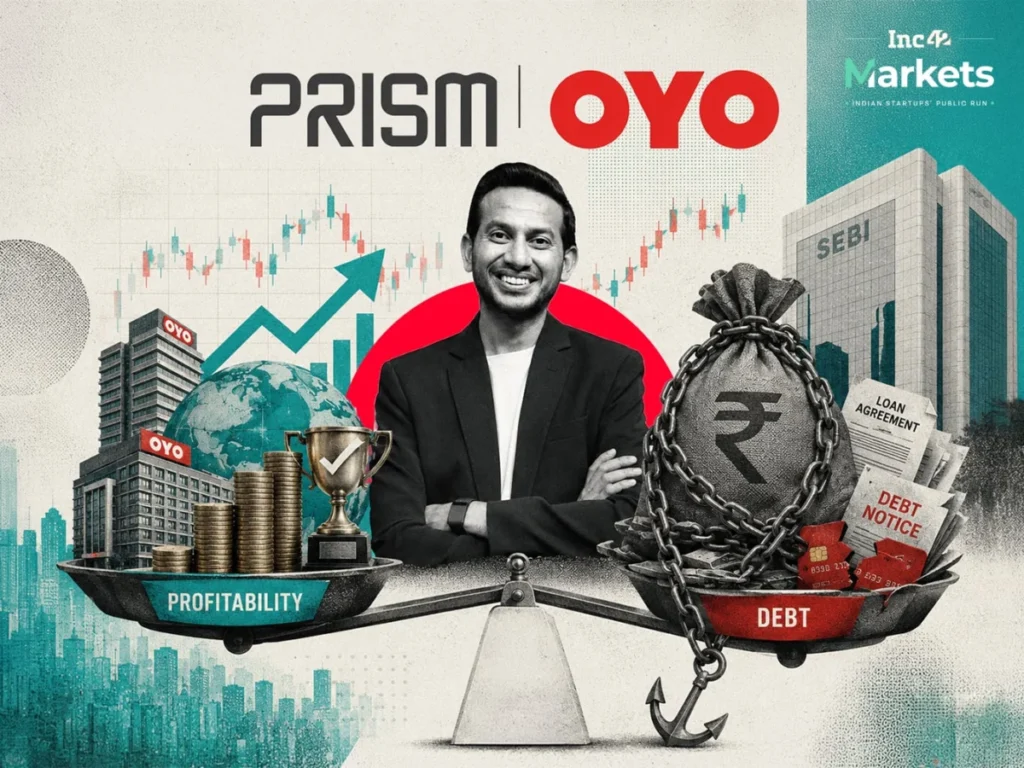
After four years of volatile market cycles, regulatory hurdles, and strategic pivots, the company formerly known as OYO—now rebranded as PRISM—has officially filed its Updated Draft Red Herring Prospectus (UDRHP) with the Securities and Exchange Board of India (SEBI). This latest attempt to hit the public markets is not merely a rerun of previous efforts; it is a fundamental reimagining of a business that has evolved from a controversial budget-hotel aggregator into a diversified, profit-generating global hospitality powerhouse.
With a fresh issue of ₹6,650 crore on the table, the company is signaling to the market that it is finally ready for the scrutiny of public shareholders. Unlike the 2021 and 2023 attempts, this iteration is defined by a newfound commitment to financial discipline, a radical geographic shift, and a corporate structure designed to withstand the skepticism of institutional investors.
The Chronology of a Four-Year Odyssey
To understand the weight of the current filing, one must look at the turbulent history of OYO’s path to the bourses.
- 2021: The Initial Ambition. Riding the post-pandemic "new-age" tech IPO wave that saw firms like Paytm and Nykaa debut, OYO filed its first draft prospectus. The goal was a valuation north of $9 billion. However, a combination of SEBI queries and a global correction in tech stocks saw the company withdraw its plans, choosing to retreat and regroup.
- 2023: The Confidential Route. Seeking a quieter path, OYO utilized the "confidential filing" process, attempting to gauge investor interest behind closed doors. This too proved difficult as market sentiment remained lukewarm toward loss-making tech startups.
- May 2024: The Strategic Withdrawal. The company officially pulled its papers once more, citing the need for debt refinancing that would have fundamentally altered its financial statements.
- September 2025: The Rebrand to PRISM. In a symbolic and structural shift, the company rebranded as PRISM. The name change was not just cosmetic; it reflected a pivot from a single-brand Indian budget aggregator to a conglomerate spanning 43 brands across 35-plus countries, including vacation homes, extended-stay properties, and premium hotel segments.
- 2026: The Public Test. With the UDRHP now filed, PRISM enters the arena with a radically different narrative: it is no longer just "scaling for growth"; it is scaling for profit.
Financial Resilience: The Data Behind the Pivot
Public market investors have historically been wary of OYO’s cash-burn model. The latest UDRHP addresses this head-on with a set of numbers that suggest the business has fundamentally stabilized.
For the nine months ended December 31, 2025, PRISM reported revenue from operations of ₹6,941 crore—already surpassing the total revenue of ₹6,259 crore generated in the full fiscal year 2025. Perhaps more impressively, the company’s profit after tax (PAT) jumped to ₹748 crore, a significant leap from the ₹245 crore recorded in FY25.
Key Performance Indicators:
- Adjusted EBITDA: The company reported an adjusted EBITDA of ₹1,968 crore, roughly 80% higher than the previous fiscal year, suggesting that the core operations are finally generating meaningful cash flow.
- Direct Channel Strength: Approximately 68% of bookings now originate through PRISM’s own direct channels, significantly lowering customer acquisition costs (CAC) by reducing reliance on third-party online travel aggregators.
- Customer Loyalty: Over 61% of stays are now attributed to repeat customers, a testament to the stabilization of service quality across their diverse brand portfolio.
The Debt Conundrum: A Necessary Burden
While the profitability figures are encouraging, the filing reveals a reality that makes this IPO unique among Indian startups: 75% of the IPO proceeds are earmarked for debt repayment.
The company’s debt history is tied to the pandemic-era "Term Loan B" (TLB) of $660 million, which served as a lifeline during the global travel freeze. As the industry recovered, OYO did not just sit still; it leaned into an aggressive acquisition strategy. By December 2024, the company had refinanced its obligations into an $830 million (approx. ₹7,044 crore) facility led by Deutsche Bank.

A significant portion of this capital was used to acquire G6 Hospitality, the parent company of the iconic Motel 6 and Studio 6 brands in the United States. This acquisition effectively transformed the US into PRISM’s largest market, accounting for 27% of 9MFY26 revenue.
As of December 2025, a debt burden of ₹7,338 crore still weighs on the balance sheet. By using nearly ₹4,987.5 crore from the IPO to prepay these borrowings, PRISM aims to clean its balance sheet and significantly reduce annual finance costs. This is a critical move to improve free cash flows—a metric that institutional investors prioritize above all else.
The Founder’s Stake and Governance
A closely watched aspect of the filing is the status of founder Ritesh Agarwal’s holding company, RA Hospitality Holdings (Cayman). The UDRHP notes that 100% of these shares were pledged in September 2025 to secure a $150 million loan. The document explicitly warns that any default on this loan could trigger a change in ownership for the parent company. For prospective investors, this adds a layer of governance risk that will undoubtedly be a topic of intense discussion during the roadshows.
Global Pivot and Strategic Reorientation
PRISM is no longer the "OYO of India." The company has successfully diversified its revenue streams, with 84% of its revenue now derived from outside India.
- North America: Dominated by the G6 Hospitality acquisition, this region is now the primary engine of the company’s growth, contributing over half of the group’s total booking value.
- Europe: Through brands like Belvilla, DanCenter, and CheckMyGuest, the company has established a foothold in the high-margin vacation rental market.
This diversification is vital. While the Indian market has seen a 10-11% decline in revenue during 9MFY26, the global portfolio has compensated for this cooling. By moving away from a single-geography, single-brand model, PRISM is attempting to mirror the business structures of global hospitality giants like Marriott and Accor.
The strategy is clear: transition from a "tech startup" model, which relies on volatile growth and venture capital, to a "hospitality operator" model, which relies on long-term franchise contracts, royalty income, and predictable occupancy.
Implications for the Market and Investors
The market response to PRISM’s IPO will be a litmus test for the "tech-to-hospitality" transition.

1. No Exit for Early Backers
In a refreshing departure from recent startup IPOs, where early venture capital firms (like SoftBank, Microsoft, Lightspeed, and Peak XV) have used the public market as an exit ramp, this IPO features no secondary sale. All existing shareholders are remaining invested. This sends a powerful signal: the current backers believe the company is significantly undervalued relative to its future potential.
2. The Premium Valuation Challenge
The central question for investors is whether PRISM’s turnaround warrants a premium valuation. While the company is profitable, the debt-heavy nature of its balance sheet means that a significant portion of its future earnings will continue to be impacted by the cost of servicing remaining liabilities. Investors will need to weigh the company’s impressive scale and global footprint against the governance risks associated with pledged shares and the competitive pressures of the international hospitality market.
3. Governance as a Competitive Advantage
By prioritizing the repayment of debt and establishing a more transparent, diversified revenue model, PRISM is trying to prove that it has evolved from a hyper-growth, "move fast and break things" startup into a mature, disciplined corporation. Whether this transformation is sufficient to satisfy the conservative demands of institutional portfolio managers remains to be seen.
Conclusion
PRISM’s return to the IPO turf is a story of survival, pivot, and maturation. By stripping away the "budget aggregator" label and replacing it with a diversified, multi-brand, global hospitality framework, the company has addressed the core criticisms that derailed its previous attempts.
The path forward, however, is not entirely clear. With a heavy debt load and a complex ownership structure involving pledged shares, the company faces a skeptical public market that is far more concerned with sustainable cash flows than with aggressive topline growth. If PRISM can successfully navigate its debt-repayment mandate and prove that its international acquisitions provide the stable, long-term returns it promises, it could well redefine how Indian tech-led hospitality firms are valued on the global stage.
The coming months will be defining not just for Ritesh Agarwal, but for the entire Indian startup ecosystem, as it watches to see if one of its most prominent "unicorns" can finally graduate to the ranks of established, profitable, public-market enterprises.