Coastal Crisis: Monsoon Perils Claim Life as Search Operations Intensify Off Andhra Coast
By Investigative Desk
July 6, 2026
The coastline of Andhra Pradesh has been gripped by a series of maritime tragedies over the past 48 hours, as the onset of the monsoon season transforms the Bay of Bengal into a treacherous environment for local fishing communities. While families in Anakapalli district mourn the loss of a breadwinner, a high-stakes search-and-rescue operation is currently underway off the coast of Visakhapatnam to locate six missing fishermen whose vessel is believed to have succumbed to the turbulent sea.
A Fatal Morning in Anakapalli
On the morning of July 6, 2026, the quiet fishing village of Revu Polavaram in Anakapalli district was shattered by news of a drowning. Chodipalli Simhadri, a local fisherman, lost his life in a harrowing incident that occurred during a routine fishing trip.
According to Arjilli Dasu, a prominent representative of the local fishing community, the incident involved a four-member crew navigating rough coastal waters. As the boat contended with heavy swells, two members of the crew were unexpectedly ensnared by a rope, causing them to be swept overboard. While one of the men managed to battle the currents and reach the safety of the shore, and the remaining two crew members successfully maneuvered the boat back to land, Simhadri could not be saved.
His body was recovered after it washed ashore at Bangaramma Palem beach later that morning. The loss has sent shockwaves through the local community, as Simhadri was the sole provider for his household, leaving behind a grieving wife and three young children. Local union leaders are now urgently appealing to the district administration and the Andhra Pradesh state government to provide immediate ex-gratia compensation and comprehensive financial support to the bereaved family, highlighting the inherent risks that define the lives of the coastal workforce.
The Disappearance off Visakhapatnam: A Race Against Time
While the community in Anakapalli grapples with a confirmed tragedy, a massive search-and-rescue operation is unfolding off the Visakhapatnam coast. Six fishermen remain missing after their vessel is suspected to have capsized during the severe weather conditions that have characterized the last few days.
The seven-man crew had departed on July 1, planning to return with their haul by 2 p.m. on July 4. When the vessel failed to return and all mobile communication lines went dead, panic set in among the families. By the time the alarm was raised, the window for a swift rescue had already begun to narrow.

Lakshman Rao, president of the Vizag Fishing Boats Association, noted that the boat likely lost contact while attempting to return to port. "The monsoon has brought with it strong, unpredictable winds and high-velocity currents," Rao explained. "Approximately 400 boats were out at sea when the weather turned, and many were caught in the sudden escalation of sea state."
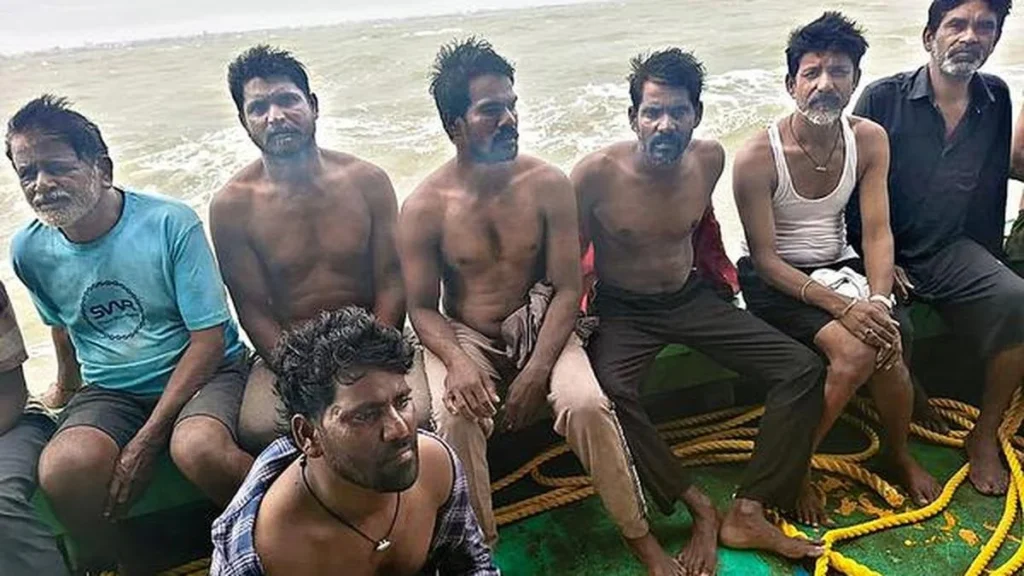
In a stroke of fortune amidst the disaster, one of the seven crew members was spotted and rescued by a passing cruise ship. His survival has provided the only witness account of the ordeal, though the location and condition of the remaining six individuals remain unknown.
Chronology of the Maritime Emergency
The escalation of the crisis followed a distinct timeline that reflects the speed at which monsoon conditions can turn lethal:
- July 1, 2026: A fishing vessel carrying seven crew members departs from Visakhapatnam for an offshore fishing expedition.
- July 4, 2026 (2:00 PM): The expected return time for the vessel passes. Family members attempt to make contact, but mobile devices are found to be switched off.
- July 4–5, 2026: As anxiety grows, the Vizag Fishing Boats Association alerts the Indian Coast Guard and Marine Police.
- July 5, 2026: A massive coordinated search begins. One survivor is rescued by a passing cruise ship.
- July 6, 2026 (Morning): Tragedy strikes in Anakapalli as Chodipalli Simhadri drowns near Revu Polavaram.
- July 6, 2026 (Afternoon): Chief Minister N. Chandrababu Naidu holds an emergency review meeting, ordering the deployment of additional naval assets to the search zone.
Official Response and Escalated Search Efforts
The severity of the situation has prompted a direct intervention from the highest levels of the state government. Chief Minister N. Chandrababu Naidu, presiding over an emergency review of the search-and-rescue operation, has prioritized the deployment of additional resources to the Bay of Bengal.
Under the Chief Minister’s directives, the Indian Coast Guard has intensified its coverage, and the Indian Navy has been brought into the fold, deploying helicopters to conduct aerial surveys of the area where the boat is suspected to have capsized. The Marine Police and local Visakhapatnam authorities have been instructed to maintain constant communication with the families of the missing and to provide the Chief Minister with hourly updates on the progress of the search.
"We are using every available asset to locate the missing individuals," a senior administrative official stated. "The monsoon conditions remain challenging, but the coordination between the Navy, Coast Guard, and local marine authorities is focused on maximizing the search radius."
The Vulnerability of the Coastal Economy
The events of the past few days serve as a stark reminder of the extreme vulnerability faced by the fishing communities of Andhra Pradesh. With approximately 400 boats operating in the region, the industry is a vital economic pillar for the state. However, it is an industry that remains acutely susceptible to climate volatility.

Fishermen’s unions have long argued that the current safety infrastructure—including weather forecasting, emergency response time, and communication equipment—needs a significant overhaul. "When the monsoon sets in, the sea becomes a different world," said one veteran fisherman. "Even with experience, a single snap of a rope or a sudden shift in wind can turn a livelihood into a death trap."
The demand for ex-gratia support for the family of Chodipalli Simhadri is not merely about financial aid; it is an appeal for recognition of the dangers inherent in a profession that is often overlooked until disaster strikes. Union leaders are calling for:
- Enhanced Satellite Communication: Mandating that all deep-sea fishing vessels be equipped with robust, weather-resistant satellite communication devices.
- Early Warning Systems: Better integration of real-time meteorological data to provide more localized, actionable warnings to small-scale fishing fleets.
- Insurance Reform: Streamlining the insurance and compensation process for families of those lost at sea, ensuring that help is provided without bureaucratic delays.
Looking Ahead: Implications for Monsoon Safety
As the search for the six missing fishermen continues into the night, the state government is under pressure to reassess its maritime safety protocols. The incident off the Visakhapatnam coast has raised questions about why these vessels were permitted to stay at sea as the monsoon strengthened.
The tragedy in Anakapalli and the ongoing search in Visakhapatnam underscore a recurring theme: the need for a more resilient maritime safety framework. As the climate becomes more unpredictable, the traditional reliance on local knowledge and basic safety measures is increasingly insufficient. The government’s response in the coming days, both in terms of the success of the rescue operation and the subsequent policy adjustments, will be closely watched by the coastal communities of Andhra Pradesh.
For now, the families in Visakhapatnam and the grieving relatives in Revu Polavaram wait—one group waiting for news of a return, and the other for the finality of closure. The monsoon, in all its ferocity, continues to dictate the lives of those who rely on the sea for their sustenance, leaving the state to contemplate the heavy cost of the harvest.