Mastering Motion: Navigating the Complex Landscape of Modern Web Animations
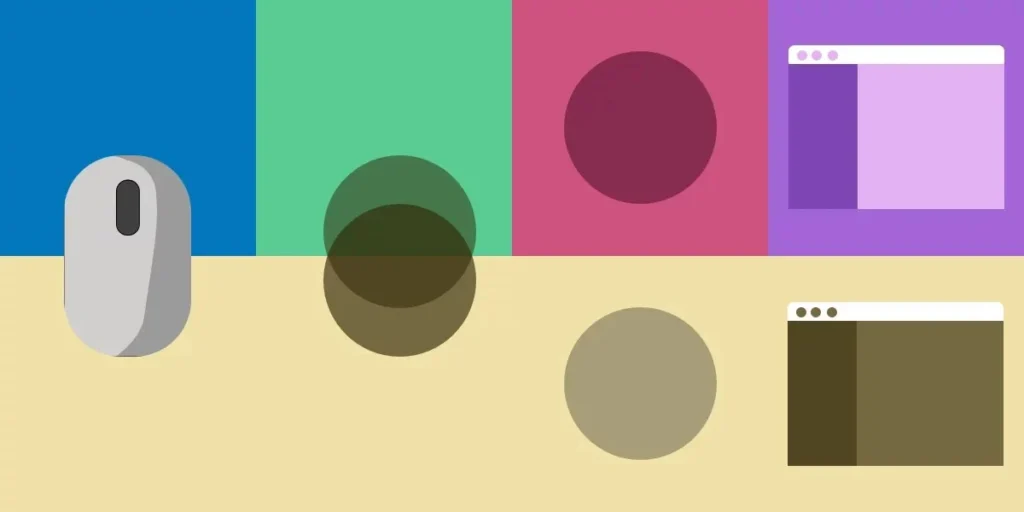
In the rapidly evolving ecosystem of CSS and browser APIs, the terminology surrounding web motion has become increasingly sophisticated—and, at times, confusing. Developers are frequently tasked with choosing between scroll-driven animations, scroll-triggered events, container-based scroll states, and the robust View Transitions API. While these tools often overlap in their visual output, they operate on fundamentally different mechanical and semantic principles.
For developers striving to build fluid, performant, and accessible user interfaces, understanding the nuance between these technologies is no longer optional. This guide serves to clarify these concepts, tracing their origins, their functional differences, and the architectural implications of integrating them into modern web projects.
The Core Distinctions: A Functional Breakdown
To navigate the modern web animation stack, one must first distinguish between animations that are "linked" to user input and those that are "triggered" by it.
Scroll-Driven Animations: The Direct Link
A Scroll-Driven Animation creates a temporal tether between the user’s physical interaction (scrolling) and the visual output. Unlike traditional animations that rely on a timeline measured in milliseconds, these animations are governed by the scroll position of a scroll container.
The primary characteristic of this technique is "scrubbability." When the user scrolls forward, the animation progresses; when the user scrolls backward, the animation reverses in lockstep. If the user stops scrolling, the animation remains frozen at that precise state. This creates a highly intuitive experience, often used for parallax effects or progress indicators that feel physically connected to the page content.
Scroll-Triggered Animations: The Event-Based Approach
In contrast, Scroll-Triggered Animations function as binary events. They do not track the granular progress of the scroll bar. Instead, they act as sophisticated event listeners: when an element crosses a specific "activation range" within the scrollport, the animation is fired. Once initiated, the animation typically runs to completion, independent of further scroll movement. This is ideal for entry animations, such as elements fading or sliding into view as they enter the viewport.
Chronology: The Evolution of Web Motion
The path to these features has been paved by years of developer feedback and browser engine improvements.
- The JavaScript Era (Pre-2015): Early web animations relied heavily on JavaScript
scrollevent listeners. This was notoriously performance-heavy, as the main thread was constantly interrupted to calculate scroll offsets, leading to "jank" and poor frame rates. - The Intersection Observer API (2016): This marked a turning point. It allowed developers to detect when an element entered the viewport without the performance overhead of traditional scroll listeners, laying the groundwork for more performant scroll-triggered animations.
- The Rise of Declarative Motion (2023–2026): With the introduction of the CSS
animation-timelineproperty, browsers moved toward a fully declarative syntax. By allowing developers to define scroll-driven effects directly in CSS, the industry effectively offloaded the calculation work to the browser’s compositor thread, resulting in buttery-smooth, hardware-accelerated animations. - The Future: Conditional Rules (Present Day): The current frontier, defined by the CSS Conditional Rules Module Level 5, introduces the concept of Container Query Scroll States. This allows CSS to react to the internal scroll state of specific containers, rather than just the window, offering a level of modularity previously thought impossible in CSS.
Supporting Data: Comparative Technical Architecture
When deciding which technology to implement, developers must evaluate the "trigger mechanism" and the "animation lifecycle." The following table summarizes these differences:
| Feature | Primary Trigger | Animation Lifecycle | Use Case |
|---|---|---|---|
| Scroll-Driven | Scroll Offset | Tied to user progress | Parallax, Progress bars |
| Scroll-Triggered | Threshold Crossing | Runs to completion | Entrance animations |
| Container Scroll State | Scroll Condition | Style updates | Sticky headers, Dynamic sidebars |
| View Transitions | DOM/State Change | Cross-document/element morph | Page navigation, UI state changes |
The Complexity of Container Query Scroll States
The emergence of container-type: scroll-state represents a significant shift. According to the W3C draft specifications, this allows a component to query its own internal scroll state. For example, a sticky navigation bar can now change its appearance—dropping a shadow, resizing its logo, or changing its background color—the exact moment it hits the top of its parent container. This removes the need for "scroll-spy" JavaScript scripts that were previously required to calculate when an element reached a "stuck" position.
Official Responses and Industry Consensus
Browser vendors and standards bodies, including the CSS Working Group and the Chrome team, have been vocal about the intent behind these APIs. The consensus is that the web must move away from "JavaScript-heavy animation" toward "CSS-native declarative animation."
The Chrome team, in particular, has championed the View Transitions API. While this API is often grouped with scroll-based features in casual conversation, experts like Bramus Van Damme have consistently clarified that it is a distinct animal. View Transitions are designed to handle the "state-to-state" transformation, whether that state change happens within a single document (same-document) or across navigation events (cross-document).
The industry response to these tools has been overwhelmingly positive, particularly regarding the ease of implementation for cross-document transitions. Where a developer previously needed complex state management libraries to animate a transition between two different HTML pages, the View Transitions API allows for a seamless "wipe" or "fade" with only a few lines of CSS.
Implications for Modern Web Development
The transition to these native browser features has profound implications for the web:
1. Performance Gains
By moving animation logic from the main thread (JavaScript) to the compositor thread (CSS), we are seeing a massive reduction in layout thrashing. Even on low-end mobile devices, these animations remain performant, as they are now handled by the browser’s optimized rendering pipeline.
2. Reduced Code Complexity
The reliance on third-party animation libraries (like GreenSock or Framer Motion) is decreasing for standard use cases. While these libraries remain essential for complex, choreographed sequences, the "bread and butter" of web motion is now covered by CSS properties. This leads to smaller bundle sizes and faster Time to Interactive (TTI) metrics.
3. Progressive Enhancement
Because these features are built into the CSS specification, they are inherently designed for progressive enhancement. Browsers that do not yet support animation-timeline or scroll-state queries will simply ignore the new properties, leaving the content functional and accessible. Developers can provide a "base" experience for older browsers while "layering on" the high-fidelity animations for modern users.
4. A Shift in Architectural Thinking
Perhaps the most significant implication is the shift in how we think about "state." We are moving toward a paradigm where the UI is aware of its own geometry. A component is no longer just a collection of styles; it is an intelligent unit that knows when it is scrolling, when it is stuck, and when it is being replaced.
Conclusion
The landscape of web animation has matured from a fragmented collection of hacks into a robust, standardized set of tools. By distinguishing between scroll-driven, scroll-triggered, and container-query-based motions, developers can create more intentional and performant interfaces.
As the View Transitions API continues to stabilize, we can expect the barrier between "web pages" and "native-feeling applications" to dissolve even further. For the developer, the goal remains the same: use the right tool for the right job, prioritize the user’s device performance, and keep the code as declarative as possible. The future of the web is not just responsive—it is animated, state-aware, and seamlessly fluid.