The Fall of a Giant: PayPal Honey’s Network Expulsion and the Future of Affiliate Accountability

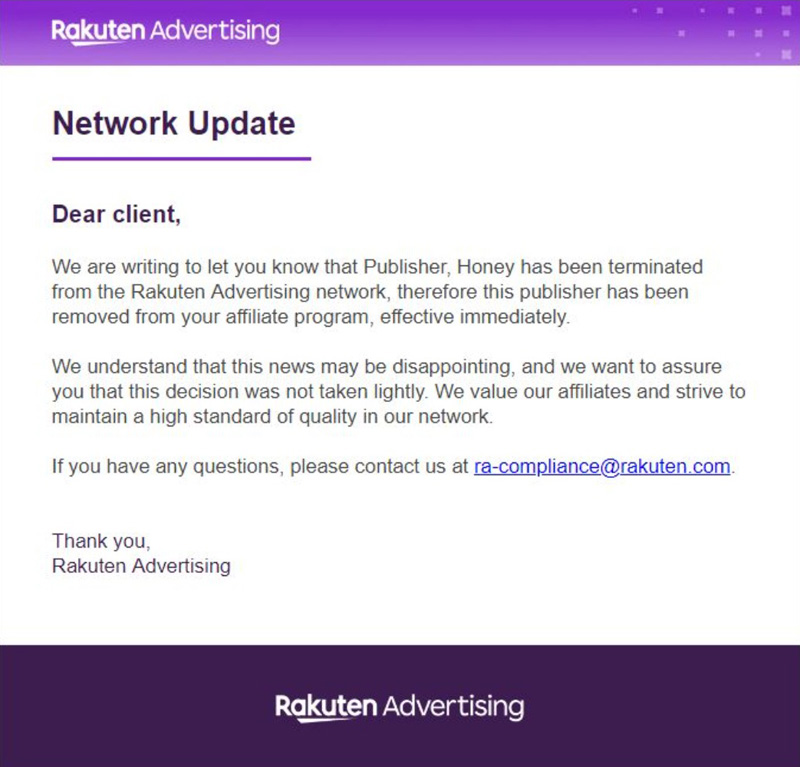
In a watershed moment for the digital marketing industry, PayPal Honey—the ubiquitous browser extension acquired by PayPal for $4 billion six years ago—has been forcibly removed from two of the world’s most prominent affiliate networks: Rakuten Advertising and impact.com. This unprecedented disciplinary action, which unfolded in mid-January, has sent shockwaves through the performance marketing sector, signaling a potential paradigm shift in how major networks handle attribution manipulation and affiliate compliance.
For years, browser extensions have occupied a gray area in the "partnership economy." While they provide undeniable value to consumers by automatically applying coupon codes at checkout, they have simultaneously faced long-standing criticism from publishers and advertisers for "link hijacking"—a practice where an extension overwrites the attribution cookie of an earlier, value-adding affiliate, effectively claiming credit for a conversion it did not influence. The recent actions against Honey mark a significant, if overdue, move to restore integrity to the last-touch attribution model.
Chronology of the Expulsion
The downfall of Honey’s standing within these networks was not sudden, but rather the culmination of mounting scrutiny. Investigations by independent researchers, most notably Ben Edelman, and critical exposés—such as the widely circulated video analysis by MegaLag—highlighted persistent issues with how Honey’s software interacted with the broader affiliate ecosystem.
Monday, January 12: The Rakuten Action
The first domino fell at the onset of Affiliate Summit West, the largest gathering of its kind in the United States. Rakuten Advertising issued a decisive statement, announcing that Honey had been "terminated from the network." In a move characterized by industry observers as a strategic public relations maneuver, the network framed the decision as a necessary step to "maintain a high standard of quality" within its ecosystem. The timing, coinciding with the industry’s most influential conference, ensured the news dominated discussions on the show floor and across professional social media channels.
Friday, January 16: The Impact.com Suspension
Following the lead of its competitor, impact.com announced that it had found Honey to be "out of compliance" with its platform policies. Unlike Rakuten’s total termination, impact.com opted for a temporary suspension, removing Honey from its "Discovery Marketplace." Despite the distinction in severity, the reasoning provided by impact.com’s leadership was stark. The network explicitly cited "attribution manipulation" as the primary catalyst for the suspension, emphasizing that such behavior fundamentally undermines the trust essential to a functional partnership economy.
Supporting Data and the "Stand-Down" Conflict
At the heart of this controversy lies the technical concept of "stand-down" rules. In the world of affiliate marketing, a "stand-down" policy dictates that a browser extension must refrain from firing its tracking code if it detects that another affiliate has already established a referral relationship with the user in the same clickstream.
The objective is simple: to protect the commissions of affiliates who invested time and resources in content creation, reviews, or discovery, ensuring they are not unfairly displaced by a last-minute coupon pop-up.

Recent audits, including a comprehensive study conducted by The Affiliate & Partner Marketing Association (APMA) in the UK, have shed light on the complexity of these interactions. The APMA audited thirty brands across ten affiliate networks, utilizing anonymized data to differentiate between various tracking technologies. The findings revealed that while some extensions play by the rules, others—including those now under fire—have employed sophisticated methods to bypass these restrictions, often through concealed violations that are difficult for the average advertiser to detect without advanced auditing tools.
Official Responses and Industry Sentiment
The response from the broader affiliate community has been largely one of relief. For years, affiliate managers have struggled to balance the conversion volume provided by large-scale extensions against the friction they create with high-quality, content-driven partners.
Impact.com’s leadership has been particularly vocal regarding the necessity of these actions, suggesting that the "partnership economy" relies on a level playing field. By calling out "attribution manipulation" by name, networks are effectively serving notice that the era of "blind growth" at the expense of fair attribution is coming to an end.
Conversely, the silence from the Honey camp has been notable. As of this writing, there has been no comprehensive public rebuttal addressing the specific allegations of intentional stand-down violations. This silence has only fueled further speculation regarding the future of browser-based affiliate models and the potential for a regulatory or industry-wide tightening of standards.
The Five Pillars of Program Integrity
For affiliate managers and brand owners, the removal of Honey serves as a case study in program management. To avoid the fallout of such incidents and ensure a healthy, diverse affiliate base, industry experts emphasize five critical lessons:
1. One Bad Apple Spoils the Program
It is a misconception that a single bad affiliate only impacts the merchant. In reality, the presence of a "hijacker" creates a hostile environment for other partners. High-quality content creators—the influencers and bloggers who drive genuine brand affinity—will frequently refuse to partner with a brand that allows its attribution to be cannibalized by aggressive extensions. By permitting these players, a brand effectively poisons the well, discouraging the very partners who provide sustainable, long-term growth.
2. Take Ownership of Policing
The most dangerous assumption a merchant can make is that the affiliate network will police their program for them. While networks have compliance teams, they are primarily concerned with network-wide policies. It is the responsibility of the brand to clearly articulate their specific rules in their Terms and Conditions. Once those terms are established, the merchant must actively monitor for violations. Relying on a network to "do the right thing" is an abdication of control over your own business.
3. Deep Dive into Technical Details
"Stand-down" and "soft-click" are not just jargon; they are the mechanics of your revenue stream. Managers must move beyond surface-level reporting and understand exactly how their affiliates’ software functions. Utilizing resources like the Performance Marketing Association’s Affiliate Network DSP Policies Comparison is essential for any manager looking to gain an intelligent understanding of their traffic sources.
4. Avoid Broad Generalizations
While the current spotlight is on browser extensions, it is a mistake to ban entire categories of affiliates based on the actions of a few. Just as not all coupon sites are created equal, not all extensions are predatory. The key is to evaluate every partner based on individual performance and behavior. Blanket bans on loyalty sites or specific tool types often result in a loss of valuable, legitimate traffic.
5. Prioritize Diversification
Perhaps the most significant lesson is that if your program suffers a massive revenue hit because a single affiliate is removed, you have already failed in your strategy. A healthy affiliate program should be a mosaic, not a monolith. By diversifying into 28+ categories—ranging from podcasters and CTV partners to charity-linked offers and niche content producers—a brand insulates itself from the volatility of any single partner or affiliate type.
Implications for 2026 and Beyond
The removal of PayPal Honey from top-tier networks is likely a harbinger of more rigorous enforcement to come. As the digital advertising landscape moves toward a more privacy-centric, cookieless future, the value of direct, transparent relationships between brands and publishers will only increase.
For merchants, this is an invitation to clean house. It is a time to audit programs for attribution leakage, re-evaluate existing partnerships, and double down on recruitment strategies that favor quality and intent over volume and speed. The "partnership economy" is maturing; the days of relying on "last-touch" dominance by large-scale extensions are numbered.
As we look toward the remainder of 2026, the brands that will thrive are those that view their affiliate program not as a source of automated leads, but as a curated network of genuine partners. By prioritizing transparency, demanding accountability, and diversifying their base, brands can build programs that are not only resistant to the "bad apples" of the industry but are also fundamentally more profitable and sustainable.
The message from the networks is clear: The party is over for those who play outside the rules. The future belongs to those who build with integrity.