The Great AI Classroom Pause: Inside New York City’s Bold Moratorium on Generative Artificial Intelligence for Young Students
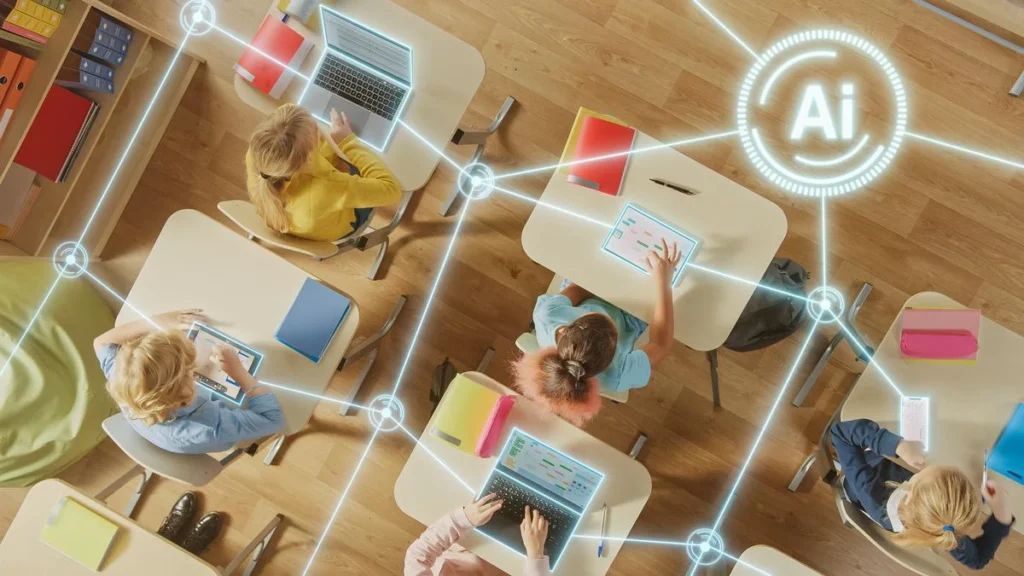
NEW YORK — In a policy shift that has immediately reverberated across global educational landscapes, New York City has instituted a sweeping one-year moratorium on the use of generative artificial intelligence (Gen AI) tools for public school students up to Grade 8, effective for the 2026–27 academic year. Spearheaded by the city’s administration, the decision draws a sharp regulatory line in the sand regarding technology in foundational education.
While proponents of educational technology have long championed the democratization of personalized learning through large language models and automated tutors, city officials have chosen to prioritize human pedagogy, fundamental cognitive development, and tactile problem-solving over algorithmic convenience.
This landmark policy decision forms the core of a broader debate over how modern societies should integrate exponential technological advancements into classrooms without undermining the cognitive autonomy of developing minds. To unpack the nuances of this decision, education experts Lavina Jaswani and Deepa Jacob joined host Priscilla Jebaraj on a recent episode of the In Focus podcast to debate whether generative AI should be barred from the educational lives of younger children.
Main Facts
The policy—announced by New York City Mayor Zohran Mamdani—targets students ranging from kindergarten through the eighth grade across the city’s vast public school system, one of the largest in the world.
Key Elements of the Policy:
- Scope: The moratorium applies strictly to generative AI applications, including text generators, automated homework assistants, and synthetic media tools utilized by students up to Class 8. High school students, by contrast, will retain supervised access to help prepare them for higher education and an evolving workforce.
- Duration: The restriction is structured as a one-year pause for the 2026–27 academic year, designed to allow educators, child psychologists, and policymakers time to comprehensively study the cognitive, social, and developmental impacts of early AI exposure.
- Core Justification: City officials have argued that children in their formative educational years require robust human-to-human connection, emotional scaffolding, and independent cognitive struggle to build critical thinking pathways. Over-reliance on algorithms, officials contend, threatens to atrophy these essential developmental skills before they are fully formed.
- Exemptions: The ban targets student-facing generative tools. Administrative and teacher-facing AI tools—such as automated scheduling, curriculum planning support, and translation software—remain largely unaffected, preserving operational efficiencies for educators.
Chronology of the Shift: From Rapid Adoption to Regulatory Brake
The path leading to New York City’s 2026 moratorium reflects the dizzying speed with which generative artificial intelligence penetrated public infrastructure following the late-2022 explosion of consumer-accessible AI models.
Phase 1: The Initial Panic and Blanket Bans (2022–2023)
When generative AI tools first burst onto the mainstream scene, educational institutions worldwide reacted with reflexive apprehension. In early 2023, the New York City Department of Education initially banned ChatGPT and similar platforms across all school devices and networks, citing deep concerns over academic dishonesty, plagiarism, and the unverified accuracy of AI-generated information.
Phase 2: The Push for Adaptive Integration (2023–2025)
As the technology matured, the hardline stance of absolute prohibition proved increasingly untenable. By late 2023 and into 2024, educational districts globally began reversing their bans. The narrative shifted from prohibition to adaptation. Tech companies heavily marketed AI as a revolutionary equalizer, capable of tailoring lessons to individual learning paces, assisting struggling readers, and easing teacher burnout. New York City, under prior policy directives, began cautiously experimenting with AI pilots, allowing older students and select middle schools to test generative assistants under controlled guidelines.
Phase 3: The Developmental Reckoning and the 2026 Moratorium
By 2025, however, a growing body of independent educational research, coupled with pushback from child psychologists and parent associations, began highlighting the unintended consequences of early AI dependency. Teachers reported a noticeable dip in students’ perseverance when faced with complex math word problems or essay outlines, with many children bypassing the cognitive struggle by instantly prompting an AI tool.
Recognizing that middle and elementary school students lacked the metacognitive maturity to balance assistance with genuine skill acquisition, the city administration formulated the current one-year moratorium. Announced in September 2026, the policy represents a paradigm shift: rather than racing to adopt every technological breakthrough, the nation’s largest school system is pressing pause to safeguard foundational human learning.
Supporting Data and Psychological Insights
The debate surrounding the New York City moratorium is anchored in mounting empirical data regarding child development, cognitive science, and digital consumption habits.
The Cost of Cognitive Offloading
Cognitive scientists refer to the reliance on external computational tools for mental tasks as "cognitive offloading." While offloading is standard for adults managing complex workflows, developmental psychologists warn that practicing it too early in life can impair working memory and executive function.
Studies cited by education advocates indicate that children who utilize generative AI for writing assistance demonstrate reduced structural organization and vocabulary retention in unassisted follow-up tasks compared to control groups. When an algorithm generates a thesis statement or solves a multi-step algebraic equation instantly, the brain is robbed of the productive struggle necessary to construct long-term neural pathways.
The Social-Emotional Dimension
Beyond academic performance, the push for a moratorium highlights profound concerns regarding social-emotional development. Modern classrooms serve not only as academic incubators but as primary arenas for socialization, emotional regulation, and interpersonal conflict resolution.
Child development experts emphasize that algorithms cannot replace the nuances of human feedback—such as a teacher’s empathetic encouragement, a peer group’s collaborative negotiation, or the subtle social cues learned during face-to-face group projects. Introducing synthetic companions or automated conversational partners into early education risks fostering digital isolation during a critical window for social bonding.
Official Responses and Stakeholder Perspectives
The implementation of the one-year pause has ignited a fierce public debate, drawing sharp divisions among educators, parents, policymakers, and technologists.
Proponents of the Moratorium
Advocates for the policy view the move as a courageous and necessary defense of childhood. During the In Focus podcast discussion, education experts Lavina Jaswani and Deepa Jacob analyzed the multifaceted implications of the ban, highlighting the urgency of protecting young learners from predatory digital environments.
"We must ask ourselves what we are optimizing for," noted participants in the ongoing discourse. "If education is simply about the rapid production of correct answers, then AI is a runaway success. But if education is about forming resilient, creative, and independently minded human beings who can reason through ambiguity, then early AI dependency is profoundly counterproductive."
Teachers unions and parent associations have largely welcomed the breathing room provided by the moratorium. Educators have long expressed exhaustion at the relentless pressure to keep pace with Silicon Valley product cycles, arguing that schools were being turned into testing grounds for commercial software without adequate longitudinal safety data.
Critics and Technology Advocates
Conversely, critics of the policy—particularly within the EdTech sector and among progressive high-tech secondary schools—argue that the moratorium is a reactionary step backward that will disadvantage students in the long run.
Opponents argue that generative AI is no longer a futuristic novelty but a foundational literacy, akin to basic computer programming or internet research skills. By locking children out of these tools until high school, critics contend that the public school system risks creating a digital divide, failing to equip younger students with the prompt-engineering and critical evaluation skills they will inevitably need in a labor market transformed by automation. Furthermore, some educators point out that AI can be an invaluable scaffolding tool for English Language Learners (ELL) and students with special needs, making a blanket ban overly restrictive.
Implications for the Future of Global Education
New York City’s policy experiment is being watched closely by school districts across the United States and internationally. As educational authorities grapple with the disruptive wave of artificial intelligence, the city’s approach offers a vital blueprint—and a cautionary tale—for the future.
1. The Redefinition of Digital Literacy
The moratorium forces a critical distinction between using technology and understanding it. Moving forward, educational systems may adopt a tiered approach, where digital literacy for young children focuses on media literacy, fact-checking, and understanding how algorithms work (and fail), rather than outsourcing cognitive tasks to them.
2. Teacher Empowerment and Pedagogical Return
By carving out a space free from generative AI in lower grades, the policy re-centers the human teacher as the irreplaceable engine of the classroom. It challenges educational systems to invest more deeply in teacher training, small-group instruction, and experiential learning environments that cannot be replicated by a screen.
3. The Pressure on EdTech Developers
EdTech companies targeting the K-8 market will now face immense pressure to pivot. Rather than developing autonomous tools that do the work for students, developers will need to create pedagogical software that promotes collaborative problem-solving, enhances teacher-student interaction, and respects the cognitive boundaries of young minds.
Conclusion
New York City’s one-year moratorium on generative AI for students up to Class 8 is more than a localized administrative policy; it is a profound philosophical statement on the nature of learning in the twenty-first century. As the debate continues to unfold—echoed in expert analyses like those featured on the In Focus podcast—the educational community is being forced to confront a fundamental question: In an age where machines can write, calculate, and create at the push of a button, what is the irreplaceable value of human education?
For New York City’s youngest learners, the answer for the 2026–27 academic year is clear: it begins with the unhurried, human-centered work of thinking for oneself.