The Evolution of Content Strategy: Lessons from Orbit Media’s 11th Annual Blogger Survey
For over a decade, blogging has served as the bedrock of digital marketing. From driving SEO authority to establishing brand thought leadership, the promise of the corporate blog has remained consistent. However, as the digital landscape shifts—impacted by the rapid integration of generative AI, changing search engine algorithms, and the rise of "zero-click" searches—the old playbooks are no longer sufficient.
To navigate this complexity, marketers are increasingly turning to data-driven insights. The most authoritative source in this space remains the Annual Blogger Survey from Orbit Media. Now in its 11th year, this comprehensive study provides a critical reality check for brands, offering a roadmap to pivot from "common practice" to high-ROI performance.
The Myth of Speed: Blogging in the Age of AI
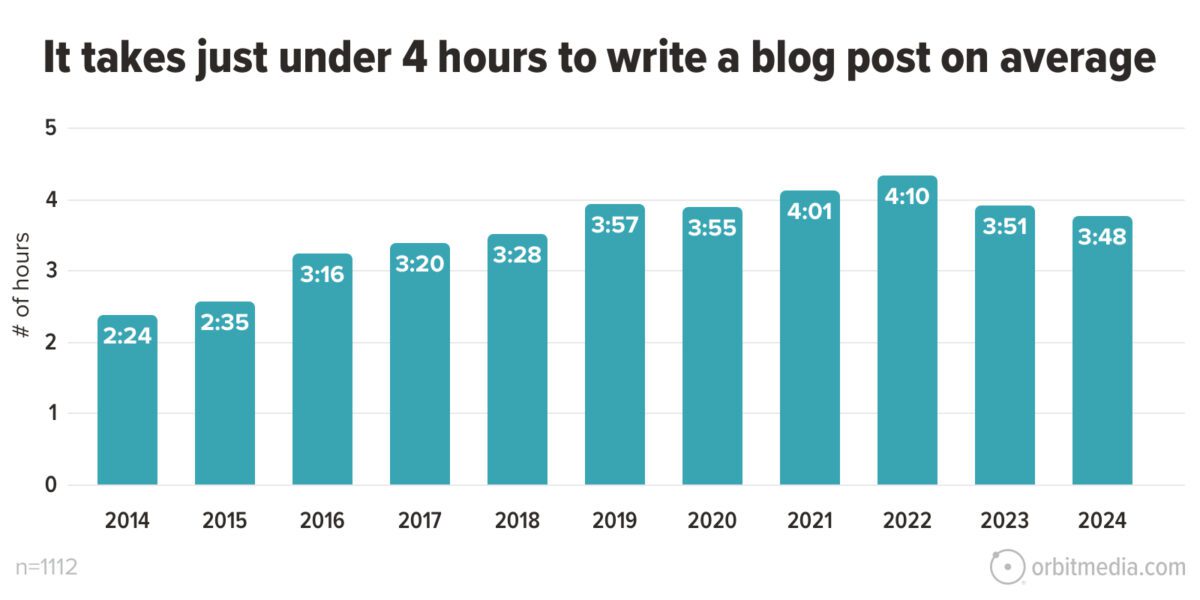
One of the most persistent questions facing marketers in 2024 was whether generative AI tools would drastically reduce the time investment required to produce high-quality content. With 80% of bloggers now utilizing AI in some capacity—up from near-zero in 2022—one might expect a significant shift in production efficiency.

The data, however, tells a different story. The average time spent crafting a single blog post currently sits at three hours and forty-eight minutes. This figure is a mere three minutes less than what was reported the previous year.
This statistic reveals a profound truth about modern content marketing: while AI is an excellent tool for brainstorming, drafting, and visualization, it cannot replace the strategic human oversight required to create truly resonant content. The "human touch"—the nuance, the brand-specific storytelling, and the meticulous fact-checking—remains the most time-consuming and essential part of the process.
The Relationship Between Effort and Outcome
If the time investment isn’t decreasing, what should marketers be prioritizing to ensure their efforts aren’t wasted? The Orbit Media survey highlights a clear correlation: greater effort yields greater results.
The 2,000-Word Threshold
The data shows that bloggers who consistently produce long-form content—specifically articles exceeding 2,000 words—are significantly more likely to report "strong results." This suggests that in an era of information overload, depth is a competitive advantage. Readers and search engines alike are favoring comprehensive, authoritative resources over thin, surface-level content.
Cadence and Consistency
Quality, however, does not necessitate a sacrifice in frequency. The research suggests that a bi-weekly posting cadence is the minimum threshold for maintaining a high-performance blog. Audiences today have high expectations; they want regular, high-value insights, and they are quick to abandon brands that fail to deliver consistent quality.
Thinking Like a Social Feed
Perhaps the most transformative takeaway from the 11th annual survey is the recommendation to treat a blog feed like a social media stream. Social platforms have spent billions on user testing to determine exactly what keeps users engaged. By adopting these same principles—visual storytelling, interactive elements, and a focus on community—blogs can move from being static repositories of information to dynamic, engaging channels.

Expert Q&A: Insights from Andy Crestodina
To better understand these findings, we sat down with Andy Crestodina, CMO and Co-Founder of Orbit Media, to discuss what these trends mean for the future of B2B and B2C marketing.
Q: What research findings were the most surprising to you personally?
Andy Crestodina: "The data is telling us, year after year, that big efforts drive big outcomes. It isn’t surprising by itself, but when you see the differences side-by-side between low-effort and high-effort performance, it’s just so stark. Literally, any extra effort can make an impact. What remains surprising is seeing so many content programs sticking with low-effort strategies—the same short-form posts on a monthly cadence with no collaboration, no research, and no video. Marketers who do the bare minimum should expect bare-minimum results."

Q: The data suggests that podcasters are twice as likely to report strong results. Why is that?
Andy Crestodina: "That stat is compelling, but it needs context. It isn’t just the audio format itself; it’s the behaviors that usually accompany it. Podcasters are rarely working in isolation. They are interviewing experts, collaborating, and producing content that is inherently conversational. They aren’t just sitting at a keyboard; they are reaching out and building networks. Hitting the record button is a forcing function for better marketing."
Q: The report notes that the most visible metrics—like traffic—are the least important. How should marketers be measuring success today?

Andy Crestodina: "We are seeing a decline in blogging results over the last five years, largely because search traffic is harder to come by and ‘zero-click’ searches are on the rise. If you define success solely as traffic, you are going to feel like you’re failing. We need to look deeper. The most important outcomes are often the hardest to measure: word-of-mouth, top-of-mind awareness, and bottom-of-funnel conversions. Every article should be an opportunity to build a relationship, support a sales conversation, or provide value to a potential client."
Strategic Implications: How to Pivot for 2025
For content marketing leaders, the transition from theory to practice is the most critical step. Based on the 11th Annual Blogger Survey, here are the recommendations for your team:
- Repurpose Ruthlessly: Every piece of content should be treated as a foundation. Convert long-form articles into social snippets, video scripts, and newsletter segments.
- Prioritize Originality: AI can help with the "heavy lifting," but it cannot provide the original research, proprietary data, or unique brand perspectives that drive real engagement.
- Diversify Your Channels: As Crestodina notes, "Don’t just build on rented land, but go where your audience is." His #1 tip for 2025 is the launch of a LinkedIn newsletter. By aligning your strategy with the goals of social platforms—keeping their users on their site—you can often gain significantly more visibility than you would through traditional SEO-only strategies.
- Focus on Conversion, Not Just Traffic: Move your KPIs away from vanity metrics. Focus on engagement depth, newsletter sign-ups, and the role your content plays in nurturing leads through the sales cycle.
Conclusion: The Future of Content
The data from Orbit Media’s latest survey is not a signal to stop blogging; it is a signal to stop blogging the old way. The era of "content for content’s sake" is over. Today’s landscape rewards the bold, the deep, and the collaborative.

By increasing your time investment, focusing on depth, and strategically distributing content where your audience spends their time, you can cut through the noise. As we move into 2025, the most successful content marketers will be those who view their blogs not as traffic generators, but as engines for building authority, trust, and long-term business value.
For more in-depth data and to download the full report, visit the Orbit Media website. To stay updated on the latest content marketing strategies from the team at Convince & Convert, subscribe to our newsletter and join the conversation on our social channels.