WordPress 7.1 "Mary Lou" Debuts: A Comprehensive Deep Dive into the CMS’s Latest Evolution
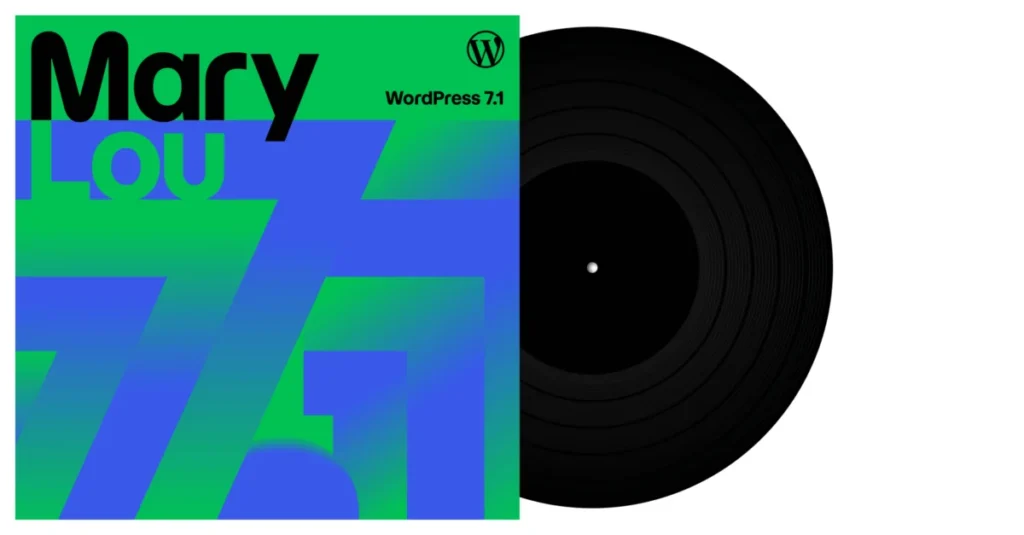
The open-source community behind the world’s most popular content management system has officially launched its latest major iteration. WordPress 7.1, code-named “Mary Lou” in honor of the pioneering jazz pianist, arranger, and composer Mary Lou Williams, is now publicly available. Representing a massive collaborative effort, this release introduces a suite of advanced design controls, streamlined administrative navigation, robust in-browser media processing, and deep developer-centric updates designed to modernize web publishing.
Main Facts
WordPress 7.1 is structured around four primary pillars: workflow refinement, design autonomy, developer extensibility, and enhanced performance.

Key user-facing and technical highlights include:
- Universal Admin Bar: The administrative toolbar now persistently follows users across the entirety of the administrative and site-editing environments, bridging the gap between dashboard management and front-end design.
- Native Responsive Styling: Content creators can now define and preview block styles tailored to specific screen sizes directly from Global Styles or block settings, eliminating the need for custom CSS media queries.
- Redesigned Media Editing Suite: A centralized media modal now integrates freeform and aspect-ratio cropping, precise rotation snapping, horizontal and vertical flipping, and advanced metadata editing into a single workflow.
- Client-Side Media Processing: Image optimization tasks—such as compression, resizing, and thumbnail generation—are now handled natively in the browser via a WebAssembly (WASM) build of
libvips, dramatically reducing server strain and avoiding traditional PHP timeouts. - Advanced Collaboration Tools: The internal Notes system has been upgraded to support rich text formatting (bold, italic, code blocks, and hyperlinks) alongside
@mentionsthat directly notify collaborators. - Expanded Block Library: Two new core blocks—Playlist (featuring interactive audio waveforms) and Tabs—have been introduced, expanding layout capabilities without relying on third-party plugins.
- Public SVG Icon API & Abilities API: Developers gain a formalized public API to register and deploy custom icon collections, alongside enhancements to the automation and integration-focused Abilities API.
Chronology of the Release
The path to WordPress 7.1 followed a rigorous, multi-month development and testing cycle characteristic of the core software’s governance model.

- Early 2026 (Ideation and Planning): Following the architecture established in previous cycles, core contributors began conceptualizing a release centered around seamless cross-editor transitions and modernized media pipelines. The community selected Mary Lou Williams as the namesake, channeling her legacy of relentless reinvention and cross-pollination of ideas (reminiscent of her legendary Harlem apartment workshops with Thelonious Monk and Dizzy Gillespie).
- Mid-2026 (Alpha and Feature Freezes): Development ramped up on core features, including the browser-based WASM image processing and the unification of the iframed post editor across all themes.
- August 2026 (Beta, Release Candidates, and Field Guide): The release squad published the WordPress 7.1 Field Guide on August 5, 2026, outlining crucial developer notes, deprecations, and API updates. Rigorous community testing by hundreds of beta testers surfaced edge cases in responsive breakpoint handling and accessibility features.
- Late August 2026 (General Availability): WordPress 7.1 officially launched worldwide, supported on day one by complete translations in over 20 locales and more than 1,500 distinct enhancements and bug fixes contributed by over 800 individuals.
Supporting Data and Technical Metrics
The scale of WordPress 7.1 underscores the vitality of its open-source contributor ecosystem. Quantitative metrics for this release highlight both community engagement and technical modernization:
- Contributor Participation: Over 800 individual contributors from around the globe submitted code, documentation, accessibility patches, and translations.
- First-Time Contributors: The release successfully onboarded more than 170 first-time contributors, continuing the platform’s mission to lower barriers to open-source participation.
- Volume of Contributions: The community delivered a combined total of over 1,500 enhancements and bug fixes.
- Localization Milestones: On day one, over 20 locales achieved 100% translation completion, establishing a record pace for internationalization rollouts.
- Performance Enhancements: By shifting heavy image processing workloads from the server to the client using WebAssembly, sites handling high-volume photography uploads report significant drops in peak RAM consumption, bypassing traditional PHP memory limit thresholds (
memory_limit) and maximum execution time limits (max_execution_time). Furthermore, the inclusion of native support for modern capture formats—including AVIF, HEIC, and High Dynamic Range (HDR) gain maps—aligns the CMS with contemporary smartphone and digital camera standards.
Official Responses and Community Perspectives
The leadership and core teams behind WordPress 7.1 emphasized that the release represents a maturation of the full-site editing paradigm.

Core leadership noted that while early iterations of the block editor focused on establishing foundational building blocks, Version 7.1 prioritizes the nuance of digital craftsmanship. By granting theme authors control over custom responsive breakpoints via theme.json and introducing interactive pseudo-states (such as hover, focus, and active states for buttons directly inside the UI), the platform bridges the historical gap between visual site building and bespoke front-end engineering.
Accessibility advocates within the project praised the expansion of core inclusive design patterns. The introduction of wp_get_tooltip() and wp_get_toggletip() functions standardizes accessible contextual help across legacy meta boxes and the login screen. Furthermore, screen reader optimizations within post list tables and interactive components ensure that complex administrative workflows remain navigable for users reliant on assistive technologies.

The contributor community also celebrated the flattening of administrative friction. By forcing the post editor to run inside an isolated iframe for all themes—matching the behavior of the Site Editor—themes no longer bleed unpredictable administrative CSS rules into the content canvas, ensuring a WYSIWYG experience that developers and clients have long requested.
Implications for Web Professionals, Developers, and Site Owners
The deployment of WordPress 7.1 carries profound implications across the digital publishing ecosystem:

For Content Creators and Editors
The addition of rich-text Notes and inline @mentions transforms WordPress into a viable alternative to dedicated cloud document-review platforms like Google Docs or Notion. Editors can now target specific text strings rather than entire structural blocks, leaving granular, threaded feedback that streamlines editorial sign-off workflows.
For Designers and Agency Owners
Designers gain unprecedented autonomy without writing custom stylesheets. Responsive styling controls baked directly into Global Styles allow teams to verify layout integrity across mobile, tablet, and desktop viewports in real time. The standardization of interactive pseudo-states means dynamic micro-interactions (like custom button hover colors) can now be configured visually.

For Developers and System Administrators
The technical stack receives significant hardening. The public exposure of the SVG Icon API (wp_register_icon_collection(), wp_register_icon(), and wp_get_icon()) allows plugin and theme authors to inject proprietary icon sets cleanly into the core UI. Meanwhile, the evolution of the Abilities API sets the stage for advanced AI-powered tooling and automated workflows with secure validation lifecycles. On the backend, browser-based WASM media processing drastically reduces server storage overhead and mitigates Denial-of-Service vectors associated with malformed or oversized image uploads.
Conclusion
Named after an artist who constantly redefined her craft across swing, bebop, and sacred jazz, WordPress 7.1 "Mary Lou" proves that the CMS is continuing to evolve with rhythm and precision. By pairing deep architectural upgrades—like browser-side media processing and a standardized design system—with intuitive user-facing features like inline rich-text collaboration and native responsive styling, WordPress 7.1 solidifies its position as an enterprise-grade platform for the modern web.