Crisis in the Fields: Kozhikode Farmers Face Financial Ruin Amid Escalating Wildlife Conflicts
By Investigative Desk
September 20, 2026
In the lush, verdant landscapes of Kozhikode, the battle between agrarian survival and wildlife encroachment has reached a critical tipping point. New data released by the Agriculture Department paints a grim picture of the current state of affairs: in just the first eight months of 2026, wildlife-induced crop destruction has inflicted losses exceeding ₹1.35 crore. As farmers struggle to protect their livelihoods, the regional administration is preparing for a high-stakes state-level conclave, tasked with shifting the narrative from passive mitigation to proactive, technology-driven defense.
The Scale of Destruction: A Financial and Agricultural Catastrophe
Between January 1 and August 14, 2026, the agricultural heartlands of Kozhikode suffered an onslaught of wildlife incursions that decimated over 72.42 hectares of cultivable land. While the total monetary loss is pegged at ₹1,35,29,000, these numbers represent more than just a balance sheet; they signify the collapse of seasonal efforts for hundreds of farming families.
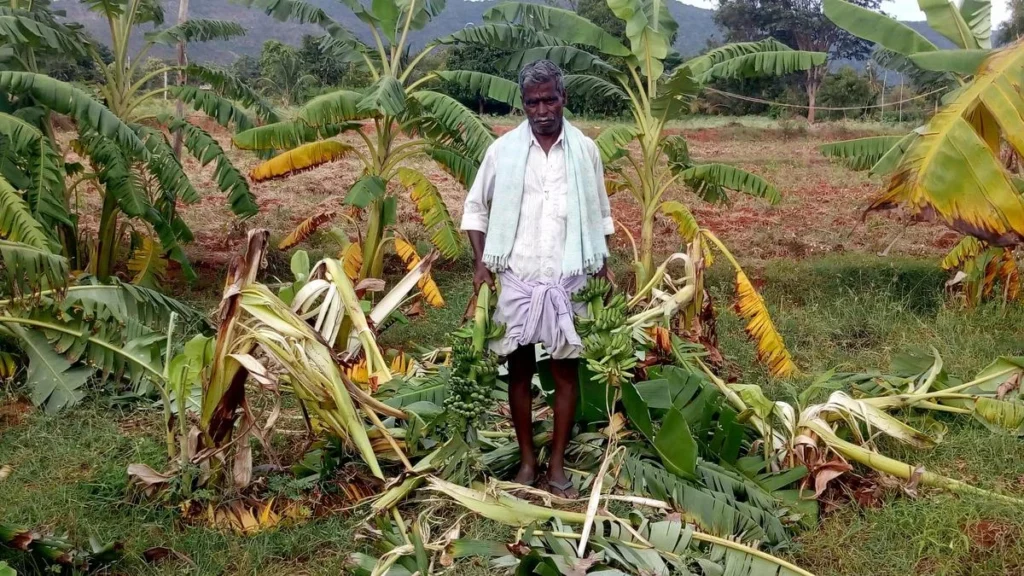
Banana plantations have emerged as the primary casualty, bearing the brunt of the destruction. However, the havoc extends across a diverse range of cash crops, including rubber, coconut, arecanut, and nutmeg. For the small-scale farmer, these crops are not merely commodities—they are the primary hedge against poverty. When a herd of elephants or a sounder of wild boars tears through these fields, they effectively strip the farmer of their annual income in a single night.
A Geographic Map of Despair
The damage is not distributed evenly, with specific regions bearing a disproportionate burden of the conflict. Leading the list of distressed areas is Purameri, where 338 farmers reported the destruction of over 6.19 hectares of land, resulting in an estimated loss of ₹15.23 lakh.

The crisis ripples outward from there:
- Chathamangalam: Losses amounting to ₹12.40 lakh.
- Maruthonkara: Losses reaching ₹12.36 lakh.
- Other critical zones: Significant damage has been documented across Nochad, Mukkam, Koodaranji, Villiappally, Balussery, Koorachundu, Nanmanda, Kuttiady, Velom, Perumanna, and the site of the upcoming conclave, Thiruvambady.
The geographic spread suggests that the conflict is no longer confined to the fringe areas near forest boundaries but is moving deeper into established agricultural belts, complicating the task of containment.
The Changing Face of the Threat: Beyond Elephants
While the specter of elephant herds remains a potent symbol of wildlife conflict, farmers are reporting a broader, more insidious threat. Shaji Thomas, an upland farmer from Nochad, points out that the culprits are diverse and adaptive.
"Wild boars and porcupines have emerged as major causes of crop damage, often causing more consistent, daily destruction than larger animals," Thomas notes. "Traditional fencing methods, which were once considered the gold standard, have largely failed. The animals are learning, adapting, and finding ways to circumvent these barriers."
Beyond the loss of crops, the psychological and physical toll on farmers is profound. Reports of livestock loss, damage to residential property, and even instances of physical injury are becoming increasingly common. For families living in the path of these migrations, farming has become a high-risk occupation characterized by constant vigilance and nightly patrols.

Cumulative Pressures: A Three-Pronged Crisis
It is vital to contextualize the wildlife crisis within the broader environmental challenges faced by the district. The Agriculture Department’s records indicate that wildlife is not the only force working against the farmers this year:
- Drought: During the same eight-month period, 195 farmers faced losses totaling ₹28.82 lakh due to water scarcity and drought conditions.
- Monsoon Extremes: The most devastating blow, however, came from the elements. Heavy, unseasonal rains affected 15,980 farmers across a staggering 2,943.61 hectares, with total losses estimated at ₹32.11 crore.
When combined, these factors create a "perfect storm" for the agricultural sector. The wildlife crisis, while smaller in monetary scope compared to flood damage, is perhaps the most volatile because it is perceived as an avoidable human-wildlife management failure, rather than a natural disaster.
The Thiruvambady Conclave: A Pivot Toward Technology
With tensions mounting, the Agriculture Department has scheduled a state-level conclave in Thiruvambady on September 29, 2026. This gathering is intended to be more than a grievance-venting session; it is expected to be a launchpad for modern, science-based intervention strategies.
Prominent farmers’ organizations are demanding a departure from conventional, manual mitigation techniques. Their proposal includes the adoption of:
- Artificial Intelligence (AI): Using AI-powered surveillance cameras to identify and track wildlife movement in real-time, sending automated alerts to farmers’ mobile devices.
- Bio-fencing: Utilizing natural barriers, such as bee-hives or specific unpalatable plant species, which have shown success in other parts of the country for deterring elephants.
- Technology-based barriers: Integrating infrared sensors and seismic detectors to trigger non-lethal deterrents, such as sirens or flashing lights, to discourage encroachment without harming the animals.
Official Response and the Path Forward
Government officials have acknowledged the urgency of the situation. In addition to discussing technological solutions, the administration has announced a concerted effort to streamline and increase compensation packages for affected farmers. The objective is to ensure that when a loss occurs, the financial recovery process is swift and sufficient to prevent farmers from falling into debt traps.

However, critics argue that compensation is a "band-aid" solution. They contend that until the government addresses the root causes—such as habitat fragmentation, the lack of buffer zones, and the failure of existing forest corridors—wildlife will continue to seek sustenance in human settlements.
The Road Ahead
As the September 29 conclave approaches, the eyes of the farming community are fixed on the government. The shift toward "Smart Farming" defense mechanisms is promising, but its success will depend on the government’s willingness to invest in infrastructure and maintenance.
Wildlife-human conflict is a reality of the modern era, exacerbated by climate change and changing land-use patterns. For the farmers of Kozhikode, the survival of their industry hinges on the ability of policymakers to balance conservation mandates with the fundamental right of farmers to exist and thrive on their own land.
The upcoming discussions in Thiruvambady represent the final opportunity for the current administration to prove that they can protect the backbone of the region’s economy. The farmers are not just asking for compensation; they are asking for a sustainable future where the harvest, not the habitat, remains secure.