Bridging Legacy and Future: The Comprehensive Guide to Migrating Oracle to BigQuery
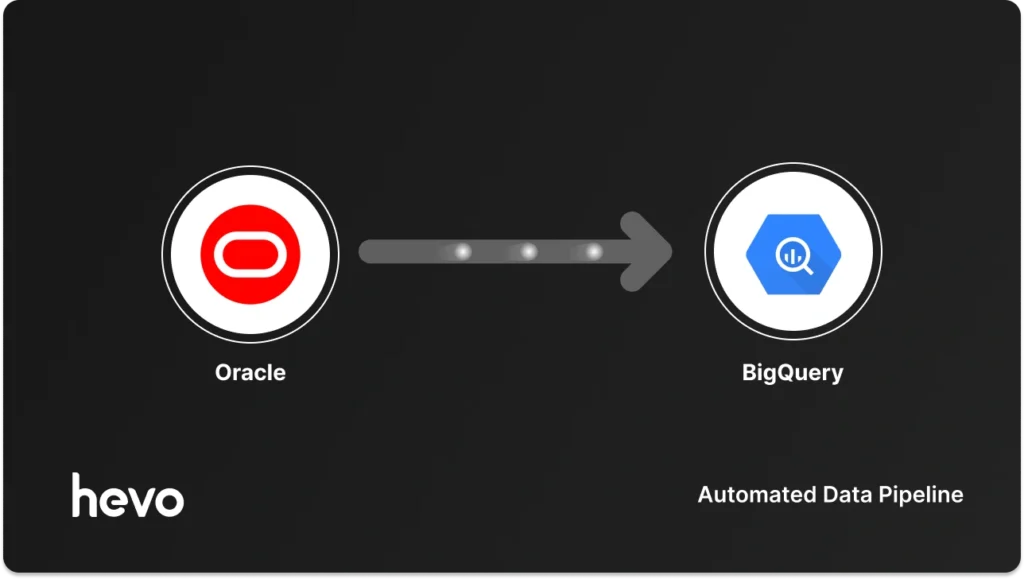
In the modern enterprise landscape, the tension between operational stability and analytical agility is a defining challenge. Many organizations rely on Oracle Database—a titan of transactional processing—as the backbone of their business operations. However, as data volumes swell and the demand for real-time, cross-functional insights intensifies, the limitations of traditional, on-premise relational databases become apparent. This is where Google BigQuery enters the frame.
Migrating from Oracle to BigQuery is not merely a database upgrade; it is a strategic shift toward a serverless, highly scalable cloud data warehouse architecture. This guide explores the "why," the "how," and the strategic considerations of executing this migration, providing a blueprint for teams looking to unlock the full potential of their data.
The Strategic Imperative: Why Migrate?
Oracle Database was built for ACID-compliant, row-level transactional integrity. While unmatched for ERPs and CRM systems, it often falters when tasked with the petabyte-scale analytical queries required by modern BI tools.
1. Performance and Scalability
BigQuery utilizes a unique decoupled storage and compute architecture. Unlike Oracle, where analytical queries can compete for resources with transactional processes—potentially degrading performance for both—BigQuery’s massively parallel processing (MPP) engine allows for near-instant execution of complex SQL queries against massive datasets without impacting source systems.

2. Cost-Efficiency and Maintenance
Managing an on-premise Oracle environment requires significant investment in hardware, patching, security, and manual tuning. BigQuery is fully managed and serverless. There are no servers to provision or clusters to manage; the infrastructure scales automatically, allowing your engineering team to pivot from "keeping the lights on" to delivering high-value data insights.
3. Seamless Ecosystem Integration
By moving your data into the Google Cloud ecosystem, you gain immediate access to advanced AI, machine learning, and data visualization tools like Looker and Vertex AI, effectively closing the loop between data storage and actionable intelligence.
Understanding the Migration Landscape
When planning your migration, the primary variable is the "maintenance tax." You must choose between automated solutions that offer hands-off efficiency and manual approaches that provide granular, albeit labor-intensive, control.
Comparative Overview of Migration Strategies
| Method | Best For | Pros | Cons |
|---|---|---|---|
| Automated (Hevo) | Real-time sync, high frequency | No-code, CDC support, auto-mapping | Requires subscription |
| Manual (GCS/Export) | One-time, massive bulk loads | Full control, no external dependency | High maintenance, error-prone |
| Native (BigQuery DTS) | Scheduled batch transfers | Google-native, managed | Limited custom transformation |
Method 1: The Automated Path (Hevo Data)
For organizations prioritizing velocity and reliability, automated pipelines are the industry standard. Tools like Hevo Data handle the heavy lifting, including Change Data Capture (CDC), which tracks modifications in your Oracle Redo Logs and streams them to BigQuery in near real-time.

Step-by-Step Implementation
- Preparation and Security: Create a dedicated database user in Oracle. Grant the
SELECTpermissions required for system dictionary and log mining.- Key Command:
GRANT LOGMINING TO HEVO_USER;
- Key Command:
- Enabling CDC: To achieve real-time synchronization, your database must operate in
ARCHIVELOGmode. Enable supplemental logging at the column level to ensure every update is captured by the pipeline. - Pipeline Configuration: In your integration platform, define the source (Oracle) and the destination (BigQuery). The platform will automatically map Oracle data types to BigQuery schemas, reducing the risk of conversion errors.
- Staging and Loading: The pipeline utilizes Google Cloud Storage (GCS) as a staging ground, performing the necessary transformations before committing the data to BigQuery tables.
Method 2: The Manual Migration Journey
For teams with strict compliance requirements or legacy architectures that prevent third-party access, the manual approach is the traditional route. This involves exporting data from Oracle into flat files, uploading them to GCS, and importing them into BigQuery.
The Chronology of a Manual Migration
- Phase 1: Data Extraction: Utilize Oracle SQL Developer to export data. Parquet is the recommended format due to its columnar efficiency, which reduces storage footprint and speeds up BigQuery ingestion.
- Phase 2: Staging in Cloud Storage: Once files are extracted, use the
gsutilcommand-line tool to move them into a GCS bucket.- Best Practice: Organize files by table and date to prevent collision during parallel loads.
- Phase 3: The Load Job: Utilize the BigQuery
bqcommand-line tool or the Cloud Console to trigger the load job. Ensure that you have configured the correct schema auto-detection or provided a JSON schema file to maintain data integrity.
Alternative Engineering: Dataflow and Custom Pipelines
When your migration involves complex transformations—such as PII masking, data enrichment, or de-normalization—off-the-shelf connectors might fall short.
Leveraging Dataflow Templates
Google Cloud Dataflow, powered by Apache Beam, is the "heavy lifter." You can deploy pre-built templates that read from JDBC sources (Oracle) and stream directly into BigQuery. This is ideal for high-scale, cloud-native workloads where the data needs to be manipulated "in flight."
Custom Python Pipelines
For total control, many enterprises build custom ingestion frameworks using Python. While this offers infinite flexibility, it introduces significant technical debt. You become responsible for managing retries, handling network timeouts, and maintaining schema evolution over years of operation.

Implications for Data Governance and Performance
Moving data is only the beginning. Post-migration, the focus must shift to Optimization and Governance.
- Partitioning and Clustering: In BigQuery, partitioning your tables by date and clustering them by frequently queried columns (e.g.,
user_idorregion) can reduce query costs by up to 90%. - Cost Management: Monitor your
INFORMATION_SCHEMA.JOBSto identify high-cost queries. Unlike Oracle, where you pay for CPU and RAM regardless of usage, BigQuery’s billing is consumption-based. - Data Quality: Implement automated validation checks to ensure that the data landing in BigQuery matches the source system’s counts and checksums.
Conclusion: The Path Forward
The decision to migrate from Oracle to BigQuery is a milestone in an organization’s digital transformation. It represents a move away from the constraints of legacy infrastructure toward a future defined by limitless analytical potential.
While manual migrations provide a sense of security through total control, the modern data team is better served by automation. By removing the manual burden of pipeline maintenance through tools like Hevo, teams can shift their focus from fixing broken data flows to uncovering insights that drive the business forward.
Whether you choose the path of automation or the path of custom engineering, the goal remains the same: democratizing access to data. In the end, Oracle keeps the lights on, but BigQuery tells you where to go next.

Frequently Asked Questions
Q: Can I use SQL queries from Oracle in BigQuery directly?
A: No. While both use SQL, the dialects differ. You will need to map Oracle functions (e.g., NVL) to their BigQuery equivalents (e.g., IFNULL).
Q: How do I ensure data consistency during the migration?
A: Use row-count validation and checksums at the end of each load batch to ensure the data in BigQuery matches the source Oracle tables.
Q: Is BigQuery always faster than Oracle?
A: For analytical, large-scale aggregation queries, yes. For single-row transactional lookups, Oracle is often more performant. It is recommended to keep your transaction-heavy workloads in Oracle and move your reporting/analytical workloads to BigQuery.