The Filter Economy: Why Marketing Leaders Are Abandoning "More" for "Meaning"
In an era defined by an unrelenting deluge of digital noise, the most precious commodity for any marketing leader is not content—it is the filter. Every day, professionals are bombarded by a relentless stream of reports, frameworks, LinkedIn think-pieces, and "must-read" case studies. Yet, despite the sheer volume of information, the industry is reaching a critical inflection point: marketing leaders are suffering from content fatigue.
The realization that "more" is no longer "better" has triggered a significant shift in how brands approach their owned media. Specifically, the humble newsletter—once written off as a legacy medium—is undergoing a profound renaissance. Convince & Convert, a consultancy known for its deep-dive analysis, recently completed a comprehensive overhaul of its own email strategy, transitioning its flagship publication from "ON" to "The Trendline." This pivot serves as a microcosm for a broader industry trend: moving away from link-heavy aggregation toward high-value, self-contained strategic debriefs.
The Data-Driven Catalyst
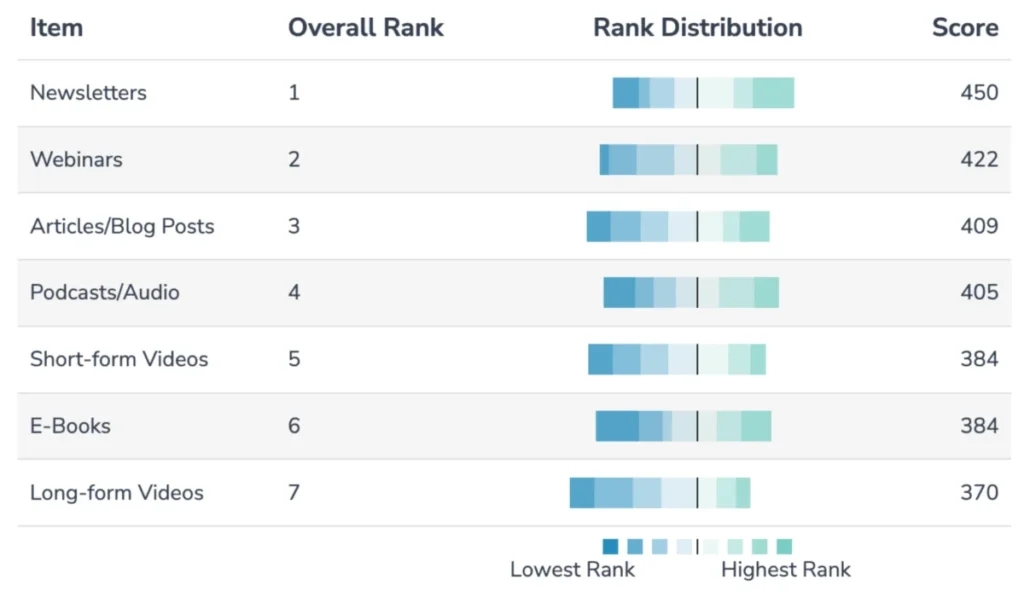
The impetus for this strategic pivot was not mere intuition, but hard data. In its most recent annual survey of marketing leaders, Convince & Convert uncovered a startling preference: newsletters are now the primary way their audience stays informed, ranking significantly higher than short-form video, webinars, blogs, or podcasts.
When asked to rank content formats by preference, respondents favored newsletters almost twice as often as any other medium. This data contradicts the conventional wisdom that younger audiences or time-poor executives have entirely abandoned the inbox for social feeds. Instead, the findings suggest that the inbox has become a sanctuary for curated, high-signal information.
For the modern marketer, the value proposition has shifted. They are no longer seeking "what happened"—that is easily found via automated alerts or AI news aggregators. They are seeking "what it means." They crave a voice that can cut through the clutter and explain the strategic implications of industry shifts.
Chronology of a Rebrand: From "ON" to "The Trendline"
For years, the Convince & Convert newsletter, titled "ON," followed the industry-standard playbook: a clean, professional list of links directing readers to the latest blog posts, podcast episodes, and training modules. While effective for a time, the model hit a ceiling.
As the digital content landscape matured, the bar for quality rose. A "link-farm" newsletter, once considered a helpful digest, became viewed as a chore—an obstacle between the reader and the insights they actually required. The team recognized that by forcing readers to click through to consume value, they were creating friction.

In late 2024 and early 2025, the organization undertook a rigorous audit of its content consumption patterns. The conclusion was clear: the format was based on the medium (blog, podcast, video) rather than the reader’s problem.
The transition to "The Trendline" involved three major strategic shifts:
- Prioritizing In-Email Value: Shifting from "teaser" text that requires a click to "complete" thoughts that deliver value directly in the inbox.
- The Debrief Approach: Reorganizing content by topical importance rather than format, ensuring that the most critical strategic news takes precedence.
- Engagement Metrics: Moving beyond vanity metrics like open rates toward active engagement through interactive elements like the "Sound Off" poll.
The Anatomy of the New Newsletter
The "Trendline" represents a departure from the "listicle" format. Instead, it functions as a briefing document for a CMO or a Director of Marketing. The structural changes reflect a shift toward brevity and impact.
1. The Strategic Lens
Every story included in the newsletter is now filtered through a "So What?" lens. The team asks: Why does this matter to the marketer? What are the follow-up questions they should be asking their teams? This moves the newsletter from a news aggregator to a strategic consultant.
2. Compact Hierarchy
The layout was redesigned to be scan-able yet substantive. Each section adheres to strict length guidelines to ensure the reader can digest the entire email in under three minutes, while still feeling as though they have gained a competitive edge.
3. Ownable Engagement
The "Sound Off" feature at the end of the newsletter serves as a direct feedback loop. By asking readers to participate in a quick poll, the publication gains a clearer understanding of how its audience views current trends, providing the editorial team with proprietary data that can be used for future research.
Implications for Modern Email Marketing
The move by Convince & Convert carries significant implications for the broader marketing industry. It suggests that we are entering a "Post-Aggregation" era of email marketing.

The Death of the Click-Bait Model
For years, the primary goal of a brand newsletter was to drive traffic to a website. While traffic is still a valid goal, the "Trendline" model suggests that brands should prioritize authority over traffic. If a subscriber trusts your newsletter as a primary source of strategic insight, the brand value is realized regardless of whether they click a link. By providing value upfront, you build a deeper, more resilient relationship with your audience.
The Rise of the "Consultant-Editor"
The successful newsletter of the future will not be written by a social media coordinator, but by a subject matter expert. To provide the kind of analysis that marketers are now demanding, the person writing the email must be able to synthesize information and offer a professional opinion. This requires a shift in how marketing teams are structured, placing a higher premium on editorial talent and strategic thinking.
Audience-Centric Formatting
The primary lesson for any brand is to conduct a "pain-point audit." When presenting to a C-suite executive, the goal is to solve a problem with minimal cognitive load. The same logic applies to email marketing. If your subscribers are senior marketing leaders, they do not have time for twenty charts or a four-page article. They need the executive summary, the implications, and the action items.
Why This Matters Now
The digital landscape is currently inundated with AI-generated content that, while technically correct, often lacks the nuance and perspective required for high-level decision-making. As the internet fills with "content sludge," the brands that offer a curated, human-led perspective will gain an outsized share of attention.
The shift to "The Trendline" is not merely a change in branding; it is a declaration that the brand respects the reader’s time. In a world where attention is the scarcest resource, the act of filtering—of deciding what not to read for your audience—is the ultimate service.
Key Takeaways for Marketing Leaders
For those looking to evolve their own email marketing strategies, the lessons from this transition are clear:
- Audit for Friction: Look at your current email performance. Are you forcing your readers to click to find value? If so, try delivering that value directly in the email body.
- Segment by Strategy, Not Medium: Stop grouping content by its format (e.g., "Our latest video," "Our latest blog"). Group it by the problems it solves for the reader.
- Treat the Inbox as a Product: Your newsletter should not be an afterthought or a secondary channel. It should be treated as a standalone product that deserves the same editorial rigor as a whitepaper or a keynote presentation.
- Invest in Authority: Use your newsletter to share opinions, not just news. Your audience can get the news anywhere; they come to you for your specific, unique perspective on what that news means for their business.
As we look toward the future of digital engagement, the trend is clear. The winners will not be the brands that shout the loudest or publish the most. The winners will be the brands that act as the most trusted filters in their space, helping their audience navigate the complexity of the modern marketing landscape with clarity, purpose, and a bit of humanity.