Beyond the "Do More With Less" Trap: A New Paradigm for Data-Driven Pipeline Growth
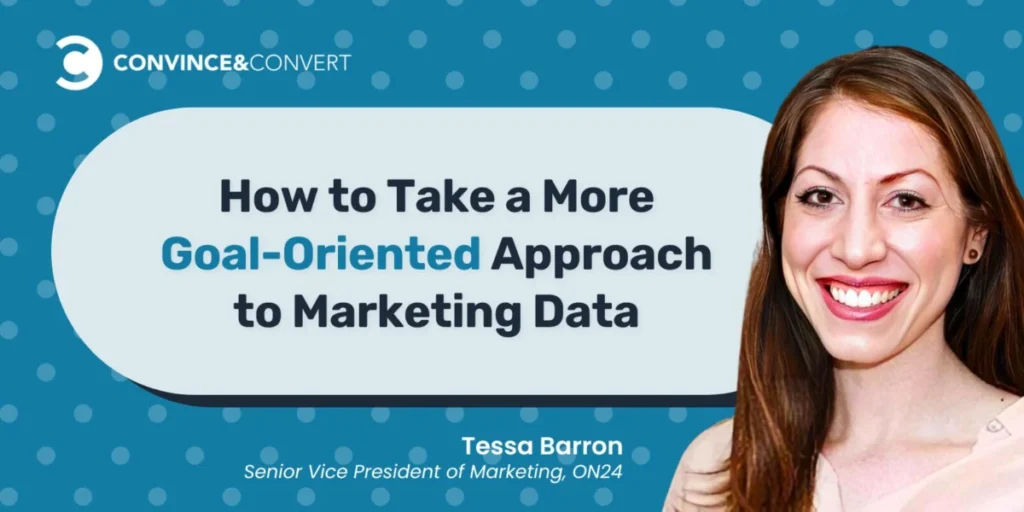
The prevailing mantra in modern corporate boardrooms—"do more with less"—has become a source of profound fatigue for marketing departments. As organizations face the dual pressures of tightening budgets and ballooning pipeline targets, many marketers find themselves trapped in a cycle of diminishing returns. The reflexive response is often to increase the volume of activity: more webinars, more whitepapers, more social posts, and more email campaigns.
However, according to Tessa Barron, former Senior Vice President of Marketing at ON24 and a recent guest on the Data-Driven Decisions podcast, this "more-is-more" approach is fundamentally flawed. Instead of treating marketing as a factory floor where higher output equals higher yield, Barron argues that organizations must pivot from being "tactic-oriented" to "goal-oriented." This shift requires a radical re-evaluation of how data is collected, how sales and marketing teams collaborate, and how the buyer’s journey is truly understood.
The Evolution of the Marketing Mindset
The post-pandemic landscape has permanently altered consumer behavior and expectations. Yet, a significant number of marketing teams remain anchored to strategies devised three or four years ago.
"We as marketers have to check in with ourselves and say, ‘Have we changed? Are we still doing what we were doing three years ago?’" Barron notes. "If the answer is yes, that is the first sign that we need to stop expecting that if we execute the same way and do more and more, we’re going to get more in return."
The trap is comfort. For veteran marketers, the standard playbook—webinars, gated content, and broad-spectrum email marketing—is familiar. The danger lies in leading with these tactics. When a marketing plan begins with "we need to host four webinars this quarter," it lacks a strategic anchor. When the plan begins with "we need a 10% uplift in qualified pipeline," the tactics become secondary, intentional tools designed to solve a specific problem.
Chronology of a Strategic Shift: From Tactic to Outcome
To move away from the "do more with less" trap, organizations must adopt a new sequence of operations. This is not a change in technology, but a change in the chronology of decision-making.
1. Define the Business Goal
The process must begin with a clear, measurable objective. For example, rather than planning for "X number of events," the goal should be "X number of new accounts in the enterprise segment" or "a 10% improvement in lead-to-opportunity conversion rates."
2. Identify the "Signal"
Data is abundant, but most of it is noise. Barron advocates for the concept of the "signal"—a specific piece of behavioral or firmographic data that indicates a buyer is moving closer to a purchase decision. By identifying these signals, marketers can stop spraying messages into the void and start building "traps"—engaging, high-value interactions designed to elicit specific information from the prospect.
3. Align with Sales Intelligence
The most common point of failure is a lack of synergy between marketing and sales. Marketing teams often design content to please their own internal KPIs, while the sales team is focused on the front-line reality of closing deals. By asking salespeople, "What questions do you ask to determine if a lead is qualified?" marketers gain a treasure trove of intelligence that can be used to inform content strategy and lead scoring.
Supporting Data and Real-World Application
The power of this goal-oriented strategy is best illustrated through real-world implementation. ON24 has utilized its platform to turn engagement into actionable data, proving that when content is treated as a data-collection mechanism rather than a passive broadcast, conversion metrics improve.
Case Study: The Cloud Provider Strategy
A technology firm struggling to regain market share analyzed its historical conversion data and discovered that customers utilizing a specific cloud provider were 10 times more likely to convert into a closed-won opportunity.
Armed with this insight, the marketing team didn’t just create more content; they created targeted content. During their webinar series, they introduced a simple, direct poll: "What cloud provider are you currently using?" This allowed the team to instantly segment their audience, prioritizing high-intent prospects for the sales team and ensuring that marketing outreach was perfectly tailored to the specific technical needs of the buyer.
Case Study: The Pharmaceutical Risk Model
In the pharmaceutical sector, a company aimed to reach doctors treating patients with specific, high-risk needs. Instead of a general awareness campaign, they hosted a webinar focused on the latest breakthroughs in drug therapies. During the session, they asked: "How would you rate the risk of your patient base: High, Medium, or Low?"
This single interaction provided the marketing team with a definitive "signal." Those who identified as "High" were immediately moved into a high-touch nurture track, while the company gained a clearer understanding of the market landscape. Both examples demonstrate that strategic data capture, when tied to an end-goal, replaces guesswork with precision.
Official Perspectives: Sales as the Pipeline Architects
A critical takeaway from Barron’s framework is the definition of the marketer’s role. There is often a misconception that marketing creates pipeline. Barron posits a more nuanced view: marketers create the "net" that catches potential buyers, but salespeople are the ones who build the pipeline through direct engagement.
The implications for this are twofold:
- Marketers must become "Signal Developers": The goal of the marketing department should be to provide sales with the clearest possible picture of a prospect before a discovery call is ever placed.
- The "In-Between" Spaces: Conversion is often lost in the friction of the customer journey—outdated lead forms, vague messaging, or a lack of follow-up. By focusing on the "little steps" between a cold lead and a qualified opportunity, marketers can move the needle on revenue far more effectively than by simply increasing the volume of leads.
Implications for Future Strategy
For organizations looking to optimize their marketing efforts, the implications of this shift are significant:
- Audit Your Current Tactics: If a specific webinar, ebook, or social campaign does not serve a direct goal, it should be paused or retired. "Do more with less" actually becomes "Do only what contributes to the goal."
- Simplify Data Visualization: Stakeholders are often overwhelmed by complex dashboards. Presenting data in a simple, "up or down" format regarding key performance indicators ensures that the entire company remains aligned on the strategy.
- Radical Collaboration: Marketing teams must move out of their silos. If the sales team is struggling to move leads through the pipeline, the answer is rarely "more leads." It is usually "better information."
Conclusion: Intentionality as a Competitive Advantage
The pressure to "do more with less" is only a trap if we continue to define "more" as quantity. If we redefine "more" as "more signal, more clarity, and more conversion," the challenge becomes an opportunity for innovation.
By prioritizing the goal over the tactic, listening to the frontline sales intelligence, and using content as a tool for signal detection, marketers can escape the exhaustion of the volume-based model. They can transition from being cost centers that demand more budget to revenue-generating partners that drive clear, measurable growth.
In the final analysis, the path forward for marketing is not through increased activity, but through increased intentionality. When we stop trying to "do more" and start focusing on what truly matters, the pipeline doesn’t just grow—it matures.