AI for Better Ad Creative: A Strategic 3-Step Framework for Modern Marketers
In an era where Meta’s algorithmic updates, such as the Andromeda release, have effectively signaled the death of “brute-force” testing—where marketers once flooded platforms with hundreds of minor ad variations—the industry has reached an inflection point. Small teams are now tasked with maintaining high-volume, high-quality output to satisfy the machine learning requirements of major ad platforms, yet they often face severe creative burnout.
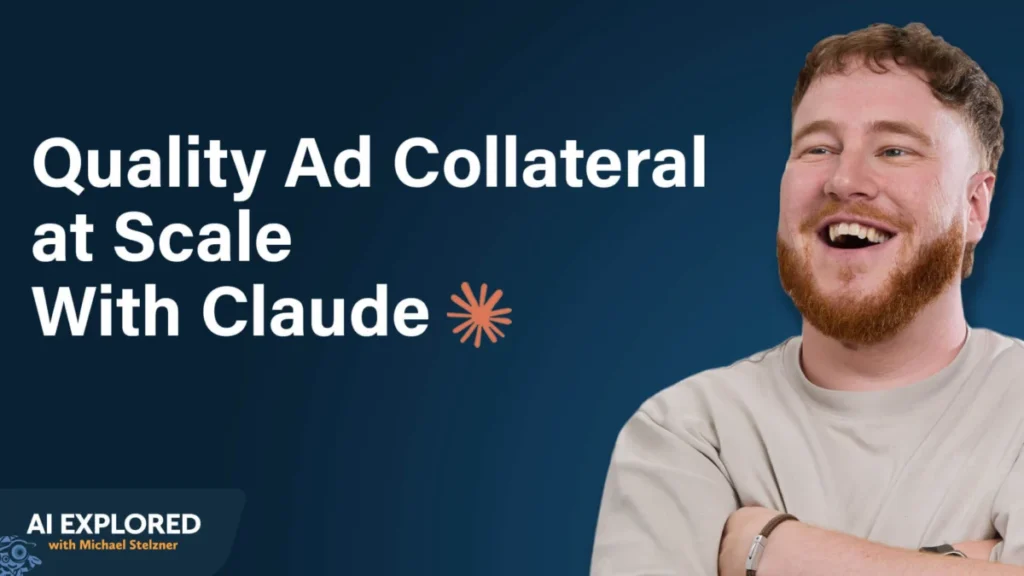
Fraser Cottrell, CEO of the direct-to-consumer agency Fraggell, argues that the solution lies not in more human labor, but in the sophisticated application of generative AI. Far from being a shortcut for the lazy, AI, when deployed correctly, acts as a force multiplier that levels the playing field for brands that lack the budgets for high-end studio productions.
The Misconceptions Holding Marketers Back
Two primary misconceptions currently stifle the adoption of AI in the creative department. The first is the belief that using AI is a “lazy” approach. Cottrell pushes back against this, noting that eliciting high-quality, brand-aligned output from LLMs requires significant intentionality and iterative effort.
The second misconception is the "quality gap." While early AI iterations struggled with consistency, current models are capable of producing images nearly indistinguishable from professional photography. For static-image ads, the quality barrier has effectively vanished. For e-commerce brands, this is a radical shift: assets that once necessitated thousands of dollars in studio fees and freelance labor can now be generated for a fraction of the cost, enabling the volume of creative variations that modern algorithms demand.
1: Build Your Brand Knowledge Base With Deep Research
The fundamental error most marketers make is treating AI as a "plug-and-play" tool. Before any creative generation begins, the AI must be trained on the specific DNA of your brand. Cottrell’s methodology begins with a "Deep Research" session, a function now available in LLMs like ChatGPT and Google Gemini that allows the model to browse the live internet for comprehensive data synthesis.
The Research Protocol
The objective is to move beyond superficial brand assumptions. Using voice dictation tools like Whisper Flow, marketers can instruct LLMs to build an external profile that includes:
- Customer Sentiment: What are the core motivations for buyers?
- The "Why Not" Factor: Why do potential customers encounter the product but choose not to buy?
- Public Discourse: What are the common complaints or specific mentions of the brand on platforms like Reddit?
- Geographic Concentration: Where does the customer base actually reside?
By aggregating these insights, the AI identifies the specific pain points and objections that make an ad resonate. Once the research document is generated—often spanning several pages—it must be verified. Cottrell recommends a "verification loop": pasting the document back into a model like Claude and asking it to act as an interviewer, questioning the user on key facts to ensure accuracy. This process bridges the gap between public internet data and the proprietary, internal knowledge held by the brand owner.
2: Train a Dedicated Claude Project
Once the research is vetted, it should be housed in a "Claude Project"—a dedicated, containerized workspace within the AI platform that maintains a persistent memory of your brand. This workspace ensures that your creative output is informed by a consistent "brand bible" rather than starting from scratch each time.
The Foundation of the Knowledge Base
To build a high-performing project, populate the workspace with the following assets:
- The Vetted Deep Research Document: The foundation of your brand profile.
- Voice-of-Customer (VoC) Data: Exported reviews and testimonials. This is critical for adopting the language your actual customers use, which often differs significantly from "marketing speak."
- The Internal Brand Manifesto: Every agency or company has nuances—what you stand for, your tone of voice, and your specific definition of a "good" ad. Providing this gives the AI a benchmark for quality.
- Performance Analytics: Feed your top-performing ads from the previous quarter into the project. Tools like Poppy can analyze video performance beyond just transcripts, identifying visual pacing and on-screen elements that drove conversion.
By centralizing these documents, you create a “brain” for your brand that understands not just who you are, but what has worked historically.
3: Executing the Creative Workflow
With the knowledge base established, the production phase becomes a systematic, hybrid process. For image generation, Cottrell advocates for a "text-manual" approach: use AI to generate the visual, but keep the copy editing in-house to ensure agility.
Brainstorming and Image Generation
When working with Claude, move from general concepts to specific briefs. For example, rather than asking for "an ad," provide the target persona and the specific product benefit. If you admire an ad from another brand, upload it to the project and ask the AI to deconstruct the concept and rewrite it for your unique brand voice.
When generating the actual image, use the AI to create a highly specific prompt. For example: "Give me a prompt for [Product Name] to use for a professional studio product shot on a purple background, with soft lighting that looks real." This prompt is then taken to image generation tools like Nano Banana 2 Pro (via Gemini) or other API-integrated platforms to produce high-fidelity visuals.
AI-Assisted Scripting for Video
While fully AI-generated video still struggles with the nuance required for high-converting ads, AI is a master of the "first draft." For video scripts, provide the Claude project with your scenario (e.g., a UGC creator running a marathon while talking about a new shoe) and ask for a 30-second script.
The AI will produce a timestamped, structured framework. While the human touch is required to infuse the script with genuine conversational empathy and tone, the AI gets the writer 30% of the way to the finish line in a fraction of the time.
Implications for the Future of Marketing
The transition to AI-assisted creative is not merely a tactical upgrade; it is a fundamental shift in the economics of marketing.
The End of "Brute-Force" Testing
With Meta’s Andromeda update, the platform’s algorithm now consolidates multiple, nearly identical ads into a single entity. This renders the old strategy of "testing 50 variations with one word change" obsolete. The modern requirement is for meaningful diversity—distinct creative angles, different visual styles, and varied emotional hooks.
The Human-AI Partnership
The implications for professional teams are clear: the role of the creative professional is evolving from "creator" to "editor-in-chief." By delegating the heavy lifting of research, brainstorming, and initial drafting to AI, marketers gain the capacity to focus on the high-level strategy and emotional resonance of their campaigns.
The Competitive Advantage
For small to mid-sized brands, this workflow creates a significant competitive advantage. The barrier to entry for professional-grade creative has been dismantled. Where a company once had to choose between high-cost agency production or low-quality DIY, they can now employ an AI-first strategy that bridges the quality gap while maintaining the high volume of creative output that current advertising algorithms demand.
Ultimately, the most successful brands will be those that treat AI as a persistent, evolving member of their team—one that is constantly updated with new performance data, fresh customer reviews, and a deepening understanding of the brand’s unique identity. As the technology continues to mature, the focus remains the same: the tool is only as good as the context you provide it. In the new landscape of digital advertising, your brand’s knowledge base is your most valuable asset.