The Fall of a Data Titan: How Radaris.com Finally Faced Judicial Reckoning

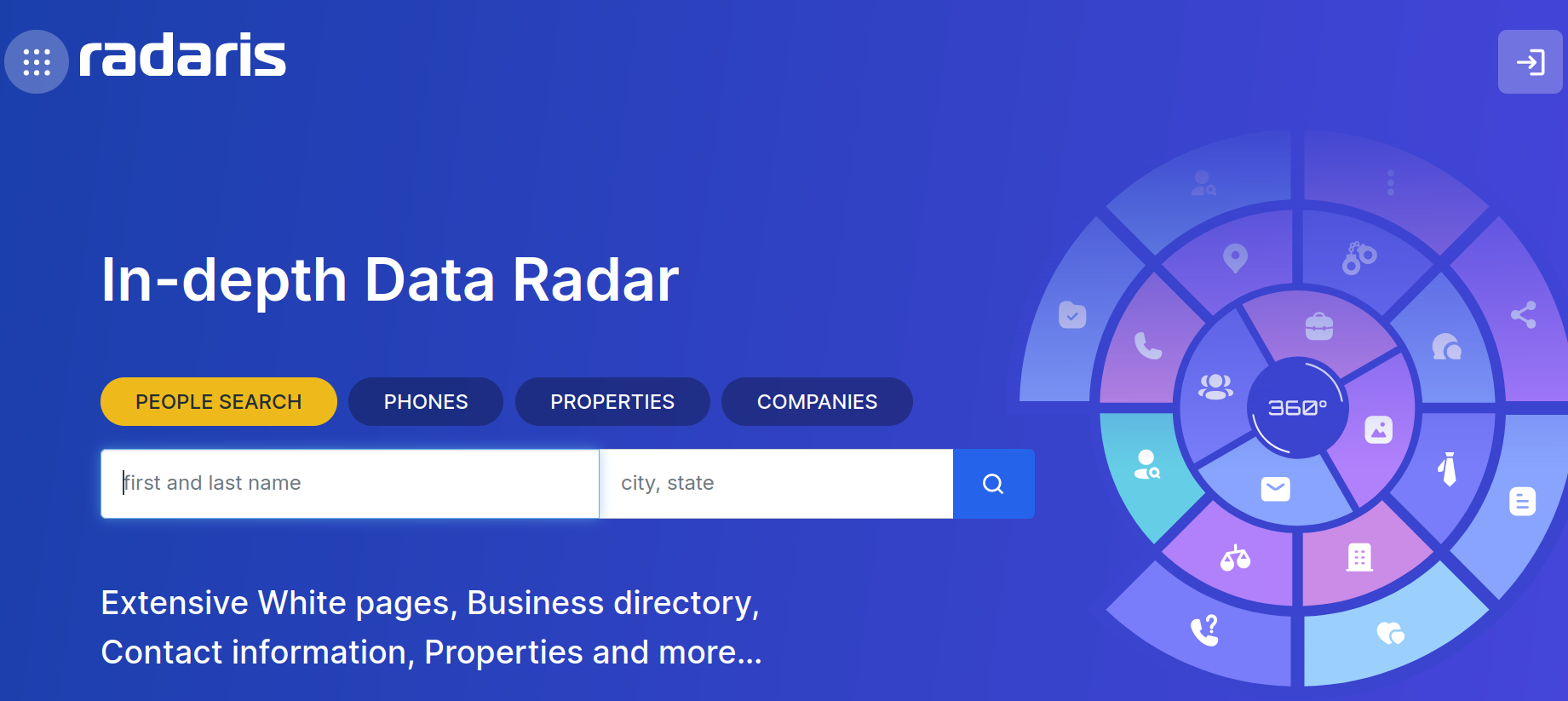
In an unprecedented victory for digital privacy advocates, the controversial consumer data broker Radaris.com has been stripped of its primary domain name following a relentless legal campaign. For years, the platform—a massive repository of personal information—earned a notorious reputation for ignoring requests to purge sensitive data. That era of impunity has effectively ended, as a New Jersey judge ordered the transfer of Radaris.com and over a dozen affiliated domains to the plaintiffs, Atlas Data Privacy Corp, following a pattern of obstructionism that finally exhausted the court’s patience.
A Legal Battle Against "The Shell Game"
The legal assault on Radaris was rooted in New Jersey’s "Daniel’s Law," a landmark statute designed to protect the safety of law enforcement personnel, judges, and government officials. The law allows these individuals to demand the removal of their personal information from data brokerage services, imposing a penalty of $1,000 per violation for every instance where a company fails to comply.
Atlas Data Privacy Corp, the firm spearheading the enforcement of this statute, initiated litigation against Radaris in February 2024. What followed was a masterclass in corporate obfuscation. Attorneys for Radaris engaged in what legal observers describe as a classic "shell game," repeatedly shifting the company’s stated ownership, country of origin, and management structure.
Matt Adkisson, CEO of Atlas, characterized the defense strategy as "island-hopping." Throughout the proceedings, Radaris’s legal team frequently updated terms of service, claiming the company was suddenly managed by entities in the Marshall Islands, the British Virgin Islands, or the Seychelles. In one particularly egregious instance, Atlas discovered that a newly designated management entity in the Marshall Islands did not even exist at the time it was cited in court filings.
Chronology of Deception: From Pseudonyms to Domain Transfers
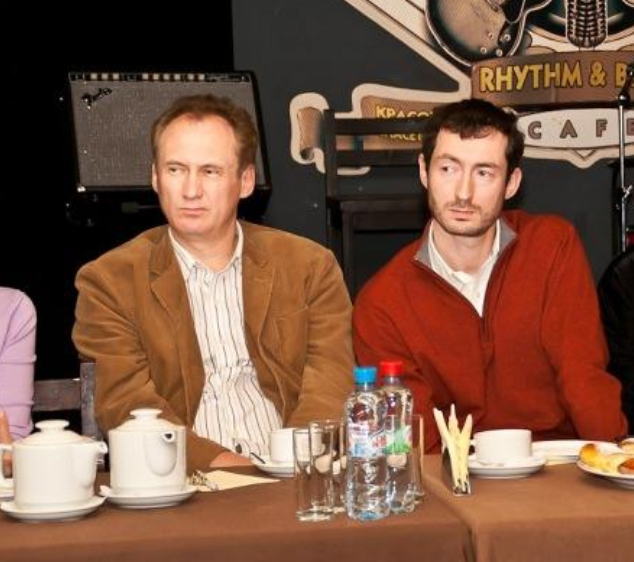
The history of Radaris is marked by a deliberate culture of anonymity and calculated falsehoods. The platform’s true operators were identified through investigative journalism as Igor and Dmitry Lubarsky, Russian-born brothers based in Massachusetts. Despite their central role in building a sprawling empire of people-search websites and affiliate marketing programs, the brothers went to great lengths to hide their involvement.
The Myth of "Gary Norden"
Perhaps the most striking evidence of the company’s deceptive practices was the invention of a fictitious CEO, "Gary Norden." Radaris utilized this fake persona in press releases and investor pitches for years. When journalists eventually exposed the fabrication, the company’s attorney, Val Gurvits of the Boston Law Group, admitted the pseudonym was a manufactured identity used to insulate the actual owners from accountability.
The 2017 Precedent and the "Attrition Strategy"
The current legal victory is not the first time Radaris has appeared in court. In 2017, the company faced a class-action lawsuit where it initially failed to respond, leading to a $7.5 million default judgment. When plaintiffs moved to seize the Radaris.com domain, the company’s legal counsel suddenly appeared, arguing that the lawsuit had targeted the wrong entity—a Cyprus-based firm called Bitseller Expert Limited. The judge, citing due process concerns, halted the transfer.
This "win by attrition" became the company’s signature move for nearly a decade. By constantly shuffling entities—moving from Bitseller to the Marshall Islands-based Andtop Company—the operators ensured that plaintiffs grew weary and exhausted their resources before a final judgment could be rendered.
The Corpus of Evidence: Exposing the Network
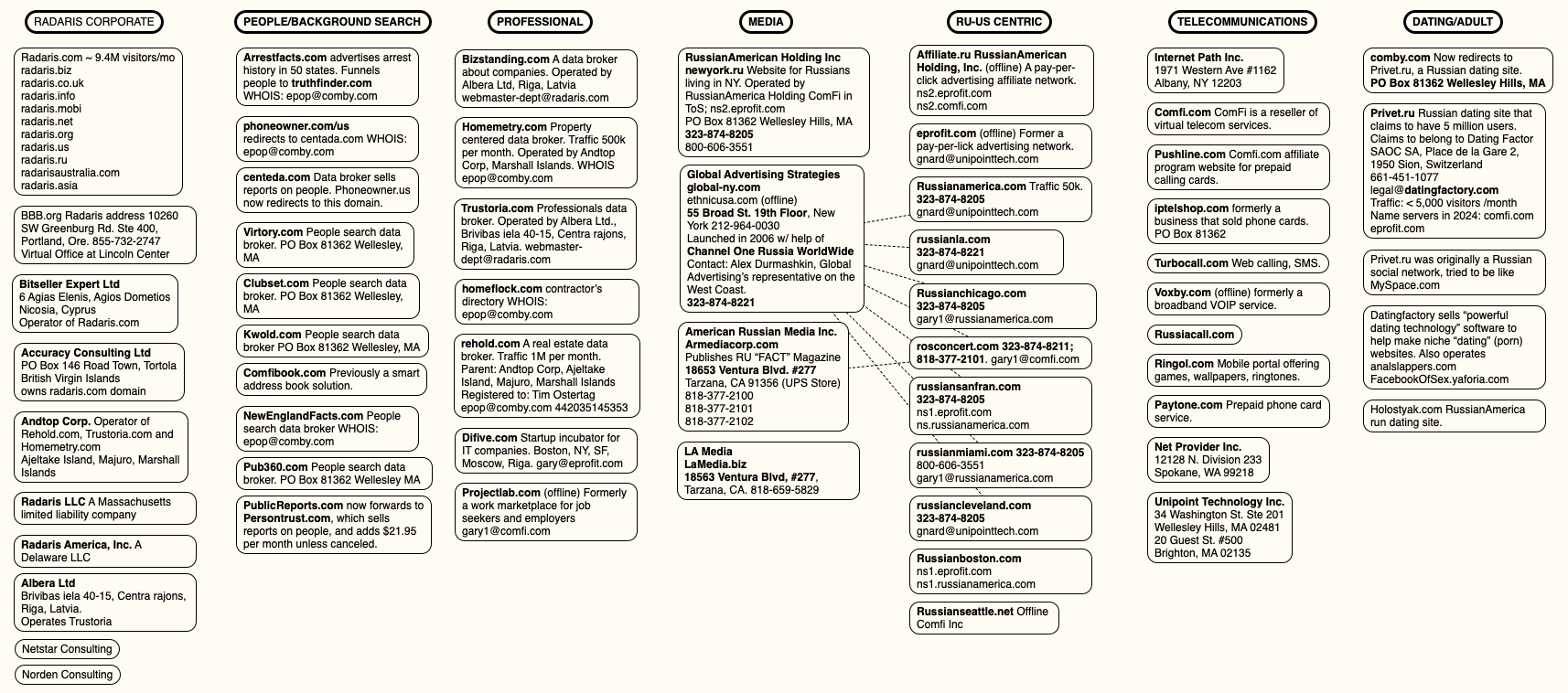
The breakthrough in the most recent case came when Atlas obtained over 10,000 internal documents and emails during discovery. These files shattered the illusion of a fragmented network of independent companies.
The evidence confirms that "Radaris America, Inc.," "Bitseller Expert Limited," "Digital Orbit Corp," and over twenty other entities were, in fact, a single, monolithic operation. These companies shared:
- Unified Infrastructure: Administrative, technical, and financial functions were funneled through the same set of email domains (such as centerex.com and scienteco.com).
- Centralized Finance: All entities utilized the same bank accounts and payment processing systems.
- Virtual Operations: Despite claims of international reach, the entire operation was managed from a singular virtual office address in the Boston area.
The documents further revealed the lucrative nature of the business. Radaris.com was estimated to generate approximately $42,000 in monthly revenue, while a sister site, Veripages.com, brought in roughly $45,000. Much of this revenue was tied to partnerships with marketing giants like the Lifetime Value Company and, surprisingly, data removal services like Onerep, which has itself been criticized for operating its own people-search sites while selling "protection" from others.
Official Responses and Legal Posturing
As of August 26, the New Jersey court has ordered the transfer of 14 domains, with Radaris.com now redirecting to a notice regarding the legal action.
The defense has not gone quietly. Victor Worms, the new attorney for the Radaris-linked entities, maintains that the transfer is legally invalid. "We have made a motion to vacate that default judgment on the grounds that it is void since a non-entity has no legal capacity to sue or be sued," Worms stated. He further argued that the domain seizure violates constitutional principles and indicated an intent to appeal the ruling to the highest possible levels.
Conversely, Raj Parikh of PEM Law, who represented Atlas, remains undeterred. "They won by attrition for a decade," Parikh noted. "But we were acutely aware of the threat this website posed to law enforcement officers… and decided early on to commit whatever time and resources were necessary to remove that threat."
Broader Implications for Privacy in the Digital Age
The Radaris case serves as a microcosm of the systemic failure in U.S. privacy protection. While 14 states have now adopted laws modeled after Daniel’s Law, the industry is fighting back. More than 150 data brokers are currently challenging the constitutionality of these statutes, arguing that they violate the First Amendment by restricting the dissemination of "publicly available" information.
The "Public Record" Loophole
Privacy expert Justin Sherman, author of the forthcoming book The Middlemen, emphasizes that as long as state laws exempt "public records"—such as marriage certificates, property filings, and motor vehicle records—people-search companies will find a way to thrive.
"We don’t need more wake-up calls," Sherman says. "We’ve had eight million wake-up calls already." He points to the recent massive breach at IDScan.net, which exposed the driver’s license data of 153 million Americans, as proof that current protections are woefully inadequate. Without a comprehensive federal privacy law that restricts how companies can harvest and monetize data derived from government records, the "Radaris model" will continue to adapt.
The AI and Lobbying Factor
The struggle is further complicated by the rise of artificial intelligence. Big tech companies and AI proponents have successfully lobbied against strict data scraping regulations, arguing that such limitations would hinder technological progress. This intersection of commercial interests, national security rhetoric, and outdated legal frameworks has created a "perfect storm" for data brokers.
As the case of Radaris.com moves toward potential appellate review—and possibly the U.S. Supreme Court—it stands as a litmus test for the future of digital privacy. Whether this victory becomes a precedent for a more secure internet or merely a temporary setback for an industry built on the commodification of personal safety remains to be seen. For now, the Radaris empire has lost its most prominent front door, but the systemic issues that allowed it to flourish remain largely unresolved.