Beyond the Algorithm: Why Your Marketing Strategy Needs a Human-Centric Pivot
In the modern digital landscape, the playbook for marketing success has become dangerously standardized. Most organizations funnel the vast majority of their budgets into a familiar "triad" of digital platforms: Google Ads, LinkedIn campaigns, and Meta (Facebook/Instagram) retargeting. These channels offer the comfort of granular attribution, clear ROI metrics, and dashboard-friendly reporting. They are the "safe bets" of the corporate world.
But are they the best bets?
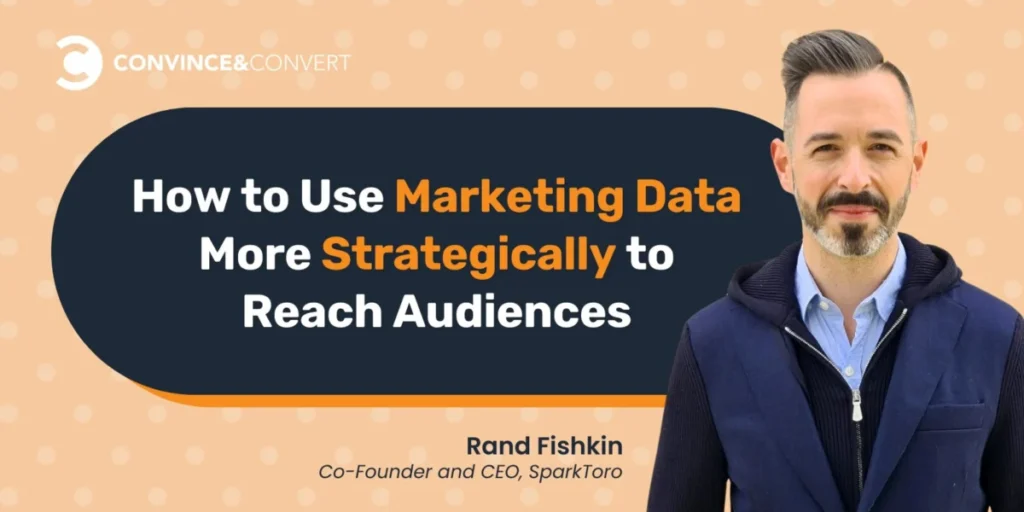
As the digital ecosystem grows increasingly crowded and ad-blindness becomes a standard consumer defense mechanism, many marketers are finding that their reliance on these platforms is yielding diminishing returns. In a recent episode of the Data-Driven Decisions podcast, Rand Fishkin, co-founder of the audience intelligence tool SparkToro, argued that the industry is suffering from a "measurement trap." By optimizing solely for what is easy to track, companies are ignoring where their audiences actually live, breathe, and make decisions.
The Measurement Trap: Why Attribution Can Be Deceptive
The core of the issue lies in the obsession with attribution. Modern marketing teams are under immense pressure to justify every dollar spent, leading them to favor platforms that provide a direct, clickable path from ad impression to conversion.
However, as Fishkin points out, this creates a distorted view of the customer journey. "A ton of what happens in Google is actually a response to something else," Fishkin explains. "People who performed a search query in Google—very rarely was that a spontaneous first-touch thing. It was like, ‘Oh, I heard about this software elsewhere, so I went to Google and searched for it.’"
In this scenario, Google acts as the "middleman." It receives the credit for the conversion because it is the final touchpoint, but it did not necessarily create the demand. When marketers allocate their budgets based on this flawed attribution model, they continue to pour money into the final step of the journey while neglecting the earlier, crucial phases where trust and brand awareness are actually established.
The Chronology of the Modern "Blind" Journey
- The Discovery Phase: A potential customer listens to an industry podcast, reads a niche newsletter, or attends a virtual event. They become aware of a pain point or a potential solution.
- The Consideration Phase: The customer begins following key influencers in the space or engages with community discussions on platforms like Reddit.
- The Search Phase (The "Middleman"): Finally, the customer searches for the brand name or service category on Google to finalize their decision.
- The Misattribution: The marketing team sees a conversion from a Google Ad and concludes that Google is their most effective channel, subsequently increasing spend there while ignoring the podcasts and communities that actually drove the prospect to the search bar.
Unearthing Niche Communities: A Strategic Shift
If paid ads are often just the tail end of the customer journey, where should marketers focus their energy? Fishkin suggests a return to high-relevance, niche channels. The goal is to identify exactly where your specific audience spends their time—whether it’s a specific sub-Reddit, a trade-focused YouTube channel, or a niche podcast.
SparkToro is designed to bridge this gap by providing data on target audience habits, such as the websites they frequent and the influencers they follow. By shifting investment toward these "under-indexed" channels, brands can break through the noise.
Case Study: Influencer-Led Growth
Consider the example of a podcast host looking to scale sponsorship revenue. Rather than buying broad, impersonal ads, the host used audience intelligence to identify high-reach, highly relevant guests who already held the attention of their target sponsors. By inviting these influencers onto the show, the host successfully "imported" their audience. This strategy converted audience trust into measurable sponsorship revenue, proving that aligning with established communities is often more effective than attempting to manufacture reach through paid impressions.
Case Study: The Power of Community Engagement
Similarly, a technology event organizer utilized audience data to source speakers who commanded loyal followings. By selecting speakers based on their audience overlap with target sponsors, the organizer ensured that the event provided immediate, high-value access for those sponsors. This demonstrates a fundamental principle: focus on where the audience is already gathered, and you won’t have to work as hard to aggregate them.
The Rise of "Zero-Click" Marketing
One of the most provocative concepts emerging from this shift is "zero-click marketing," a term coined by Amanda Natividad, VP of Marketing at SparkToro.
In an era where social media algorithms actively punish content that directs users away from the platform (the dreaded "external link"), zero-click marketing encourages brands to stop trying to force users into a funnel. Instead, the strategy involves providing value directly on the platform where the user is already interacting.
A prime example is the company Chartr, which used the Reddit community r/dataisbeautiful to build brand awareness. Rather than posting links or aggressive CTAs, they posted high-quality, relevant data visualizations that resonated with the community’s interests. The result was not a direct "click-to-buy" conversion, but a massive surge in brand credibility and top-of-mind awareness.
By delivering value without the "ask," brands build a reservoir of trust. When the customer is finally ready to make a purchase, they don’t need a retargeting ad to remind them of the brand—the brand is already part of their mental ecosystem.
Reconciling Data with Human Insight
While Fishkin advocates for a data-driven approach, he is also quick to issue a warning: Data is not a crystal ball.
"I’m not saying don’t be data-informed," Fishkin notes, "but I think it pays to be responsible in your recognition of what problems data can solve and what it can’t."
Data is excellent at showing where people are, but it is often terrible at explaining why they are there or what they are feeling. This is where qualitative research—customer interviews and surveys—becomes indispensable. Data might show you that users are abandoning an app at a certain stage, but only a human conversation can reveal the frustration or misunderstanding behind that action.
Balancing the Portfolio
To build a truly robust strategy, marketers should look to balance their efforts:
- The "Reliable" Bucket: Continue using paid channels (Google, Meta, LinkedIn) for conversion-focused objectives, but recognize them for what they are: the "final mile" of the journey.
- The "Discovery" Bucket: Redirect a portion of the "top 10% of spend" that shows little incremental value into creative, audience-first channels.
- The "Human" Bucket: Invest in customer research that goes beyond analytics. Use interviews to understand the frustrations and motivations that quantitative data inevitably misses.
Implications for the Future of Marketing
The implications of this shift are profound. We are likely entering a phase where the "walled gardens" of digital advertising (Google/Meta) will become more expensive and less effective due to privacy regulations and increased competition. Brands that rely solely on these tools are building their houses on rented land.
By moving toward audience-centric, community-focused marketing, companies can build assets that are harder for competitors to replicate. You can buy a keyword on Google, but you cannot "buy" the trust of a niche community—you have to earn it through consistent, value-added engagement.
As Zontee Hou, Managing Director at Convince & Convert and author of Data-Driven Personalization, has argued throughout her series, data should serve as a tool for deeper personalization and stronger cross-functional collaboration, not just as a scoreboard for ad spend.
Conclusion: The Path Forward
The path to better marketing results is not found in a better ad-bidding algorithm; it is found in the willingness to look beyond the dashboard. By understanding the broader customer journey—the podcasts they listen to, the influencers they trust, and the communities they join—marketers can move from being "interruptive" to being "additive."
It is time to stop optimizing for the metrics that make us look good in meetings and start optimizing for the human experience. When you stop chasing the click and start chasing the audience, the results will follow.
For those looking to deepen their understanding of how data-driven strategies can transform organizational culture, you can explore the full series of conversations on the Data-Driven Decisions podcast. For more on Zontee Hou’s insights into personalization, visit the official resources page for exclusive insights and further reading.