The Quality Imperative: How AI Personas and Feedback Loops Are Redefining Content Excellence
By the Editorial Board
Published in partnership with AI Explored
Main Facts
In the modern digital landscape, the rapid democratization of artificial intelligence has rendered the mere creation of content nearly costless. Anyone can instantly generate dozens of reports, strategy documents, or short-form media ideas at the click of a button. However, this hyper-abundance has triggered an inverse market reaction: while quantity surges toward infinity, true quality becomes an increasingly scarce and valuable commodity.
A co-creation between industry strategist Austin Marchese and Michael Stelzner reveals a systemic solution to this dilemma. Rather than using AI merely to amplify output volume, forward-thinking creators, marketers, and executives are deploying AI-driven quality control systems.
At the heart of this methodology are two primary mechanisms:
- AI Personas: Simulated digital replicas of target audiences, managers, or stakeholders built from real-world data (such as message threads, call transcripts, and past critiques).
- Feedback Loops: Iterative testing cycles that catch and correct up to 100% of potential shortcomings before any human stakeholder ever lays eyes on the deliverable.
By shifting from human-to-human review to a rapid human-to-AI-clone validation loop, professionals are eliminating the friction of traditional revisions, safeguarding their professional reputations, and producing work that stands out in a sea of homogenized, AI-generated mediocrity.
Chronology: The Evolution of AI Quality Control
To understand how modern AI quality systems operate, it is necessary to examine how the technological and strategic workflow has evolved over recent years:
- The Generative Boom (Early Phase): When tools like ChatGPT and early image-generation models first emerged, the mere novelty of automated creation astounded users. Outputs were celebrated for their speed and basic competence.
- The Homogenization Trap (Mid Phase): Within months, audiences and consumers began to recognize the distinct, average “flavor” of raw AI output. Reports, imagery, and marketing copy began to look and sound identical, leading to an erosion of trust and perceived value.
- The Strategic Pivot (Current Era): Advanced practitioners like Austin Marchese recognized that prompt engineering alone could not bridge the gap between "average" and "exceptional." This realization catalyzed the development of structured LLM (Large Language Model) knowledge bases, project environments, and customized persona skills designed explicitly for pre-publication quality assurance.
Supporting Data and Technical Architecture
Implementing a robust AI quality control system requires more than casual prompting. According to Marchese, the technical architecture relies on a structured, three-tiered framework that ensures users "own" their intelligence rather than merely "renting" it from a software platform.
1. The Infrastructure: Projects, Local Files, and Knowledge Bases
- Claude Projects: The most accessible entry point for setting up context. By uploading audience preferences, communication histories, and past feedback directly into a project environment, users establish a foundational baseline that is roughly 80% as effective as advanced local setups.
- Local File Systems (Claude Cowork / Code): Advanced users maintain folders directly on their local machines. Utilizing a structure inspired by researcher Andrej Karpathy, information is bifurcated into two layers:
- Raw Folders: Containing unprocessed data such as raw call transcripts and message exports.
- Wiki Folders: Containing AI-processed summaries and extracted psychological preferences.
- Portability: Keeping context and persona data on a local machine ensures that intellectual property travels seamlessly if a user transitions from Claude to ChatGPT or to open-source models.
2. Operationalizing Skills and Voice Input
- Reusable Skills: Rather than writing out instructions from scratch for every task, workflows are packaged into single commands (e.g., an
internal-focus-groupskill). Rather than drafting these by hand, creators use AI-guided interviews to build precise prompt behaviors. - Voice-Driven Nuance: Experts advocate using voice-input tools (such as Claude’s native feature or Wispr Flow) to dictate instructions. Spoken input naturally captures human nuance, emotion, and detail that typed prompts frequently omit.
3. The 80/20 Rule of Impact
Quality control should not be applied haphazardly across every mundane task. By applying the Pareto principle (the 80/20 rule), professionals identify the 20% of high-leverage deliverables—such as YouTube packaging (titles and thumbnails), executive weekly reports, or critical client deliverables—where moving from "good" to "great" creates exponential returns.

Official Insights and Methodology: Building the AI Focus Group
The core operational innovation of this quality system is the Internal AI Focus Group. Instead of waiting for real-world recipients to point out flaws, creators build a panel of digital personas representing diverse audience archetypes (e.g., founders, technical builders, price-sensitive buyers, or risk-averse managers).
Step-by-Step Persona Calibration
- Data Harvesting: Gather robust historical data sets from the intended recipient or audience segment—including text messages, Slack threads, email archives, and social engagement patterns.
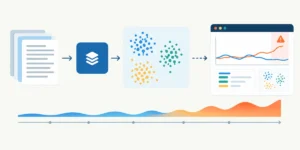
- Deployment: Feed the draft deliverable into the multi-persona focus group, prompting the AI to evaluate the work on a strict numerical scale (0 to 10) across different psychological profiles.
- The Calibration Loop: Compare the AI clone’s feedback against reality. For instance, if an AI persona critiques a title in a certain way, test that hypothesis with the real human counterpart.
- Iterative Correction: If the AI’s feedback diverges from reality, feed the actual human conversation back into the system with the prompt: "Based on this conversation, update my project so it doesn’t make the same mistake again."
- Autonomy: After roughly five to six iterations, the AI persona matches reality so closely that the human feedback loop can be safely bypassed, radically accelerating production timelines without sacrificing rigor.
(Note: Practitioners also note the utility of creating "boards of advisors"—AI personas modeled on public thought leaders like Seth Godin or Alex Hormozi—to inject high-level strategic perspective into daily work.)
Implications for Marketers, Creators, and Businesses
The widespread adoption of AI-driven quality control carries profound implications for the future of work across multiple sectors:
- The Death of Average Content: As the marginal cost of content creation approaches zero, the market value of unrefined AI output plummets. Professionals who rely on default prompts will find their work ignored or immediately flagged as inauthentic.
- The Rise of the Editor-Strategist: The role of the human worker is shifting decisively from a primary creator to an executive editor and systems architect. Success no longer depends on how fast one can type a prompt, but on how effectively one can curate, train, and manage digital quality control ecosystems.
- Exponential Business Growth: Early adopters of these methodologies are witnessing unprecedented compounding returns. For example, creators implementing rigorous internal AI focus groups have reported dramatic upward trajectories—such as tenfold subscriber growth—by ensuring that every piece of published material is pre-vetted for maximum resonance before public release.
Ultimately, the future belongs to those who maintain their own critical thinking while utilizing AI not as a shortcut to do more, but as an uncompromising tool to elevate the quality of everything that matters.