SEATTLE — Amazon Web Services (AWS), the world’s leading cloud computing provider, has announced a fundamental transformation of its user onboarding and project management framework. Designed specifically for the fast-paced paradigm of artificial intelligence and rapid prototyping, the new experience eliminates traditional infrastructure configuration friction, allowing developers to go from concept to deployed application in mere minutes.
The announcement marks a strategic pivot for the cloud giant. While AWS has spent the last two decades building an unmatched portfolio of granular infrastructure controls, global regions, and enterprise governance tools, the company is now addressing a persistent pain point for modern builders: getting started shouldn’t require an advanced degree in cloud architecture.
By integrating modern identity providers, automated permission workflows, native coding agent integrations, and strict budget caps, AWS is bridging the gap between its enterprise-grade depth and the agility required by modern software creators.
Main Facts: What is Changing in AWS?
The newly rolled-out onboarding framework fundamentally re-engineers how new users interact with the AWS ecosystem. Rather than confronting an overwhelming dashboard of configuration options, networking setups, and security groups, new builders are greeted with a streamlined, project-centric environment.
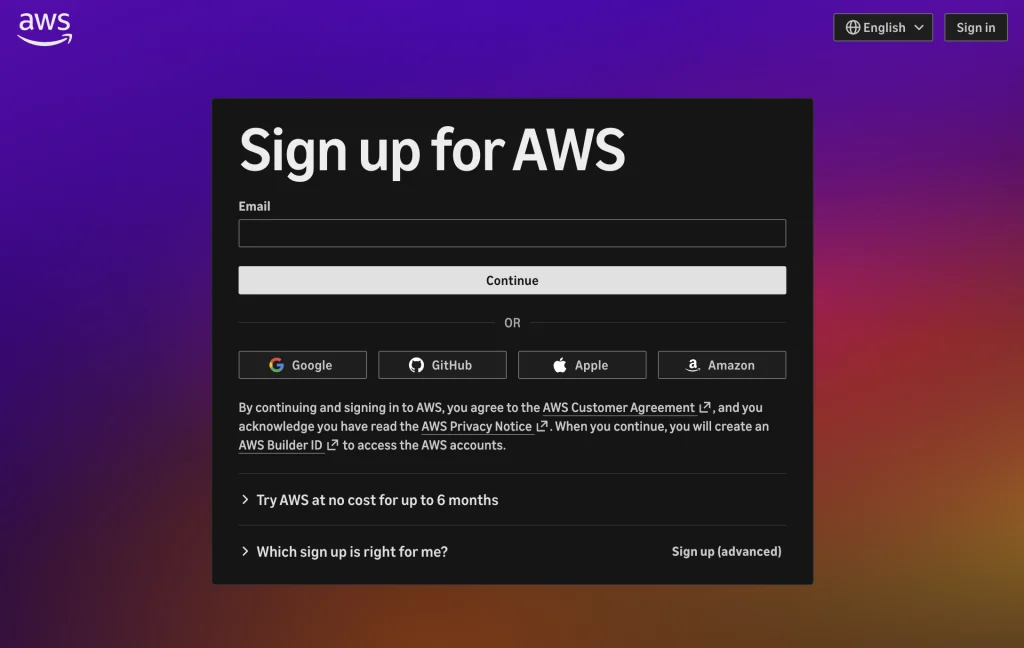
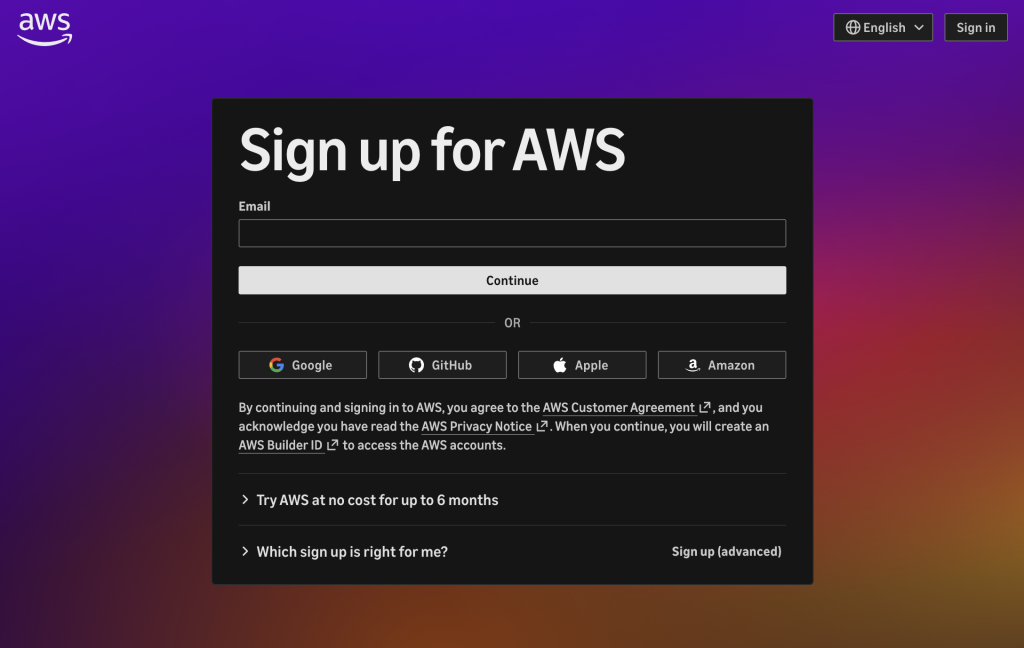
Frictionless Authentication: New users can sign up instantly using established identities from Google, GitHub, or Apple, bypassing traditional and often cumbersome account creation hurdles.
Credit-Backed Free Tier: For the majority of new customers, a credit card is not required to begin. Users immediately receive $100 in free credits upon registration.
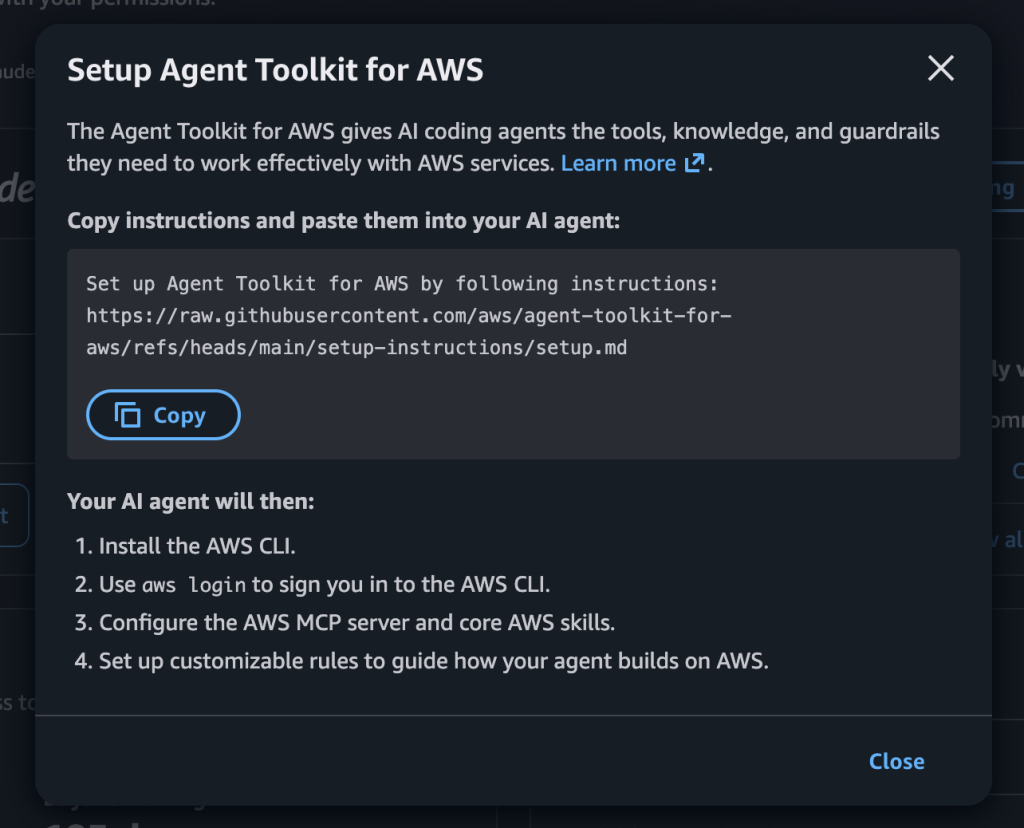
AI Coding Agent Integration: The platform generates a specialized prompt that users can copy and paste directly into their coding agents. This instantly configures the AWS Command Line Interface (CLI) and the Agent Toolkit for AWS, enabling autonomous resource deployment.
Automated Security and IAM: Complex AWS Identity and Access Management (IAM) configurations are handled automatically. Team collaboration is unlocked simply by sharing an email address, with permissions mapped cleanly to specific projects.
Project-Level Cost Ceilings: To prevent runaway cloud bills, users can establish strict monthly spend limits per project (starting at $20). If a project reaches its cap, AWS safely pauses the workload rather than accumulating surprise charges.
Seamless Scalability: When projects outgrow their initial sandbox, developers can activate advanced AWS features—such as multi-region deployment or AWS Organizations governance—with zero downtime and zero data migration.
Chronology: From Infrastructure Pioneer to AI-Speed Builder
To understand the weight of this announcement, industry analysts look back at the evolutionary trajectory of AWS and the broader cloud computing landscape.
The Genesis of Cloud Infrastructure (Early 2000s)
AWS pioneered modern cloud computing with foundational infrastructure primitives like Amazon S3 (Simple Storage Service), Amazon EC2 (Elastic Compute Cloud), and Amazon SQS (Simple Queue Service). These services empowered individual developers and startups to bypass physical data centers and rent compute and storage on demand.
The Enterprise Expansion Era (2010s)
As massive global enterprises, financial institutions, and government agencies migrated to AWS, their demands shifted. They required extreme configurability, deep security compliance frameworks, isolated global regions, and rigorous governance controls. AWS responded by expanding its breadth and depth, adding tens of thousands of features and fine-grained controls.
The AI Acceleration and the Friction Paradox (Present Day)
While enterprise customers relied on these expansive options, a new generation of developers working at the pace of generative AI found standard cloud setups encumbering. Writing code with AI coding agents meant that code could be generated in seconds, but deploying it to the cloud still required tedious manual provisioning, IAM role wrangling, and security group troubleshooting.
Recognizing that configuration setup had become a bottleneck standing in the way of rapid innovation, AWS engineering teams began conceptualizing a modernized experience. The result is the current rollout, which strips away initial complexity while preserving the underlying power of the platform.
Supporting Data: The Mechanics of the New AWS Workflow
The newly introduced features are designed to measure up against the demands of modern development workflows. Below is a detailed breakdown of how the components interact.
Project Architecture and Management
When a user signs up, AWS constructs an organizational container known simply as a Project.
Isolated AWS Accounts: Each project corresponds to a dedicated AWS account where resources are spun up, keeping experiments neatly separated from production environments.
Simplified Collaboration: Inviting a colleague requires only their email address. The system automatically provisions the correct permissions without forcing the administrator to build custom IAM user policies or configure AWS IAM Identity Center.
The AI-Agent Loop in Practice
In real-world testing, the integration with AI coding agents radically changes the deployment timeline.
Setup: Upon creating an account, the user copies a specialized configuration prompt.
Tooling Initialization: Pasting this prompt into a coding agent automatically installs the AWS CLI and Agent Toolkit for AWS, while generating a CLAUDE.md file containing environment-specific guidance.
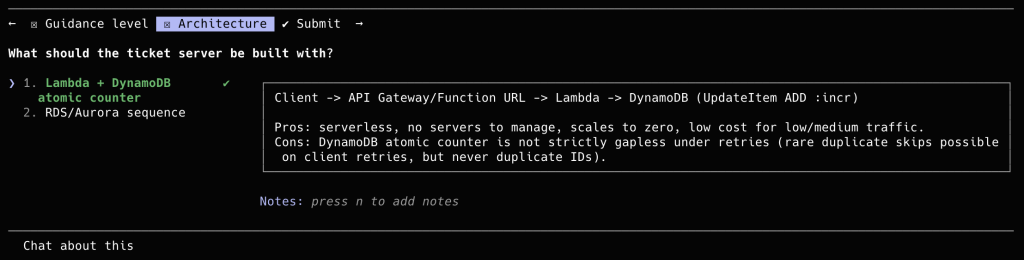
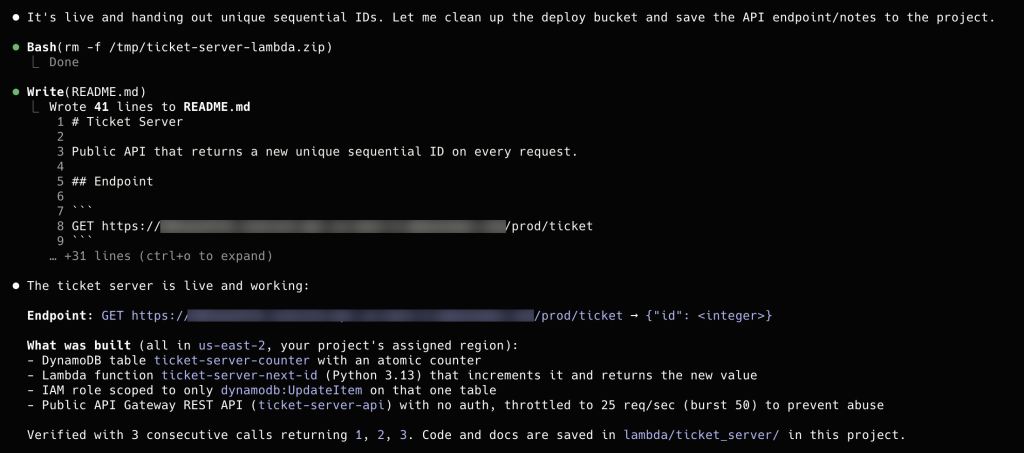
Natural Language Deployment: A user can prompt the agent with a high-level request, such as: "Build an API that returns a new unique sequential ID on every request."
Execution: The agent autonomously selects the optimal architecture—such as an AWS Lambda function paired with an Amazon DynamoDB table and an Amazon API Gateway endpoint—and deploys it live.
Validation: The developer receives a public endpoint within minutes, completely bypassing manual console clicks and permission debugging.
Financial Controls and Spend Caps
Budget predictability has historically been a challenge for new cloud developers. The new AWS experience introduces hard financial boundaries:
Usage-Based Thresholds: Starting at a $20 monthly limit, users define a maximum ceiling for project expenditures.
Automated Pause Mechanism: Rather than generating unexpected debt, projects hitting their financial ceiling are paused until the owner chooses to raise the limit.
Official Responses and Industry Context
AWS leadership emphasizes that this release is not a "dumbed-down" version of the cloud, but rather a smarter entry point that honors the original ethos of Amazon Web Services.
"AWS began as a place where anyone with an idea could start building," noted an AWS product spokesperson during the rollout briefing. "As we matured, we added incredible depth to serve the world’s largest institutions. But for a developer sitting down with an AI agent to build a new product today, every configuration option is friction. We listened to our builders. We wanted to bring that original, frictionless starting point back, while ensuring that the full global power of AWS is waiting right there when their idea scales."
Early industry feedback from independent developers and DevOps engineers has been largely positive. Analysts note that cloud providers are racing to capture the mindshare of "vibe coders" and AI-native application builders who prefer interacting with natural language interfaces and autonomous agents over traditional graphical user consoles.
Implications: What This Means for the Cloud Ecosystem
The introduction of this simplified, agent-ready experience carries profound implications for the broader cloud computing and software development markets.
1. Lowering the Barrier to Entry
By removing the steep learning curve traditionally associated with AWS, the platform is expanding its total addressable market. Non-traditional developers, product managers, designers, and domain experts who previously found cloud architecture intimidating can now prototype production-ready applications with the help of AI coding agents.
2. Redefining Cloud Cost Management
The implementation of mandatory project-level spend ceilings and automated pausing addresses one of the most notorious traps in cloud computing: the runaway development bill. By making cost containment proactive and automatic, AWS is building greater trust with independent developers and small startups.
3. The Rise of Agent-Native Infrastructure
This release signals a major validation for AI coding agents as first-class citizens in enterprise software architecture. By explicitly designing initialization scripts and toolkits tailored for agents, AWS is acknowledging that future software will increasingly be written, deployed, and managed by autonomous systems working alongside human directors.
4. A Seamless Path to Enterprise Maturity
Crucially, developers do not need to undergo a painful cloud migration when their startup takes off. Because the sandbox projects are built on top of real, underlying AWS infrastructure, upgrading to enterprise features—such as multi-region redundancy, advanced compliance controls, and custom organizational policies—happens instantaneously with zero downtime.
Conclusion and Next Steps
The new streamlined AWS experience is rolling out gradually to new customers worldwide. For developers eager to test the limits of AI-driven cloud development without getting bogged down in infrastructure configuration, the path forward is open.
To get started: Visit aws.amazon.com and select Create account to sign up using Google, GitHub, Apple, or Amazon credentials.
To learn more: Consult the official AWS Sign-up User Documentation for comprehensive guides on project management and agent toolkits.