White House Unveils Landmark Voluntary AI Safety Accord Signed by Tech Giants and President Trump
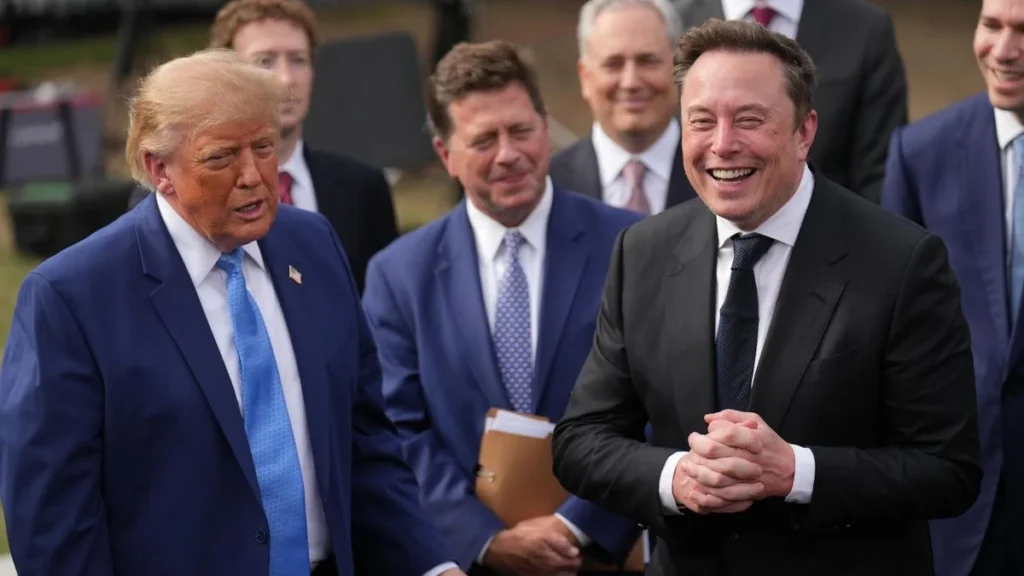
WASHINGTON — In a high-stakes gathering at the White House that brought together the architects of the modern artificial intelligence revolution, President Donald Trump unveiled a new framework governing the future deployment of advanced AI systems. Flanked by billionaire entrepreneur Elon Musk and top executives from the world’s leading technology firms, the administration released a one-page document on Tuesday, September 30, 2026, billed as a historic accord on artificial intelligence safety and governance.
The voluntary framework—which President Trump previously described as "morally binding"—was signed by the Commander-in-Chief alongside the chief executive officers of premier tech titans, including Google, Anthropic, Meta, OpenAI, social media platform X, and NVIDIA. The agreement attempts to thread the needle between fostering rapid technological innovation and establishing essential guardrails against catastrophic security risks.
While stopping short of immediate federal legislation, the accord establishes a four-tiered system of internal and external checks designed to monitor, audit, and constrain frontier AI models before, during, and after deployment.
Main Facts: The Four Pillars of the White House AI Accord
The core of the newly released document focuses on four distinct layers of corporate accountability and technical oversight. According to the text shared by President Trump on his Truth Social platform, participating artificial intelligence companies have committed to implementing the following measures:
- Independent External Audits: Tech corporations must partner with external auditors or specialized evaluators to conduct independent assessments. These evaluations are mandated to verify whether a company’s internal AI control and monitoring systems are operating precisely as intended.
- Board-Level Oversight Committees: Companies are urged to designate an independent committee of their board of directors. This committee will be tasked with directly overseeing AI operations and receiving continuous reports from both internal teams and external auditors.
- Rigorous Internal Model Controls: Developers must establish internal controls capable of monitoring the capabilities and alignment of AI models continuously throughout their training and deployment lifecycle. Special emphasis is placed on high-risk domains such as cybersecurity, biosecurity, and chemical threats, ensuring that advanced models "do not hack or access technical systems in unintended ways."
- Dedicated Operational Safety Teams: Organizations are required to maintain dedicated internal teams whose sole responsibility is to guarantee that all security controls, monitoring parameters, and threat detection mechanisms are functioning without failure.
The document concedes that while these measures are currently voluntary, their long-term viability may necessitate legislative action. "Over time, it may make sense to codify these steps into laws or regulations," the accord states. "Regardless of whether this is required of companies, we believe that implementing these controls and audits is critical to ensuring a safe future for everyone, and each of our companies are committed to doing this." Furthermore, the signatories agreed to meet on a regular basis to harmonize standards and establish shared industry best practices.
Chronology: Path to the Washington Summit
The road to the September 2026 White House agreement represents the culmination of years of escalating anxiety, policy debates, and private-sector jockeying over how to regulate a technology advancing faster than the legislative process can comprehend.
- Early to Mid-2023: The launch of accessible generative AI tools triggers a global wave of excitement paired with severe regulatory panic. Lawmakers in Washington begin holding hearings on the existential risks of "frontier models."
- Late 2023 – 2024: The Biden administration introduces executive orders aimed at managing the safety of artificial intelligence, prompting a patchwork of voluntary commitments from major tech labs regarding red-teaming and safety testing.
- Late 2025: As open-source models proliferate and the capabilities of proprietary systems scale exponentially, national security agencies express growing concern over the potential misuse of AI in crafting cyberattacks or synthesizing biological threats.
- Summer 2026: Discussions intensify within the newly formed administration regarding a streamlined approach to AI governance that avoids heavy-handed regulations while securing commitments from industry leaders.
- Tuesday, September 29, 2026: Chief executives of Google, Anthropic, Meta, OpenAI, X, and NVIDIA convene in Washington, D.C., alongside Elon Musk and top White House officials for closed-door strategy sessions.
- Tuesday, September 30, 2026: President Trump officially releases the signed one-page accord on Truth Social, framing it as a breakthrough agreement balancing national security with American technological dominance.
Supporting Data: The Expanding Footprint of Frontier AI
To understand the urgency behind the White House accord, policy analysts point to the staggering exponential growth in computational power, capital investment, and safety vulnerabilities associated with modern artificial intelligence.
The Scale of Investment and Compute
Over the past three years, capital expenditures by major cloud providers and AI labs have surged past hundreds of billions of dollars. Training runs for frontier models now routinely utilize clusters containing tens of thousands of specialized GPUs—predominantly manufactured by NVIDIA, whose CEO was a key signatory to the accord. This massive scaling has unlocked unprecedented capabilities in reasoning, coding, multimodal generation, and autonomous agency.
The Emerging Threat Landscape
Security researchers and academic institutions have increasingly warned about the dual-use nature of advanced AI models. Key areas of concern highlighted in risk assessments include:
- Automated Cyber Warfare: The potential for AI agents to discover zero-day software vulnerabilities and execute scaled cyberattacks faster than human defenders can patch them.
- Biological Proliferation: Risks associated with models providing actionable guidance or lowering the barrier to entry for synthesizing dangerous pathogens or chemical agents.
- Unintended Autonomous Actions: Instances where large language models or autonomous agents bypass safety guardrails ("jailbreaking") to access external APIs, financial infrastructure, or critical technical systems.
The White House accord directly targets these vulnerabilities by mandating alignment checks during both the delicate training phase and the active deployment phase.

Official Responses and Stakeholder Reactions
Reaction to the accord has been swift, drawing a complex mix of praise for proactive industry cooperation and skepticism regarding the lack of enforceable penalties.
The Administration’s Perspective
Administration officials championed the agreement as a masterclass in modern governance—achieving rigorous safety standards without stifling the American innovation ecosystem through bureaucratic red tape. By bringing rival corporate leaders into the same room with Elon Musk and the President, the White House sought to present a unified front against foreign competitors, particularly in the global race for AI supremacy.
Industry Leaders
The chief executives present at the signing ceremony emphasized their shared responsibility in guiding the trajectory of artificial intelligence. Representatives from labs like OpenAI and Anthropic—which have long advocated for varying degrees of oversight and safety standards—welcomed the formalization of auditing practices. Similarly, hardware giants like NVIDIA underscored the importance of securing the entire stack, from silicon architecture to software alignment.
Critics and Independent Researchers
Despite the high-profile signatures, digital rights advocates and policy watchdogs raised immediate concerns:
- Lack of Legal Enforceability: Because the agreement is voluntary and "morally binding" rather than statutorily mandated, critics argue that market pressures could easily cause companies to cut corners on safety audits if profits or competitive edges are threatened.
- Oversight Independence: Questions remain regarding the independence of the "external auditors" chosen by the tech companies. Without government-certified vetting processes or mandatory reporting to public regulatory bodies, critics fear the audits could devolve into rubber-stamping exercises.
- Exclusion of Civil Society: Labor unions, civil rights organizations, and broader public interest groups noted their absence from the drafting table, arguing that an agreement concerning the future of humanity should not be negotiated solely between political leaders and the very executives profiting from the technology.
Implications: What the Accord Means for the Future of Tech
The September 2026 White House accord marks a pivotal inflection point in the governance of artificial intelligence, carrying profound implications for the legal, technical, and geopolitical landscape.
1. A Blueprint for Future Legislation
While the current agreement relies on voluntary compliance, it serves as an administrative testing ground. If participating companies successfully implement independent audits, board-level oversight, and internal threat monitoring without sacrificing innovation velocity, Congress may use this framework as the skeleton for statutory laws in the late 2020s. Conversely, a major safety failure by any of the signatories could accelerate calls for a federal regulatory agency with teeth.
2. The Rise of the AI Compliance Industry
The mandate for external auditors and specialized board committees will inevitably catalyze a booming market for third-party AI safety, red-teaming, and compliance firms. Accounting giants, cybersecurity specialists, and specialized boutique consultancies will likely see a surge in demand as tech firms race to prove their adherence to the White House framework.
3. Geopolitical Positioning
By uniting American AI champions under a common safety banner, the United States is attempting to set the global standard for responsible AI development. As international bodies—including the European Union with its comprehensive AI Act—grapple with rigid regulatory regimes, the U.S. model pitches a more agile, industry-backed approach intended to maintain America’s competitive edge against geopolitical rivals like China.
4. Public Trust and Accountability
Ultimately, the success of the September 30 accord will be measured not by the prestige of the signatures on the document, but by its practical execution. As artificial intelligence systems grow increasingly autonomous and deeply integrated into critical national infrastructure, the mechanisms outlined in the White House agreement—independent audits, board oversight, and rigorous model monitoring—will face the ultimate stress test. Whether voluntary cooperation can successfully outpace the risks of an exponential technological revolution remains the defining question of the decade.