Centre Moves to Bar Minors from Social Media: Supreme Court Hears Proposals for Stricter IT Rule Amendments
NEW DELHI — In a major regulatory shift that could fundamentally reshape the digital landscape for millions of young internet users, the Union Government has informed the Supreme Court of India that it is planning to amend the Information Technology (IT) Rules to effectively bar minors under the age of 18 from creating or maintaining social media accounts.
The startling revelation came to light during a high-stakes court hearing centered on child safety in digital spaces. Solicitor General (SG) Tushar Mehta, representing the Centre, firmly told the apex court that any digital agreements or terms of service established between social media intermediaries and minors are legally classified as "void contracts" under Indian law and, therefore, must be systematically prevented.
If the Union government proceeds to enact these statutory amendments, India will instantly leap to the forefront of a global regulatory wave aimed at curtailing children’s unfettered access to digital platforms. However, setting the age threshold at 18 also places India’s proposed policy significantly higher than those adopted by almost all other nations currently experimenting with adolescent digital restrictions.
1. Main Facts: The Legal Showdown and Proposed IT Rule Amendments
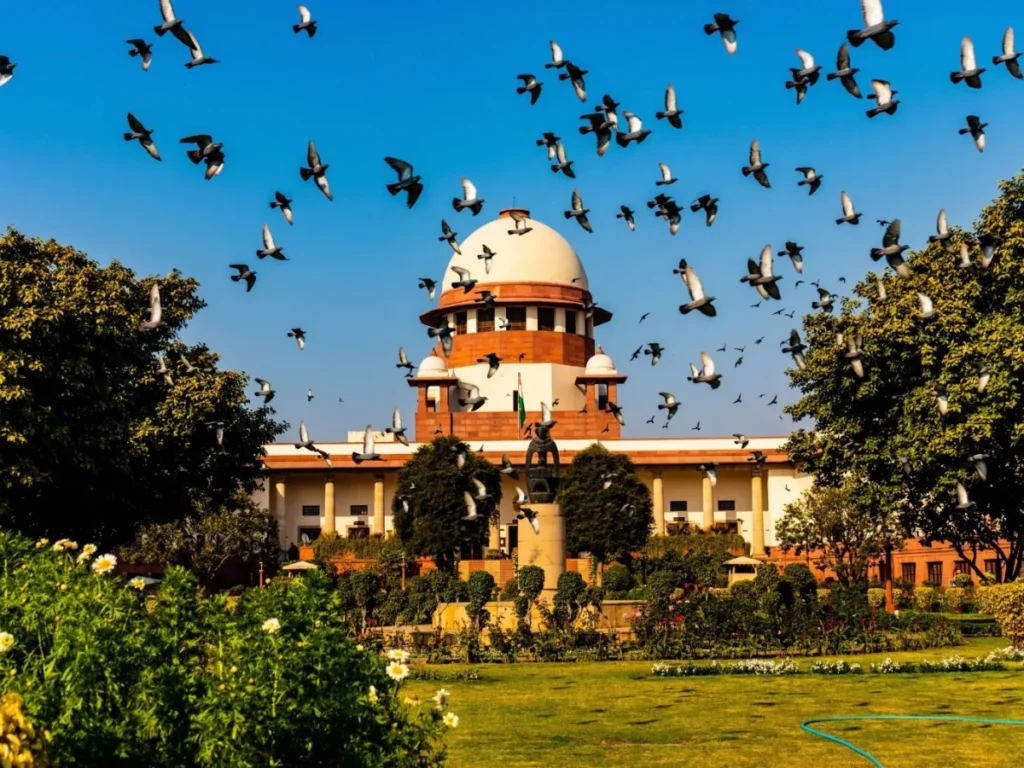
The sweeping policy announcement unfolded before a distinguished Supreme Court bench comprising Chief Justice of India (CJI) Surya Kant, Justice Joymalya Bagchi, and Justice V. Mohana. The bench was presiding over a crucial public interest petition filed by the civil society organization Just Rights for Children Alliance. The petition brought to the fore deep-seated societal anxieties regarding children’s exposure to online predators, cyberbullying, explicit content, and addictive algorithmic loops.
Addressing the bench, Solicitor General Tushar Mehta did not mince words regarding the legal standing of minor-account holders. He argued that because minors lack the legal capacity to enter into binding contracts under the Indian Contract Act, their digital sign-ups for social media terms of service are fundamentally void ab initio.
To rectify this legal loophole and enforce robust child protection, the Centre intends to introduce a specific statutory provision within the existing IT Rules framework. This amendment will place a direct, legally enforceable obligation on social media intermediaries—such as Meta, Google, X (formerly Twitter), and ByteDance—to actively bar minors from registering profiles.
"Membership of educational websites can be taken through the consent of parents," SG Mehta clarified during the proceedings, drawing a clear line between essential digital learning tools utilized for academic growth and commercial social media ecosystems designed for engagement and monetization.
When the bench pressed the government for structural clarity—specifically asking whether the Centre intended to draft entirely new legislation or modify existing regulatory norms—Mehta assured the court that the overarching compliance framework would firmly establish that global tech giants "will have to conform to Indian laws and there is no doubt about it."
Backing this stance, Justice Joymalya Bagchi noted during the hearing, "They must restrict, at least in registering membership, to a minimum threshold of 18 years." The Solicitor General responded in total agreement, cementing the government’s resolve to make domestic platform compliance non-negotiable.
2. Chronology: How India’s Digital Child Safety Debate Evolved
The momentum behind an absolute social media ban or severe age gating for minors has accelerated rapidly over the past year, transitioning from academic policy papers to active legislative corridors across both central and state governments.
- February 2024: The discourse gained formal administrative traction when IT Secretary S. Krishnan publicly announced that the Union government would deeply examine the policy recommendations made in the Economic Survey. The survey had previously called for structured, age-based access controls across social media and digital entertainment platforms.
- March 2024: Sub-national governments began pushing the envelope. The Karnataka state government proposed a localized legislative ban on social media use for children under the age of 16. Around the same period, the Andhra Pradesh government signaled similar intentions, mulling a comprehensive ban for children under 13.
- Mid-to-Late 2024: Pressure continued to mount on major tech companies like Meta and Google as Indian regulatory authorities leaned heavily on them to clamp down on Child Sexual Abuse Material (CSAM). Google eventually agreed to proactively report and hand over CSAM-related data to Indian law enforcement. However, friction remained over holistic teen protections. While Meta rolled out advanced usage limits, overnight access blocks, and rigorous parental controls for teenagers in Western markets like the United States, consumer advocacy groups criticized the company for failing to deploy identical safeguards for Indian adolescents.
- Late 2024–Present: The culmination of these growing pressures crystallized in the Supreme Court, where the Centre’s recent submission effectively elevated a state-level and bureaucratic debate into a national constitutional imperative.
3. Supporting Data: The Scale of India’s Digital Youth
To understand the profound economic, social, and psychological implications of the Centre’s proposed restrictions, one must examine the staggering scale of internet and social media penetration in India.
According to the latest ecosystem metrics compiled by Inc42, India boasts more than 655 million active social media users. This figure is staggering when viewed contextually: it accounts for nearly three-fourths (approximately 75%) of India’s total internet user base, which has now comfortably crossed the 886 million milestone.
- The Demographic Dividend: India remains one of the youngest nations in the world, with a massive median age hovering near 29 years. Children and teenagers form a disproportionately high percentage of early digital adopters, often receiving smartphones before entering secondary school.
- Screen Time Realities: Industry studies indicate that Indian children spend an average of several hours daily across platforms like YouTube, Instagram, Snapchat, and WhatsApp—primarily for entertainment, peer socialization, and short-form video consumption.
- The Enforcement Void: Under the current self-regulatory models, age verification on social media platforms is largely nominal. Simple workarounds—such as altering birth years during registration—allow children as young as 10 or 12 to bypass safety filters, exposing them unchecked to targeted advertising, body image dysmorphia, misinformation, and predatory algorithms.
4. Official Responses and Global Comparisons
The Centre’s latest move aligns India with an assertive global cohort of governments moving decisively to shield youth from the perils of the digital ecosystem.
The Global Landscape
- Australia: Pioneered some of the world’s strictest legislation by officially banning social media access for children under the age of 16, backed by hefty penalties for non-compliant tech firms.
- Indonesia and Malaysia: Both Southeast Asian nations have implemented targeted regulatory frameworks and statutory restrictions restricting minor access to high-engagement digital platforms.
- Europe and the Middle East: France and Turkey are actively working on minimum-age legislative frameworks, while Greece has advanced plans to institute an under-15 access restriction policy.
India’s Unique Outlier Position
While international standards for social media restrictions largely hover between ages 13 and 16, India’s proposed threshold of 18 years places it at the absolute conservative end of the global spectrum. Critics and digital rights advocates point out that defining all individuals below 18 as incapable of navigating social media could spark fierce debates over freedom of expression, digital literacy, and the practical enforcement mechanisms required to police a population of hundreds of millions of digitally active youths.
Furthermore, domestic officials have expressed deep frustration regarding the differential treatment meted out by multinational tech corporations. While platforms willingly adapt to stringent child safety frameworks in the US, European Union, and Australia, they have historically dragged their feet when deploying equivalent privacy, time-limit, and parental supervision tools within the Indian market. The proposed IT Rule amendments aim to strip away this compliance deficit.
5. Implications: What the Ban Means for Tech Giants, Parents, and Children
If the Union government successfully codifies these amendments into the IT Rules, the cascading effects will alter India’s digital ecosystem across multiple dimensions:
A. For Social Media Intermediaries (Meta, Google, ByteDance, X)
Tech giants will face an existential compliance challenge. Platforms will no longer be able to rely on voluntary terms of service or self-certification. They will be legally mandated to deploy foolproof, highly secure Age Verification Mechanisms (AVMs)—potentially requiring government-issued digital IDs, facial recognition estimation, or rigorous parental authorization portals. Failure to comply could invite severe financial penalties, suspension of intermediary safe harbor protections, and direct criminal liabilities for corporate executives.
B. For Parents and Educators
While the policy offers immense relief to parents grappling with the psychological fallout of screen addiction and cyberbullying, it will also shift a heavy operational burden onto households and schools. Parents will find themselves cast as compliance officers, monitoring whether their teenagers are circumventing blocks via Virtual Private Networks (VPNs) or alternative accounts. Conversely, educational institutions will need clear, unambiguous guidelines to ensure that collaborative digital learning tools (such as educational portals and virtual classrooms) are not inadvertently choked by the sweeping restrictions.
C. For Children and Teenagers
For India’s youth, the regulations represent a massive pivot from an open digital frontier to a heavily gated environment. While proponents argue this will safeguard mental health, reduce cybercrime, and protect developing minds from harmful content, critics worry that an outright ban at 18 could stunt digital literacy, alienate tech-savvy youth, and push underground adolescent activity onto encrypted, unmonitored messaging channels where risks are even harder to track.
Outlook
As the Supreme Court continues its deliberations on the Just Rights for Children Alliance petition, all eyes remain fixed on the Ministry of Electronics and Information Technology (MeitY). The upcoming draft of the amended IT Rules will determine not only how India polices its digital borders, but also how the world’s largest internet demographic transitions into the digital age.