Chaos at Pataliputra Station: Exam Aspirants and Security Forces Clash Amid Rail Disruptions in Bihar
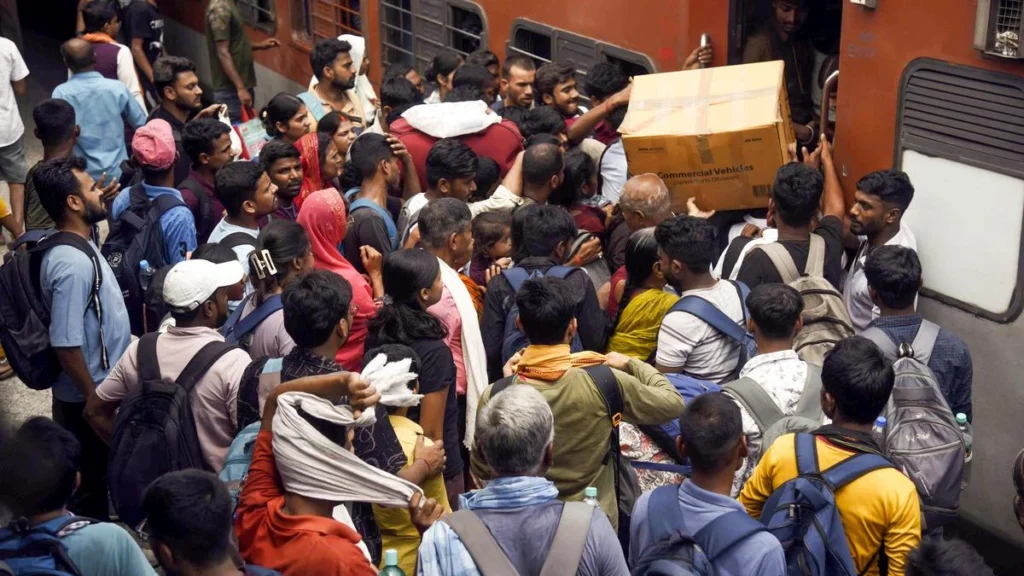
PATNA, June 14, 2026 — The logistical strain of hosting large-scale state-level competitive examinations in Bihar reached a boiling point in the early hours of Sunday, as Pataliputra station witnessed scenes of intense confrontation between security personnel and a crowd of over 200 young men. The unrest, which resulted in a lathi-charge and the use of tear gas, has sparked a debate over the state’s management of student travel and the underlying security risks inherent in mass-recruitment drives.
The incident occurred on the eve of the Bihar Police Prohibition Constable, Jail Warder, and Mobile Squad Constable examinations, a recruitment process that typically draws hundreds of thousands of applicants, putting immense pressure on the state’s already strained public transportation infrastructure.
The Chronology of the Midnight Standoff
The situation began to escalate shortly after midnight on June 14. According to officials, a group of approximately 200 individuals—who identified themselves as students traveling for the upcoming recruitment examinations—gathered at the Pataliputra railway station. The group expressed immediate frustration regarding the availability of train berths and general passenger capacity.
The Escalation
By 1:00 a.m., the frustration had manifested into direct action. The protesters occupied the railway tracks, effectively halting all incoming and outgoing traffic. They demanded the immediate provision of a "special train" to ferry them to their designated examination centers, claiming that the existing arrangements were woefully inadequate for the volume of students currently transiting through the state capital.
The Police Intervention
Amresh Kumar, the Inspector General (IG) in-charge of the Railway Protection Force (RPF) for the East Central Zone, arrived on the scene with a contingent of RPF and Government Railway Police (GRP) personnel. Recognizing the potential for a larger crisis, railway authorities were alerted, and an emergency special train was dispatched, arriving at the station by 2:00 a.m.
Despite the concession, the crowd refused to clear the tracks. What began as a protest for better transport logistics rapidly devolved into a law-and-order situation. According to police reports, when officers attempted to clear the tracks to restore rail services, the protesters began pelting stones at the security forces. Faced with escalating violence and the risk of damage to critical railway infrastructure, the RPF resorted to a lathi-charge and the firing of tear gas shells.
Restoration of Normalcy
By 3:00 a.m., the station was cleared, and a heavy security presence was established. While the tracks were finally cleared, the incident had caused significant disruptions. Two passenger trains and one goods train were left stranded for several hours, and several other trains scheduled to pass through Pataliputra were diverted to alternative routes to bypass the affected area.

Official Perspectives and Investigation
The events at Pataliputra station have prompted a swift response from both the railway authorities and the state administration.
Allegations of Sabotage
IG Amresh Kumar offered a critical assessment of the crowd, suggesting that the protest may have been orchestrated by actors with ulterior motives. "It appears that many of the young men at the station were anti-social elements who actually wanted to foment trouble so that the exams would get cancelled," the IG stated. This suspicion of outside agitators infiltrating student groups is a common feature in Bihar’s protest landscape, though it raises questions about the ability of the administration to distinguish between genuine student grievances and politically motivated disruptions.
Legal Recourse
The administration has moved to hold those responsible for the vandalism accountable. The RPF and GRP are currently collaborating with the Patna Police to analyze CCTV footage from the station. Patna Zone IG Jitendra Rana confirmed that a formal First Information Report (FIR) is in the process of being filed.
"We are in touch with the GRP and Railway officials," IG Rana stated. "Those involved are being identified with the help of CCTV footage, and they will be brought to book." The authorities intend to use the video evidence to prosecute not just the stone-pelters, but to determine if there was an organized effort to cripple the examination process.
Broader Implications: The Burden of Mass Recruitment
The Pataliputra incident is not an isolated event but rather a symptom of a systemic issue regarding how competitive examinations are conducted in states with high unemployment rates and limited public resources.
Infrastructure Under Strain
The Bihar Police recruitment exams for Prohibition Constables, Jail Warders, and Mobile Squad Constables involve a massive mobilization of human capital. Thousands of aspirants travel across the state, often from rural districts to urban centers, creating massive surges in demand for buses and trains. When the railway network, already operating near capacity, fails to provide sufficient accommodation, the resulting frustration often translates into public disorder.
The "Maryada" Debate
The incident has also invited political commentary on the conduct of the youth. Bihar Deputy Chief Minister Bijendra Prasad Yadav expressed disappointment, stating, "It is unfortunate that such an incident took place on the eve of a competitive exam. Youngsters, too, should be mindful of decorum (maryada)."

However, critics of the government argue that the onus of decorum lies with the administration. They contend that if the government organizes exams that require millions of people to move across the state, it is the fundamental responsibility of the state to ensure that transport logistics are handled with efficiency and foresight, rather than relying on reactive measures that lead to police confrontations.
The Path Forward: Balancing Security and Student Aspirations
The aftermath of the June 14 clash raises several critical questions for the Bihar government:
- Logistical Planning: Can the state implement a more decentralized testing model to prevent such massive migrations of students to major hubs like Patna?
- Intelligence and Crowd Control: As the state looks to identify "anti-social elements," how will it ensure that genuine students—who may be genuinely distressed by travel failures—are not unfairly targeted by broad security crackdowns?
- Communication Gaps: The delay in providing a special train until 2:00 a.m. suggests a breakdown in communication between the examination board and the railway authorities. A more integrated approach is required to preemptively identify high-traffic corridors and deploy resources before the situation reaches a breaking point.
As the state moves forward with the examination process, the heavy security presence at stations is likely to remain. For the thousands of aspirants, the priority remains securing their future through these government roles; however, the events of this weekend serve as a stark reminder of the fragility of the systems that support them.
The authorities have pledged that the recruitment process will continue as scheduled. For now, the focus shifts to the investigation, with the state government under pressure to ensure that future examinations do not descend into scenes of violence, while simultaneously balancing the need for firm law enforcement with the legitimate needs of the state’s youth.
As the dust settles at Pataliputra station, the incident remains a potent reminder of the volatile intersection between the aspirations of Bihar’s youth and the infrastructure challenges of the state, a dynamic that remains one of the most significant social and governance hurdles in the region.