Navigating the AI Era on LinkedIn: How to Master the Algorithm Without Losing Your Humanity
In the modern digital landscape, the push and pull between artificial intelligence and authentic human connection has reached a boiling point. For professionals and marketers utilizing LinkedIn, the stakes have never been higher. As the platform aggressively cracks down on automated "AI slop" and inauthentic engagement, creators find themselves walking a precarious tightrope: leveraging the undeniable efficiency of AI tools without sacrificing credibility, audience trust, or algorithmic favor.
Insights shared by B2Linked founder and CEO AJ Wilcox during a recent industry deep-dive shed light on how modern marketers can successfully navigate this shifting terrain. By understanding the platform’s detection mechanisms, adopting structured content frameworks, and adjusting engagement and advertising strategies, professionals can build real authority in an automated world.
Main Facts: The Great AI Crackdown on LinkedIn
LinkedIn is no longer turning a blind eye to the flood of automated text, generic comments, and low-effort posts clogging its feeds. In recent months, the platform has quietly blocked hundreds of thousands of automated comment attempts daily, alongside billions of posting attempts.
To combat this wave of automation, LinkedIn has introduced user-facing reporting features that allow members to flag content they suspect is generated by AI. Furthermore, the platform’s analytics dashboard now explicitly displays whether an audience perceived a post as heavily AI-generated.
Significantly, LinkedIn is reforming its own native tools. The platform is actively replacing its old "enhance your post" feature—which historically rewrote content in a generic, easily recognizable AI voice—with a strictly proofreading-focused tool. This new utility is engineered exclusively to clean up grammar and flow while fiercely preserving the author’s unique voice. The underlying message from the platform is clear and unequivocal: LinkedIn views AI as a collaborative assistant, not a replacement for human thought.
Chronology: How the Platform Shifted from Automation to Authenticity
The evolution of LinkedIn’s stance on AI mirrors a broader cultural fatigue with synthetic content across social media ecosystems.
- Early AI Adoption (2022–2023): As generative AI tools exploded into the mainstream, LinkedIn users quickly adopted large language models to scale their output. Feeds became saturated with formulaic hooks, excessive emoji usage, and predictable narrative structures.
- The Rise of Detection and Reporting (2024): Recognizing a decline in user experience, LinkedIn rolled out detection models and community-reporting tools. While these initial reports largely functioned as training mechanisms for detection algorithms rather than direct penalties, they immediately impacted visibility. AI-generated comments began receiving fewer likes, naturally pushing them to the bottom of comment threads.
- The Pivot to Comments and Long-Form Live Content (Late 2024–Present): With original posting subjected to tighter scrutiny, LinkedIn pivoted attention toward community engagement. Comment impressions became trackable metrics, and the platform began highlighting substantive discussions directly in the feed. Concurrently, LinkedIn integrated AI tools to repurpose live-stream video, bridging the gap between high-production video hurdles and scalable content creation.
Supporting Data: Engagement Metrics and Scheduling Realities
Understanding how LinkedIn’s ecosystem functions requires looking closely at the data surrounding timing, formatting, and engagement structures.
Optimal Posting Schedules and Frequency
Data and behavioral patterns on LinkedIn highlight specific windows for maximum impact:
- Best Days to Post: Tuesday and Thursday remain the strongest days for a two-post-per-week schedule. For a single weekly post, Wednesday outperforms all other days.
- Days to Avoid: Monday is plagued by high competition as professionals catch up on emails and workloads. Friday sees a steep drop-off as users mentally check out for the weekend.
- The Danger of Over-Posting: Publishing twice in a single day is self-defeating; the second post cannibalizes the reach and engagement of the first. Furthermore, publishing a new post while a previous one is still gaining traction forces the algorithm to shift focus, stunting the organic lifecycle of the older content.
Comment Density and Visibility
Engagement metrics reveal that superficial comments like "great post" or "thanks for sharing" register zero value in LinkedIn’s algorithmic assessment. Instead, the platform prioritizes "comment density"—the depth and intellectual substance of a conversation thread. Data shows that time spent within LinkedIn comments has surged by 18% year-over-year, making community engagement a powerful stand-alone growth strategy for accounts lacking massive follower bases.
Official Responses and Strategic Frameworks
To survive and thrive under LinkedIn’s heightened scrutiny, industry experts recommend moving away from total automation and adopting hybrid workflows.
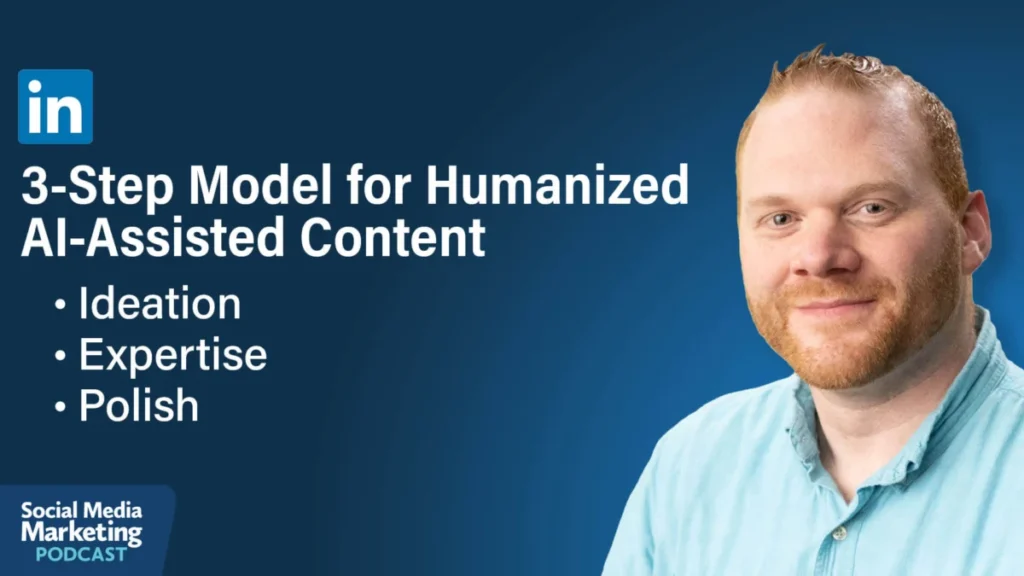
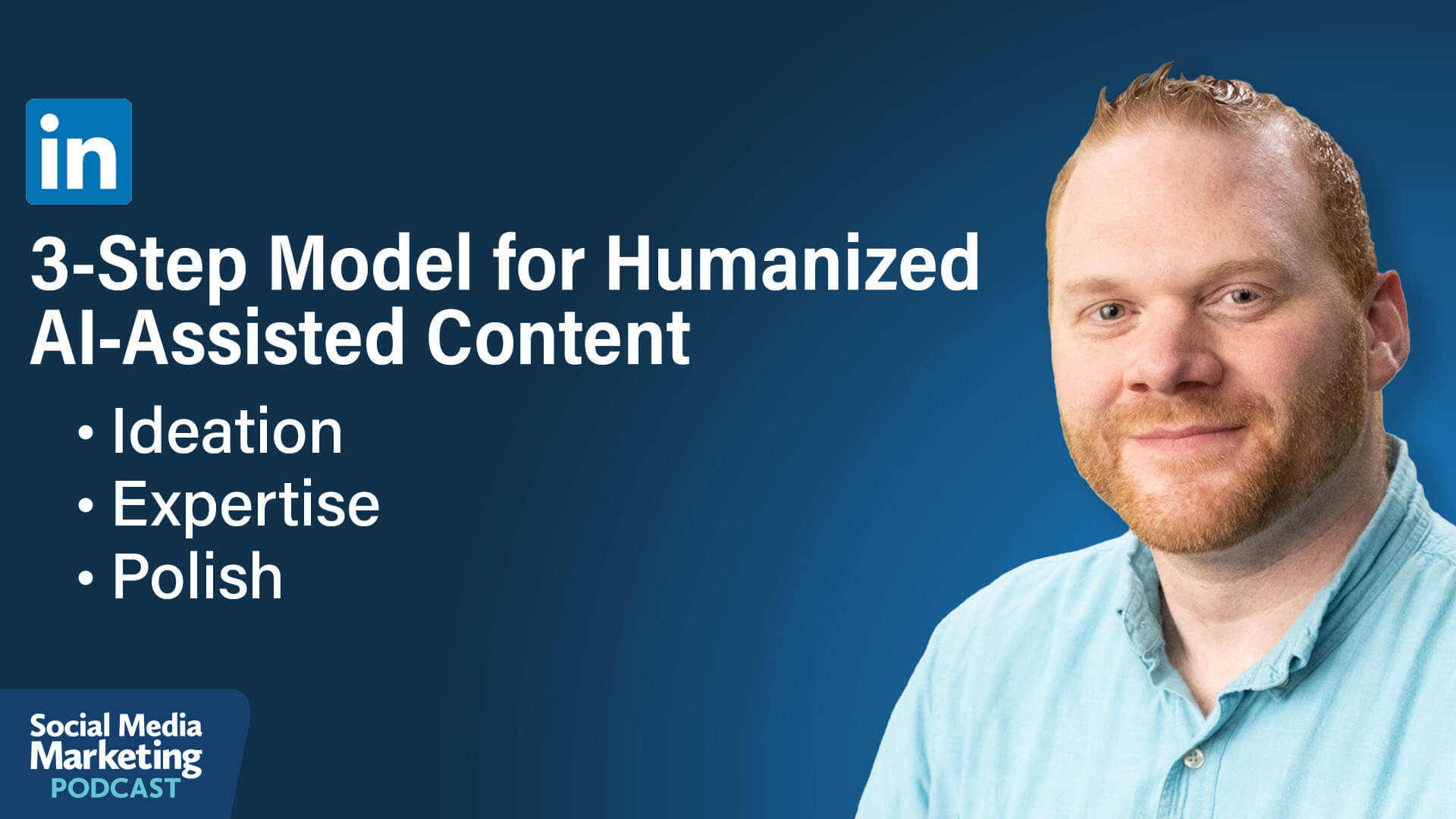
The Ideation-Expertise-Polish (IEP) Model
According to AJ Wilcox, the most effective way to utilize AI without sounding robotic is to sandwich human expertise between AI-driven bookends:
- Ideation (AI): Use large language models to brainstorm angles, frameworks, and supporting points. This stage focuses entirely on volume and possibility, not final prose.
- Human Expertise (Human): This is the non-negotiable core. Creators must inject original experiences, industry-specific data, and hard-earned nuance. Skipping this step is what turns a post into recognizable "AI slop."
- Polish (AI): Once the core thoughts are written in the creator’s natural voice, AI can be deployed to tighten sentences, enhance readability, and fix formatting.
Avoiding "AI Tells"
Audiences and detection models have grown hyper-aware of specific artificial patterns. Red flags include:
- Overused Punctuation: Em dashes appear far more frequently in AI-generated text than in standard human writing.
- Formulaic Hooks: Dramatic phrases such as "guard your mental faculties" or "this is silently killing you" instantly trigger skepticism.
- Uncharacteristic Emojis: Randomly inserted emojis that do not match a commenter’s standard voice destroy credibility.
Rather than relying on clumsy tactics like intentionally embedding typos—which AI can easily replicate—creators should focus on substance. A well-edited post backed by genuine value will rarely be flagged as slop, regardless of its polish.
Implications for Marketers, Executives, and Advertisers
The shift toward authenticity has profound implications across different pillars of LinkedIn marketing:
1. The Rise of Comment-Led Growth
Because comment impressions are now fully trackable and surfaced prominently in feeds, brands and individuals can build robust authority simply by leaving thoughtful, high-value comments on established industry accounts. To do this effectively:
- Target the first 1 to 2 hours after a target post goes live.
- Use inviting follow-up lines such as "Am I wrong?" or "What am I missing?" to prompt diverse community replies.
- Practice respectful disagreement via the "Ted Lasso principle"—open with a genuine compliment, state a differing perspective ("I have a slightly different take"), and invite further discussion.
2. Democratizing Executive Video via AI Live Streams
Company leaders often avoid video marketing due to high production and editing costs. LinkedIn’s AI-powered live-stream tools solve this by automatically generating short-form clips (30 to 60 seconds) and building chapters from long-form video replays. By recording a simple, unedited interview format in high quality, executives can let LinkedIn’s AI extract the strongest highlights, making video creation frictionless.
3. LinkedIn Ads vs. Meta Playbooks
A common pitfall for modern advertisers is applying Meta’s advertising best practices to LinkedIn. While Meta rewards high creative volume (running five or more ad variations), doing so on LinkedIn breaks the platform’s frequency cap. This forces the system to treat each variation as a distinct ad, driving up auction costs and irritating users by showing them the same messaging too frequently.
Wilcox recommends limiting ad sets to two to four creative variations (such as one image paired with two intro texts). While top-performing creatives can cross over from Meta to LinkedIn, the execution must remain disciplined and tailored to LinkedIn’s unique B2B environment.
Conclusion
LinkedIn’s war on artificial inauthenticity is not a rejection of technology; it is a recalibration toward quality. For marketers willing to step back from lazy automation and embrace a hybrid strategy anchored in genuine human expertise, the platform offers unprecedented opportunities for organic reach, authority building, and high-value conversion. In the end, the most successful creators will be those who use AI to amplify their voices, rather than surrender them.