The Era of the ‘Market of One’: How Business Owners Are Building Custom AI Apps Without Writing a Line of Code
By the Tech & Business Innovation Desk
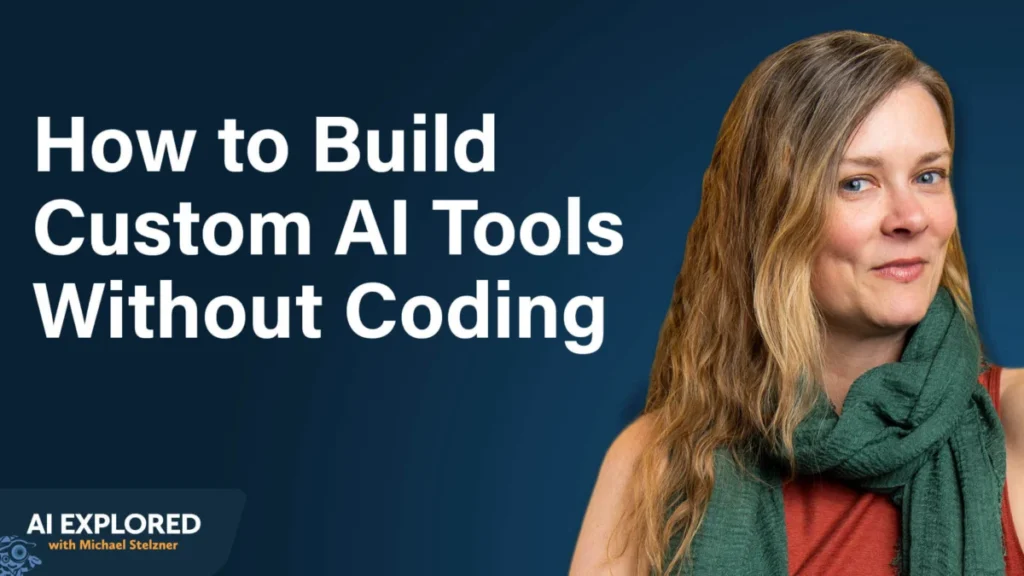
Co-created by Erika Stanley and Michael Stelzner
For decades, small business owners have faced a frustrating technological compromise: paying hefty monthly subscriptions for off-the-shelf software that only partially solves their operational challenges. Traditional enterprise and SaaS (Software as a Service) platforms are engineered for mass markets, forcing users to contort their unique workflows into rigid, pre-built frameworks. You pay for thousands of features you will never touch, while the specific integrations you desperately need remain entirely absent.
Today, that dynamic is fundamentally shattering.
A new wave of artificial intelligence platforms, powered by advanced reasoning models and "vibe coding" environments, is allowing entrepreneurs with zero programming background to build, deploy, and scale custom applications built expressly for a "market of one." Rather than adapting your business to someone else’s software, you can now build software that adapts entirely to your business.
Main Facts: The No-Code AI Revolution
The modern paradigm shift in software development centers around accessibility, cost-efficiency, and hyper-customization.
- The Rise of Vibe Coding: Non-technical operators can now build functional web applications simply by describing what they want in plain, conversational language. Tools like Lovable, Base44, Replit, and Bolt translate natural language inputs directly into production-ready code.
- Dramatic Cost Reductions: By leveraging advanced LLMs (such as Claude Max plans) and end-to-end development suites, business owners are successfully replacing thousands of dollars in legacy software subscriptions with custom-built alternatives that cost a fraction of the price.
- The MVP Framework: Rather than attempting to build massive, overly complex platforms on day one, successful non-technical developers are utilizing Minimum Viable Product (MVP) strategies to solve acute friction points incrementally.
- Built-In Security and Automation: Modern vibe-coding platforms feature integrated safety checks, automated vulnerability patching, and seamless deployment pathways via GitHub, Vercel, and Railway.
Chronology: From Concept to Deployed App in Half a Day
The journey of building a custom AI application without technical skills no longer requires months of development cycles or costly engineering teams. Industry practitioners like Erika Stanley—founder of AI Queens and Mile End Digital—have mapped out a rapid, repeatable timeline for conceptualizing and launching operational tools in a matter of hours.
Phase 1: Identifying the Friction Point
The development lifecycle always begins with operational friction. Stanley’s first MVP project aimed to replace a $29-per-month automation tool she had relied on for over two years. The tool handled two distinct tasks: sorting, tagging, and color-coding her email inbox while drafting matching responses, and recording Zoom client calls to generate automated follow-up emails.
Rather than building a sprawling standalone dashboard, Stanley realized she could orchestrate existing ecosystems. By combining Claude’s advanced connectors for email sorting, Fathom’s free tier for transcripts, and Claude’s native generative capabilities, she outlined a streamlined architecture.
Phase 2: Drafting the Product Requirements Document (PRD)
Before writing a single prompt in a coding interface, successful builders establish a clear blueprint.
- The Brainstorming Session: Users open an advanced model like Claude and describe their operational problem and desired outcome—leaving the technical "how" entirely up to the AI.
- Generating the PRD: The user prompts the AI to draft a comprehensive Product Requirements Document. This document acts as an engineering specification detailing every feature, page layout, user action, and design aesthetic.
- Interactive Refinement: If a business owner is unsure what to include, modern LLMs can conduct an interactive discovery interview, asking targeted questions to flesh out missing parameters.
Phase 3: Executing via Vibe Coding Platforms
With a polished PRD in hand, the operator moves to a vibe-coding environment such as Lovable. By feeding the requirements document into the platform, the AI autonomously generates the foundational architecture, user interface, and database connections.
Modifications are executed iteratively through a side chat box. If an operator wants to add dark mode, secure user authentication, or modify a workflow, they simply type the request in plain English, test the resulting prototype in real-time, and publish the update with a single click.
Phase 4: Deployment and Hosting
Depending on the scope of the project, applications are hosted instantly through the development platform or deployed via external infrastructure like Vercel (ideal for lightweight web apps) or Railway (for apps requiring robust database capabilities). Custom URL redirects allow business owners to route traffic through clean, branded links without purchasing redundant domains.
Supporting Data: The Economics of Custom AI Tools
The financial argument for transitioning from traditional SaaS to custom-built AI micro-tools is striking.
- Subscription Overload: The average small business accumulates dozens of discrete subscriptions for invoicing, client relationship management (CRM), email sorting, and scheduling—frequently totaling upwards of $1,200 to $3,600 annually.
- The Upgrade Threshold: To justify scaling a generative AI subscription from a standard $20/month tier to a high-performance $100/month Max plan (such as Claude Max), operators establish a strict return-on-investment threshold: cut at least $100 in legacy software costs immediately.
- Time Efficiency: Using automated workflows and intelligent task scheduling (such as custom scripts that run at off-peak hours to conserve token limits, like Stanley’s 5:30 AM email-and-Slack digest), projects that traditionally required external developers can now be conceptualized, built, tested, and deployed in less than half a working day.
Official Perspectives and Expert Methodology
Industry leaders emphasize that the success of no-code AI development relies heavily on adhering to strict structural frameworks rather than diving blindly into complex coding environments.

The Skateboard Analogy for MVPs
"A working skateboard beats a non-working car sitting in your garage," notes Erika Stanley. The primary pitfall for novice builders is scope creep—attempting to construct an all-in-one enterprise ecosystem on their first try. By starting with a minimal, functional core (the skateboard), operators can validate the tool’s utility before iterating toward scooters, bicycles, and fully realized digital products.
Token Optimization and Cost Management
Experienced practitioners advise keeping the brainstorming and PRD phases entirely within standard LLM chat interfaces (like Claude or ChatGPT) before transitioning to vibe-coding platforms. Because code-generation environments consume tokens rapidly during active building, arriving with a finalized, detailed PRD drastically minimizes development costs and preserves platform credits. Furthermore, developers recommend maintaining monthly subscriptions rather than annual commitments, scaling platform tiers upward strictly during active development cycles and dropping back down to minimal hosting tiers once an application is complete.
Implications: The Future of Business Software and Monetization
The widespread democratization of software development through conversational AI carries profound implications for the global digital economy.
1. The Death of Generic SaaS for Niche Workflows
As custom-built micro-applications become frictionless to create, the market share for rigid, generic SaaS products tailored to micro-industries will face severe downward pressure. When a specialized consultant or local service provider can build an exact replica of a cumbersome industry tool—tailored precisely to their operational quirks over a lunch break—paying hundreds of dollars a month to external vendors ceases to make financial sense.
2. Turning Internal Solutions into Revenue Streams
The utility of a custom-built AI app does not stop at internal efficiency. Once an operator masters the process of building tools to solve their own daily business friction, that exact same skill set can be turned outward. Tools originally designed for personal or internal team use can easily be packaged, branded, and commercialized as direct-sale digital products, community memberships, or subscription-based SaaS tools for broader target audiences.
3. Heightened Focus on Cyber Security
With the rapid proliferation of vibe-coded applications handling user data, email credentials, and payment gateways, digital safety has become a paramount concern. Bad actors are increasingly scanning the ecosystem for vulnerabilities in rapidly deployed codebases. Consequently, modern no-code platforms are moving swiftly to integrate automated security audits, red-flagging vulnerabilities before publication, and mandating rigorous pre-deployment checks to ensure that speed to market does not compromise digital integrity.
Ultimately, the barrier separating operational ideas from functional digital reality has vanished. For business owners willing to embrace the MVP mindset and leverage conversational AI, the future belongs not to those who buy the best software, but to those who build the exact software they need.