AWS Unveils Public Preview of Managed Agents Powered by OpenAI and Expands Enterprise AI Capabilities
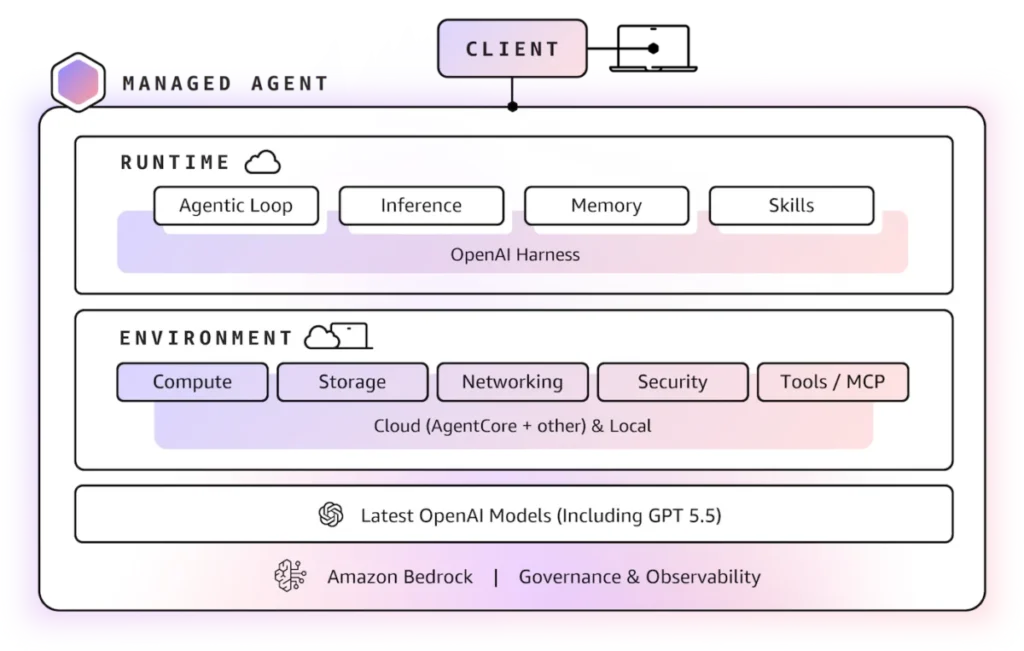
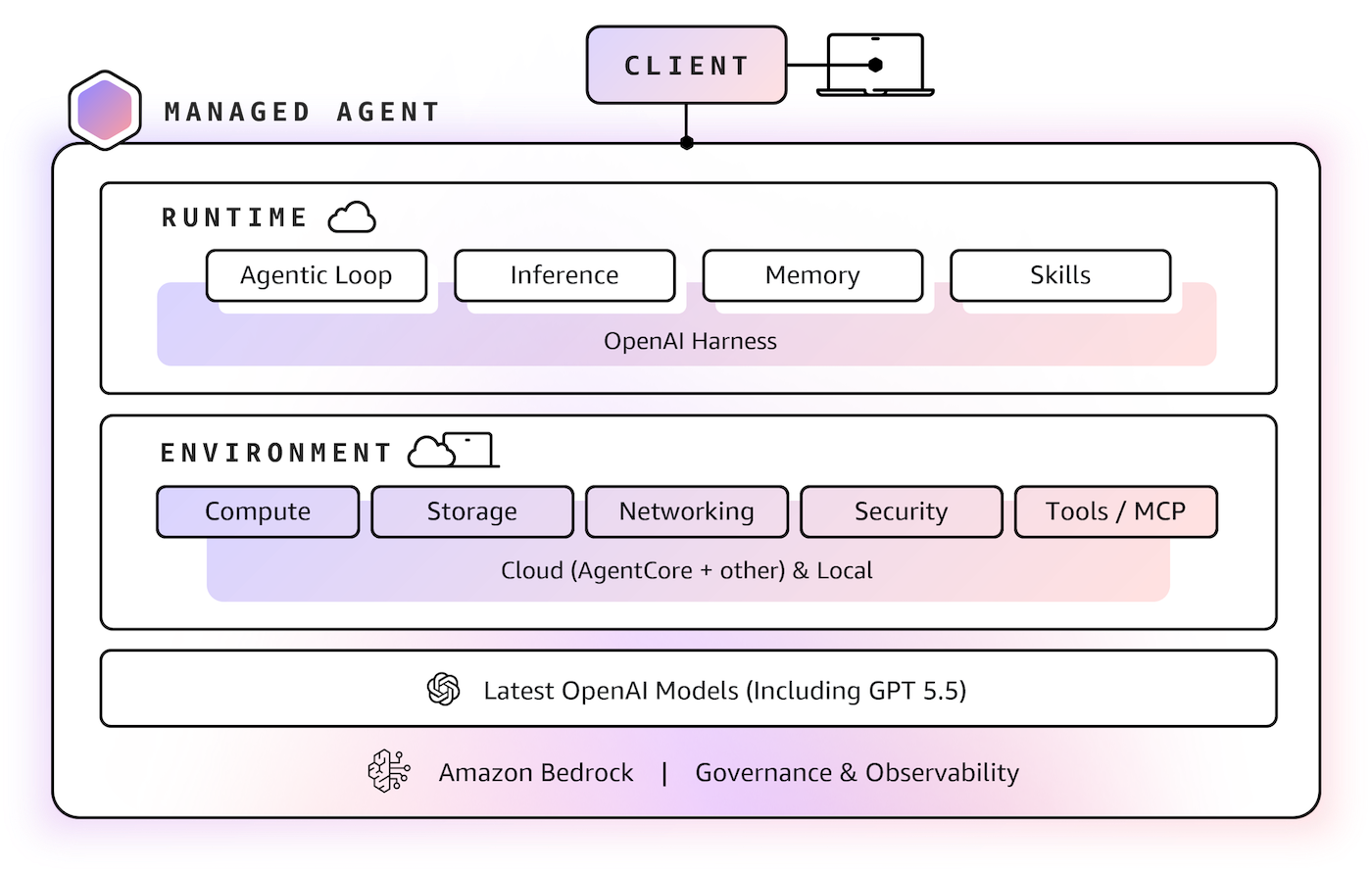
SEATTLE — Amazon Web Services (AWS) has announced a major expansion of its artificial intelligence ecosystem with the public preview of Amazon Bedrock Managed Agents powered by OpenAI. Built upon a customized version of OpenAI’s Agents API, the new offering has been re-engineered to be natively integrated into the AWS infrastructure.
The announcement, highlighted in AWS’s weekly developer roundup, bridges the gap between frontier AI models and enterprise-grade security. It empowers organizations to construct, deploy, and scale sophisticated AI agents optimized for OpenAI models while leveraging the robust identity, permissions, and governance frameworks they already utilize across their AWS environments.
Alongside this flagship release, AWS continues to broaden its portfolio of frontier models, streamline its product lifecycle management, and prepare developers for a packed season of technical conferences, including the upcoming AWS re:Invent.
Main Facts
The introduction of Amazon Bedrock Managed Agents powered by OpenAI represents a significant shift in how developers can orchestrate multi-step, autonomous AI workflows within a secure cloud architecture.
- AWS-Native OpenAI Integration: Rather than requiring complex custom wrappers or disparate external API setups, developers can now utilize a customized variant of the OpenAI Agents API that is deeply integrated into AWS native tooling.
- Flexible Execution Environments: Users are given the choice of two distinct execution environments:
- Self-Hosted Compute: Ideal for developers wishing to utilize existing local development machines, custom containers, or specialized compute instances.
- Amazon Bedrock AgentCore Runtime: A fully managed runtime session layer offering configurable storage managed directly within the user’s AWS account.
- Unified Security and Governance: Because the agents run entirely inside AWS, they inherit existing security postures, including AWS Identity and Access Management (IAM) policies, encryption standards, and compliance tracking.
- Expanded Frontier Model Support: AWS is continuously augmenting the Amazon Bedrock model catalog, providing businesses with broader choices to fine-tune AI performance, latency, and cost-efficiency.
- Lifecycle Updates: AWS has published its routine product lifecycle shifts, detailing upcoming maintenance periods, service sunsets, and end-of-support timelines to help enterprises manage architectural migrations smoothly.
Chronology of Developments
To understand how Amazon Bedrock Managed Agents powered by OpenAI fits into the broader timeline of AWS product development, it helps to examine the sequence of recent announcements leading up to this public preview.
Early 2026: The Foundation of Agentic Workflows
Throughout early 2026, enterprise demand shifted rapidly from static text-generation models to autonomous "agents"—AI systems capable of executing complex, multi-step workflows, calling APIs, and interacting dynamically with enterprise databases. Recognizing this trend, AWS began expanding Amazon Bedrock’s capabilities to support more advanced orchestration frameworks.
Late September 2026: Lifecycle and Infrastructure Adjustments
On September 29, 2026, AWS updated its Product Lifecycle Changes documentation. This routine update established clear migration paths for legacy services entering maintenance or sunset phases, ensuring that AWS engineers and enterprise customers could dedicate resources toward modern, scalable architectures like Bedrock.
Early October 2026: Public Preview Launch
In the first week of October 2026, AWS officially launched the public preview of Amazon Bedrock Managed Agents powered by OpenAI. Announced via the AWS News Blog by Principal Developer Advocate Channy Yun, the release marked a pivotal collaboration-enabling milestone, combining OpenAI’s advanced agentic framework with AWS’s enterprise infrastructure. Concurrently, documentation went live, offering deployment guides for both self-hosted and Bedrock AgentCore Runtime environments.
Supporting Data and Architectural Frameworks
The technical architecture behind Amazon Bedrock Managed Agents is designed to minimize operational overhead while maximizing control.
Execution Environment Comparison
| Feature / Metric | Self-Hosted Compute | Amazon Bedrock AgentCore Runtime |
|---|---|---|
| Primary Use Case | Local development, custom testing, proprietary environments | Production-grade deployment, scalable managed sessions |
| Infrastructure Control | High (managed entirely by the user) | Fully managed by AWS within the user’s account |
| Storage Configuration | Configured via custom local or cloud volumes | Configurable, managed storage tiers natively tied to AWS |
| Security & Identity | Managed via local configurations and standard IAM | Native AWS IAM policies, automated auditing, and governance |
Operational Impact of Lifecycle Changes
AWS’s product lifecycle updates on September 29 outlined specific service transitions:

- Maintenance Phase: Services entering this tier will become inaccessible to new customers starting October 29, 2026. Existing customers are provided with transition roadmaps and alternative service mappings.
- Sunset and End of Support: Clear cutoff dates ensure that legacy architectures do not become unpatched security liabilities, encouraging migration to modern serverless and AI-driven offerings.
Official Responses and Perspectives
Industry analysts and AWS leadership view the integration of OpenAI’s agent technology into Amazon Bedrock as a watershed moment for enterprise generative AI adoption.
"By building a customized version of OpenAI’s Agents API that is engineered to be AWS-native, we are giving builders the best of both worlds," noted engineering leads close to the project. "Developers get the cutting-edge reasoning and orchestration capabilities optimized for OpenAI models, while security and compliance teams retain absolute control through familiar AWS governance tools."
Enterprise customers have frequently cited data governance, identity management, and compliance as the primary hurdles when deploying third-party AI agents. By routing agent sessions through Amazon Bedrock and utilizing the AgentCore Runtime, AWS addresses these concerns directly. Organizations no longer need to compromise between state-of-the-art model capabilities and strict internal compliance mandates.
Implications for Developers and Enterprises
The arrival of Amazon Bedrock Managed Agents powered by OpenAI carries far-reaching implications for software architects, enterprise IT departments, and the broader cloud computing ecosystem.
1. Accelerated AI Application Development
Building autonomous agents that can securely query databases, execute business logic, and interact with SaaS platforms traditionally required stitching together multiple disparate tools. With a managed, native approach, development teams can drastically reduce time-to-market for complex AI solutions.
2. Enhanced Enterprise Security and Compliance
Security remains a top board-level priority. Because these agents operate entirely within the customer’s AWS boundary, data never leaves unvetted zones without explicit permissions. Leveraging existing IAM roles ensures that an AI agent inherits the exact permissions of the user or service account executing it—preventing unauthorized data access.
3. Streamlined Cloud Architecture
With AWS actively deprecating legacy tools through its product lifecycle updates, enterprises are being nudged toward modern, cloud-native paradigms. Integrating advanced AI agents directly into Bedrock allows companies to consolidate their technology stacks, reducing technical debt and operational complexity.
4. Community and Future Outlook
As the tech industry looks ahead to upcoming flagship events—including AWS re:Invent and regional AWS Community Days—developers are encouraged to engage with peers through the AWS Builder Center. These forums will serve as primary hubs for sharing architectural best practices, open-source agent templates, and deployment strategies for the new Bedrock Managed Agents.
For full details, documentation, and migration guides, developers can visit the official Amazon Bedrock Documentation and keep track of continuous updates on the What’s New with AWS page.