Open Source Content Management Systems Unite: WordPress Foundation Assumes Presidency of the Open Website Alliance
Global Technology Desk
Comprehensive Report
Main Facts
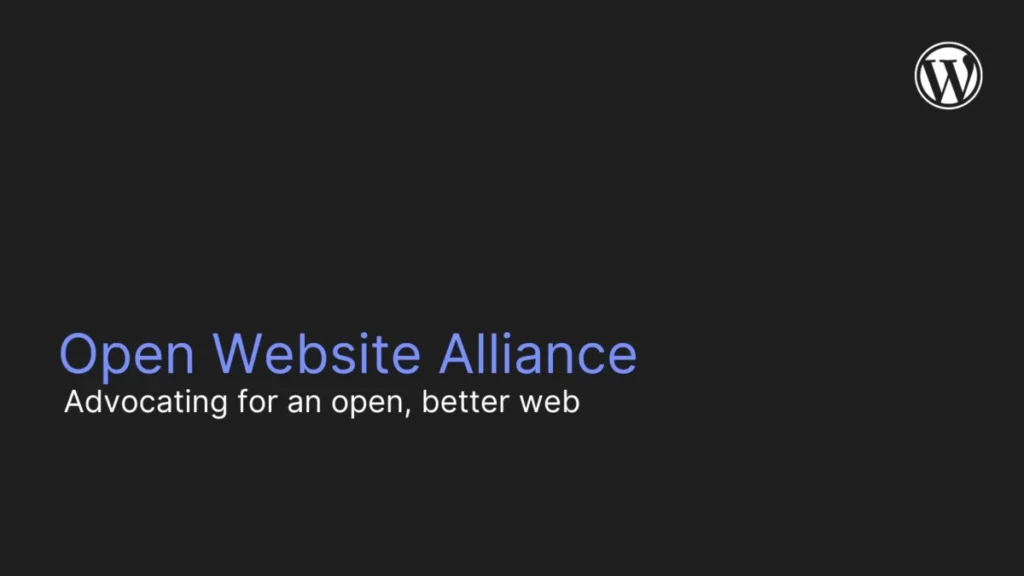
In a significant development for the global open-source software ecosystem, the leadership of the WordPress Foundation has formally assumed the presidency of the Open Website Alliance (OWA). This collaborative international coalition unites the community organizations behind four of the world’s most dominant content management systems (CMS) and web publishing platforms: WordPress, Drupal, Joomla!, and TYPO3.
The OWA presidency operates on a rotating model among its core constituent members. By taking the helm, the WordPress Foundation steps into a pivotal coordination role, guiding the Alliance’s unified advocacy, policy engagement, and cross-project knowledge sharing. While individual open-source software initiatives frequently concentrate on core digital infrastructure—such as operating systems, databases, and programming languages—the OWA member projects power the foundational web layer where enterprises, small businesses, non-profits, and independent creators connect directly with audiences, conduct e-commerce, and build digital services.
Together, these four systems account for a commanding share of the global internet’s website infrastructure. By pooling their institutional weight, technical expertise, and community governance models, the OWA member organizations aim to present a unified front to policymakers, regulatory bodies, and industry stakeholders. The core mission of the Alliance centers on defending and advancing open-source freedoms, ensuring that laws governing digital security, data governance, and artificial intelligence reflect the decentralized realities of community-driven software development.
Chronology of Collaboration
The establishment and maturation of the Open Website Alliance represent the culmination of years of deepening tactical cooperation among open-source CMS communities. The timeline of this coalition reflects a shifting global regulatory landscape that increasingly demands coordinated advocacy from the software sector.
- August 2023 – Regulatory Catalyst: The nascent partnership gained critical momentum in response to proposed European Union legislation, most notably the Cyber Resilience Act (CRA). Communities behind WordPress, Drupal, Joomla!, and TYPO3 recognized that broad regulatory frameworks drafted without deep technical consultation could inadvertently penalize open-source contributors and nonprofit foundations. The projects mobilized collective statements and stakeholder feedback to address policymakers directly.
- February 2024 – Formalizing the Alliance: Building directly upon their successful joint advocacy regarding European tech regulations, WordPress officially announced its formal participation in the newly consolidated Open Website Alliance. This milestone institutionalized what had previously been ad-hoc cooperation among project leaders, creating a permanent framework for shared strategy, resource pooling, and defense of open web standards.
- August 2026 – Expanding into AI Governance: The coalition’s scope broadened beyond traditional web publishing and security policy to address emerging technological paradigms. The WordPress ecosystem underscored its commitment to open principles by signing the Open Weights and American AI Leadership letter, signaling that the OWA’s mandate would actively engage with modern questions surrounding artificial intelligence, model transparency, and algorithmic democratization.
- September 2026 – The WordPress Foundation Presidency: The leadership transition took formal effect, with the WordPress Foundation assuming the presidential rotation of the OWA. This transition places the foundation at the strategic center of the Alliance’s ongoing campaigns, policy interventions, and inter-community initiatives.
Supporting Data and Ecosystem Scope
To understand the immense influence wielded by the Open Website Alliance, one must examine the profound footprint that its member platforms hold within the global digital economy.
Market Share and Economic Impact
- WordPress: Powering well over 40% of all top websites globally, WordPress operates as the undisputed heavyweight of web publishing. Its extensive ecosystem of themes and plugins supports millions of commercial enterprises, news organizations, and government entities.
- Drupal: Renowned for its enterprise-grade scalability, security, and complex data architecture, Drupal is the platform of choice for major global universities, multinational corporations, and high-traffic government portals.
- Joomla!: Bridging the gap between ease of use and advanced extensibility, Joomla! maintains a fiercely loyal international user base, supporting hundreds of thousands of small-to-medium enterprises and community networks.
- TYPO3: A powerhouse in the European enterprise market, TYPO3 specializes in multi-site, multi-language corporate deployments that require rigorous workflow governance and long-term stability.
The Human Infrastructure of Open Source
Beyond server statistics and traffic metrics, the OWA represents an unparalleled human capital network. Unlike proprietary platforms controlled by single corporate entities, these four projects rely on decentralized global communities comprising:
- Core Developers: Writing, reviewing, and securing millions of lines of codebase.
- Translators: Localizing software into dozens of regional languages to ensure global accessibility.
- Educators and Documentarians: Empowering new users through tutorials, workshops, and comprehensive guides.
- Designers and Accessibility Advocates: Ensuring that web publishing tools remain usable for individuals with diverse physical and technical capabilities.
Official Responses and Perspectives
The leadership transition at the Open Website Alliance has prompted reflections from key figures across the open-source landscape regarding the imperative for solidarity in an increasingly regulated digital age.
In announcing the assumption of the presidency, representatives emphasized the foundational philosophy shared by all OWA member projects: the fundamental freedom for every individual to use, study, modify, and distribute the software upon which they build their digital lives.
"While many open source projects focus on underlying digital infrastructure, our content management systems power the websites where businesses reach customers and sell products and services. We asked policymakers to account for that economic role when setting security requirements, while respecting how communities of developers, translators, educators, and other contributors build and maintain the software."
This perspective highlights a persistent challenge in technology policy: distinguishing between commercial software vendors who profit from closed codebases and decentralized open-source communities that operate through collaborative stewardship. Regulatory frameworks that impose strict institutional liabilities or compliance burdens without recognizing the volunteer-driven nature of open source threaten to choke innovation.
Furthermore, the Alliance’s recent engagement with artificial intelligence policy underscores a broader philosophical alignment. By supporting initiatives like the Open Weights and American AI Leadership letter, OWA members are signaling that the fight for openness cannot stop at traditional web publishing. Just as content management systems democratized the publishing of text and media, open-weight AI models seek to democratize access to advanced analytical and generative tools, preventing the concentration of cognitive infrastructure in the hands of a few monopolistic tech giants.
Stakeholders interested in the precise legal and operational framework governing this coalition are encouraged to review the official Open Website Alliance Charter, which outlines the shared values, governance structures, and collaborative commitments agreed upon by WordPress, Drupal, Joomla!, and TYPO3.
Implications for the Future of the Open Web
The consolidation of power and advocacy represented by the Open Website Alliance under the WordPress Foundation’s presidency carries profound implications for developers, enterprise decision-makers, and policymakers alike.
1. Unified Policy Defense Against Overregulation
As governments worldwide turn their legislative focus toward cybersecurity, data privacy, and artificial intelligence, standalone open-source projects frequently find themselves outmatched by corporate lobbying efforts. By speaking with a unified voice through the OWA, WordPress, Drupal, Joomla!, and TYPO3 can effectively educate lawmakers. They can demonstrate how open-source contribution models function in practice, ensuring that future regulations do not inadvertently criminalize volunteer code sharing or impose insurmountable compliance costs on community foundations.
2. Standardizing Best Practices and Interoperability
Beyond external lobbying, the Alliance serves as an internal laboratory for operational excellence. By sharing administrative frameworks, security patch methodologies, and community management strategies, member projects can enhance their internal resilience. This cross-pollination of ideas helps smaller or volunteer-heavy projects adopt enterprise-grade governance without losing the grassroots agility that defines the open-source ethos.
3. Securing the Democratization of Publishing and AI
The convergence of content management systems and artificial intelligence represents the next major frontier for the open web. As automated content generation, intelligent site-building tools, and decentralized data processing reshape how websites are created and maintained, the OWA provides a vital counterweight to proprietary lock-in. Ensuring that AI models remain open-weighted and accessible guarantees that the foundational tools of digital communication remain in the hands of the public rather than restricted behind corporate paywalls.
Conclusion
The assumption of the Open Website Alliance presidency by the WordPress Foundation marks a mature phase in the evolution of open-source web technologies. By forging deep alliances across historical project boundaries, WordPress, Drupal, Joomla!, and TYPO3 are not merely safeguarding their respective codebases—they are actively defending the democratic principles upon which the modern internet was built. As digital policy landscapes grow increasingly complex, the organized solidarity of the OWA ensures that the open web remains free, accessible, and resilient for generations to come.