AWS Weekly Roundup: Code Vulnerability Automation, ECS Gateways, and the Reality of Zero-Day Windows
Executive Summary: Bridging the Gap Between Traditional Markets and Accelerated Threat Landscapes
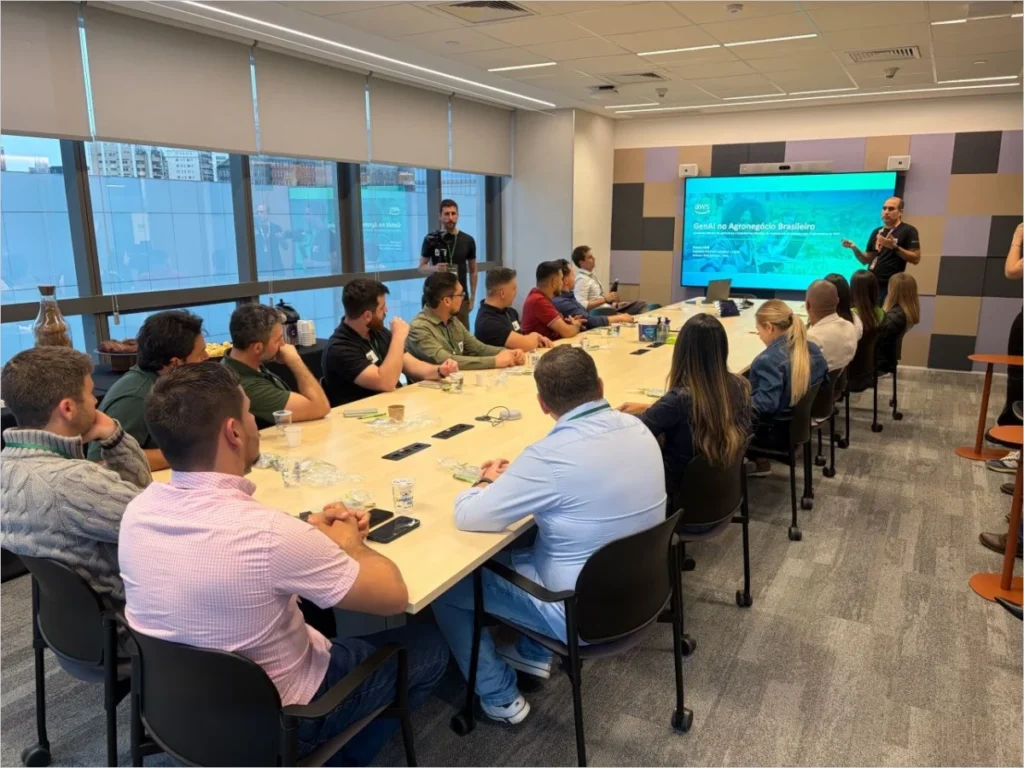
The relentless convergence of artificial intelligence, automated threat exploitation, and distributed infrastructure was on full display this week across Amazon Web Services (AWS). From the boardroom tables of São Paulo—where agribusiness leaders are rethinking user interfaces around generative voice models while driving between farms—to the rapidly shrinking windows of vulnerability exploitation documented by Amazon Threat Intelligence, the underlying theme is unmistakable: traditional operational paradigms are giving way to automated, real-time responses.
This week’s major announcements span enterprise security, container networking, and developer tooling. AWS introduced AWS Continuum, a general-availability vulnerability management service designed to automatically contextualize, reproduce, and generate pull requests for code flaws before attackers can weaponize them. This release arrived on the heels of startling telemetry data from AWS honeypots, which revealed that real-world threat actors are actively exploiting zero-day vulnerabilities hours before public disclosure dates.
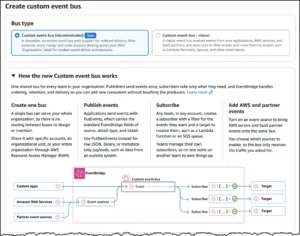
Additionally, AWS unveiled Amazon ECS Gateway, a powerful new tool designed to decouple network provisioning from application development, enabling up to 25 services to seamlessly share a single Application Load Balancer (ALB). Alongside these monumental infrastructure releases, AWS delivered significant updates to its Amazon Polly Generative engine (including new Brazilian Portuguese voices), introduced TorchNeuron for native PyTorch support on Trainium, expanded serverless migration capabilities for Valkey, and streamlined agentic workflows and model customization.
Chronology of Key AWS Releases and Threat Intelligence Disclosures
To fully understand the velocity of this week’s developments, it is essential to trace the timeline of product availability announcements, threat intelligence telemetry findings, and community engagements:
- Mid-October: AWS presents "GenAI no Agronegócio Brasileiro" at the AWS office in São Paulo, highlighting the critical need for voice-first AI interfaces in agricultural operations.
- October 17: Amazon Threat Intelligence honeypot telemetry (MadPot) captures a live
PHP2Shellexploitation attempt in the wild—four days prior to the public disclosure of CVE-2026-109618 and CVE-2026-109619. - October 21 (02:00 UTC): Proof-of-concept exploits for the aforementioned vulnerabilities begin circulating across underground channels—roughly twelve hours before the official embargo and public disclosure lift at 14:00 UTC.
- Current Week:
- AWS Continuum for code vulnerabilities achieves general availability (GA) in US East (N. Virginia) and US West (Oregon).
- Amazon ECS Gateway launches across all commercial regions.
- Amazon Polly rolls out its major Generative engine upgrade, adding 14 new voices (including two in Brazilian Portuguese).
- TorchNeuron enters public beta, bringing native PyTorch support to AWS Trainium.
- Amazon SageMaker AI rolls out generally available training session APIs for custom loss functions and reward signals.
- Amazon ElastiCache Serverless for Valkey introduces zero-downtime online migration.
- October 31: AWS Community Day Brasil Norte convenes in Belém, marking the close of the 2026 Brazilian community season.
- November 30 – December 4: AWS re:Invent opens in Las Vegas, featuring more than 2,200 sessions.
Main Facts: Deep Dive Into Major Product Releases
1. AWS Continuum: Redefining Vulnerability Management
For years, vulnerability management has been reactive and siloed. Security scanners generate endless lists of CVEs, dump them onto engineering teams, and leave developers to determine which alerts represent actual operational risks. AWS Continuum fundamentally reframes this workflow as an end-to-end remediation pipeline.
Continuum operates by constructing a comprehensive context graph linking code repositories directly to running AWS environments. Rather than merely flagging static severity labels, the service assigns evidence levels and—crucially—reproduces exploitable findings inside an isolated sandbox environment. By generating proof-of-concept (PoC) code, Continuum allows security and engineering teams to observe the flaw in action.
The engine ranks vulnerabilities based on how closely an attack path approaches business-critical systems. Once prioritized, Continuum automatically drafts a pull request containing the fix. Currently, security boundaries dictate that every remediation requires human verification; developers review and merge the pull request. However, future iterations are expected to introduce autonomous fix classes gated behind strict confidence thresholds.
2. Amazon ECS Gateway: Streamlining Multi-Service Networking
Managing ingress traffic for containerized applications has historically created friction between platform engineering teams—who manage network security, subnets, and TLS certificates—and application developers, who simply want to deploy microservices.

Amazon ECS Gateway resolves this operational bottleneck by splitting responsibilities cleanly:
- Platform Teams define a single gateway encompassing organization-wide subnets, security groups, TLS certificates, listener settings, and AWS WAF web ACLs.
- Application Teams opt in by attaching a simple gateway connector to their service definitions.
Behind the scenes, Amazon ECS automatically provisions an AWS Certificate Manager (ACM) certificate, generates a unique DNS hostname, configures listener rules and target groups, and establishes a security group that restricts traffic exclusively to the Application Load Balancer.
Economically, the architecture is highly efficient: up to 25 services can share a single ALB. ECS provisions ALBs automatically upon the first service connection and removes them when no longer required. Furthermore, a single gateway can scale to associate with up to 10,000 clusters, with a maximum of five gateways per cluster. Organizations can adopt ECS Gateway incrementally via the UpdateService API without replacing existing load balancers.
3. Amazon Polly Generative Engine Upgrade
Highlighting the practical application of generative AI in traditional sectors like agriculture, Amazon Polly received a major upgrade to its Generative engine. The catalog now encompasses 57 generative voices spanning 11 languages and 25 locales.
The update introduces 14 new voices across 9 locales, marking the general availability of Hindi and Finnish generative voices for the first time. Notably, the release includes two new Brazilian Portuguese voices: Leo and Carolina. Designed as a drop-in upgrade, existing integrations require no code rewrites; developers retain the exact same SynthesizeSpeech API calls and pricing structures while instantly benefiting from significantly more natural, expressive audio output.
Supporting Data and Security Telemetry
The urgency behind automated security tools like AWS Continuum was underscored this week by compelling telemetry data published by Amazon Threat Intelligence regarding the PHP2Shell vulnerabilities (CVE-2026-109618 and CVE-2026-109619).
+-----------------------------------------------------------------+
|               The Collapsing Vulnerability Window               |
+-----------------------------------------------------------------+
  Oct 17         Oct 21 (02:00 UTC)         Oct 21 (14:00 UTC)
    |                    |                          |
    v                    v                          v
 MadPot Telemetry    PoC Exploits Circling      Public Disclosure &
 Detects Attack      in Underground Channels    Embargo Lifts
    |                    |                          |
    +--------------------+--------------------------+
                         |
                         v
     Result: Patch windows measured in days are obsolete.
According to data gathered from MadPot telemetry, Amazon Threat Intelligence identified a live exploitation attempt on October 17—four full days before the vulnerabilities were publicly disclosed. More alarmingly, proof-of-concept exploits were circulating across digital channels at 02:00 UTC on disclosure day, giving defenders a mere twelve-hour warning before the official embargo lifted at 14:00 UTC.
This empirical evidence establishes a stark reality for modern enterprises: relying on a patch window measured in days is a dangerous miscalculation. Threat actors operationalize vulnerabilities almost immediately upon discovery. Consequently, organizations must pivot their investigative baselines from public disclosure dates to the earliest known exploitation markers. To assist defenders, AWS simultaneously published comprehensive AWS WAF mitigations for the targeted CVEs.

Official Responses and Ecosystem Expansions
Beyond security and container networking, AWS announced a robust slate of developer, machine learning, and database enhancements:
- TorchNeuron (Public Beta): Bridging hardware independence and high-performance computing, TorchNeuron is an open-source PyTorch backend allowing machine learning engineers to run models on AWS Trainium chips simply by calling
.to('neuron'). Eager execution andtorch.compileremain fully intact, eliminating the need for extensive code rewrites across Trainium2 and Trainium3 instances. - Amazon SageMaker AI Training Sessions: Developers can now maintain strict control over post-training loops—including custom loss functions and reward signals—while offloading GPU allocation, distributed execution, fault recovery, and checkpoint management to SageMaker. Billing is strictly metered against processed tokens, halting while custom reward functions score batches. Support has also expanded to include Muse Glimmer, Qwen 3.8, and Ministral 3.
- Anthropic Claude Structured Outputs on Amazon Bedrock: Enterprise automation received a major boost with native support for schema-compliant JSON outputs from any Anthropic Claude model on Amazon Bedrock. Accessible across
bedrock-runtimeandbedrock-mantleendpoints, this capability eliminates custom parsing scripts and retry logic for tasks ranging from financial auditing to clinical note processing. - ElastiCache Serverless for Valkey Online Migration: Organizations running self-managed Valkey or Redis OSS on Amazon EC2 can now execute zero-downtime migrations directly into ElastiCache Serverless. Utilizing built-in data synchronization rather than third-party replication tools, the migration ensures zero client errors during cutover.
Implications for Enterprise Architecture and the Road Ahead
The announcements and telemetry data from AWS this week signal a profound structural shift in how cloud architectures must be conceived, secured, and operated.
1. Security Automation Becomes Mandatory
The collapse of the vulnerability exploitation window proves that human-speed patch management is no longer viable. Tools like AWS Continuum—which combine context graphs, automated sandboxed reproduction, and pull request generation—represent the future of enterprise defense. Security is transitioning from a retrospective auditing function to an automated, continuous feedback loop integrated directly into the developer workflow.
2. Architectural De-siloing
Innovations like Amazon ECS Gateway demonstrate a concerted effort by cloud providers to reduce operational friction between distinct engineering domains. By abstracting complex ALB and WAF configurations into centralized gateways managed by platform teams, organizations can scale microservices faster while maintaining rigid security and compliance guardrails.
3. Ubiquitous Voice and Edge AI Integration
As noted during the São Paulo agribusiness presentation, technology adoption in traditional sectors is dictated entirely by practical usability. When field operators interact with systems via voice interfaces while driving between agricultural plots, the underlying infrastructure must scale seamlessly—from high-performance generative models like Amazon Polly to specialized silicon like Trainium and flexible agentic registries (AWS Agent Registry).
Looking Forward
As the global tech community prepares for AWS re:Invent in Las Vegas (November 30 to December 4), where more than 2,200 sessions await attendees, the overarching message from AWS is clear: agility, automated security, and hardware-agnostic machine learning are no longer optional differentiators. They are the foundational pillars upon which the next generation of enterprise software will be built.