Karnataka Government Seeks Central Intervention to Resolve Sugarcane Crisis; Farmers Remain Skeptical
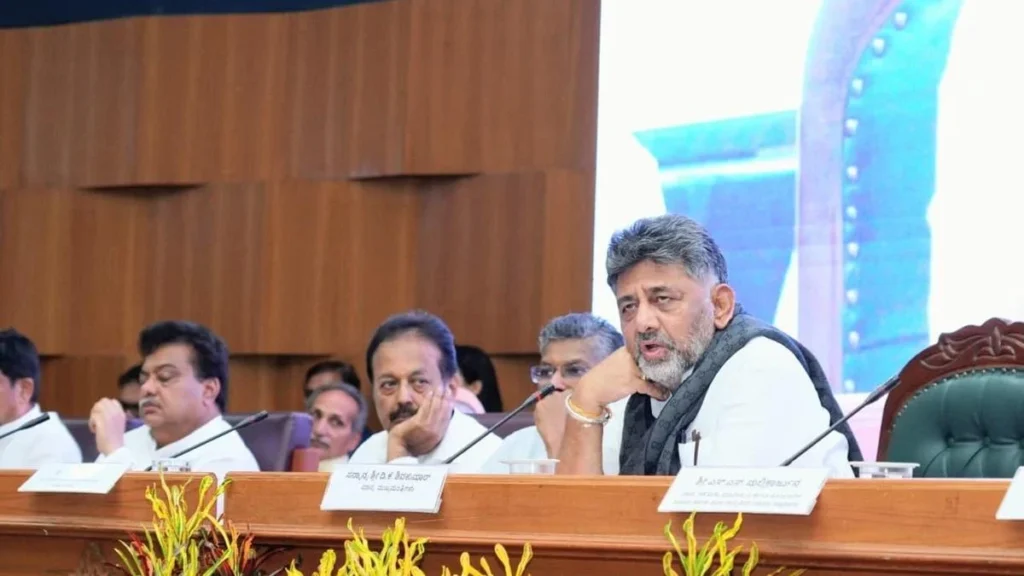
BELAGAVI – In a high-stakes meeting held at the Suvarna Soudha on Monday, Karnataka Chief Minister D.K. Shivakumar attempted to bridge the widening chasm between the state’s distressed sugarcane farmers and the sugar industry. Facing mounting pressure to provide immediate relief, the Chief Minister urged patience, citing the need for a collaborative approach with the Union government and the findings of an impending expert committee report.
The meeting, which brought together representatives of sugar mills, legislative members, and vocal farmers’ unions, highlighted the complex economic web linking agricultural productivity, industrial output, and state fiscal policy.
The Core Conflict: Pricing and Economic Sustainability
At the heart of the standoff is the perennial demand from farmers for a higher State Advised Price (SAP) for sugarcane. While the Union government fixes the Fair and Remunerative Price (FRP), many farmers argue that the input costs—fueled by rising labor, fertilizer, and water management expenses—render the current market prices insufficient for a sustainable livelihood.
During the session, farmer leader Chunappa Pujeri pushed for immediate, concrete action. He demanded that the Karnataka government bypass bureaucratic hurdles and unilaterally announce an SAP of at least ₹1,000 per tonne above the current benchmarks, leaving broader policy disputes for later negotiation with the Center.
Chief Minister Shivakumar, however, maintained a stance of fiscal caution. He emphasized that the government’s coffers are not bottomless and that any decision must be backed by sustainable revenue models. "Any decision by the government involves public money," Shivakumar stated. "When the previous administration announced an incentive of ₹50 per tonne, it cost the exchequer ₹300 crore. Currently, our power subsidy bill has escalated by ₹8,000 crore due to drought conditions. I cannot offer empty promises; I must act based on financial reality."
Chronology of the Negotiations
The Monday meeting was the culmination of weeks of rising tensions in the northern belt of Karnataka, where sugarcane cultivation is a primary economic driver.
- Pre-meeting Consultations: Earlier in the day, Chief Minister Shivakumar held closed-door discussions with representatives of private and cooperative sugar factories. The atmosphere was noted to be "conciliatory," with the CM emphasizing that blaming stakeholders would not yield a solution.
- The Suvarna Soudha Session: The primary meeting with farmers’ leaders began in the afternoon. The CM defended the decision to hold the meeting in Belagavi rather than Bengaluru, stating it was a gesture of solidarity with the farming community.
- The Impasse: The meeting saw a breakdown in communication as farmers, frustrated by the lack of a specific monetary announcement, began speaking over one another. Despite the chaos, the CM reiterated his commitment to the cause.
- The Roadmap Ahead: The government has now pinned its hopes on the visit of a Central committee headed by Ramesh Chand, which is scheduled to arrive in Karnataka on Thursday, October 29.
Supporting Data: The Scale of the Challenge
To understand the scale of the crisis, one must look at the production metrics of Karnataka compared to its neighbors. The Chief Minister pointedly addressed comparisons often made by activists regarding sugar prices in Tamil Nadu.
"There is no comparison between the sugar output of Tamil Nadu and Karnataka," Shivakumar noted. "Karnataka’s output is significantly higher, meaning that any state-level subsidy or price adjustment has a vastly different multiplier effect on our budget than it would in other states."
Furthermore, the government’s legal experts pointed out the precarious position regarding the SAP. The previous administration under Basavaraj Bommai had attempted to implement an SAP, but the move was subsequently challenged and stayed by the courts. This legal precedent makes it difficult for the current government to unilaterally announce a new price without facing immediate litigation or constitutional challenges.

Official Responses and Measures for Transparency
Minister Shivanand Patil, representing the state government, highlighted that while a price hike is currently under review, the administration has made strides in curbing the "weighbridge exploitation" that farmers have long complained about.
"We have introduced greater transparency in sugar factories and markets," Patil stated. "To date, we have installed 22 weighbridges in close proximity to sugar factories to ensure farmers get an accurate measurement of their produce. If the situation demands, we are prepared to establish additional units to prevent any form of tampering."
The government is also positioning itself as an advocate for the farmers at the federal level. By pushing for an increase in the Minimum Selling Price (MSP) of sugar, the state aims to ensure that factories have the liquidity required to pay farmers higher procurement prices.
Implications: The Path to Resolution
The standoff in Belagavi has far-reaching implications for the political and economic landscape of Karnataka.
1. The Federal-State Dynamic
The reliance on the committee led by Ramesh Chand underscores the limitations of the state government in isolation. By involving the Union government, Karnataka is attempting to shift the burden of the "price gap" onto a broader national policy framework, rather than absorbing the entire cost into the state budget.
2. Farmer Mobilization
The persistence of the farmers, as evidenced by the heated atmosphere at the Suvarna Soudha, indicates that the current agitation is not merely a regional issue. The farmers believe their protest is setting a precedent for the rest of India. As one attendee noted, "I am confident that the problems of sugarcane farmers across the country will be resolved due to the agitation by the Karnataka farmers."
3. Economic Sensitivity
The state’s fiscal health is currently under immense strain due to drought-induced expenditures. The government’s decision-making process will be a litmus test for its ability to balance populist agricultural support with the hard realities of fiscal deficit management.
Conclusion: A Tense Wait
As the meeting concluded without an immediate resolution, the mood among the farming community remained one of skepticism. While the Chief Minister’s promise to "not lie and walk away" provided a glimmer of transparency, the lack of a timeline for the actual price increase leaves the farmers in a state of limbo as the harvest season approaches.
The upcoming visit of the Central committee on October 29 will now serve as the focal point for all stakeholders. Whether that visit will result in a breakthrough that satisfies the demand for a ₹1,000 per tonne hike remains to be seen. For now, the farmers of Karnataka remain at the gates of the Suvarna Soudha, their livelihoods hanging in the balance, waiting to see if the promised "consultations" will finally yield the harvest of support they have been promised.