Anthropic’s @Claude Transforms Workplace Collaboration, Integrating as a Persistent Slack AI Coworker
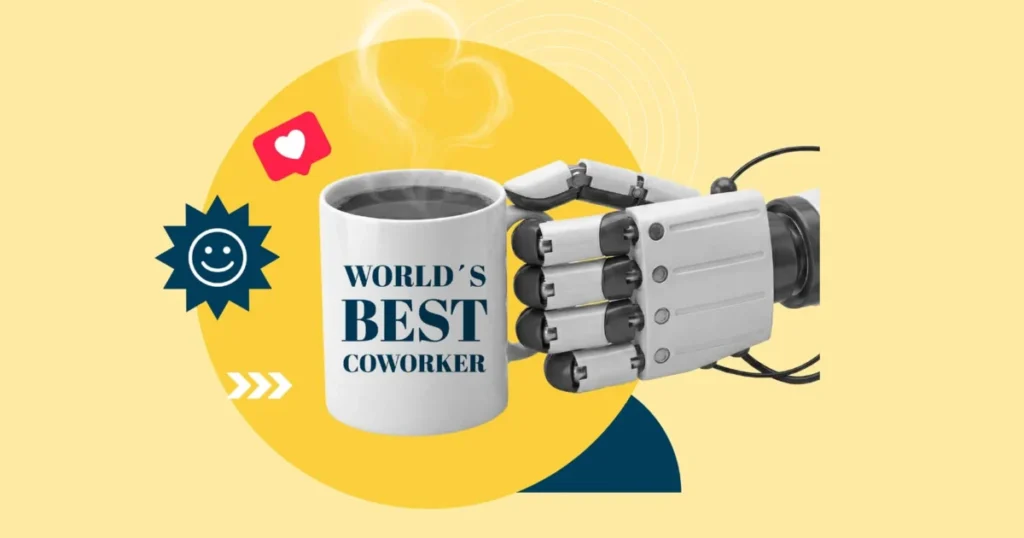
San Francisco, CA – The landscape of workplace technology is undergoing a profound transformation, spearheaded by the rapid evolution of artificial intelligence. In a significant move that blurs the lines between human and machine collaboration, Anthropic has officially introduced "Claude Tag," a groundbreaking feature that embeds its advanced AI model, @Claude, directly into Slack channels. This integration positions Claude not merely as a chatbot responding to isolated prompts, but as a persistent, context-aware "coworker" capable of remembering ongoing conversations, undertaking scheduled tasks, and accessing a range of tools to execute work that has historically remained within the human domain.
This development marks a pivotal moment in the practical application of large language models (LLMs) within enterprise environments. By allowing users to tag @Claude directly within their daily communication streams, Anthropic is ushering in an era where AI agents become integral, active participants in team workflows, promising to reshape productivity, accelerate innovation, and redefine the very nature of digital collaboration.
Main Facts: Introducing Claude Tag, Your New AI Colleague
Anthropic’s Claude Tag represents a strategic leap in how artificial intelligence interacts with human teams. No longer confined to siloed applications or single-query interactions, @Claude is now designed to be an omnipresent, intelligent entity within the collaborative fabric of Slack.
Bridging the Gap: AI as a Conversational Team Member
The core innovation of Claude Tag lies in its seamless integration into Slack, a platform synonymous with real-time team communication. Users can invoke @Claude by simply tagging it within any channel, much like they would a human colleague. This seemingly simple mechanism belies a sophisticated underlying architecture that allows Claude to engage in ongoing dialogues, understand complex requests, and contribute meaningfully to shared objectives. The immediate implication is a reduced friction in bringing AI capabilities to bear on everyday tasks, making advanced computational power as accessible as sending a message.
Beyond Prompts: Memory, Scheduled Tasks, and Tool Access
What truly distinguishes Claude Tag is its expanded functional scope. Unlike previous generations of AI assistants that operated on a prompt-by-prompt basis, @Claude, through this new feature, boasts a significant memory retention capability. It can recall past interactions and contextual information within the Slack channels it monitors, eliminating the need for users to repeatedly provide background details for ongoing projects. This persistent memory allows Claude to build a deeper understanding of team dynamics, project nuances, and evolving requirements, making its contributions more relevant and efficient over time.
Furthermore, Claude Tag empowers the AI with the ability to handle scheduled tasks. This means that once assigned, Claude can independently work on assignments that extend beyond an immediate response, such as monitoring data streams, generating reports at specific intervals, or tracking project milestones. Coupled with its ability to access various tools – from internal databases and code repositories to external APIs – Claude can execute multi-step workflows, retrieve specific information, and even initiate actions across different platforms, all under the supervision and control of administrators. This capability transforms Claude from a mere information provider into a proactive agent capable of driving work forward autonomously.
A New Chapter in Workplace AI: The Chronology of Integration
The arrival of Claude Tag is not an isolated event but the culmination of years of development in artificial intelligence and a broader trend towards embedding AI deeply into enterprise operations.
The Evolution of AI in Enterprise Environments
The journey of AI in the workplace began with rudimentary automation tools, followed by rule-based chatbots designed for customer service or internal FAQs. The advent of machine learning brought more sophisticated data analysis capabilities, while the recent explosion of large language models (LLMs) like OpenAI’s GPT series and Anthropic’s Claude has ushered in an era of generative AI. These models demonstrated unprecedented abilities in understanding, generating, and summarizing human language, paving the way for more complex integrations.
Early integrations of LLMs often involved direct API calls or specialized interfaces, requiring users to switch contexts or learn new platforms. The next logical step, therefore, was to bring these powerful capabilities directly into the communication hubs where teams already operate. Platforms like Slack and Microsoft Teams, already central to modern enterprise collaboration, became prime candidates for such integrations, seeking to leverage AI to enhance existing workflows rather than disrupt them with new tools.
Anthropic’s Journey: From Foundational Models to Practical Application
Anthropic, founded by former OpenAI researchers, has distinguished itself by prioritizing safety and ethical considerations in AI development, coining the term "Constitutional AI." Their Claude models, known for their strong reasoning capabilities and reduced propensity for harmful outputs, have steadily gained traction in the competitive AI landscape. Initially offered as standalone APIs and web interfaces, the challenge for Anthropic, like other AI developers, has been to translate raw model power into practical, value-adding enterprise solutions.
The development of Claude Tag signifies a maturation of Anthropic’s strategy, moving beyond foundational model provision to direct, actionable integration within critical business applications. It reflects a growing understanding that the true potential of AI in the enterprise lies not just in its intelligence, but in its seamless availability and contextual awareness within the existing human workflow.
The Strategic Choice: Why Slack?
Anthropic’s decision to launch Claude Tag initially on Slack is highly strategic. Slack has become a de facto operating system for many modern businesses, serving as the central hub for communication, project management, and cross-functional collaboration. By integrating @Claude directly into Slack channels, Anthropic taps into an established user base and a workflow that is already second nature to millions of professionals.
The inherent structure of Slack, with its channels, threads, and direct messaging, provides an ideal environment for an AI agent that needs to understand context and participate in ongoing discussions. This choice also positions Claude Tag to immediately address real-world business challenges where communication and information flow are paramount, from engineering and product development to customer support and data analysis. The initial beta availability for Claude Enterprise and Team customers underscores this focus on high-value, business-critical applications.
Supporting Data and Real-World Applications
The promise of AI integration often sounds abstract, but Anthropic provides concrete evidence of Claude Tag’s immediate utility and potential impact.
Anthropic’s Internal Success: A Testament to AI Efficacy
Perhaps the most compelling endorsement of Claude Tag comes from Anthropic itself. The company has revealed that its internal version of Claude Tag is responsible for generating an astonishing 65% of its product team’s code. This statistic is not merely a testament to Claude’s coding prowess but indicates a profound shift in engineering workflows. It suggests that Claude is not just assisting with minor tasks but is actively contributing to core development, potentially handling boilerplate code, generating test cases, or even drafting initial versions of complex functions. This frees human engineers to focus on higher-level architectural design, complex problem-solving, and innovative features, significantly boosting overall development velocity. While the announcement doesn’t state that Claude is replacing engineers, it undeniably augments their capabilities and redefines their roles.
Concrete Use Cases: From Code Generation to Customer Support
The applications of Claude Tag extend far beyond coding. Anthropic envisions a wide array of use cases across various departments:
- Engineering: As seen internally, code generation, debugging assistance, reviewing pull requests, and generating documentation.
- Product Management: Chasing down product metrics, analyzing user feedback, summarizing market research, and drafting product specifications.
- Customer Support: Working through support tickets, categorizing inquiries, drafting responses, and identifying recurring issues for proactive solutions.
- Data Analysis: Extracting insights from datasets, generating reports, monitoring trends, and answering data-related queries in natural language.
- Marketing & Communications: Drafting social media posts, summarizing meeting notes, generating content ideas, and proofreading communications.
- Project Management: Tracking project progress, identifying bottlenecks, summarizing discussions, and generating status updates.
The ability for Claude to access various data sources and code repositories, governed by administrator controls, means its utility is limited only by the permissions granted and the creativity of the users. Administrators can also set spend limits, providing a crucial layer of financial governance over AI resource utilization.
The Broader Landscape of AI Agents and Productivity
Anthropic’s move with Claude Tag aligns with a broader industry trend towards "AI agents" – autonomous or semi-autonomous AI systems designed to achieve specific goals. Competitors like OpenAI are developing their own customizable GPTs, and Microsoft’s Copilot integrates AI across its entire suite of productivity tools, including Teams, Word, Excel, and PowerPoint. Google’s Gemini also offers similar integration capabilities within its Workspace environment.
Studies from organizations like McKinsey and Accenture consistently highlight the potential for AI to significantly boost global productivity. By automating repetitive tasks, augmenting human decision-making, and providing instant access to information, AI agents like Claude Tag are expected to free up human capital for more strategic, creative, and interpersonal work, driving substantial economic value.
Addressing the Nuances: Current Capabilities and Limitations
While the potential is immense, it’s crucial to acknowledge the current state of AI capabilities. While Claude is highly advanced, it is still an algorithmic system. It operates based on the data it was trained on and the context it is provided. Limitations include:
- Potential for Hallucinations: AI models can sometimes generate plausible but incorrect information. Human oversight remains critical.
- Contextual Boundaries: While it remembers within channels, its understanding might be limited to the digital information it processes and may lack nuanced human understanding or empathy.
- Ethical Dilemmas: AI systems, by nature, reflect biases present in their training data. Careful monitoring is required to ensure fairness and prevent unintended discrimination.
- Dependence on Tools and Data Access: Claude’s effectiveness is directly tied to the quality and breadth of the tools and data sources it is granted access to.
These factors underscore the need for a collaborative approach where AI augments human intelligence rather than fully replacing it, with humans providing critical judgment, ethical oversight, and strategic direction.
Official Responses and Anthropic’s Vision
Anthropic’s messaging around Claude Tag is clear and consistent with its broader philosophy: AI as a powerful, yet responsible, partner.
Cultivating Collaboration: AI as an Augmentation, Not a Replacement
Anthropic explicitly frames Claude Tag as an assistant designed to "help employees, not as replacements for them." This narrative is critical for fostering acceptance within the workforce and managing expectations. The company envisions Claude as a persistent, learning partner that improves over time by observing and participating in team activities. "The longer they work the better they’re supposed to become at that work," the announcement states, emphasizing the adaptive and iterative nature of Claude’s learning within a team context.
This vision aligns with the concept of "augmented intelligence," where AI enhances human capabilities rather than displacing them entirely. It suggests a future where AI handles the routine, data-intensive, or computationally heavy aspects of tasks, allowing human employees to focus on creativity, critical thinking, strategic planning, and interpersonal communication – skills that remain uniquely human.
The Principles Behind Claude Tag: Safety and Control
True to its "Constitutional AI" roots, Anthropic emphasizes the built-in safeguards and administrative controls of Claude Tag. Administrators retain full control over what tools Claude can access and can set spend limits, ensuring both security and cost management. This granular control is essential for enterprises concerned about data privacy, intellectual property, and the responsible deployment of AI. By empowering organizations to dictate Claude’s boundaries, Anthropic aims to build trust and facilitate broader adoption, addressing common anxieties around autonomous AI systems.
Future Horizons: Expanding AI’s Reach Across Platforms
While Slack is the initial launchpad, Anthropic has made it clear that this is just the beginning. Their goal is "to expand where it’s available more widely, so that teams can tag @Claude in the many other places they work." This indicates an ambitious roadmap for integrating Claude across a multitude of enterprise applications and platforms, potentially including project management tools, CRM systems, code repositories, and even custom internal software. This multi-platform strategy will further cement Claude’s role as a pervasive AI assistant, seamlessly integrated into the entire digital workflow of an organization.
Profound Implications for the Future of Work
The introduction of Claude Tag, and the broader trend it represents, carries profound implications for the future of work, touching upon workforce dynamics, ethical considerations, competitive landscapes, and the psychological impact on employees.
Redefining Human-AI Collaboration and Workforce Dynamics
The persistent AI "coworker" paradigm necessitates a re-evaluation of human-AI collaboration. Employees will need to develop new skills:
- Prompt Engineering: The ability to effectively communicate tasks and expectations to AI.
- AI Oversight and Verification: Critically evaluating AI outputs for accuracy, bias, and completeness.
- Task Delegation: Understanding which tasks are best suited for AI and which require human intervention.
- Human-AI Teaming: Learning to integrate AI contributions seamlessly into team projects.
This shift will likely lead to job augmentation, where human roles evolve to include more strategic and creative components, while repetitive or data-heavy tasks are offloaded to AI. However, it also raises questions about the pace of this transformation and the potential for certain roles to be significantly altered or even phased out, requiring substantial investment in reskilling and upskilling initiatives.
Navigating Ethical Minefields: Privacy, Bias, and Accountability
The deep integration of AI into communication channels like Slack presents significant ethical challenges:
- Data Privacy: What happens to the conversational data Claude processes? How is it stored, used, and protected? Clear policies and transparent practices are crucial to maintain user trust.
- Bias: If Claude learns from team interactions, could it inadvertently pick up and perpetuate human biases present in those communications or in its training data? Mechanisms for detecting and mitigating bias will be essential.
- Accountability: When Claude makes an error, who is responsible? The individual who assigned the task, the team, the administrators, or Anthropic itself? Establishing clear lines of accountability for AI-generated outputs is paramount.
- Transparency: How can users understand why Claude made a particular suggestion or took a specific action? Explainable AI (XAI) will become increasingly important for building trust and enabling effective oversight.
The Competitive Arena: Anthropic’s Strategic Move
Claude Tag positions Anthropic firmly in the race to dominate the enterprise AI market. By offering a direct, integrated, and persistent AI agent, Anthropic directly challenges offerings from OpenAI, Microsoft, and Google. This move is not just about technological capability but also about market penetration and establishing a strong foothold in the daily workflows of businesses. The success of Claude Tag will largely depend on its performance, ease of use, and Anthropic’s ability to demonstrate tangible ROI for its enterprise customers.
User Acceptance and the Psychological Impact of AI Coworkers
The original article hints at the "scary" aspect for some workers, and this is a critical point. The notion of an AI "coworker" can evoke a range of emotions, from excitement about increased efficiency to anxiety about job security and the dehumanization of the workplace. Building user acceptance will require:
- Clear Communication: Explaining how Claude will be used and its benefits.
- Training and Support: Equipping employees with the skills to effectively collaborate with AI.
- Pilot Programs and Feedback: Allowing employees to experience Claude Tag firsthand and provide input.
- Demonstrating Value: Showcasing how Claude enhances human work, rather than diminishes it.
The psychological impact of working alongside an AI that remembers conversations and takes initiative is still largely unexplored. It could lead to novel forms of team dynamics, but also potential feelings of surveillance or competition if not managed carefully.
Conclusion: The Dawn of the Persistent AI Assistant
Anthropic’s Claude Tag represents a significant evolution in the application of artificial intelligence, moving beyond discrete interactions to embed AI as a continuous, context-aware participant in the workplace. By integrating @Claude directly into Slack channels with memory, scheduled task capabilities, and tool access, Anthropic is pioneering a new paradigm of human-AI collaboration.
While promising immense gains in productivity and innovation, this development also brings forth crucial considerations regarding workforce adaptation, ethical governance, and the psychological impact on employees. As AI agents become increasingly sophisticated and integrated, the challenge for organizations will be to harness their power responsibly, ensuring they serve as powerful augmentations to human intellect and creativity, ultimately shaping a more efficient, yet still profoundly human, future of work. The journey of the AI coworker has just begun, and its trajectory will undoubtedly be one of the most compelling narratives in the coming years.